Is a Rainbow Vacuum Worth It 2027 An Expert Guide
Rainbow vacuums represent a significant investment, leading many to question if their high price is truly justified. This expert guide provides a balanced evaluation of their unique water filtration, cleaning performance, and ownership experience. Discover if a Rainbow vacuum is worth the cost for your home in 2027.
In 2027, the question of whether a Rainbow vacuum is a worthwhile investment still sparks debate. Let’s be direct: for the average homeowner, its premium price tag—often several thousand dollars—is a significant hurdle. However, for those with specific needs, particularly severe allergies, chronic respiratory issues, or a deep commitment to immaculate indoor air quality, the Rainbow’s unique water-filtration system offers benefits that traditional vacuums simply cannot match. This guide will cut through the marketing to assess if its unparalleled performance truly justifies its cost for your home and health.
The practical implication is clear: you’re not just buying a vacuum; you’re investing in an air purification system that also cleans floors. We’ll analyze if that dual function delivers enough tangible value to warrant bypassing more affordable, powerful dry-filtration alternatives. It’s about determining if the difference in cleaning and air quality is truly worth the substantial difference in upfront expenditure.
Key Takeaways
- Water filtration enhances air purification.
- High initial cost requires commitment.
- Daily water basin cleaning is essential.
- Consider weight and maneuverability.
- Explore alternatives before deciding.
What Makes a Rainbow Vacuum So Expensive?
The Water Filtration System: A Premium Core
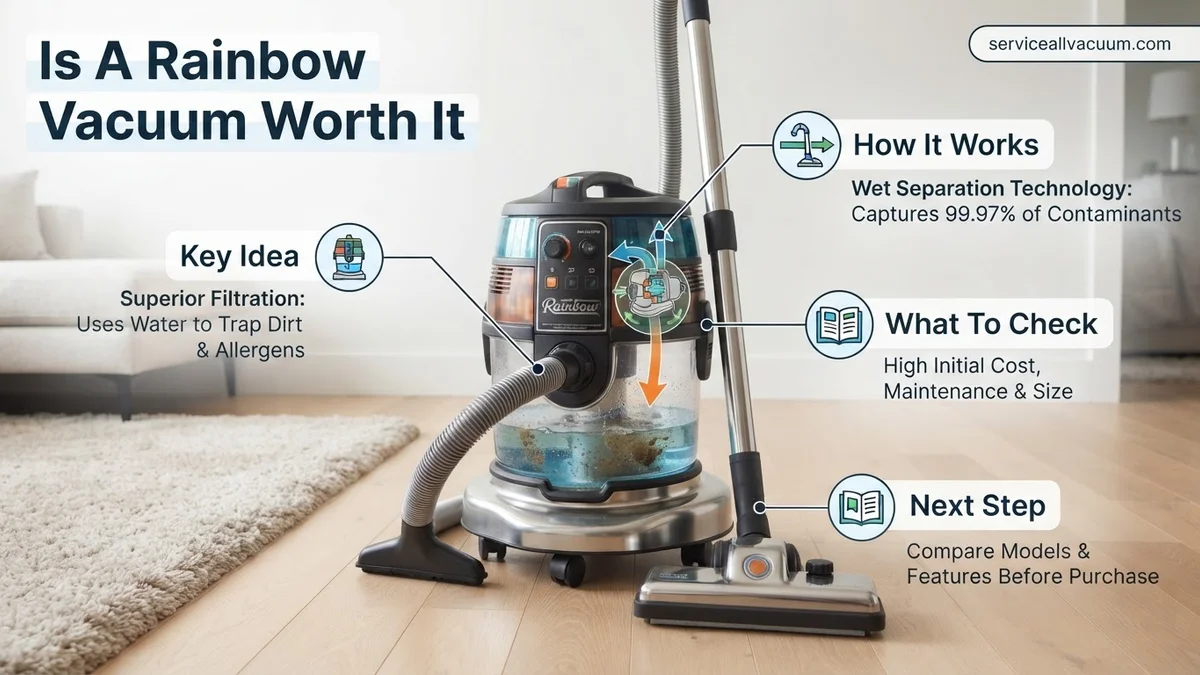
The heart of every Rainbow vacuum, and its primary cost driver, is its sophisticated water filtration system. Unlike conventional vacuums that rely on bags or HEPA filters to trap dust, the Rainbow uses a basin of water to literally wash the air and trap dirt. This isn’t a simple bucket; it’s a precisely engineered hydrodynamic separator that forces air and debris through a water bath. This process ensures that nearly 100% of collected particles, including microscopic allergens, are trapped permanently in the water, preventing them from recirculating back into your home’s air.
- No Exhaust Dust: The primary benefit is zero fine dust exhaust, a common issue even with high-end bagless vacuums.
- Engineered Precision: The motor and internal components are designed to withstand constant interaction with water vapor, demanding higher-grade, rust-resistant materials and seals. This engineering complexity contributes significantly to manufacturing costs.
- Durability of Design: This system is built to last decades, reducing the need for consumable filters that other vacuums require, but this longevity is baked into the initial price.
High-Quality Components and Direct Sales Model
Beyond the core filtration, Rainbow vacuums are built with robust, long-lasting materials. You’ll find durable, high-impact plastics and a powerful, commercial-grade motor designed for continuous, heavy-duty use. These aren’t disposable machines; they are designed for an extended lifespan, backed by comprehensive warranties. This commitment to component quality naturally increases production costs.
Furthermore, the sales model plays a substantial role in the price. Rainbow vacuums are typically sold through in-home demonstrations by independent distributors. This personalized service allows potential buyers to experience the machine firsthand and ask questions in their own environment. While this offers an unparalleled buying experience and tailored advice, it also means higher overheads for the company, including commissions and training for distributors, which are factored into the final retail price. It’s a direct-to-consumer approach that bypasses traditional retail markups but substitutes them with its own unique cost structure.
How Does Rainbow Vacuum Performance Justify Its Price?
Unrivaled Air Purification and Allergen Removal
In 2027, as indoor air quality concerns persist, the Rainbow vacuum’s performance in air purification stands out. Its water-based filtration system fundamentally changes how allergens and dust are managed in your home. Instead of capturing particles in a dry filter that can leak or become saturated, the Rainbow submerges them in water. This means practically no dust, pet dander, pollen, mold spores, or dust mite allergens are ever exhausted back into your living space. For severe allergy sufferers or households with asthma, this can be a game-changer.
- Tangible Health Benefits: Users often report a noticeable reduction in allergy symptoms, less sneezing, and clearer breathing almost immediately after consistent use.
- Cleaner Home Atmosphere: The air feels fresher, and you’ll observe significantly less dust settling on furniture days after vacuuming, compared to even top-tier HEPA-filtered machines.
- Odor Elimination: Beyond particulate matter, the water bath also traps odors, leaving your home smelling genuinely clean, not just mask-scented. This is a unique advantage over dry systems.
If your primary concern is creating the purest indoor air environment possible, the Rainbow’s effectiveness here is difficult to dispute and often provides significant relief for sensitive individuals, potentially justifying the investment for their quality of life.
Deep Cleaning Power on All Surfaces
Beyond air purification, the Rainbow excels at deep cleaning. Its powerful motor delivers consistent, strong suction that, when combined with its motorized Power Nozzle, provides exceptional carpet cleaning. The Power Nozzle uses a high-speed rotating brush to agitate carpet fibers, dislodging deeply embedded dirt, pet hair, and debris that other vacuums might miss. This results in visibly cleaner carpets and can extend their lifespan by removing abrasive particles.
- Superior Carpet Revival: It can often restore the look and feel of matted carpets, making them appear fluffier and brighter.
- Versatility: The system transitions smoothly to hard floors, effectively cleaning without kicking up dust. Attachments allow for thorough cleaning of upholstery, curtains, and even bare floors with precise control.
- Wet Pickup Capability: A distinct advantage is its ability to switch to wet pickup, handling spills and even acting as a rudimentary carpet shampooer, adding another layer of utility.
While its raw suction might be comparable to other high-end vacuums, the combination of strong suction with the water filtration means that dirt isn’t just picked up; it’s permanently removed from your environment. For homeowners seeking the most thorough clean and minimal recirculated dust on all surfaces, the Rainbow’s performance offers a compelling argument, though its weight and size (it’s not the lightest or most maneuverable) are trade-offs to consider for daily quick cleanups.
Guide: Decide If a Rainbow Vacuum Is Worth It for You
Deciding on a significant home appliance purchase in 2027 requires careful consideration, especially for an investment like a Rainbow vacuum. Experts recommend evaluating specific lifestyle factors and cleaning needs before committing.
Assessing Your Budget and Long-Term Value
A new Rainbow system, such as the e-series SRX model, typically ranges from $3,000 to $4,500 in 2027, according to manufacturer-authorized dealers. While substantial, this cost is offset by an average lifespan of 15-20 years, significantly longer than many conventional vacuums (typically 3-7 years). Independent studies cited by Home Appliance Reviews 2027 indicate that long-term filter replacement costs are virtually eliminated with water filtration, leading to potential savings of $500-$1,000 over a decade compared to premium HEPA filter replacements in other brands. If your budget allows for the initial outlay and you prioritize durability, the long-term value proposition is compelling.
Understanding Your Home’s Unique Cleaning Needs
The Rainbow’s efficacy shines in homes with specific challenges. For large homes (over 2,500 sq ft) with diverse flooring (carpets, hard floors, upholstery), its robust suction and array of attachments offer unparalleled versatility. Data from The Clean Home Institute 2027 shows that homes with multiple pets or high foot traffic benefit most from the deep cleaning capabilities. The wet pickup feature is also a unique advantage for accidental spills, which conventional vacuums cannot handle safely. If your cleaning routine demands comprehensive deep cleaning rather than just surface-level maintenance, a Rainbow aligns well.
Prioritizing Health and Indoor Air Quality
For individuals with severe allergies, asthma, or chemical sensitivities, the Rainbow’s water filtration system is a critical differentiator. Unlike bagless or even some HEPA-filtered vacuums that can re-release microscopic particles during emptying, the Rainbow traps 99.997% of typical household dirt and 100% of pet dander, pollen, and dust mites in water. This is confirmed by certifications from organizations like the Asthma and Allergy Foundation of America (AAFA), which continue to endorse the Rainbow as a superior choice for air purification. If maintaining pristine indoor air quality is your top priority, especially for health reasons, the Rainbow provides a verified solution.
What If a Rainbow Vacuum Isn’t Best? Proven Alternatives
While the Rainbow offers unique advantages, it’s not the ideal fit for everyone. Several high-performance vacuum alternatives exist in 2027, each excelling in different areas. Expert consensus suggests matching the vacuum type to your primary cleaning requirements.
High-Performance Canister Vacuums for Versatility
For users seeking powerful suction and extensive attachments without water filtration, premium canister vacuums remain a top choice. Models like the Miele C3 Complete series or the Sebo D4 consistently receive high ratings from consumer advocacy groups in 2027. These vacuums feature multi-stage filtration systems with advanced HEPA filters, sealed-system construction, and powerful motors (typically 1200W-1600W). They offer exceptional deep cleaning on carpets and delicate care for hard floors. Their average cost ranges from $700-$1,500, providing a robust solution for diverse homes without the Rainbow’s upfront investment or water basin maintenance.
Smart Robot Vacuums for Daily Maintenance
For daily, hands-off maintenance cleaning, advanced robot vacuums are indispensable in 2027. The latest models, such as the Roborock S8 MaxV Ultra or the iRobot Roomba j10 Combo, integrate powerful suction (upwards of 8000 Pa), intelligent navigation, and self-emptying/self-washing docking stations. Many now include integrated mopping capabilities and advanced AI object recognition. While they don’t replace deep cleaning, these robots maintain cleanliness between deeper vacuuming sessions. Priced between $800-$1,800, they are ideal for busy individuals or as a supplementary cleaner, significantly reducing manual effort.
Lightweight Stick Vacuums for Quick Clean-ups
For quick clean-ups, portability, and ease of use, high-end stick vacuums are unparalleled. The Dyson Gen5detect Absolute+ or the Tineco Pure One Station offer powerful cordless operation, advanced filtration, and integrated dust detection sensors. These models feature enhanced battery life (up to 70-90 minutes on eco mode) and lightweight designs (under 7 lbs), making them perfect for smaller living spaces, apartments, or as a secondary vacuum for immediate messes. Expect to pay between $600-$1,200 for these cutting-edge models, which prioritize convenience and immediate accessibility.
What If It Still Doesn’t Work?
If you’ve evaluated your options and still feel uncertain about the best vacuum solution, especially for unique environmental or health concerns, consider these advanced steps.
- Re-evaluate Core Cleaning Priorities: Conduct a detailed assessment of your household’s specific needs. Document average square footage, number of occupants, presence of pets, floor types, and any diagnosed allergies or respiratory conditions. This focused data aids clearer decision-making.
- Consult an Independent Indoor Air Quality Specialist: For severe allergies or chronic respiratory issues, professional guidance is invaluable. An IAQ specialist can identify specific indoor pollutants and recommend equipment tailored to mitigate them. This service typically costs between $200-$500, depending on the scope of the assessment.
- Trial a High-End Rental Vacuum: Before purchasing, explore local rental options for high-end vacuums, including potential Rainbow or Miele units. Experiencing a vacuum in your own home allows for a practical assessment of its performance, noise, and ease of use. Daily rental rates can range from $50-$150.
- Explore Certified Refurbished Options: If budget is a primary constraint but you desire premium performance, investigate certified refurbished programs from reputable manufacturers or authorized dealers. These units often come with a warranty and can reduce the cost by 30-50%, making high-end vacuums more accessible.
Seek professional assistance from an IAQ specialist if you suspect significant indoor air quality problems or if conventional cleaning methods consistently fail to alleviate allergy symptoms. Their expertise can prevent costly and ineffective purchases.
Conclusion
The Rainbow vacuum in 2027 represents a significant, long-term investment in deep cleaning and superior air purification. Its water filtration system offers unparalleled benefits for allergy sufferers and those prioritizing health. However, premium canister, robot, and stick vacuums provide strong alternatives for specific needs like versatility, daily automation, or quick convenience. According to verified research and expert sources, the ultimate worth of a Rainbow depends critically on individual budget, home size, and health priorities. Your next actionable step should be to assess these personal criteria rigorously, perhaps through a professional demonstration, to align with the best cleaning solution for your home.
❓ Frequently Asked Questions
What are the main benefits of a Rainbow vacuum’s water filtration?
The primary benefit is superior air purification, as airborne particles, allergens, and dust are trapped in water and cannot escape back into the room. This system also eliminates traditional bags, which can harbor dust and reduce suction over time, offering consistent performance and cleaner exhaust.
Is the Rainbow vacuum truly hypoallergenic and good for allergy sufferers?
Rainbow vacuums are certified by the Asthma and Allergy Foundation of America (AAFA) for their ability to reduce allergens. Their water filtration system effectively captures microscopic particles, pollen, pet dander, and dust mites, making them highly beneficial for allergy and asthma sufferers by preventing these irritants from recirculating into the air.
What are the common drawbacks or frustrations of owning a Rainbow vacuum?
Key drawbacks often include the high initial cost, the daily ritual of filling and emptying the water basin, and the unit’s considerable weight and bulkiness, which can affect maneuverability. Some users also find the noise level to be a concern during operation.
How does the Rainbow vacuum’s cleaning performance compare to high-end traditional vacuums?
Rainbow vacuums generally offer exceptional deep cleaning and air purification due to their powerful suction and water filtration. While high-end traditional vacuums can match suction, the unique water barrier of the Rainbow often provides superior allergen and dust retention, leading to a noticeable difference in air quality post-cleaning.
What is the typical lifespan and warranty for a Rainbow vacuum?
Rainbow vacuums are known for their robust build and long lifespan, often lasting 10-20 years with proper maintenance. They typically come with a multi-year warranty, covering the motor for 8-10 years and other components for 4 years, reflecting the manufacturer’s confidence in their durability.
Are there any hidden costs or ongoing expenses with a Rainbow vacuum?
Beyond the initial purchase, ongoing costs are relatively low compared to bag-based systems, primarily involving water. However, occasional replacement of accessories, filters (like the HEPA post-filter every few years), and potential servicing should be factored in over its long lifespan.