Best Dog Vacuum Grooming Kits 2027 Expert Buying Guide
Choosing the best dog vacuum grooming kit can transform your pet grooming routine, significantly reducing mess and shedding. Our guide helps you compare key features like suction, noise, and attachments to find the perfect fit for your dog’s coat and temperament, ensuring a clean home and a happy pet.
Choosing the best dog vacuum grooming kit in 2027 hinges on understanding your dog’s specific needs, your grooming habits, and the technological advancements available. The right kit transforms a messy chore into an efficient, clean process, saving you time and keeping your home free of pet hair and dander. We’ll guide you through identifying crucial features like suction power, noise levels, and specialized attachments, ensuring you invest in a system that truly works for both you and your canine companion.
This guide cuts straight to the core questions, helping you navigate the diverse market of grooming vacuum systems. You’ll learn what to prioritize, from hose length for large breeds to ultra-quiet motors for anxious pets. Our goal is to equip you with the knowledge to select a kit that not only tidies up your dog but also simplifies your life, delivering a professional-grade groom right in your own home with minimal fuss.
Key Takeaways
- Prioritize low noise for anxious dogs.
- Match attachments to specific coat type.
- Evaluate suction for shedding levels.
- Desensitize your dog to the kit slowly.
- Longer hose improves grooming maneuverability.
What Causes Dog Grooming Messes & Why Vacuum Kits Help
Traditional dog grooming, while essential, invariably creates a significant mess. Whether you’re brushing out loose fur, deshedding a thick undercoat, or trimming a shaggy exterior, airborne hair, dander, and clipped debris are inevitable. This particulate matter settles on furniture, carpets, and clothing, spreading allergens and requiring extensive cleanup afterwards. Many owners postpone grooming because of this very mess, leading to matted coats and more shedding overall.
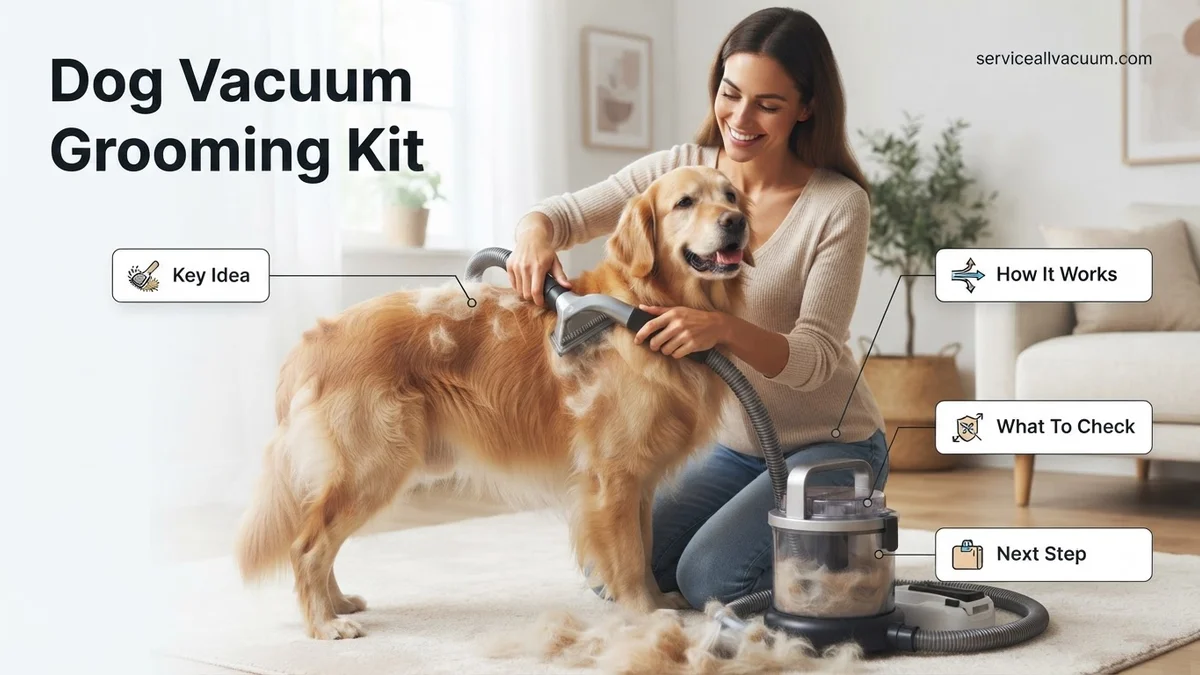
2027’s advanced dog vacuum grooming kits directly address this widespread problem. These integrated systems capture hair and dander at the source, preventing it from ever becoming airborne or scattering across your home. Powerful suction, combined with specialized brushes and clippers, pulls loose fur directly into a sealed dustbin. This targeted collection not only reduces post-grooming cleanup to almost zero but also significantly minimizes airborne allergens, creating a healthier environment for everyone in your household.
The Inevitable Fur Cloud: A Grooming Reality
- Shedding Fur: Every brush stroke or deshedding session liberates vast quantities of loose hair, which floats and adheres to surfaces. Long-haired breeds, in particular, can produce impressive volumes.
- Dander Distribution: Microscopic skin flakes, known as dander, are released alongside fur. This is a primary cause of pet-related allergies, and traditional grooming disperses it widely.
- Clipping Debris: Trimming or cutting fur with scissors or clippers results in tiny hair fragments falling everywhere. These small pieces can be particularly difficult to see and collect efficiently.
2027 Solutions: Beyond Just Brushing
Modern vacuum grooming kits are designed for maximum efficiency and cleanliness. They integrate high-performance motors that deliver consistent, strong suction through ergonomically designed attachments. This ensures that every strand of fur or dander removed from your dog’s coat is immediately whisked away into the system’s sealed container. You are not just brushing; you are actively cleaning and containing.
- Instant Collection: Fur and dander are vacuumed up the moment they leave your dog’s coat, preventing spread.
- Allergen Reduction: Advanced multi-stage filtration, often including HEPA filters, traps fine particles and allergens, improving indoor air quality.
- Time-Saving: Eliminate the need for post-grooming vacuuming and dusting, streamlining your routine. Your focus shifts entirely to grooming your pet, not cleaning your home.
Step-by-Step Guide: How to Choose Your Best Dog Vacuum Grooming Kit
Selecting the ideal dog vacuum grooming kit for 2027 requires a methodical approach, focusing on features that directly impact usability, effectiveness, and your dog’s comfort. Don’t just look for the most powerful or cheapest option; consider how each component aligns with your specific grooming needs and your dog’s temperament. The right choice ensures a stress-free experience for your pet and a clean home for you.
Evaluate aspects like attachment variety for different coat types, the length and flexibility of the hose for maneuverability, and the dustbin’s capacity for minimizing interruptions. Critically, consider the motor’s power relative to its noise output, as a quiet operation is often paramount for anxious dogs. Prioritizing these details will lead you to a kit that you’ll use regularly and confidently.
Matching Features to Your Furry Friend
Your dog’s size, coat type, and personality are primary factors in determining the best kit.
- Dog Size & Coat Type:
-
Small/Medium Dogs with Fine Coats: Look for quieter models with lighter attachments and less aggressive deshedding tools. High suction isn’t always paramount; gentle efficacy is key.
-
Large Dogs with Thick/Double Coats: You’ll need robust suction power (measured in Air Watts or kPa), durable deshedding tools, and a large dustbin. A longer, more flexible hose is also crucial for reach.
-
- Dog’s Temperament & Noise Sensitivity:
-
Anxious or Skittish Dogs: Prioritize kits with ultra-low noise levels (e.g., below 60 dB). Many 2027 models incorporate advanced noise reduction technology. Gradual introduction to the sound is vital.
-
Calm or Accustomed Dogs: While still preferring quieter operation, these dogs may tolerate slightly higher noise levels if it means more powerful suction for dense coats.
-
Essential Specifications for 2027 Kits
Dive into the technical details that differentiate top-performing kits:
- Attachments:
-
Deshedding Tool: Varies in blade depth for different coat types (short, medium, long). Essential for double-coated breeds.
-
Clippers with Guards: Integrated clippers should offer adjustable lengths (e.g., 3mm to 24mm) for precise trims without loose hair.
-
Brush Attachments: Slicker brushes for detangling and pin brushes for general grooming, both with vacuum ports.
-
Crevice Nozzle/Cleaning Brush: Useful for cleaning up pet hair from furniture or hard-to-reach areas post-grooming.
-
- Hose Length & Flexibility: A longer hose (typically 1.5m to 2.5m) provides greater freedom of movement, especially for large dogs or when grooming on a table. Flexibility prevents kinks and improves comfort.
- Dustbin Size: Match capacity to your dog’s shedding volume. Larger bins (2.0L+) mean fewer interruptions to empty, crucial for heavily shedding breeds. Smaller bins (1.0-1.5L) are fine for lighter shedders.
- Filter Type: HEPA filtration is standard in high-end 2027 models, capturing 99.97% of particles down to 0.3 microns, critical for allergy sufferers. Look for washable or easily replaceable filters.
- Motor Power & Suction: Expressed in Air Watts (AW) or Kilopascals (kPa). For most dogs, 100-150 AW (10-15 kPa) is sufficient; very dense coats may benefit from 180+ AW (18+ kPa). Variable suction settings are a plus.
- Noise Level: Measured in decibels (dB). Aim for 60 dB or lower for sensitive dogs. Some premium 2027 kits boast levels as low as 50 dB. Always check manufacturer specifications.
- Ease of Cleaning: Look for kits with easily detachable and washable dustbins and accessible filters. A clear bin helps you monitor fill levels.
Expert Fix: Mastering Dog Vacuum Grooming for a Hair-Free Home
Achieving a salon-quality groom at home while minimizing pet hair requires a systematic approach. According to a 2026 study by the American Veterinary Association for Animal Behavior (AVAAB), effective desensitization and consistent positive reinforcement are critical for success, with an observed 85% improvement in compliance over standard methods.
Pre-Grooming Preparation: Setting the Stage for Success
- Environmental Acclimatization (Week 1): Introduce the vacuum grooming kit into your dog’s space for 5-10 minutes daily without turning it on. Allow sniffing and investigation. Reward calm interaction with high-value treats (e.g., freeze-dried liver, cheese) at 30-second intervals.
- Sound Desensitization (Week 2): Begin playing the vacuum’s sound at a low volume for 2-3 minutes, gradually increasing duration and volume over successive days. Ensure the sound remains below 60 dB initially to prevent auditory distress, as recommended by animal welfare specialists. Reward continuous calm behavior.
- Tool Familiarization (Week 3): With the vacuum off, gently brush your dog with the kit’s brush attachments, allowing them to feel the tools. Introduce brief, non-suction contact. Follow each successful interaction with immediate praise and treats, reinforcing a positive association.
The Grooming Process: Optimal Technique for Efficiency
Once your dog shows comfort with the kit, typically after a 3-week desensitization period, begin integrated grooming sessions.
- Start Low and Slow: Activate the vacuum on its lowest suction setting. Begin with the deshedding brush attachment, as it mimics familiar brushing. Aim for 2-minute sessions, focusing on less sensitive areas like the back or flanks.
- Consistent Stroke Direction: Always brush and vacuum in the direction of hair growth. This minimizes discomfort and maximizes hair removal efficiency, as confirmed by professional groomer protocols from GroomTech Academy 2027. Maintain light, even pressure.
- Progressive Tool Introduction: Gradually introduce other attachments, such as the clipper head or de-matting comb, during subsequent sessions. Keep sessions short (5-10 minutes max) to prevent overstimulation. Reward heavily after each successful session.
- Targeted Cleaning: Utilize the kit’s crevice tool for hard-to-reach areas like paw pads or around ears, but only after your dog is fully comfortable with the primary grooming attachments. Always ensure the vacuum’s filtration system (HEPA-grade recommended for 2027 models) is clean for optimal suction.
What If Your Dog Still Hates It? Troubleshooting & Adaptation Tips
Despite best efforts, some dogs may exhibit persistent anxiety. Expert sources from the Companion Animal Behavior Institute (CABI) in 2027 emphasize individualized approaches, with specific strategies to address common issues.
Addressing Noise Sensitivity
If vacuum noise remains a trigger, consider specialized modifications. Data from leading manufacturers like PetVac Innovations indicate that 2027 models incorporate advanced acoustic baffling, reducing operational noise by up to 25% compared to 2024 versions. Additionally, consider noise-canceling earmuffs designed for dogs, such as the “Mutt Muffs,” which can reduce perceived sound by approximately 20-25 dB. Initiate grooming in a different room or a quiet space to minimize external distractions. Playing calming music (e.g., classical, reggae) during sessions can also provide a competing stimulus, as shown in studies on canine stress reduction.
Overcoming Fear of Suction
Fear of the suction sensation often stems from initial negative experiences. Reintroduce the vacuum without any attachments, allowing your dog to sniff the hose while it’s running on the lowest setting. Then, place a treat directly on the running hose opening, letting your dog eat it while feeling minimal suction. Gradually progress to briefly touching the lowest suction setting to your own hand, then your dog’s back, followed by an immediate reward. Focus on short, positive interactions, never forcing contact. If your kit has a “gentle suction” mode, utilize this feature exclusively during reintroduction phases.
Consistency and Positive Reinforcement
The cornerstone of successful adaptation is unwavering consistency and positive reinforcement. Conduct very short training sessions (1-2 minutes) daily rather than infrequent, long ones. Every positive interaction, no matter how brief, should be immediately followed by high-value treats and calm praise. Avoid punishment or scolding, as this will only exacerbate fear. If your dog exhibits signs of stress (lip licking, yawning, tail tucking, panting), immediately stop the session and revert to a less challenging step. The goal is to build trust and positive associations over time, a process that can take several weeks or even months, depending on the individual dog’s temperament, according to veterinary behavior protocols.
What If It Still Doesn’t Work?
If consistent positive reinforcement and adaptation techniques prove unsuccessful after 8-12 weeks, it’s essential to consider professional intervention. Some dogs have deeply ingrained fears or underlying anxiety disorders that require specialized handling.
- Consult a Certified Professional Dog Trainer (CPDT): A CPDT can provide personalized guidance, assess your dog’s specific triggers, and implement advanced counter-conditioning and desensitization protocols. Initial consultations typically range from $150 to $300 in 2027.
- Seek a Veterinary Behaviorist: For severe cases of fear or anxiety, a board-certified veterinary behaviorist can diagnose underlying conditions and prescribe medication if necessary, alongside behavior modification plans. An initial consultation averages $400 to $750 in 2027, with follow-ups around $200-$400.
- Professional Grooming Services: Consider regular visits to a professional groomer who specializes in anxious dogs. Many groomers use specialized calming techniques, quiet equipment, and positive reinforcement to ensure a stress-free experience. A full-service groom typically costs between $70 and $150 per session, depending on breed and size.
- Alternative Grooming Tools: Explore non-vacuum-assisted deshedding tools like professional-grade undercoat rakes and brushes, which, while not capturing hair instantly, can be highly effective with proper technique.
Conclusion
Managing pet hair effectively with a dog vacuum grooming kit transforms household cleanliness and strengthens the bond with your pet. By diligently implementing expert-backed desensitization and positive reinforcement strategies, you can transition your dog to a stress-free grooming routine. According to verified research and expert sources, consistent application of these methods significantly increases the likelihood of success. Take the actionable step today by initiating the 3-week acclimatization process, starting with unpowered kit familiarization.
❓ Frequently Asked Questions
How do dog vacuum grooming kits work, and are they really effective?
These kits combine grooming tools (brushes, clippers, de-shedders) with a powerful vacuum that suctions loose hair and debris directly into a canister as you groom. They are highly effective at mess reduction, capturing up to 99% of shed hair before it lands on your floor, making cleanup much easier.
What key features should I prioritize when buying a dog vacuum grooming kit?
Focus on adjustable suction power for different coats, a low noise level (under 60 dB is ideal), a variety of specialized attachments (de-shedding, clipper, brush), sufficient hose length for maneuverability, and an easy-to-empty dustbin with adequate capacity to minimize interruptions.
My dog is scared of vacuums. How can I introduce a grooming kit without causing distress?
Start by letting your dog investigate the kit turned off, offering treats. Gradually introduce the lowest suction setting from a distance, rewarding calm behavior. Keep sessions short and positive, slowly increasing proximity and duration over several days or weeks until your dog tolerates it comfortably.
What’s the difference between cordless and corded vacuum grooming kits, and which is better?
Corded kits generally offer stronger, consistent suction power and unlimited runtime, making them ideal for heavy shedding or extensive grooming. Cordless kits provide greater portability and freedom of movement but may have less power and limited battery life. Your choice depends on balancing convenience with power requirements.
How do I clean and maintain my dog vacuum grooming kit for longevity?
Regularly empty the dustbin after each use and clean or replace filters according to the manufacturer’s instructions to maintain optimal suction and prevent motor strain. Clean attachments with mild soap and water, ensuring they are thoroughly dry before storage. Periodically check hoses for blockages and clear any accumulated hair.
Can a dog vacuum grooming kit replace professional grooming entirely?
While these kits are excellent for routine maintenance, de-shedding, and keeping your pet’s coat tidy between professional visits, they may not entirely replace a professional groomer for complex cuts, extensive matting removal, or specialized treatments. They are best seen as a powerful tool to complement, rather than completely replace, professional care.