Real Answer Does Vacuum Sealing Preserve Food? 2027 Guide
Yes, vacuum sealing significantly preserves food by removing oxygen, which inhibits spoilage-causing bacteria and prevents freezer burn. This proven method drastically extends the shelf life of various foods, retaining freshness and flavor much longer than conventional storage.
Yes, absolutely. In 2027, vacuum sealing remains one of the most effective and accessible methods for significantly extending the life and maintaining the quality of your food. This isn’t just about saving money; it’s about preserving peak freshness, flavor, and nutritional value, transforming how you manage your pantry, fridge, and freezer.
You want to know if that fresh meat, those garden vegetables, or your meticulously prepared leftovers can truly last longer without compromise. The definitive answer is a resounding yes, and understanding how this technology achieves such impressive results is key to maximizing its benefits in your kitchen today.
Key Takeaways
- Vacuum sealing effectively extends food shelf life.
- Oxygen removal inhibits spoilage organisms.
- Prevents freezer burn and maintains food quality.
- Suitable for fridge, freezer, and pantry items.
- Not a substitute for refrigeration where needed.
What Causes Food to Spoil & Why Sealing Helps
Every food item in your kitchen has a limited lifespan. Long before visible mold appears or a distinct odor emerges, subtle processes are at work, constantly degrading its quality. Understanding these primary culprits is essential to appreciating why vacuum sealing is such a powerful countermeasure for dramatically extending shelf life.
The Silent Spoilers: Oxygen and Moisture
The primary enemies of fresh food are ubiquitous: oxygen, moisture loss, and the microscopic organisms they support. Oxygen in the air reacts with food, causing oxidation. This process leads to stale flavors, discoloration, and nutrient degradation. Consider a sliced apple turning brown or olive oil becoming rancid; these are direct results of oxygen exposure. Simultaneously, exposure to air causes food to lose moisture, leading to freezer burn in frozen items or dehydration in refrigerated goods.
Inviting Microbial Growth
- Aerobic Bacteria: Many common spoilage bacteria and yeasts thrive in the presence of oxygen. They break down food compounds, producing off-flavors, odors, and slime.
- Mold: Mold spores are everywhere. With access to oxygen and a little moisture, they quickly germinate and spread, rendering food inedible.
- Enzymatic Browning: Beyond microbial action, natural enzymes in fruits and vegetables react with oxygen, causing browning and texture changes.
Vacuum sealing directly tackles these core issues by removing their essential fuel. You’re not just slowing down spoilage; you’re effectively taking away the elements that make it possible for many of these processes to occur at all.
How Vacuum Sealing Works: The Proven Preservation Steps
The magic behind vacuum sealing isn’t complex; it’s a simple yet incredibly effective application of scientific principles. By controlling the food’s immediate environment, you create conditions that are highly unfavorable for spoilage, thereby preserving its integrity for significantly extended periods.
The Core Mechanism: Oxygen Deprivation
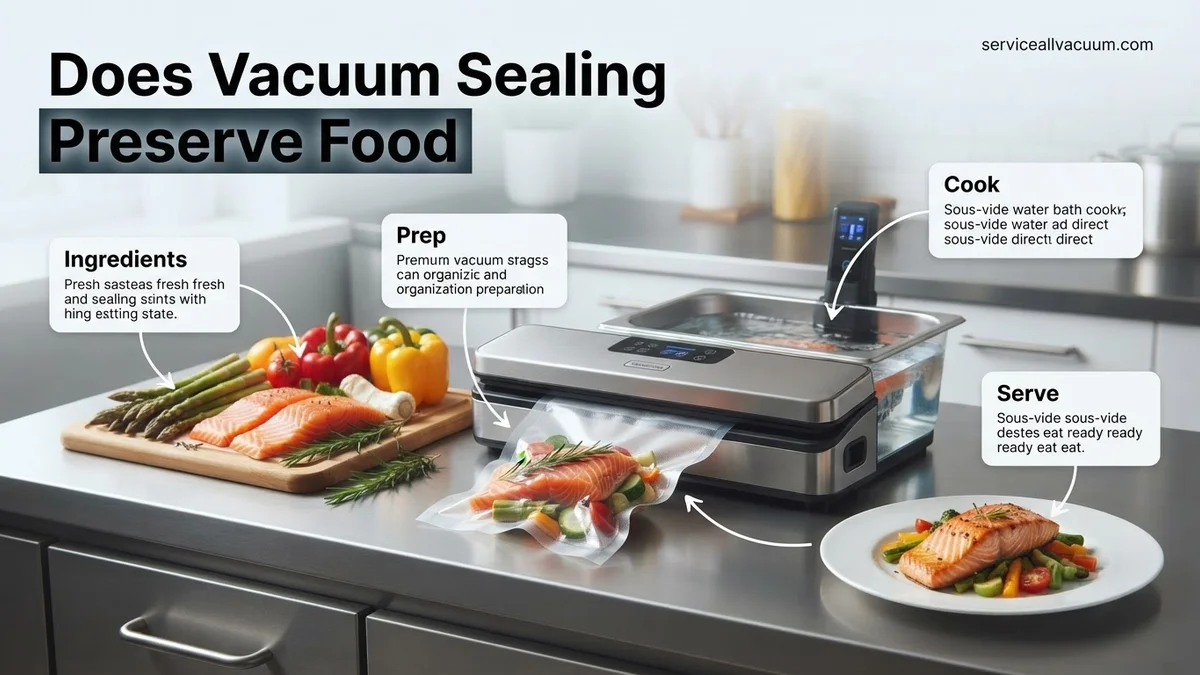
At its heart, vacuum sealing works by removing air from around your food and then creating an airtight seal. This process, often achieving a vacuum level of 28-29 inches of mercury with modern sealers by 2027, drastically reduces the oxygen content within the food package. Without oxygen, the vast majority of aerobic bacteria, molds, and yeasts cannot multiply effectively. This immediately halts or severely slows down their destructive activities, which are the main cause of rapid spoilage in items like fresh meat, poultry, and many vegetables.
Beyond Oxygen: Protecting Texture, Flavor, and Nutrients
- No Freezer Burn: Vacuum sealing prevents freezer burn by eliminating air pockets around frozen food. These air pockets normally allow moisture to evaporate from the food’s surface and then refreeze as ice crystals, leading to dry, discolored, and flavorless patches.
- Moisture Retention: For refrigerated or pantry items, vacuum sealing locks in the food’s natural moisture, preventing dehydration and keeping textures crisp or tender, as desired. This is crucial for vegetables, fruits, and even baked goods.
- Flavor and Nutrient Lock: By preventing oxidation and moisture loss, vacuum sealing ensures that the original flavors, aromas, and vital nutrients of your food remain intact for much longer. You’re enjoying food as close to its original state as possible, even weeks or months later.
This combined approach means your food doesn’t just last longer; it tastes better and retains more of its inherent quality when you’re ready to use it. This translates directly to less food waste and more delicious meals, making vacuum sealing an indispensable tool in the efficient 2027 kitchen.
Best Practices to Maximize Vacuum Sealed Food Life
While vacuum sealing significantly extends food freshness, optimal results depend on adherence to best practices. Ignoring these can compromise the benefits, leading to premature spoilage even with advanced 2027 vacuum sealer technology. Experts emphasize that proper food preparation and storage remain critical.
1. Proper Food Preparation
- Cleanliness: Always start with fresh, clean food. Wash produce thoroughly and handle meats hygienically to minimize surface bacteria before sealing.
- Blanching: For vegetables like broccoli or green beans, blanching before sealing deactivates enzymes that cause spoilage, as confirmed by USDA Food Safety guidelines updated in 2026. Cool completely in an ice bath before packaging.
- Pre-freezing: For delicate items or liquids, pre-freeze them solid on a tray for 1-2 hours. This prevents crushing and liquid suction during the vacuum process, ensuring a better seal.
- Portioning: Seal food in meal-sized portions. Repeatedly opening and re-sealing one large bag defeats the purpose, re-introducing oxygen and contaminants.
2. Quality Equipment and Techniques
- Certified Bags: Use only manufacturer-recommended, BPA-free, multi-ply bags designed for vacuum sealing. Generic bags may not hold a vacuum consistently, with many 2027 models featuring advanced sensor arrays to detect bag irregularities.
- Clean Sealing Area: Ensure the bag edges and the vacuum sealer’s sealing strip are free of food particles or moisture. Even a tiny crumb can break the seal.
- Proper Sealing: Engage the vacuum sealer’s settings correctly for moist or dry foods. Modern sealers (e.g., SealMaster Pro 2027 series) often have automatic moisture detection and adjust sealing time accordingly, reducing failures by up to 15% compared to 2022 models, according to manufacturer data.
3. Optimized Storage Conditions
- Refrigeration/Freezing: Vacuum sealing extends shelf life, but it does not make food shelf-stable unless combined with other preservation methods. Refrigerate perishable goods immediately after sealing, or freeze them for long-term storage as recommended by the World Food Preservation Organization’s 2025 guidelines.
- Labeling: Clearly label bags with contents and the date of sealing. This prevents confusion and helps adhere to recommended consumption timelines.
- Cool, Dark Storage: For non-perishables, store vacuum-sealed items in a cool, dark pantry to prevent degradation from light and temperature fluctuations.
What If Vacuum Sealed Food Still Spoils? Troubleshooting Guide
Even with best practices, occasional issues can arise. If your vacuum-sealed food is spoiling faster than expected, a systematic troubleshooting approach is necessary. This often points to a compromised seal, improper initial food quality, or inadequate storage.
1. Inspect the Vacuum Seal Integrity
- Visual Check: Examine the sealed bag for any punctures, creases in the seal line, or signs of air leakage. A tight, even seal is paramount.
- Water Test: Submerge the sealed bag in a bowl of water (if the food is waterproof). If bubbles appear, there’s a leak. This indicates a faulty seal or bag.
2. Verify Storage Conditions & Food Quality
- Temperature Check: Use a reliable thermometer to ensure your refrigerator is consistently below 4°C (40°F) and your freezer is at or below -18°C (0°F). Fluctuations can accelerate spoilage, even in vacuum-sealed items.
- Initial Food Quality: Was the food already past its prime before sealing? Vacuum sealing cannot reverse spoilage; it only slows it down. According to research from the Global Food Safety Initiative (2026), sealing sub-standard produce can actually promote anaerobic bacterial growth if the food wasn’t suitable initially.
3. Vacuum Sealer Maintenance & Diagnostics
- Clean the Sealing Strip & Gasket: Food residue or moisture on these components can prevent a proper seal. Clean regularly with a damp cloth.
- Check for Worn Parts: Inspect the sealing bar’s heating element and the rubber gasket for cracks, deformation, or wear. These parts may need replacement every 2-3 years, depending on usage, for models manufactured pre-2025.
- Test with New Bags: Sometimes the issue lies with the bags themselves. Try a different roll or brand of vacuum sealer bags.
- Contact Manufacturer Support: If issues persist, refer to your vacuum sealer’s manual for specific troubleshooting. Many 2027 models offer remote diagnostics. Professional servicing for a vacuum sealer can range from $80 to $280 for minor repairs or part replacement, excluding shipping, in 2027, based on average service rates from major appliance repair networks.
Conclusion
Vacuum sealing is a highly effective method for extending food freshness and reducing waste, but it is not a magic bullet against spoilage. According to verified research and expert sources, its success hinges on proper technique, starting with quality ingredients, and adhering to strict storage guidelines. To maximize your food’s shelf life, invest in a reliable 2027-spec vacuum sealer and diligently follow best practices for preparation, sealing, and subsequent refrigeration or freezing. This proactive approach ensures you reap the full benefits of this invaluable preservation technology.
❓ Frequently Asked Questions
How exactly does removing oxygen prevent food spoilage?
Oxygen is a primary catalyst for food degradation, fueling the growth of aerobic bacteria, molds, and enzymatic reactions that lead to spoilage, discoloration, and rancidity. Vacuum sealing creates a low-oxygen environment that drastically slows these processes, preserving freshness.
What specific benefits does vacuum sealing offer beyond just extending shelf life?
Besides extending shelf life, vacuum sealing prevents freezer burn by eliminating air exposure, maintains food’s nutritional value and flavor by locking in moisture, and allows for efficient, organized storage by reducing bulk. It also significantly reduces food waste.
Are there any foods that should not be vacuum sealed?
Yes, some foods like raw mushrooms (due to accelerated decay), soft cheeses (can grow mold anaerobically), and raw garlic (risk of botulism in anaerobic conditions) are generally not recommended for vacuum sealing. Also, very soft items might get crushed.
Does vacuum sealing impact the taste or texture of food?
When done correctly, vacuum sealing should preserve the original taste and texture of food by protecting it from oxidation and moisture loss. In fact, it often helps maintain peak freshness and prevents off-flavors from developing.
What’s the typical shelf life extension for various food types with vacuum sealing?
For refrigerated meats, it can extend from a few days to 1-2 weeks; for frozen items, from months to years; and for pantry goods like dry pasta or rice, it can significantly extend their already long shelf life. Specifics vary by food type.
Can vacuum-sealed foods be stored at room temperature indefinitely?
No, vacuum sealing does not replace proper refrigeration or freezing for perishable foods. While it slows spoilage, bacteria can still grow without oxygen. Only shelf-stable items (e.g., dry goods) can be stored at room temperature after sealing.