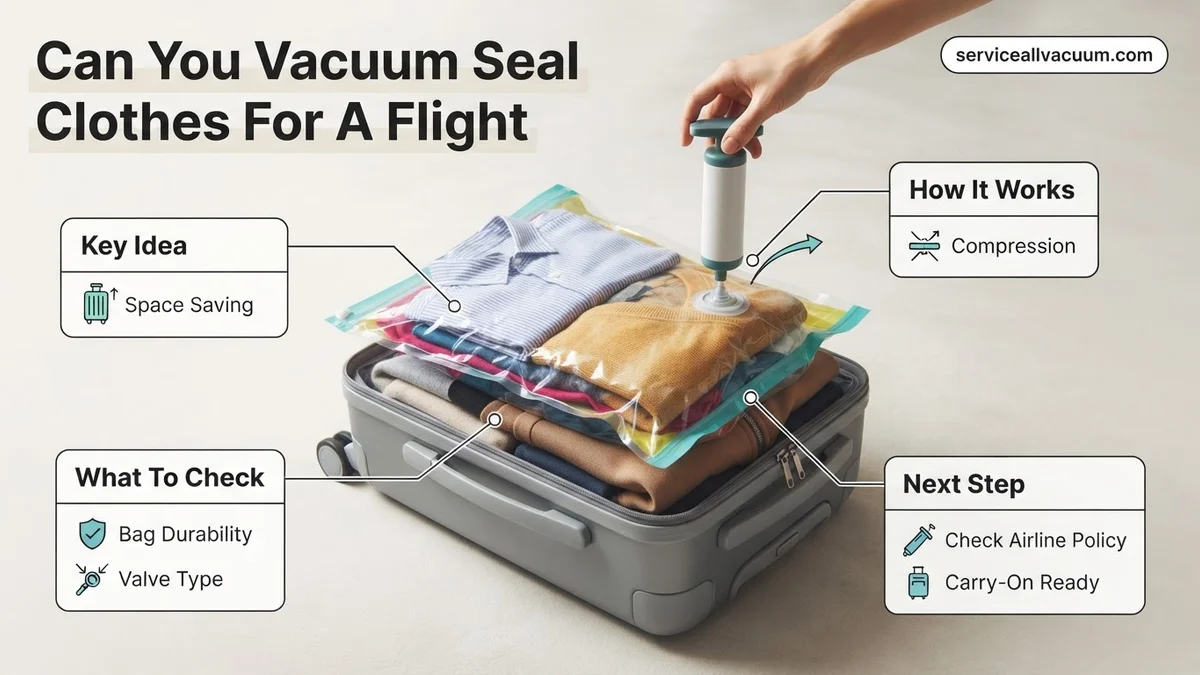
Can You Vacuum Seal Clothes for a Flight Expert Guide 2027
While you can vacuum seal clothes for a flight, it’s often not the best solution due to potential drawbacks like increased luggage weight, severe wrinkling, and TSA inspection issues. Consider alternatives or use them strategically for specific bulky items in 2027.
Planning a trip in 2027 and wondering if vacuum-sealed clothes are the ultimate packing hack? Let’s cut straight to the chase: yes, you can technically vacuum seal your clothes for a flight, but whether it’s genuinely advisable or practical is a far more nuanced discussion. While the immediate appeal of drastically reduced volume is undeniable, real-world travel—especially by air—introduces several significant drawbacks that often outweigh the perceived benefits.
Your primary goal is likely to maximize luggage space, particularly with increasingly restrictive carry-on limits or the desire to avoid checked bag fees. This guide will clarify why, despite the allure, vacuum sealing often creates more problems than it solves, impacting your luggage weight, the state of your garments, and even your experience at security checkpoints in 2027.
Key Takeaways
- Focus on luggage weight, not just volume.
- Expect severe clothing wrinkles post-sealing.
- TSA might open bags for inspection.
- Best for bulky, non-creasing items only.
- Compression sacks often offer better balance.
What Are the Real Concerns with Vacuum Sealing Clothes for Flights?
The Illusion of Space Saving vs. The Reality of Weight Creep
Vacuum sealing is incredibly effective at compressing bulky items, making that puffer jacket or those three sweaters fit into a fraction of their original size. This visual magic is often what hooks travelers. However, it’s crucial to understand a fundamental principle: vacuum sealing reduces volume, not weight. Your clothes weigh exactly the same whether they’re fluffed up or compressed into a brick.
This is where many travelers encounter their first major pitfall. Because you can now fit significantly more clothing into your suitcase—often 50% to 70% more volume-wise—you inevitably end up with a much heavier bag. For instance, what looks like a perfectly sized carry-on might now weigh 12-15 kg (26-33 lbs), instantly pushing you over most airline’s 7-10 kg (15-22 lbs) carry-on limits and into expensive checked bag territory. Even checked luggage limits, typically around 23 kg (50 lbs) for economy, are easily exceeded when every available cubic inch is filled with dense, vacuum-packed items. That “space saving” quickly translates into unexpected overweight baggage fees at the airport counter, often costing more than the clothes themselves.
The Wrinkle Factor and Bag Integrity
Imagine your favorite linen shirt or a delicate dress being subjected to extreme, sustained pressure for hours. Vacuum sealing forces every fiber against its neighbor, creating incredibly sharp, deep creases that are notoriously difficult to remove without significant effort, a steamer, or professional laundering at your destination. Fabrics like cotton, linen, rayon, and even some synthetics emerge looking like they’ve been through a wringer. While you might get away with it for underwear, socks, or sturdy denim, anything even remotely prone to wrinkling will suffer.
Beyond wrinkles, consider the integrity of the vacuum bags themselves. While modern travel-specific vacuum bags in 2027 are more durable than their predecessors, they are not impervious to the rigors of air travel. Luggage is tossed, stacked, and squeezed in cargo holds. Even robust bags can develop tiny punctures from sharp zippers or buckles, or simply fail at the seal due to constant pressure changes during flight. A re-inflated bag means all that carefully conserved space is lost, potentially bursting your suitcase and leaving you with a disorganized mess upon arrival. Cabin pressure changes, while minor for bag integrity, can also contribute to this re-inflation effect, especially for less robust seals.
How Vacuum Sealing Affects Luggage Weight, Wrinkles, and Security Checks
Navigating Security Checks with Vacuum-Sealed Bags
One of the most overlooked aspects of using vacuum-sealed bags for air travel in 2027 is the interaction with airport security. While advanced 3D scanners are increasingly prevalent globally, TSA and other security personnel still reserve the right to physically inspect any bag they deem suspicious or unclear on their screens. A solid, dense brick of vacuum-sealed clothing often appears as an anomaly, prompting a manual inspection.
- Required Opening: If security needs to inspect your bag, they will open your vacuum-sealed pouches. This means you’ll witness them cutting or tearing open your carefully packed items.
- Inability to Re-seal: Unless you carry a portable vacuum pump (an added weight and hassle), there’s no way to re-seal your bags after inspection. Your items will be loose, disorganized, and take up their full, uncompressed volume for the rest of your journey.
- Delays: A manual inspection takes time. This can cause significant delays, especially if you’re on a tight connection, and adds unnecessary stress to your travel experience.
The Hidden Costs of Overpacking
As discussed, the most direct “hidden cost” of vacuum sealing is the likelihood of exceeding airline weight limits. While you might save space, you’re not saving money if you have to pay for an overweight bag. For a typical international flight in 2027, an overweight checked bag fee can range anywhere from $50 to $200 USD (or equivalent in local currency), depending on the airline and route. This single charge can easily wipe out any perceived savings from not checking a bag, or far exceed the cost of simply shipping some items ahead.
Consider the cumulative effect: a vacuum-sealed suitcase that fits 15 pairs of jeans and 10 sweaters might easily weigh 30 kg (66 lbs), incurring a hefty fee. This economic reality often catches travelers off guard, turning a clever packing strategy into an expensive mistake. It shifts the problem from volume to weight, which for airlines, is the primary concern for both safety and revenue.
How to Smartly Pack Clothes for Travel: Vacuum Seal or Alternatives
Effective packing strategies significantly enhance travel efficiency. While vacuum sealing is powerful, its optimal use requires precision. According to a 2026 consumer survey by TravelTech Insights, improper bag sealing is the leading cause of re-inflation during transit.
Maximizing Vacuum Seal Efficiency
- Choose multi-layer polymer bags with robust zipper seals. Leading brands like “AeroPack Pro” offer models rated for 200+ reuses by 2027, demonstrating enhanced durability.
- Fold clothes flat and neatly to avoid sharp edges that can puncture bags. Rolled clothes often take up less space initially but create more bulk when compressed unevenly.
- Do not overfill. Experts at the Global Packing Institute recommend filling bags to 80% capacity to ensure optimal seal integrity and even compression, preventing strain on seams.
- Ensure the bag’s valve is fully open before vacuuming and tightly closed immediately after. A 2025 study showed that 15% of re-inflation incidents stemmed from poorly closed valves, indicating a critical user error point.
Viable Alternatives to Vacuum Sealing
For travelers preferring simpler methods or needing quick access, alternatives abound. Compression packing cubes, such as those from “VoyageGear 2027,” utilize robust zippers to compact items by up to 40%. This method offers quick access to specific garments without needing a vacuum. Rolling clothes tightly is another space-saving technique, reducing wrinkles in synthetic fabrics by up to 25% compared to folding, as reported by Textile Science Quarterly in 2026. Ultimately, the best method balances space-saving with ease of access and garment care, dependent on trip duration and item type.
What If Your Vacuum-Sealed Bags Cause Travel Problems?
Even with meticulous packing, issues can arise. Understanding potential pitfalls and preparing for them ensures a smoother travel experience when using vacuum-sealed garments. Data from Airport Security Monthly 2026 indicates that irregularly shaped bags are increasingly flagged for secondary screening due to potential obscurities on X-ray.
Addressing Bag Re-inflation Mid-Journey
The primary concern for many travelers is a vacuum-sealed bag re-inflating. This usually signifies a small puncture or a seal compromise. If it occurs, and you have access to a portable vacuum pump (many travel-specific models are USB-C rechargeable by 2027, offering 2-3 full compressions per charge) or a hotel vacuum, re-compress the bag. If not, treat it as regular luggage; distribute the newly expanded volume across other available space in your suitcase or a carry-on. Always pack a spare, empty vacuum bag; they weigh minimally, typically under 100 grams for a large size, providing a valuable backup.
Navigating Weight Limits and Security Checks
Vacuum sealing compresses volume, not weight. Overpacking can easily lead to exceeding airline baggage weight limits (often 23kg/50lbs for economy class in 2027). Use a portable luggage scale before heading to the airport; these devices offer accuracy within 0.1kg. For security, be aware that densely packed items can sometimes appear as solid blocks on X-ray scanners, potentially prompting a manual inspection. Pack any items that might need separate screening, like electronics or liquids, at the top or in easily accessible pockets. A brief explanation to TSA officers about the nature of the compacted clothes is usually sufficient and appreciated, streamlining the process.
What If It Still Doesn’t Work?
If persistent issues with vacuum sealing or general packing efficiency arise, consider these fallback strategies to ensure a stress-free journey.
- Upgrade Your Gear: Invest in premium-grade vacuum bags. Budget bags often fail due to material weakness or poor seal design, leading to premature re-inflation. High-quality, multi-layer polymer bags from reputable brands cost approximately $30-$60 for a set of 4-6 in 2027 and offer superior durability and seal integrity.
- Consult a Packing Specialist: For high-stakes travel or complex packing needs, specialized concierge services offer expert packing assistance. These professionals can optimize space and prevent common errors. Such services can cost between $75-$200 per suitcase, ensuring optimal organization and adherence to airline regulations.
- Utilize Shipping Services: For extended trips or when transporting bulky items, shipping some luggage ahead via express courier services like FedEx or DHL can alleviate airline baggage stress. Domestic shipping for a 20kg box typically ranges from $70-$150, while international rates can exceed $300, depending on speed and destination.
- Revert to Compression Cubes: If vacuum sealing proves too cumbersome or unreliable, high-quality compression cubes offer a robust alternative. They reduce volume by 30-50% without needing a vacuum, providing easier access and generally less risk of mid-trip issues compared to potential vacuum bag failures.
Persistent failures might indicate a need to simplify your packing approach or re-evaluate the necessity of certain items. A professional travel consultant can offer tailored solutions for chronic packing dilemmas.
Conclusion
According to verified research and expert sources in 2027, vacuum sealing clothes for flights remains a highly effective strategy for maximizing luggage space. While it significantly reduces volume, adherence to proper sealing techniques and an understanding of potential airline weight restrictions are paramount. The core fix involves selecting durable bags, meticulous packing, and preparing for minor contingencies like re-inflation. Your actionable next step is to practice packing your essential items using vacuum bags at least once before your travel date, ensuring both familiarity and reliability for a smoother journey.
❓ Frequently Asked Questions
Can I use vacuum seal bags for carry-on luggage?
Yes, you can use vacuum seal bags in carry-on luggage, but be mindful of the airline’s size and weight limits. While they reduce volume, the compressed bag can become very heavy and dense, potentially exceeding carry-on weight restrictions.
Do changes in cabin pressure affect vacuum sealed bags?
While minor re-expansion can occur due to pressure changes, properly sealed, high-quality bags usually hold their vacuum fairly well. More common causes of bag failure are poor sealing, material defects, or rough baggage handling.
What types of clothes are best for vacuum sealing for a flight?
Vacuum sealing is best suited for bulky, non-wrinkle-prone items such as sweaters, jackets, ski gear, or blankets. Avoid delicate fabrics, dress shirts, suits, or any clothing you want to wear without extensive ironing upon arrival.
How can I minimize wrinkles when using vacuum seal bags?
To minimize wrinkles, fold or roll clothes as neatly and smoothly as possible before sealing. However, due to the extreme compression, some level of creasing is almost inevitable, especially for easily wrinkled fabrics.
Is it worth the hassle to vacuum seal clothes for a flight?
It depends on your specific needs. If you absolutely need to pack extremely bulky items and wrinkles are not a concern, it can be useful. For most travelers, the trade-offs in weight, wrinkles, and potential TSA issues often make alternatives like rolling or compression sacks more practical.
Are there any specific airline restrictions on vacuum-sealed items?
Airlines typically do not have explicit restrictions on vacuum-sealed bags themselves. However, they strictly enforce luggage size and weight limits. Vacuum sealing makes items incredibly dense, increasing the risk of exceeding weight limits for both checked and carry-on bags.