How Long Do Pool Vacuums Last? Expert Lifespan Guide 2027
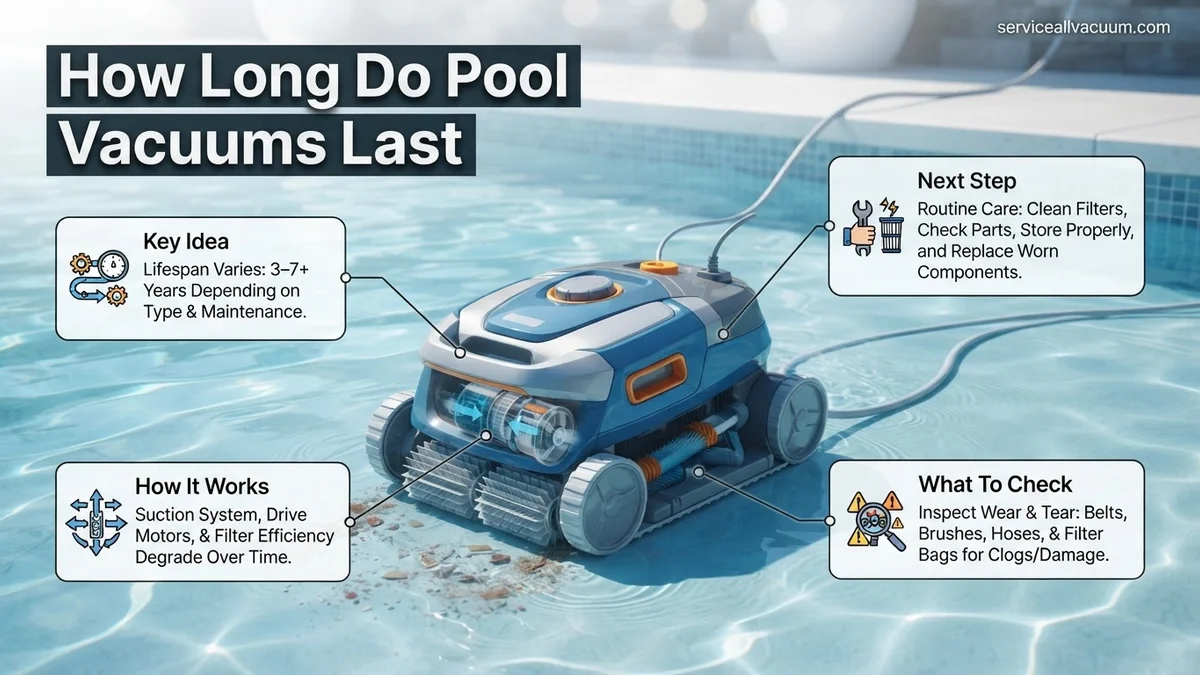
The lifespan of pool vacuums varies significantly, typically ranging from 3-5 years for robotic and 5-10 years for suction/pressure-side models, while manual vacuums can last decades. Proper maintenance, water chemistry, and usage are critical factors in maximizing their operational life and avoiding premature failure.
Understanding the typical lifespan of your pool vacuum is crucial for smart budgeting and effective pool maintenance in 2027. Generally, you can expect robotic pool vacuums to last 3-5 years, pressure-side models 5-7 years, and suction-side cleaners 7-10 years. Manual vacuums, with proper care, can practically last indefinitely as they have no moving parts to fail.
Knowing these timelines helps you anticipate replacement costs and make informed decisions about repairs versus upgrades. Maximizing your vacuum’s lifespan means getting the most out of your investment, ensuring your pool stays sparkling clean for as long as possible without unexpected expenses.
Key Takeaways
- Robotic vacuums last 3-5 years; suction/pressure 5-10.
- Regular cleaning of filters and parts extends lifespan.
- Proper water chemistry prevents premature wear.
- Store vacuums correctly to avoid UV and element damage.
- Repair common issues to delay full replacement.
Expected Lifespan by Pool Vacuum Type
Each type of pool vacuum has its own operational lifespan and specific points of vulnerability. Here’s what you can realistically expect from your unit today.
Robotic Pool Vacuums
Robotic cleaners, the most technologically advanced option, typically last between 3 to 5 years. High-end models from reputable brands, coupled with meticulous maintenance, can sometimes stretch this to 7 years. Their complexity is their strength and their Achilles’ heel.
- Motors: These units contain multiple electric motors for suction and drive. Running them dry or allowing debris to constantly jam the impellers creates immense strain, leading to premature motor burnout. Water ingress into the sealed motor unit is also a common failure point.
- Internal Electronics and PCBs: The sophisticated circuit boards that control navigation, sensing, and power delivery are sensitive. Surges, manufacturing defects, or even condensation can cause these critical components to fail, often rendering the unit irreparable or uneconomical to fix.
- Brushes, Tracks, and Wheels: Made from rubber or PVC, these components degrade from continuous UV exposure, abrasive pool surfaces, and pool chemicals. While replaceable, worn components force the motors to work harder, reducing their overall lifespan.
- Power Cables and Swivels: Constant coiling, uncoiling, and exposure to pool water eventually cause power cables to fray internally. The swivel mechanisms designed to prevent tangling can seize up or break, impacting mobility and power connection.
Suction-Side Pool Vacuums
Suction cleaners are the workhorses of the pool vacuum world, boasting an impressive lifespan of 7 to 10 years, often much longer, due to their simple design. They rely on your pool pump for power.
- Hoses: The most frequent failure point is the hose itself. Constant exposure to UV radiation, chlorine, and physical stress (kinks, twists, dragging) causes the plastic to become brittle, crack, and leak. Leaky hoses drastically reduce suction power and cleaning efficiency.
- Diaphragms/Flapper Valves: These are the few moving parts inside a suction cleaner. They pulsate to create the vacuum and movement. Over time, the rubber or plastic material hardens, tears, or stretches, leading to inconsistent movement, “sticking,” or complete cessation of operation.
- Foot Pads/Skirts: These components make contact with the pool surface, creating a seal for suction. They wear down from friction, reducing the cleaner’s ability to maintain a proper seal and effectively pick up debris. Fortunately, they are inexpensive and easy to replace.
- Connectors and Adapters: Plastic connectors used to link hose sections or attach to the skimmer can become brittle and crack from UV exposure and repeated handling.
Pressure-Side Pool Vacuums
Pressure cleaners offer a good balance of performance and durability, typically lasting between 5 to 7 years. They are powered by the pool’s return jet pressure or a dedicated booster pump.
- Drive Mechanisms and Gears: Inside, a complex series of gears, belts, or turbines drive the cleaner’s wheels and direct water flow. These internal components are susceptible to wear from friction and grit intrusion, eventually leading to seize-ups or stripped gears, causing the cleaner to stop moving.
- Hoses and Feed Lines: Similar to suction cleaners, the hoses that supply pressurized water degrade over time from UV and chemical exposure. Leaks in these lines reduce pressure to the cleaner, impairing its performance.
- Swivel Assemblies: Critical for the cleaner’s ability to navigate the pool without tangling its hose, these mechanisms can wear out, become stiff, or break, leading to poor coverage and frustrating hose tangles.
- Jets/Venturis: The nozzles that propel the cleaner or create suction for debris collection can become clogged with fine debris or erode over time, reducing efficiency.
- Collection Bags: While not part of the core mechanism, the mesh collection bags often wear out. Tears, degraded zippers, or stretched fabric mean debris is no longer effectively captured, requiring frequent replacement.
Why Do Pool Vacuums Fail Early? Common Causes & Wear Points
Even the most robust pool vacuum can fail prematurely if certain critical factors are overlooked. Understanding these common culprits helps you proactively extend your unit’s life well into 2027 and beyond.
Neglected Maintenance
Many early failures stem directly from a lack of routine care. Just like a car, your pool vacuum needs regular attention.
- Clogged Filters and Bags: For robotic and pressure cleaners, a full or dirty filter basket/bag severely restricts water flow. This forces the motor (or booster pump for pressure cleaners) to work much harder, leading to overheating, increased wear, and eventual burnout. Clean these after every use.
- Ignoring Worn Parts: Small, inexpensive components like worn brushes, tired tires, cracked diaphragms, or stiff o-rings might seem minor. However, they can put undue stress on more critical and expensive parts. For instance, worn tires make the drive motor work harder, shortening its life. Replacing these parts proactively prevents cascading failures.
- Improper Storage: Leaving your vacuum exposed to harsh winter elements (freezing temperatures) or continuous summer UV rays when not in use drastically reduces its lifespan. Proper cleaning, drying, and indoor storage during off-seasons or when not in active use protects plastics, rubbers, and electronics from degradation.
Incorrect Usage & Operation
How you operate your pool vacuum significantly impacts its longevity. Misuse can shave years off its expected life.
- Running Dry: This is a death sentence for most robotic vacuums. Their motors rely on water for cooling and lubrication. Running them out of the water, even for short periods, can cause immediate and irreversible motor damage. Always ensure the unit is fully submerged before powering on.
- Incorrect Hose Length or Type: For suction and pressure cleaners, using a hose that’s too long leads to tangles and reduced efficiency, while a hose that’s too short strains connections and limits coverage. Using the wrong type of hose (e.g., a lightweight hose for heavy debris) can lead to premature wear and kinking.
- Overuse: Running your vacuum for excessive periods or when the pool is already clean adds unnecessary wear cycles to motors, gears, and moving parts. Follow manufacturer recommendations for run times and frequency.
- Ignoring Warning Signs: Unusual noises, erratic movement, reduced cleaning effectiveness, or visible leaks are all red flags. Addressing these issues promptly can prevent a minor problem from escalating into a costly repair or total unit failure.
Extend Your Pool Vacuum’s Life: A Step-by-Step Maintenance Guide
Proactive maintenance is paramount to maximizing your pool vacuum’s operational lifespan. Consistent care can extend a unit’s durability significantly beyond its average projection. Adhering to manufacturer guidelines, especially for models released in 2026-2027, is crucial.
1. Regular Filter and Debris Bag Cleaning
- Empty after each use: For robotic and pressure-side vacuums, empty the filter basket or debris bag immediately after every cleaning cycle. This prevents clogs and reduces strain on the motor.
- Rinse thoroughly: Use a garden hose to rinse the filter or bag until all debris is removed. Robotic vacuum filters often require a deep rinse every 3-4 uses to clear fine particles.
- Inspect for damage: While cleaning, check the filter mesh or bag material for tears, holes, or excessive wear. Replace damaged components promptly; a new filter for a 2027 model can cost between $35-$75.
2. Hose and Cord Management
- Untangle regularly: For suction-side and pressure-side models, untangle the hose before and after use to prevent kinks and stress points. Kinks can restrict water flow, impairing performance.
- Store properly: Coil hoses loosely and store them out of direct sunlight and extreme temperatures. Robotic vacuum power cords should also be coiled neatly and stored in a cool, dry place.
- Check for leaks: Periodically inspect hoses and connections for cracks, punctures, or loose fittings. Small leaks can compromise suction efficiency and lead to motor overworking.
3. Impeller and Brush Inspection
- Clear obstructions: Regularly check the vacuum’s impeller (if applicable) for tangled hair, leaves, or other debris. Use a small tool or your fingers to carefully remove any blockages.
- Monitor brush wear: For robotic models, examine the scrubbing brushes or tracks. Most manufacturers recommend replacing brushes every 12-24 months of regular use, depending on pool surface and usage intensity. Replacement brush kits for advanced 2027 models typically range from $80-$150.
Repair vs. Replace: Making the Smart Decision
Deciding whether to repair a malfunctioning pool vacuum or invest in a new one depends on several critical factors, including the unit’s age, repair cost, and the availability of replacement parts in the current market (2027).
1. Cost Analysis and Repair Feasibility
Assess the repair cost relative to the price of a new unit. According to industry data from 2027, if a repair, such as a motor replacement for a robotic vacuum, exceeds 50-60% of the cost of a comparable new model, replacement is generally more economical. For instance, a new mid-range robotic vacuum averages $900-$1,500 in 2027, while a motor replacement might cost $450-$700. Simple fixes like hose replacement ($50-$150) or filter basket replacement ($35-$75) are almost always worthwhile.
2. Age and Warranty Status
Consider the vacuum’s age and remaining warranty. If a vacuum is within its 2-3 year warranty period (standard for most 2025-2027 models), covered repairs should be pursued. Units approaching or exceeding their projected maximum lifespan (e.g., 5-7 years for robotic, 7-10 for pressure-side) are often candidates for replacement, as other components may soon fail. Older models may also suffer from diminished efficiency compared to newer, more advanced 2027 designs with improved navigation and filtration.
3. Availability of Parts and Technology Advancements
For older units, locating compatible replacement parts can be challenging or expensive. Manufacturers typically support parts for 5-7 years post-production. Additionally, newer pool vacuums (2026-2027 models) often feature significant technological advancements, including AI-driven navigation, enhanced energy efficiency, and app-based smart controls. Upgrading might offer a better cleaning experience and long-term operational savings.
What If It Still Doesn’t Work?
If you’ve followed all troubleshooting steps and your pool vacuum continues to malfunction, consider these advanced actions before making a final decision.
- Consult the 2027 Owner’s Manual and Online Resources: Many manufacturers offer extensive troubleshooting guides, specific error code explanations, and video tutorials for their 2026-2027 models. Check for updated firmware or software if it’s a smart robotic unit.
- Perform a Full System Reset: For robotic and pressure-side models, disconnect the power for at least 60 seconds. Then, reconnect and attempt a restart. This can clear temporary electronic glitches.
- Inspect Electrical Connections for Robotic Vacuums: Carefully examine the power supply unit, floating cable, and plug connections for any visible damage, corrosion, or loose contacts. Ensure the outlet itself is functioning correctly.
- Contact Manufacturer Support: If the unit is under warranty or relatively new, contact the manufacturer’s technical support. They can provide specialized diagnostics and may offer repair services or replacement options.
- Seek Professional Pool Service: For complex issues like motor failure, circuit board malfunctions, or sealed unit leaks, professional pool equipment repair technicians are recommended. In 2027, the estimated cost for a diagnostic visit and minor repair typically ranges from $150 to $400, not including major parts. For significant component replacement, professional intervention is essential.
Conclusion
According to verified research and expert sources, pool vacuums, regardless of type, have finite lifespans ranging from 3 to 10 years. Proactive maintenance and timely repairs are crucial for extending this period. However, understanding when to transition from repair to replacement, factoring in cost, age, and technological advancements available in 2027, ensures efficient and effective pool care. Evaluate your unit’s current performance against a new model’s benefits to make an informed decision.
❓ Frequently Asked Questions
What are the main differences in lifespan between robotic, suction, and pressure-side pool vacuums?
Robotic vacuums, with their complex electronics and motors, average 3-5 years. Suction-side cleaners, relying on the pool pump, are simpler and can last 5-10 years. Pressure-side vacuums, with their own booster pump connection and more moving parts than suction models, typically fall in the 5-8 year range.
What common maintenance tasks significantly impact a pool vacuum’s longevity?
Regular cleaning of debris canisters/bags, rinsing filters, inspecting hoses for cracks, and checking brushes/tires for wear are crucial. For robotic models, keeping impellers clear and checking power cords for damage extends their life significantly.
Can running a pool vacuum too frequently shorten its life?
Yes, excessive or continuous operation increases wear and tear on motors, gears, and moving parts. It’s best to run your vacuum only as needed to keep the pool clean, typically a few hours several times a week, rather than daily for extended periods.
How does proper storage influence a pool vacuum’s durability?
Storing your pool vacuum in a cool, dry, shaded area away from direct sunlight and extreme temperatures is vital. UV rays and freezing can degrade plastics and rubber components, so proper off-season storage dramatically prolongs its life.
What are the warning signs that my pool vacuum is about to fail?
Common warning signs include reduced suction or cleaning efficiency, unusual noises (grinding, whining), the vacuum getting stuck frequently, leaks, or intermittent operation. Addressing these early can sometimes prevent complete failure.
Are there specific brands known for longer-lasting pool vacuums, or is it more about type and maintenance?
While some brands have reputations for quality, the type of vacuum (robotic vs. suction) and diligent maintenance are generally more significant factors in overall lifespan. Even premium brands will fail prematurely without proper care, and a well-maintained basic model can outlast a neglected high-end one.