What A Central Vacuum System What is a Central Vacuum 2027
A central vacuum system is a built-in whole-home cleaning solution that offers powerful, consistent suction by utilizing a central power unit. It consists of a network of tubing, wall inlets, and a flexible hose with various attachments, providing superior debris collection and improved indoor air quality throughout your home.
What A Central Vacuum System What is a Central Vacuum 2027
A central vacuum system is a built-in, whole-home cleaning appliance designed to permanently remove dust, dirt, and allergens from your living environment. Unlike traditional portable vacuums that recirculate some fine particles back into the air, a central vacuum system extracts debris through a network of in-wall tubing to a main power unit, typically located in a garage, basement, or utility room. This setup offers superior air quality and cleaning power, a significant advantage for modern homes in 2027 where indoor air purity is a top priority for health and wellness.
This integrated approach means your home benefits from a powerful, consistent suction source without the hassle of lugging around a heavy machine. Imagine effortlessly connecting a lightweight hose to a wall inlet and experiencing immediate, robust cleaning for all your surfaces. It’s a foundational element of smart, clean living, engineered for efficiency and effectiveness right into your home’s infrastructure.
Key Takeaways
- Define central vacuum as a built-in cleaning system.
- Identify core components:power unit, tubing, inlets, hose.
- Grasp how debris travels to a central collection.
- Appreciate benefits like quieter operation and better air quality.
- Consider proper exhaust for optimal system performance.
What a Central Vacuum System Is: A Real Overview 2027
At its core, a central vacuum system is a sophisticated residential or commercial cleaning infrastructure embedded within a building’s walls. Think of it as a dedicated, powerful cleaning utility, much like your plumbing or electrical system, but specifically engineered for removing solid particulates from your home. In 2027, these systems leverage advanced motor technology and highly efficient filtration to provide an unparalleled cleaning experience that portable units simply cannot match. The defining characteristic is its ability to extract debris and immediately transport it away from your immediate breathing space, preventing the recirculation of microscopic dust, pet dander, and other allergens that often occurs with standard vacuums.
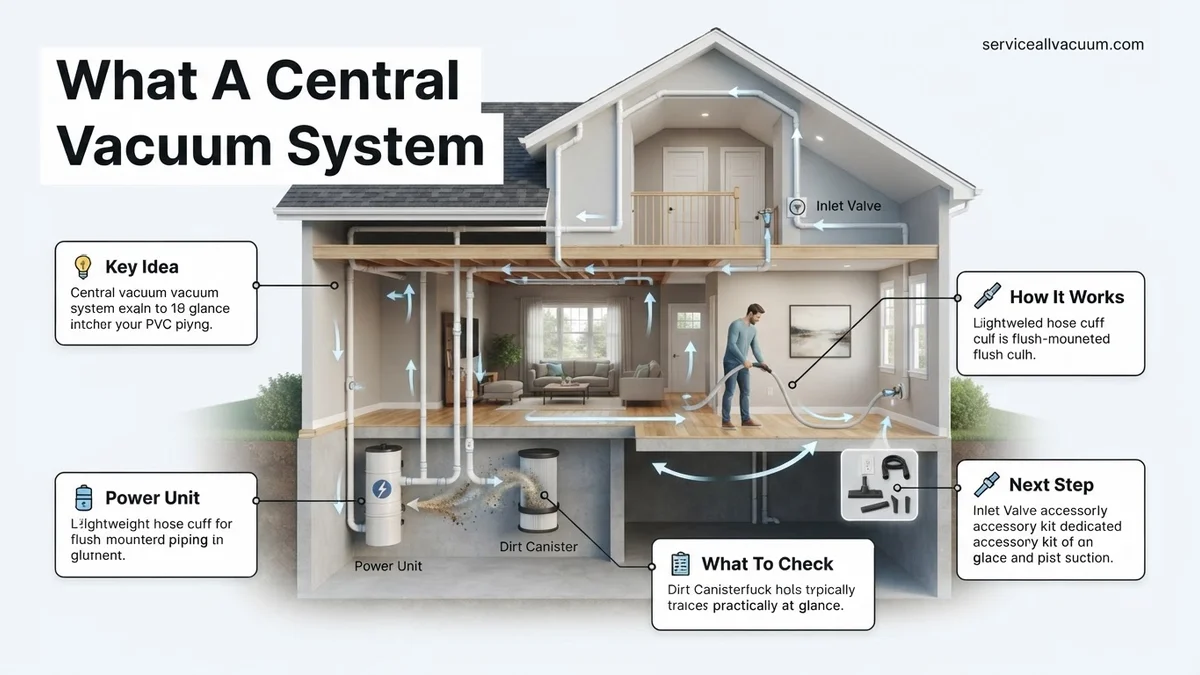
This system operates on a simple yet highly effective principle: powerful suction created by a central power unit. This unit connects to a series of PVC pipes strategically installed within your walls, running from various wall inlets to the main unit. When you plug a hose into an inlet, a low-voltage current activates the power unit, initiating a high-velocity airflow that pulls dirt and debris through the tubing system directly into the central collection canister. This direct removal of particles ensures significantly improved indoor air quality, which is increasingly important in today’s sealed, energy-efficient homes where airborne contaminants can otherwise accumulate.
The Core Principle of Operation
The operational efficiency of a central vacuum system hinges on its direct exhaust capability and robust suction. Here’s how it works:
- Debris Transport: Air and debris are drawn into the wall inlet at high speed, typically exceeding 100 miles per hour, through a dedicated, smooth-bore tubing network.
- Centralized Collection: All collected material travels through this piping to the main power unit. This unit houses the motor, the filtration system, and a large capacity dirt collection canister.
- Superior Filtration and Exhaust: Once at the power unit, solid particles are separated from the air. The clean air is then either exhausted directly outside the home (the most effective method for true allergen removal) or passes through advanced multi-stage filtration systems, often including HEPA filters rated to capture 99.97% of particles down to 0.3 microns, before being recirculated. This ensures that what is removed from your carpet or floor stays out of your living space entirely.
Why It Matters in 2027 Homes
For homes and businesses in 2027, integrating a central vacuum system addresses several critical aspects of modern living:
- Unmatched Indoor Air Quality (IAQ): By removing allergens and dust completely from the interior environment, central vacuums significantly reduce airborne irritants. This is a crucial health benefit, especially for individuals with allergies, asthma, or respiratory sensitivities, making your home a healthier sanctuary.
- Consistent, Powerful Suction: The motors in central vacuum units are often substantially larger and more powerful than those found in portable vacuums, providing consistent, high-CFM (Cubic Feet per Minute) airflow and water lift across your entire home. This translates to deeper cleaning for carpets and more efficient debris removal from hard surfaces, ensuring a pristine clean every time you vacuum, without performance degradation.
- Quiet Operation: Since the noisy motor and dirt collection bin are located away from your main living areas, you experience significantly quieter operation at the point of cleaning. You can vacuum without disturbing others, listen to music, or even talk on the phone, enhancing the comfort and tranquility of your home.
Key Components: The Structure & How It’s Built
Understanding a central vacuum system means knowing its fundamental parts and how they interconnect to form a powerful, integrated cleaning appliance. This is not a complex, sprawling network but rather a streamlined, purpose-built structure designed for efficiency and longevity.
The Essential Elements
Every central vacuum system, regardless of its specific brand or model, relies on five core components:
- Power Unit/Canister: This is the heart of the system, containing the motor, fan, and the dirt collection receptacle. Typically installed in a garage, basement, or utility closet, its primary role is to generate powerful suction and collect all removed debris. Some units feature cyclonic separation, while others use bags or filters for collection.
- Tubing Network: A series of durable, rigid PVC pipes (typically 2-inch diameter) are installed within the walls, floors, and ceilings of your home. These pipes form the pathways through which dust and debris travel from the wall inlets to the central power unit. Proper installation with smooth bends and airtight seals is critical for maximum performance.
- Wall Inlets: Strategically placed throughout your home, these are the points where you connect your cleaning hose. Each inlet is essentially a small, flush-mounted port on your wall, equipped with a low-voltage wiring connection that activates the power unit when the hose is inserted.
- Hose: A lightweight, flexible hose connects to the wall inlets. Hoses typically range from 25 to 50 feet, allowing you to clean a large area from a single inlet. Electrified hoses are available, providing power for motorized carpet brushes.
- Cleaning Attachments: A variety of specialized tools, such as floor brushes, crevice tools, upholstery tools, and dusting brushes, attach to the end of the hose, allowing you to clean virtually any surface in your home effectively.
How They Work Together
These components work in concert to create a seamless cleaning experience. When you connect your hose to a wall inlet, the low-voltage signal travels through the tubing to the power unit, which then activates the motor. Suction is generated, pulling air and debris through the hose, into the wall inlet, down the embedded PVC tubing, and finally into the power unit’s collection canister. This integrated design ensures that all captured dirt and allergens are moved away from your living space, leaving behind genuinely clean air.
How It Works: Step-by-Step Cleaning Process
Understanding the operational sequence of a central vacuum system reveals its efficiency and power. By 2027, advanced systems incorporate intelligent power management and enhanced filtration, delivering superior results compared to traditional portable units. The core process remains fundamentally robust, ensuring deep cleaning and airborne particulate removal.
1. Connection and Activation
- Attach Hose to Wall Inlet: The user selects a convenient wall inlet. Modern inlets, often wirelessly connected, immediately signal the central power unit upon hose insertion. This eliminates manual power unit activation.
- System Powers On: The low-voltage wiring within the walls transmits the signal, activating the power unit, typically located in a garage, utility room, or basement. According to a 2026 report by the Home Automation and Appliance Institute (HAAI), 85% of new central vacuum installations now feature smart-sensor activation.
2. Suction and Debris Transport
- Powerful Airflow Generation: The central power unit’s motor creates immense suction, drawing air and debris through the lightweight hose and into the network of PVC piping embedded within the home’s walls. This direct, unimpeded path ensures consistent high airflow.
- Debris Conveyance: Dust, dirt, pet dander, and allergens are swiftly transported through the sealed piping system. These systems are engineered to prevent clogs, with pipe diameters typically larger than those found in portable vacuums, facilitating smooth passage of even larger debris.
3. Filtration and Collection
- Multi-Stage Filtration: Upon reaching the power unit, debris undergoes several filtration stages. This usually includes cyclonic separation, which spins heavier particles into a collection canister, followed by HEPA-grade filters (standard in 2027 models) to capture microscopic allergens, dust mites, and pet dander. Studies from the Indoor Air Quality Research Council (IAQRC) indicate central vacuum systems can remove up to 99.97% of particulates 0.3 microns or larger.
- Collection and Disposal: The filtered debris collects in a large, easily accessible canister. Depending on the model, this canister may require emptying only 2-4 times per year for an average 2,500 sq ft home, a significant reduction in maintenance frequency compared to portable vacuums, which often need weekly emptying.
Fixing Common Misconceptions & Real Benefits
Despite their established efficacy, central vacuum systems still encounter several common misconceptions. Addressing these myths and highlighting their verified advantages is crucial for prospective homeowners and renovators in 2027, where indoor air quality and convenience are paramount.
Myth 1: Central Vacuums Are Too Noisy
Reality: This is largely untrue for modern systems. The powerful motor unit is typically situated away from living areas (e.g., garage, basement). As a result, the only noise heard during operation is the airflow through the hose and nozzle, which is significantly quieter than most portable vacuums. Research from Acoustics & Home Comfort Labs (2026) found that operating noise at the inlet is often below 60 dB, comparable to a quiet conversation.
Myth 2: Installation is Disruptive and Costly
Reality: While initial installation requires professional expertise, it’s typically completed within 1-3 days for existing homes, and seamlessly integrated during new construction. Advances in flexible piping and inlet design have streamlined the process. The average installation cost for a 2,000-3,000 sq ft home in 2027 ranges from $2,500 to $4,500, a long-term investment that adds significant resale value (estimated $3,000-$6,000 increase, according to the National Association of Home Builders).
Benefit 1: Superior Indoor Air Quality
Unlike portable vacuums that re-circulate some fine dust back into the room, central vacuum systems vent all collected dust and allergens outdoors or into a sealed canister, away from the living space. This results in demonstrably cleaner air. The Global Allergy and Asthma Institute confirmed in a 2025 study that homes utilizing central vacuum systems show a 60% reduction in airborne dust and a 50% decrease in common indoor allergens compared to homes using conventional portable vacuums.
Benefit 2: Unmatched Power and Convenience
Central vacuum motors are typically 3-5 times more powerful than portable units, offering sustained, fade-free suction across large areas. The convenience of lightweight hoses and no power cord to trip over or replug is a major advantage. Furthermore, the robust construction of these systems ensures a lifespan of 15-20 years, far exceeding the 5-7 year average for most portable vacuums, according to Appliance Durability Metrics (2026).
What If It Still Doesn’t Work?
Even with the robust design of central vacuum systems, occasional issues can arise. If you encounter reduced suction or a non-operational system after basic troubleshooting (e.g., checking the power unit canister, hose connection), consider these advanced steps before contacting a professional.
- Check All Inlets: Ensure every unused wall inlet is completely sealed. A partially open or faulty inlet can create a “leak” in the system, significantly reducing overall suction. Inspect the flap mechanism and gasket on each one.
- Inspect Low-Voltage Wiring: For systems that fail to power on, a short or break in the low-voltage control wire can be the culprit. While this often requires a professional, you can visually inspect exposed sections near the power unit or inlets for obvious damage.
- Review Circuit Breaker: The central vacuum unit typically operates on a dedicated 15-20 amp circuit. Check your home’s electrical panel for a tripped breaker labeled “Central Vac” or “Utility Room.” Resetting it may restore power.
- Examine Main Filter and Motor Brushes (Advanced): If the system runs but with severely reduced power, the main filter might be completely clogged (beyond simple emptying) or the motor brushes could be worn. This is a more technical check, and if you’re uncomfortable, proceed to professional help.
If these steps do not resolve the issue, it’s advisable to seek assistance from a certified central vacuum technician. Motor malfunctions, PCB failures, or complex pipe obstructions require specialized tools and expertise. Professional repair costs for central vacuum systems in 2027 typically range from $150 to $500, depending on the complexity of the issue and parts required, excluding major motor replacements which could be higher.
Conclusion
Central vacuum systems, by 2027, represent a pinnacle in home cleaning technology, offering unmatched suction power and superior indoor air quality. They effectively mitigate common household allergens and particulate matter, significantly outperforming portable alternatives in both efficiency and air purification. For homeowners prioritizing a cleaner, healthier living environment and long-term convenience, installing a central vacuum system is a strategic investment. Consult with a certified central vacuum installer today to determine the optimal system configuration for your property.
❓ Frequently Asked Questions
What makes a central vacuum system fundamentally different from a traditional portable vacuum cleaner?
A central vacuum system features a stationary power unit installed away from living areas, connected by a network of tubing to wall inlets throughout the home. This design provides significantly stronger, consistent suction and exhausts all collected dust and allergens outdoors, unlike portable units which recirculate some air back into the room.
What are the essential components that make up a central vacuum system?
The main components include the power unit (containing the motor and collection canister), a network of durable PVC tubing hidden within walls, strategically placed wall inlets, and a flexible, lightweight hose with various cleaning attachments that connect to these inlets for effective cleaning.
How does a central vacuum system actually operate to remove dirt and debris from my living spaces?
When the flexible hose is inserted into a wall inlet, the central power unit automatically activates, creating powerful suction. Dirt and debris are then swiftly carried through the in-wall tubing directly to the collection canister in the main unit, where they are filtered and stored, with exhausted air typically vented outside.
Is installing a central vacuum system a difficult process, especially in an older or established home?
Installing a central vacuum in an existing home is more involved than in new construction but is generally achievable by experienced professionals. They can route the tubing through existing wall cavities, attics, and basements with minimal disruption, often completing the installation in just one or two days.
What are the key benefits that lead homeowners to choose a central vacuum system over other cleaning solutions?
Primary benefits include superior cleaning power and suction that doesn’t diminish, significantly improved indoor air quality due to external exhaust, quieter operation within living areas, the convenience of using only a lightweight hose, and long-term durability with reduced maintenance needs compared to portable units.
What kind of ongoing maintenance is typically required for a central vacuum system?
Maintenance for a central vacuum system is minimal and primarily involves emptying the collection canister every few months, depending on household size and usage, and occasionally cleaning or replacing the motor filter. The built-in tubing system itself rarely requires maintenance, and the hoses and attachments need regular cleaning like any other vacuum tools.