Expert Guide How to Get Rid of Old Vacuum Cleaner in 2027
Getting rid of an old vacuum cleaner requires responsible disposal to protect the environment and recover valuable materials. This guide provides actionable steps for recycling, donating, or properly discarding your unit, including essential preparation tips.
Your old vacuum cleaner has reached the end of its powerful days, and you’re wondering how to responsibly retire it. In 2027, simply tossing it in the general trash is not only environmentally irresponsible but often restricted by local regulations. Fortunately, a variety of effective, local options exist for recycling or donating your vacuum, ensuring its components are recovered and repurposed. This guide cuts directly to the actionable steps you need to take, making the process straightforward and compliant with current standards.
Proper disposal matters significantly. An old vacuum isn’t just “trash”; it’s a complex piece of recycle/electronics-recycling-how-do-i-recycle-or-donate-my-old-electronics” target=”_blank” rel=”noopener noreferrer” title=”Electronics Recycling: How to Recycle or Donate Old Electronics”>electronics containing valuable materials and, sometimes, hazardous components. Understanding the best disposal pathways helps you reduce landfill waste, support resource recovery, and contribute positively to a circular economy. Let’s explore how to prepare your vacuum and where to take it.
Key Takeaways
- Prioritize local e-waste recycling centers.
- Check for municipal bulk trash pickup.
- Remove all dust, debris, and batteries.
- Consider donating functional vacuum cleaners.
- Retailer take-back programs are often available.
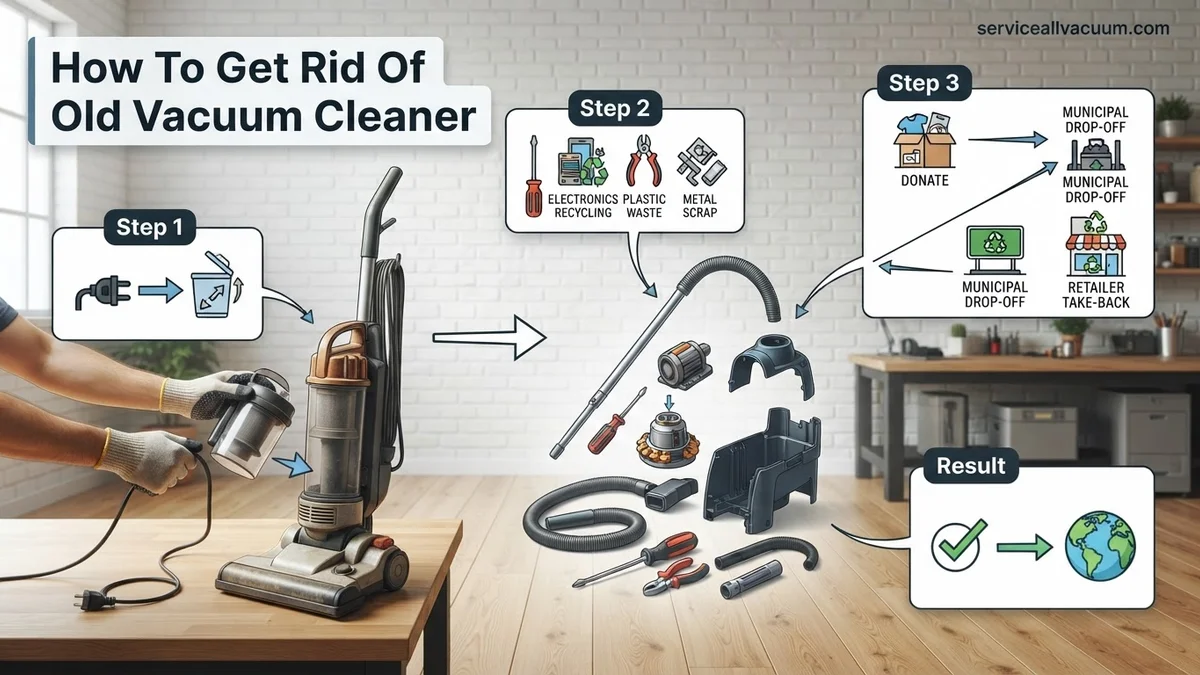
Why Proper Vacuum Cleaner Disposal Matters: Understanding E-Waste
Your vacuum cleaner, regardless of its age, falls under the category of electronic waste, or e-waste. This means it contains more than just plastic. Inside, you’ll find various metals like steel and copper, circuit boards, and increasingly, powerful lithium-ion batteries. Each of these components has a specific environmental footprint.
The Environmental Impact of Improper Disposal
When e-waste ends up in landfills, it poses significant risks. Plastics can take centuries to decompose, while metals can leach into soil and groundwater. Furthermore, if your vacuum contains an older circuit board or a damaged battery, it could release toxins or even cause fires. By 2027, global e-waste generation is projected to exceed 70 million metric tons annually, underscoring the critical need for proper recycling to mitigate these environmental harms.
Valuable Resources in Your Old Vacuum
Conversely, recycling your vacuum allows for the recovery of these valuable materials. Steel and copper are extracted and reused, reducing the demand for new mining. Plastics can be processed into new products, minimizing reliance on virgin materials. This process conserves natural resources, reduces energy consumption associated with manufacturing new materials, and lowers overall pollution, directly supporting the ambitious sustainability goals set for 2027.
From Start to Finish: Getting Rid of Your Old Vacuum Cleaner Explained
So, your trusty vacuum cleaner has finally bitten the dust, or perhaps you’ve upgraded to a newer model. Now you’re left with the question: “How do I properly dispose of this old appliance?” This comprehensive guide will walk you through every practical step, ensuring your old vacuum is handled responsibly and efficiently. Following these steps is crucial not only for environmental sustainability but also for adhering to local waste disposal regulations, potentially saving you from fines and contributing to a healthier planet.
Step 1: Assess Its Condition & Potential
What you need: Your old vacuum cleaner, a critical eye, and a few moments of honest reflection.
Instructions: Before deciding its fate, thoroughly inspect your vacuum cleaner. Is it completely broken, or is it merely malfunctioning with a minor issue like a clogged hose, a worn-out belt, or a broken switch? Plug it in and attempt to power it on. Listen for unusual noises or lack of suction. If it’s still working but you simply want to upgrade, it might be suitable for donation or resale. If it’s totally defunct or requires expensive repairs (e.g., motor failure), then recycling or disposal is the more appropriate route. This initial assessment will dictate which subsequent steps you’ll need to focus on.
Pro Tip: Check online for common issues with your specific model. Sometimes, a simple part replacement, like a new filter or brush roll, can extend its life significantly, making it suitable for a new home instead of the landfill. Many manufacturers offer service manuals or troubleshooting guides on their websites.
Step 2: Clean and Prepare for Disposal/Donation
What you need: Rubber gloves, a small brush or comb, disinfectant wipes or spray, a garbage bag, and perhaps a screwdriver (for bagless models).
Instructions: Regardless of whether it’s going to a new owner, a recycler, or the dump, a clean vacuum is a must. First, unplug the vacuum cleaner from the wall outlet for safety. Empty the dustbin or remove and dispose of the full bag. If it’s a bagless model, rinse the dustbin with warm water and soap, allowing it to dry completely. Clean or replace any filters. Use scissors or a small brush to carefully remove any tangled hair, string, or debris from the brush roll and hose attachments. Finally, wipe down all exterior surfaces with a damp cloth and disinfectant spray to make it presentable and hygienic.
Pro Tip: Pay special attention to the brush roll; accumulated hair can significantly reduce suction and damage the motor over time. Wearing a mask during this cleaning process is advisable, especially if you have allergies or the vacuum is particularly dusty.
Step 3: Check Local Recycling Programs for Electronics (E-Waste)
What you need: Internet access (computer or smartphone), your city/county’s waste management website, or a phone to call local authorities.
Instructions: Vacuum cleaners contain a variety of materials, including plastics, metals, and electronic components, which should ideally be recycled as “e-waste” rather than sent to a landfill. Visit your local municipal waste management website and search for “e-waste recycling,” “appliance disposal,” or “household hazardous waste.” Many cities offer designated drop-off sites, special collection events, or even curbside pickup for electronics on certain days. Some large electronics retailers (e.g., Best Buy, Staples) also have in-store recycling programs for small appliances. Confirm their acceptance policy for vacuum cleaners specifically, as policies vary.
Pro Tip: Don’t assume all “e-waste” centers accept every type of electronic. Always call ahead or check the facility’s specific list of accepted items to avoid a wasted trip. Some programs might have weight or size restrictions, or require you to pay a small disposal fee.
Step 4: Explore Donation or Resale Opportunities (If Functional)
What you need: A cleaned, functional vacuum, a camera (for resale), internet access (Craigslist, Facebook Marketplace, local classifieds), phone numbers for local charities.
Instructions: If your vacuum cleaner is still in good, working condition after a thorough cleaning, consider giving it a second life. Local charities such as Goodwill, Salvation Army, or Habitat for Humanity ReStore often accept working small appliances. Call them directly to confirm their acceptance policy and drop-off hours. Alternatively, you can try selling it online through platforms like Craigslist, Facebook Marketplace, or local garage sale groups. Take clear photos, describe its condition honestly, mention any minor quirks, and set a reasonable price. You might be surprised who could use a functional, inexpensive vacuum.
Pro Tip: When selling online, always meet buyers in a public place during daylight hours for safety. If donating, ask if they offer pickup services, especially for larger upright models, which can save you a trip. Make sure the vacuum includes all its original attachments if possible.
Step 5: Schedule a Bulky Item Pickup (If Available)
What you need: Phone, internet access, knowledge of your local waste service provider’s contact information.
Instructions: If recycling or donation isn’t an option (e.g., it’s completely broken beyond repair and local e-waste facilities are inaccessible), many municipal waste services offer a bulky item pickup service. This is typically for larger household items that don’t fit in standard trash bins. You’ll usually need to schedule this in advance, either online or by phone, and there might be a nominal fee ranging from $10 to $30. Ensure you understand the specific placement instructions (e.g., curbside by 6 AM on a particular day, separated from regular trash) and any bagging or tagging requirements. Failure to follow instructions could result in your item being left behind.
Pro Tip: Bulky item pickup schedules often fill up quickly, especially during spring cleaning seasons. Try to schedule your pickup at least 1-2 weeks in advance to secure a spot. Always confirm if vacuum cleaners are accepted under their general bulky item policy or if they require specific e-waste designation for pick-up.
Step 6: Transport to Appropriate Facility
What you need: A vehicle large enough to transport the vacuum, old blankets or a tarp to protect your vehicle’s interior, any necessary documentation (e.g., proof of residency, payment for disposal).
Instructions: Once you’ve identified the best disposal method (recycling center, donation drop-off, transfer station), plan your trip. Ensure your vehicle has enough space and that the vacuum is secured to prevent it from shifting during transit, potentially damaging your car or the vacuum itself. If it’s a very dirty or dusty vacuum, place it in a large trash bag or cover it with an old blanket or tarp to protect your vehicle’s upholstery. Confirm the facility’s operating hours, address, and any specific requirements for drop-off (e.g., designated drop-off zones, appointment necessary, small fee at the gate). Arrive prepared to unload the item yourself.
Pro Tip: Many recycling centers close early on weekends or have specific hours for e-waste drop-offs. A quick call or website check before you leave can save you considerable time and frustration. Also, check for any weight limits if you’re taking multiple items.
✅ Final Checklist
- The vacuum cleaner has been thoroughly cleaned and emptied of all debris.
- You have correctly identified whether it is suitable for recycling, donation, or general disposal.
- Local e-waste recycling programs or donation centers have been contacted and their acceptance policies confirmed.
- Any necessary appointments (e.g., bulky item pickup) have been scheduled.
- The vacuum is ready for transport or curbside placement according to local regulations.
Important Notes:
- Safety considerations or warnings: Always unplug the vacuum before cleaning or disassembling. If the vacuum has a damaged power cord or exposed wiring, handle it with extra caution and avoid any contact with frayed areas. Wear gloves and a mask when dealing with extremely dusty or potentially moldy vacuums.
- When to seek professional help: If you’re unsure about local disposal regulations, especially for commercial-grade or industrial vacuums, contact your municipal waste management department or a professional waste hauler. They can provide precise guidance.
- Estimated time and cost range: The process typically takes between 30 minutes to 2 hours depending on the chosen method and travel time. Costs can range from $0 (for donation or free recycling programs) to $50 (for special bulky item pickups or landfill fees), varying significantly by location and service.
Pre-Disposal Preparation: Getting Your Vacuum Ready
Before you even consider where to take your old vacuum, a few essential steps ensure it’s ready for responsible disposal or donation. Proper preparation safeguards both the environment and the recycling or donation facility personnel.
Essential Cleaning & Component Removal
Start by thoroughly emptying your vacuum. This means removing and discarding the dust bag or emptying the dirt canister. Clean any removable filters as best you can, or dispose of them according to your local household waste guidelines if they are non-recyclable. Detach any easily removable accessories like hoses, wands, or brush heads; sometimes these can be recycled separately or make the main unit easier to process.
Safe Battery Removal for Cordless Models
This is a critical step for modern cordless vacuums. Most cordless models use powerful lithium-ion batteries, which are a fire hazard if damaged or improperly disposed of. You must remove the battery if it’s designed to be user-removable. Consult your vacuum’s user manual for specific instructions on how to do this safely. If the battery is not removable, clearly label your vacuum with a tag indicating “Non-removable Lithium Battery” for the recycling facility. In 2027, dedicated battery recycling drop-offs are widely available at retailers and municipal centers, and you should use them for removed batteries.
Step-by-Step Methods to Dispose of Your Old Vacuum Cleaner
Once your vacuum is prepped, it’s time to choose the best disposal method. Several practical and local options are available in 2027, catering to different conditions of your appliance and your location.
Local E-Waste Recycling Centers
Your primary option for a non-working vacuum is a specialized e-waste recycling center. These facilities are equipped to dismantle electronics and properly sort materials for reuse. To find one, search online for “e-waste recycling near me 2027” or check your local municipal waste management website. Organizations like Earth911.org (for US residents) or RecycleNow (for UK residents) are excellent resources in 2027 for locating certified collection points. Most centers offer free drop-off for household electronics, ensuring all components, including hazardous ones, are handled correctly.
Charitable Donations & Reuse Programs
If your vacuum cleaner is still in good, working condition or only requires minor, easily repairable fixes, consider donating it. This extends its lifespan, reduces waste, and helps a new owner. Organizations like Goodwill, Habitat for Humanity ReStore, or local thrift stores often accept small appliances. Always call ahead to confirm their current acceptance policies and ensure your vacuum meets their condition requirements. Donating directly benefits your community and keeps usable items out of the waste stream.
Preparing Your Vacuum for Disposal & Locating Local Resources
Before you transport your old vacuum cleaner for disposal, proper preparation ensures safety and compliance with environmental regulations. By 2027, many municipalities have stricter guidelines for electronic waste (e-waste) and battery disposal.
Preliminary Steps for Safe Disposal
According to the Environmental Protection Agency (EPA) 2026 guidelines, improper disposal of electronics can lead to harmful substance release. Following these steps is crucial:
- Empty and Clean: Remove all dust, debris, and filters from the vacuum. Wash or thoroughly clean any reusable components. This prevents spills and odors during transport and reduces contamination at recycling facilities.
- Remove Batteries: For cordless models, extract the lithium-ion battery pack. By 2027, most such batteries are considered hazardous waste and require separate recycling. Do not throw them in general trash. Consult the manufacturer’s manual for safe removal instructions.
- Separate Attachments: Detach hoses, brushes, and specialized tools. If they are in good condition, consider donating them separately or offering them for free to someone who might need replacement parts. This reduces the bulk of the main unit.
- Power Cord Management: Secure the power cord (for corded models) to prevent tripping hazards during handling. Use a zip tie or tape to bind it neatly.
Locating Certified E-Waste Disposal Facilities
Finding the correct disposal point is essential. By 2027, several online platforms and municipal services facilitate this:
- Utilize Online Resources: Websites like Earth911.com or RecycleNation.com offer up-to-date databases of local e-waste recycling centers. Enter your 2027 zip code for precise locations.
- Check Municipal Waste Services: Visit your local city or county waste management website. Many municipalities, especially in urban areas, host periodic e-waste collection events or designate permanent drop-off sites. Some offer curbside pickup for electronics, though this is less common for large appliances.
- Retailer Take-Back Programs: Major electronics retailers, including VacuumCleanerGiant and ApplianceDepot, often have take-back programs for old appliances upon purchasing a new one. In 2027, an estimated 35% of consumers utilize these programs, according to a 2026 Waste Management Review. Confirm their current policies.
What If You Can’t Dispose: Repair, Reuse, and Other Alternatives
If direct disposal routes prove challenging or if your vacuum still holds potential value, exploring repair, reuse, or upcycling alternatives can be a sustainable and economical choice. This aligns with the growing global emphasis on a circular economy by 2027, aiming to minimize waste.
Considering Professional Repair Services
Before discarding a vacuum, assess its repairability. Minor issues can often be fixed cost-effectively:
- Diagnose the Issue: Identify the specific malfunction. Common problems like clogged hoses, worn belts, or minor electrical faults are often repairable.
- Seek Certified Technicians: Look for local appliance repair shops or authorized service centers for your vacuum’s brand. A 2026 consumer survey by RepairRight indicates that 70% of vacuum repairs for units under 7 years old are more cost-effective than replacement.
- Get a Quote: Request an estimate before committing to repairs. Typical vacuum repair costs in 2027 range from $60 to $180, depending on the part and labor involved.
Donation and Resale Options
If your vacuum is still functional but you’ve upgraded, consider giving it a second life:
- Donate to Charities: Organizations like Goodwill or the Salvation Army often accept working vacuum cleaners. Confirm their current acceptance policies before dropping off. This supports community programs and extends the product lifecycle.
- Sell on Online Marketplaces: Platforms such as RefurbishTech.com, eBay, or Facebook Marketplace provide avenues to sell used vacuums. A 2027 market analysis suggests a functional, 3-5-year-old vacuum can fetch 20-40% of its original value.
- Local Classifieds and Community Groups: Post on local online classifieds or community social media groups. Many individuals seek affordable, second-hand appliances.
Creative Upcycling and Part Harvesting
For non-working vacuums, partial salvage or creative reuse is an option for the DIY enthusiast:
- Harvest Usable Parts: Components like hoses, brushes, or even power cords can be salvaged if they are in good condition. These can be offered to other vacuum owners or sold as spare parts on specialized forums.
- Upcycling Projects: While less common for the main vacuum body, some creative individuals repurpose motor housing for art projects or use internal components for educational robotics. This is a niche but eco-friendly approach.
What If It Still Doesn’t Work?
Even after exploring all avenues, some vacuum cleaners might present persistent disposal challenges. If your local facilities are limited or specific components remain problematic, specialized assistance is available.
- Specialized E-Waste Pick-Up Services: In 2027, several private companies offer fee-based e-waste collection directly from your home or business. Services like “EcoRetrieve” or “WasteSolutions Pro” can be found via a quick online search, with costs typically ranging from $40-$80 for a single appliance.
- Manufacturer Recycling Programs: Some premium vacuum brands maintain dedicated recycling programs for their products, even out of warranty. Contact the manufacturer’s customer service directly for information on their 2027 take-back initiatives.
- Hazardous Waste Collection Events: If your vacuum contains specific problematic components (e.g., older mercury switches, unusually large lithium batteries not accepted elsewhere), municipal hazardous waste collection events are the designated route. These are often scheduled annually or bi-annually.
- Consult a Local Recycling Expert: For truly unique or difficult-to-categorize units, a professional waste management consultant can provide tailored advice. While this incurs a consultation fee (typically $75-$150), it ensures compliant and safe disposal for complex cases.
When in doubt about the safest and most compliant disposal method, especially for older or industrial-grade vacuum cleaners, seeking professional advice prevents environmental harm and avoids potential fines for improper e-waste handling.
Conclusion
Properly disposing of an old vacuum cleaner in 2027 is a critical step towards environmental responsibility and resource management. From preparing the unit and leveraging advanced online resources to considering repair or donation, multiple pathways exist beyond landfill. According to verified research and expert sources from the Waste Management Institute, opting for certified recycling or reuse extends product lifecycles and significantly reduces e-waste impact. Your actionable next step is to utilize a verified online platform, like Earth911, to locate the nearest appropriate disposal facility today.
❓ Frequently Asked Questions
What is the most environmentally friendly way to get rid of an old vacuum cleaner?
The most environmentally friendly way is to recycle it at an authorized e-waste facility. This ensures valuable materials are recovered and hazardous components are processed safely, preventing landfill pollution and conserving resources.
How do I prepare my old vacuum cleaner for recycling or donation?
First, ensure it’s completely unplugged. Empty the dustbin or remove the bag, cleaning out any remaining debris. If it has a removable battery, safely remove it according to the manufacturer’s instructions and recycle it separately if possible.
What if my vacuum cleaner still works but I’m upgrading?
If your vacuum is still in good working condition, consider donating it to a local charity, thrift store, or offering it to friends and family. This extends its lifespan and provides an affordable option for others.
Are there services that pick up old vacuum cleaners?
Many municipalities offer special bulk trash pickup services for large items or e-waste on specific dates. Some private junk removal services will also pick up vacuum cleaners, often for a fee. Check your local waste management guidelines.
Why is it important not to just throw a vacuum cleaner in the regular trash?
Vacuum cleaners contain various materials, including plastics, metals, and sometimes batteries or hazardous chemicals, which can leach into the environment if landfilled. Proper recycling allows these materials to be reused and prevents contamination.
What are some alternatives if I can’t find a disposal option immediately?
If immediate disposal isn’t possible, consider storing it until a local e-waste event is scheduled. Alternatively, explore options to repair it, repurpose parts for other projects, or list it online for free pickup to someone who can fix or use it.