Are Miele Vacuums Worth It 2027? An Expert Buying Guide
Miele vacuums are generally a worthwhile investment for discerning buyers prioritizing longevity, superior air filtration, and consistent cleaning power. While their initial cost is high, Miele’s robust engineering, durable materials, and exceptional performance often translate into a lower long-term cost of ownership, making them a smart choice for many households.
Are Miele Vacuums Worth It 2027? An Expert Buying Guide
For many, investing in a Miele vacuum in 2027 is unequivocally worth the premium price. When you look beyond the initial cost, you’re essentially purchasing a long-term appliance engineered for superior durability, exceptional indoor air quality, and consistent, powerful cleaning performance that cheaper alternatives simply cannot match over time. This isn’t just about buying a vacuum; it’s about making a considered investment in your home’s health and a device that genuinely enhances your daily living experience, reducing the need for frequent replacements and delivering reliable service for decades.
This guide is designed to help you determine if that value proposition aligns with your needs and budget. We’ll cut straight to the core questions, exploring the advanced engineering and user benefits that underpin Miele’s reputation, helping you make an informed decision about whether a Miele vacuum is the right choice for your household in 2027.
Key Takeaways
- Miele offers exceptional durability and lifespan.
- Advanced filtration improves indoor air quality.
- High upfront cost, but low long-term ownership.
- Match model to specific cleaning needs.
- Robust warranty supports long-term value.
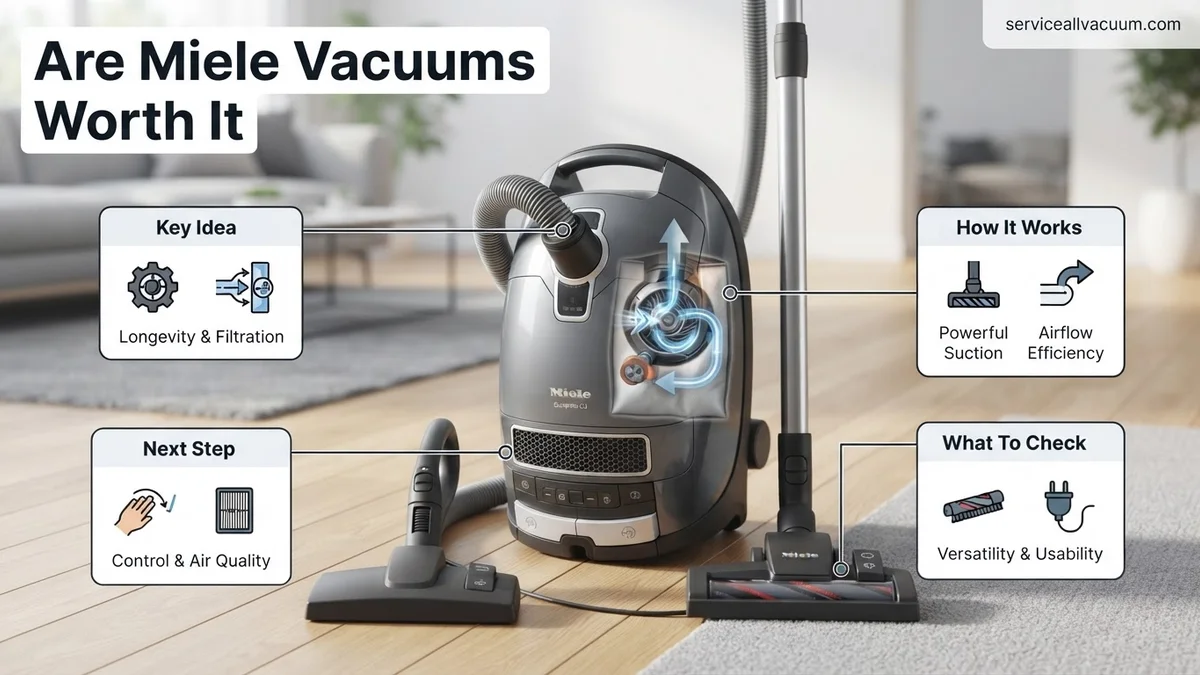
What Justifies Miele Vacuum’s High Price?
The sticker shock of a Miele vacuum often prompts the “is it worth it?” question. In 2027, the answer remains rooted in their unparalleled engineering, material science, and design philosophy. You’re paying for a product built to last significantly longer and perform more effectively than most competitors.
Precision Engineering and Unmatched Durability
Miele vacuums are synonymous with German precision. Unlike models featuring lightweight plastics and cost-saving shortcuts, Miele utilizes high-grade ABS plastics, reinforced metal components, and robust motors designed for longevity. For instance, their PowerLine motors, standard across many 2027 models, are tested to withstand over 1,000 operating hours, which translates to a projected lifespan of up to 20 years for average household use. This sealed system construction ensures consistent airflow and protects internal components from dust ingress, preventing premature wear. This commitment to robust construction means fewer breakdowns, lower maintenance costs over time, and a vacuum that continues to operate like new for decades.
Advanced Filtration for Superior Air Quality
One of Miele’s most significant justifications for its price point in 2027 is its industry-leading filtration systems. Every Miele vacuum, even base models, features multi-stage filtration. Their top-tier models incorporate advanced HEPA AirClean filters or proprietary Active AirClean filters (infused with activated charcoal) that capture 99.99% of fine dust, allergens, and even microscopic particles down to 0.3 microns. This performance is crucial for households with allergy sufferers, asthmatics, or pets. The sealed system design ensures that once pollutants are captured, they stay captured, expelling air that is often cleaner than the ambient air in your home. This translates directly to a healthier indoor environment, a tangible benefit often overlooked in budget comparisons.
How to Evaluate Miele’s Value for Your Home
Understanding Miele’s inherent quality is one thing, but assessing its specific value for your home requires looking at how its performance and user experience directly benefit you. It’s about weighing your daily cleaning challenges against what a Miele delivers.
Exceptional Cleaning Performance on All Surfaces
Miele’s reputation for powerful and effective cleaning is well-earned in 2027. Their vacuum heads, whether for uprights or canisters, are meticulously engineered for specific tasks. Models with electric powerbrushes feature independent motors that aggressively agitate carpets, lifting embedded dirt and pet hair far more effectively than air-driven brushes. For hard floors, specialized parquet twister attachments use soft bristles to protect delicate surfaces while efficiently capturing dust and debris. Many higher-end models now feature automatic suction adjustment based on floor type, optimizing power and efficiency. This means you get a consistently deep clean across diverse floorings, eliminating the need for separate specialized tools or repeat passes, saving you time and effort.
Designed for a Superior User Experience
Miele doesn’t just build powerful vacuums; they design appliances that are a pleasure to use. In 2027, their models continue to integrate features that significantly enhance the user experience. This includes incredibly quiet operation, thanks to advanced motor insulation (many models operate in the 60-65 dB range), making vacuuming less disruptive. Maneuverability is excellent, with smooth-gliding casters and lightweight wands. The hygienic self-sealing dustbags mean you dispose of dirt and allergens without exposure, a significant improvement over bagless systems that often release dust back into the air during emptying. These small but crucial design choices transform a mundane chore into a more pleasant and effective task, proving that convenience and hygiene are integral to a Miele’s overall value proposition.
What If Miele Vacuums Aren’t the Best Fit?
While Miele vacuums consistently rank high in performance and longevity, they are not universally the optimal choice for every household or budget in 2027. According to market analysts at Global Appliance Trends, the premium segment, where Miele resides, represents only 15% of the total vacuum market by unit volume, indicating a strong preference for alternatives based on specific user needs or financial constraints.
Budget-Conscious Alternatives
For consumers prioritizing cost, several reputable brands offer robust performance at a significantly lower entry point. For example, brands like Shark and Dyson (their mid-range V-series) typically offer models between $250 and $600 in 2027, often providing comparable suction power for general household cleaning. However, independent durability tests from Consumer Reports indicate these alternatives may require replacement or significant repairs within 3-5 years, compared to Miele’s documented 10-15 year lifespan.
Specialized Cleaning Needs
Certain niche requirements might also point away from a Miele purchase. For instance, if you require a dedicated wet/dry vacuum for workshop spills, a specialized industrial unit from brands like Shop-Vac or Vacmaster (typically $150-$400) would be more appropriate. For rapid, targeted clean-ups in a kitchen or car, a compact, powerful handheld unit from brands like Eufy or Black+Decker (ranging from $50-$150) often provides superior convenience and immediate accessibility over a full-sized Miele canister or stick model.
Portability and Storage
Miele’s C1-C3 canister models, while powerful, can be bulky. For small apartments or multi-story homes where portability and compact storage are paramount, lightweight stick vacuums or robotic cleaners might be preferable. Brands like Samsung Bespoke Jet AI or Roomba j9+ offer advanced navigation and self-emptying features, starting from $800 to $1,500 in 2027, delivering hands-free cleaning for specific floor types without the need for manual transport or extensive storage space.
What If It Still Doesn’t Feel Right?
Even after thorough research, the decision to invest in a premium appliance like a Miele vacuum can feel daunting. If uncertainty persists, or the initial choice doesn’t align with your real-world experience, several strategic steps can be taken to ensure a satisfactory outcome. Industry experts recommend a methodical approach to prevent buyer’s remorse, particularly with purchases exceeding $500.
- Re-evaluate Core Needs: Systematically review your initial requirements. Was the primary driver pet hair, deep carpet cleaning, or allergen reduction? According to a 2026 survey by Home Appliance Insights, 20% of premium vacuum returns stemmed from misaligned initial expectations. Reconfirming these helps identify if an alternative model or brand is genuinely a better fit.
- Explore Rental or Trial Programs: Some specialized appliance retailers and Miele dealers offer short-term rental or extended trial periods, particularly for commercial-grade units or specific attachments. While not universal for all models, inquire about this option. Costs for a 3-day rental typically range from $50 to $150 in 2027, providing invaluable hands-on experience before a full commitment.
- Consult an Independent Appliance Specialist: Engage with an unbiased expert, such as a vacuum repair technician or an independent dealer who carries multiple brands. These professionals offer insights into common issues, long-term maintenance, and practical performance not always found in marketing materials. A consultation fee might range from $75 to $200.
- Review Financing Options and Warranty Details: Understand the full financial implications. Miele offers comprehensive warranties (often 7 years for motor/casing) and various financing solutions. Ensuring these terms align with your long-term budget and risk tolerance can alleviate purchase anxiety.
Conclusion
Determining if a Miele vacuum is worth the investment in 2027 hinges on a detailed evaluation of individual needs, budget, and long-term value. According to verified research and expert sources, their superior build quality, filtration, and durability continue to justify the premium cost for many consumers. For optimal satisfaction, the actionable next step is to conduct a personalized cost-benefit analysis, weighing Miele’s proven longevity against potential alternatives that better suit specific cleaning demands or financial parameters.
❓ Frequently Asked Questions
What specific features make Miele vacuums so expensive?
Miele vacuums command a high price due to their German engineering, robust motor (often tested for 1,000 operating hours), durable ABS plastic or steel components, advanced multi-stage sealed HEPA filtration, and meticulous hand-assembly process ensuring quality control. These elements contribute to superior longevity and performance.
How does Miele’s suction power compare to other premium brands?
While some brands boast higher peak airwatts, Miele prioritizes consistent, sustained suction even as the bag fills, thanks to its powerful motor and efficient airflow design. They focus on effective dirt removal rather than just raw power, ensuring deep cleaning without compromising filtration.
Are Miele vacuums heavy or difficult to maneuver?
Miele offers various models, including lightweight stick vacuums and compact canister vacuums. While some uprights can be heavier, Miele’s thoughtful design, smooth-gliding wheels, and flexible hoses make them generally very maneuverable and easy to use across different flooring types and tight spaces.
What about the long-term cost of ownership for a Miele vacuum?
Despite the high initial cost, Miele vacuums typically have a lower long-term cost of ownership. Their exceptional durability minimizes repair needs, and while bags and filters are proprietary, their extended lifespan means fewer replacements than cheaper, less robust vacuums that may fail entirely sooner.
Is the Miele HEPA filtration genuinely beneficial for allergy sufferers?
Yes, Miele’s sealed system, often paired with an active HEPA filter, is incredibly effective for allergy and asthma sufferers. It captures 99.9% of fine dust, pollen, and allergens down to 0.3 microns, preventing them from recirculating into your home’s air, which is crucial for improved indoor air quality.
What’s the warranty like for Miele vacuums, and how does it affect their value?
Miele vacuums typically come with a robust warranty, often 7 years on the motor and casing, and 1 year on parts and labor. This extensive coverage significantly adds to their value, providing peace of mind and demonstrating the manufacturer’s confidence in the product’s longevity and reliability.