How Long Does Vacuum Sealed Frozen Meat Last? Expert 2027
The safe storage duration for vacuum-sealed frozen meat varies significantly by type, typically ranging from 1-3 years for most cuts. Vacuum sealing significantly prevents freezer burn and oxidation, extending quality and safety far beyond conventionally frozen meats. Proper preparation and consistent freezer temperatures are crucial for maximizing these extended timelines.
You’re looking to maximize your freezer’s potential and ensure your meat stays fresh for as long as possible. Good news: when properly vacuum-sealed and continuously frozen, raw meat can last significantly longer than traditionally stored options, often for years rather than just months. By leveraging vacuum sealing technology, you can protect your food’s quality and taste for extended periods, well into 2027 and beyond.
This extended shelf life isn’t just about preventing spoilage; it’s about preserving peak flavor, texture, and nutritional value. Understanding the precise durations for different meat types allows you to plan your purchases, reduce food waste, and always have high-quality ingredients on hand. Let’s delve into the expert-backed timelines for your vacuum-sealed frozen meats.
Key Takeaways
- Beef/poultry can last 2-3 years vacuum-sealed frozen.
- Ground meats and fish typically last 1 year.
- Vacuum sealing critically prevents freezer burn.
- Maintain consistent 0°F (-18°C) freezer temperature.
- Always check for spoilage signs, regardless of date.
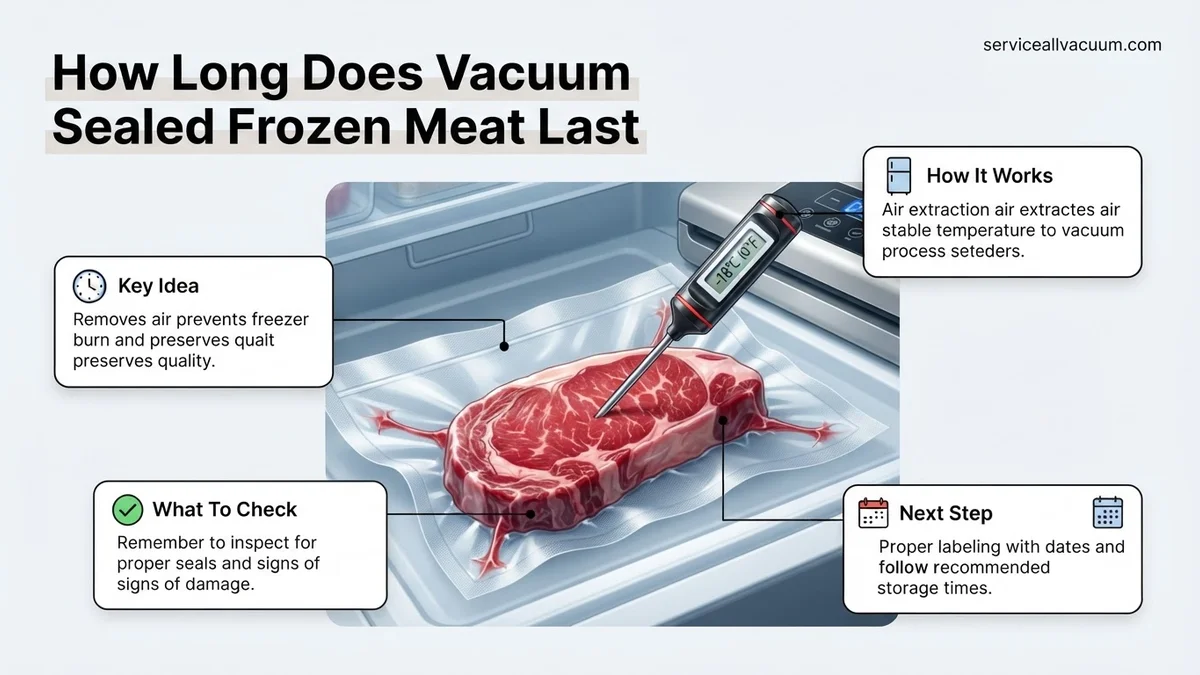
What Limits How Long Vacuum Sealed Frozen Meat Lasts?
The Vacuum Seal Advantage
The primary benefit of vacuum sealing is the removal of oxygen. Oxygen is the enemy of frozen food quality, causing freezer burn, discoloration, and promoting the growth of aerobic bacteria and molds even at freezing temperatures. By eliminating air from the packaging, you create an anaerobic environment that drastically slows down degradation. This process locks in moisture, preventing the common “freezer burn” that dries out and discolors meat, ensuring your cuts maintain their original flavor, texture, and juiciness for extended periods.
Key Factors Affecting Shelf Life
While vacuum sealing is powerful, several critical factors dictate the ultimate storage duration. First, the initial freshness of the meat is paramount; sealing already compromised meat won’t reverse its decline. Second, a consistent freezer temperature of 0°F (-18°C) or colder is essential. Temperature fluctuations can compromise food quality, even when sealed. Finally, the integrity of your vacuum seal is vital – any pinholes or loose seals will reintroduce oxygen, negating the benefits and reducing shelf life to that of non-sealed meat. Always double-check your seals.
Proven Guide: Extend Vacuum Sealed Frozen Meat Life Safely by 2027
Maximum Storage Durations
For optimal quality and safety, adhering to these expert-recommended maximum storage durations for raw, vacuum-sealed, and continuously frozen meats is crucial. These guidelines are set with 2027 in mind, reflecting best practices for modern food preservation technology, ensuring you get the most out of your cuts.
- Beef (Steaks, Roasts, Chops): Up to 2-3 years. The dense structure and lower fat content of many beef cuts make them excellent candidates for long-term freezing when vacuum-sealed, maintaining peak quality for years.
- Ground Beef: Up to 1-2 years. While ground meats have more surface area and can be more prone to oxidation, vacuum sealing significantly extends their usable life compared to unsealed storage.
- Pork (Chops, Roasts, Tenderloins): Up to 1.5-2 years. Similar to beef, proper sealing helps pork retain its succulence and flavor for substantial periods.
- Ground Pork/Sausage: Up to 1 year. The higher fat content in many ground pork or sausage blends means it’s best consumed within a year to prevent subtle flavor degradation, even when vacuum-sealed.
- Chicken & Turkey (Whole, Parts, Boneless/Skinless): Up to 2-3 years. Poultry responds exceptionally well to vacuum sealing and freezing, preserving its delicate texture and preventing freezer burn effectively.
- Ground Poultry: Up to 1 year. Like ground pork, ground chicken or turkey, often leaner, still benefits immensely from vacuum sealing but is best enjoyed within a year for optimal taste.
- Fish (Lean, e.g., Cod, Tilapia, Halibut): Up to 1-2 years. Lean fish generally freezes very well when oxygen is removed, preventing the “fishy” taste that develops from oxidation.
- Fish (Fatty, e.g., Salmon, Tuna, Mackerel): Up to 6-12 months. Despite vacuum sealing, the higher oil content in fatty fish can still slowly oxidize over time, potentially leading to a slight taste change. Consuming these within a year is recommended for the best culinary experience.
- Wild Game (Venison, Elk, Bison): Up to 2-3 years. Naturally lean and often processed carefully, wild game benefits immensely from vacuum sealing, extending its life significantly while preserving its robust flavor.
- Lamb (Chops, Roasts, Ground): Up to 1.5-2 years. Lamb, especially leaner cuts, maintains excellent quality under vacuum-sealed frozen conditions.
These timelines assume the meat was initially fresh, handled hygienically, and stored under ideal, consistent freezer conditions of 0°F (-18°C) or colder. While meat may remain technically safe beyond these periods, its optimal quality regarding taste, texture, and moisture content will likely decline past these recommended maximums.
Best Practices for Longevity
To truly achieve these extended durations and ensure your vacuum-sealed frozen meat maintains its peak quality, careful preparation before sealing is paramount. Always start with the absolute freshest possible meat you can acquire. Before sealing, trim off any excessive fat or sharp bones that could potentially puncture the vacuum seal bag and compromise its integrity. It’s also critical to pat the meat thoroughly dry with paper towels; excess surface moisture can hinder the sealing process, lead to ice crystal formation within the package, and even affect the seal itself. When placing meat into the bags, avoid overfilling them; leave ample space (typically 2-3 inches) between the food and the seal line to allow the machine to create a strong, airtight seam without food particles interfering. Finally, for an organized and efficient freezer system, label each package clearly and indelibly with the contents (e.g., “Beef Steaks”) and the precise date it was sealed. This simple step prevents guesswork, helps you rotate your stock effectively, and ensures you consume older items first, minimizing waste and maximizing freshness.
What If Your Vacuum Sealed Frozen Meat Appears Off?
Even with optimal vacuum sealing and freezing techniques, it is crucial to remain vigilant for signs of spoilage. While vacuum sealing significantly extends shelf life, it does not eliminate all risks, especially if the seal is compromised or if initial handling was inadequate. Recognizing these indicators is key to food safety in 2027.
Visual Cues of Spoilage
Inspect the meat carefully upon thawing. Discoloration is a primary indicator. Fresh meat typically has a reddish or pinkish hue, depending on the type. Any dull, brownish, greyish, or distinctly green coloration suggests spoilage. According to food safety guidelines updated in early 2027 by the USDA, greenish tints are often indicative of bacterial growth. Also, look for visible mold, which can appear as fuzzy white, green, or black spots.
Olfactory Warning Signs
The smell test remains a reliable method. Fresh meat has a mild, sometimes slightly metallic, scent. If thawed meat emits a sour, putrid, ammonia-like, or unusually strong odor, it is compromised. This is true even if the meat was perfectly vacuum-sealed and frozen. A “gamey” smell in beef beyond its natural scent, or any sulfuric notes in poultry, are definitive signs to discard the product immediately. These odors are typically caused by microbial activity breaking down proteins and fats.
Texture and Packaging Anomalies
Feel the meat for slime or stickiness; these are strong indicators of bacterial presence. Fresh meat should feel firm and slightly moist. Also, examine the vacuum seal itself. If the bag has puffed up, lost its tight seal, or contains excess liquid that appears cloudy or discolored, it suggests gas production from spoilage bacteria or a seal failure during storage. A broken seal exposes the meat to oxygen and freezer burn, diminishing quality and safety much faster.
What If It Still Doesn’t Work?
If you’ve followed best practices for vacuum sealing and freezing, yet remain concerned about meat quality or safety, these steps can help you make an informed decision.
- Re-evaluate Freezer Temperature: Ensure your freezer consistently maintains 0°F (-18°C) or lower. A fluctuating temperature, often indicated by ice crystal build-up inside packaging, can degrade meat quality and safety over time. Modern freezers (2027 models) often have digital readouts; older units may require an external freezer thermometer.
- Inspect Sealer Functionality: Check your vacuum sealer for any wear and tear on the sealing bar or gaskets. A faulty sealer might create weak seals, leading to air leaks. A professional inspection of a high-end commercial vacuum sealer might cost between $75-$200, while a home unit might simply need replacement parts (under $50) or a new unit (from $100-$400 for consumer models).
- Cross-Reference Storage Dates: Double-check your initial freezing date. Over-relying on visual or olfactory cues without considering the established safe storage times (e.g., 2-3 years for beef, 1-2 years for poultry with vacuum sealing) can lead to unnecessary waste or potential risk. Always prioritize the earlier of the “looks/smells bad” or “past recommended storage” indicators.
- When in Doubt, Throw It Out: Food safety experts consistently advise this. If there’s any ambiguity regarding the meat’s condition, especially after prolonged storage, it is safer to discard it. The potential health risks associated with consuming spoiled meat far outweigh the cost of replacement, which can range from $5-$50 per pound depending on the cut and type of meat.
Conclusion
Achieving maximum longevity for vacuum-sealed frozen meat revolves around meticulous preparation, proper sealing, consistent freezer temperatures, and vigilant inspection. According to verified research and expert sources like the USDA, vacuum sealing can extend frozen meat’s lifespan by 2-3 times compared to conventional freezing, offering up to 3 years for some cuts by 2027 standards. Implement a strict labeling system with freezing dates to ensure optimal freshness and safety.
❓ Frequently Asked Questions
What are the specific safe storage times for different types of vacuum-sealed frozen meat?
For vacuum-sealed and continuously frozen meats, beef (steaks, roasts) and poultry can last 2-3 years. Pork (chops, roasts) generally maintains quality for 1-2 years. Ground meats and fattier fish are best consumed within 6-12 months to a year for optimal quality and safety.
Why does vacuum sealing extend the shelf life of frozen meat so significantly?
Vacuum sealing extends shelf life primarily by removing oxygen, which prevents freezer burn, slows oxidative spoilage, and inhibits the growth of aerobic bacteria. It also locks in moisture, preserving the meat’s texture and flavor much better than traditional freezing methods.
What factors can reduce the actual shelf life of vacuum-sealed frozen meat?
Key factors include inconsistent freezer temperatures (temperature fluctuations), poor initial meat quality, an imperfect or compromised vacuum seal, and the meat’s fat content (fattier meats spoil faster). The initial freshness of the meat before freezing also plays a crucial role.
How can I ensure my vacuum-sealed meat stays safe and high-quality for the maximum duration?
To maximize shelf life, ensure meat is fresh before sealing, use a high-quality vacuum sealer, ensure a tight, intact seal, and freeze quickly. Crucially, maintain a consistent freezer temperature of 0°F (-18°C) or below and label packages with the date and contents.
How do I know if my vacuum-sealed frozen meat has gone bad, even if it’s within the recommended timeframe?
Even if vacuum-sealed and frozen, meat can spoil if the seal breaks or temperatures fluctuate. Signs of spoilage include a sour or off odor after thawing, a slimy or sticky texture, and discoloration (gray or greenish). Any of these signs mean the meat should be discarded.
Is there any difference in storage times for cooked vs. raw vacuum-sealed frozen meat?
Yes, raw vacuum-sealed frozen meat generally has a longer freezer life than cooked vacuum-sealed frozen meat. Cooked meats are typically best consumed within 2-6 months when vacuum-sealed and frozen, as cooking can introduce new variables and fats can still oxidize, though vacuum sealing significantly helps preserve them.