Can You Vacuum Up Glass? Expert Guide for a Safe Fix 2027
Generally, it’s not recommended to vacuum up broken glass with a standard household vacuum due to risks of injury, vacuum damage, and spreading fine shards. Instead, use safer, proven methods like tape or a wet paper towel to protect yourself and your equipment. Learn the expert fix for glass cleanup to ensure safety.
You’ve just had an accident, and now there’s broken glass on the floor. Your first instinct might be to grab the trusty vacuum cleaner for a quick cleanup. But in 2027, as in years past, the immediate answer to “Can you vacuum up glass?” is a resounding and crucial: generally, no, not with your standard household vacuum. This isn’t just about preserving your appliance; it’s fundamentally about your safety and preventing a bigger, more dangerous mess.
Understanding why this seemingly efficient solution is actually a significant risk can save you from potential injury, costly repairs, and a more thorough cleanup down the line. While specialized equipment exists, your everyday upright or canister vacuum isn’t engineered for the destructive nature of broken shards. Let’s delve into the specifics of why this seemingly simple task can be fraught with peril and why you need a different approach.
Key Takeaways
- Avoid vacuuming glass with standard vacuums.
- Risk cuts, motor damage, and dust dispersal.
- Use tape, bread, or a potato for safety.
- A shop vac is a safer, specialized alternative.
- Always wear gloves and eye protection.
What Happens When You Vacuum Glass?
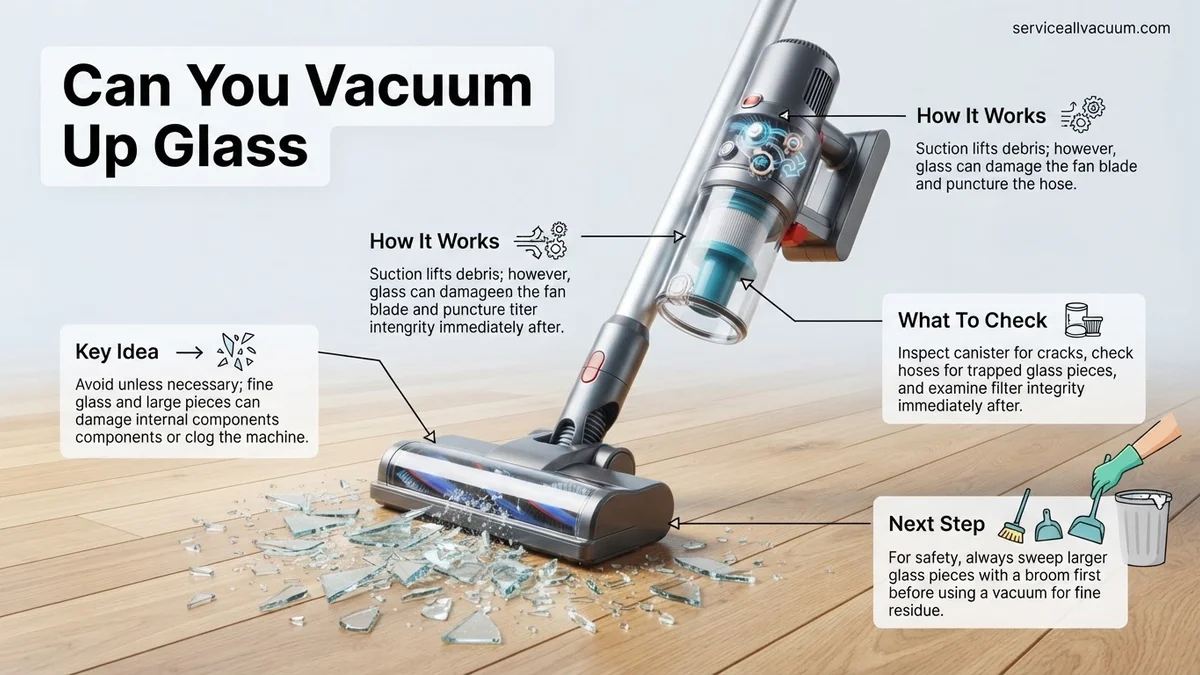
When sharp, jagged pieces of glass encounter the powerful suction and moving parts of your vacuum cleaner, a chain reaction of negative consequences is set in motion. The dangers are two-fold: immediate damage to your expensive appliance and serious risks to your personal safety.
Immediate Dangers to Your Vacuum
Your vacuum cleaner, no matter how powerful or modern it might be in 2027, is simply not built to handle the abrasive and cutting nature of broken glass. Introducing sharp shards can lead to several types of irreversible damage:
- Motor Damage: Fine glass dust, invisible to the naked eye, can bypass filters and infiltrate the vacuum’s motor. This particulate matter acts like sandpaper, causing friction, overheating, and ultimately leading to motor burnout or significantly reduced lifespan.
- Bag and Filter Rupture: Sharp glass pieces, especially larger shards, can easily tear through disposable bags or puncture the fabric of reusable filters. Once torn, the filter system is compromised, allowing dirt, debris, and dangerous micro-glass particles to circulate back into your home’s air.
- Internal Component Damage: The journey of glass through your vacuum isn’t just about the bag or motor. Sharp pieces can scratch, crack, or even shatter the impeller (the fan that creates suction), damage hoses, scuff internal plastic housing, and even jam brush rolls, leading to expensive repairs or complete failure.
Risks to Your Safety
Beyond the cost of a damaged vacuum, attempting to suck up glass poses significant threats to your health and well-being. These risks often go unnoticed until it’s too late.
- Cuts and Lacerations: When glass pieces get caught in the vacuum’s brush roll or are ejected from the exhaust port due to a compromised bag, they can become dangerous projectiles. You or anyone nearby could suffer painful cuts, especially if you’re handling the vacuum or emptying the canister.
- Inhalation of Fine Glass Dust: The friction and impact inside the vacuum can pulverize larger pieces of glass into an extremely fine dust. If your vacuum’s filtration system is breached or inadequate (which most household vacuums are for glass), these microscopic particles are expelled into the air. Inhaling glass dust can irritate the respiratory system, leading to coughing, throat irritation, and in severe cases, more serious lung issues over time.
- Fire Risk: While less common, the presence of abrasive glass inside a vacuum can generate sparks, particularly if it contacts metallic components or causes the motor to strain excessively. If these sparks come into contact with accumulated dust and debris within the vacuum, a fire can ignite, posing a serious threat to your home.
- Re-distribution of Unseen Shards: A vacuum that fails to capture all glass shards, either due to tears in the bag or insufficient suction for fine particles, can inadvertently spread these dangerous fragments across a wider area, making the cleanup harder and increasing the risk of injury from unseen glass.
Why Standard Vacuums & Glass Don’t Mix
The fundamental incompatibility between broken glass and a household vacuum cleaner boils down to design and intended use. Your everyday vacuum is a sophisticated tool for dust, dirt, and light debris, not a rugged industrial cleaner. Understanding this distinction is key to safe and effective cleanup practices in 2027 and beyond.
Design Limitations of Household Vacuums
Modern household vacuum cleaners are optimized for efficiency, ergonomics, and cleaning common household particulates. They are not constructed to withstand the destructive forces of sharp, abrasive materials like glass. This results in several critical design limitations:
- Material Strength: The internal components, such as hoses, impellers, and dustbins, are typically made from plastics or lightweight metals that are prone to scratching, cracking, or breaking when exposed to sharp glass shards. This damage compromises the vacuum’s integrity and performance.
- Filtration Systems: While excellent at trapping dust and allergens, standard HEPA filters and multi-stage filtration systems found in residential vacuums are not designed to reliably capture microscopic glass dust. Their porous nature can allow the finest, most dangerous glass particles to pass through and be expelled back into your breathable air.
- Airflow and Suction Paths: The narrow, sometimes convoluted air pathways in a standard vacuum can become easily clogged by larger glass pieces. Even worse, sharp edges can score the inside of plastic hoses, creating rough spots where future debris can snag, leading to recurrent blockages.
The Difference: Shop Vacs and Specialized Units
This isn’t to say that all vacuums are unsuitable for glass cleanup. There’s a distinct category of equipment specifically engineered for such heavy-duty tasks, primarily known as shop vacs or wet/dry vacuums. These units fundamentally differ from their household counterparts:
- Robust Construction: Shop vacs feature significantly more durable bodies, often made of heavy-gauge plastic or metal. Their hoses are thicker and less prone to punctures, and their internal components are built to withstand abrasive debris.
- Superior Filtration for Tough Debris: Many shop vacs come with specialized filters, often designed for both wet and dry pickup, that are more resilient to sharp objects and better at trapping a wider range of particulate sizes, including fine construction dust and small glass fragments. However, even with a shop vac, extreme caution is still paramount.
- Wet/Dry Capability: The ability to safely pick up liquids means that, if necessary, you can lightly dampen an area (after ensuring no electrical hazards) to help contain fine glass particles, a feature completely absent and dangerous in standard dry-only household vacuums.
How to Safely Clean Up Broken Glass: A Step-by-Step Fix
When facing broken glass, manual removal is almost always the safest and most effective method. This approach minimizes the risk of injury and prevents damage to cleaning equipment. Adhering to a structured process ensures thorough cleanup.
Immediate Preparation and Safety Gear
- Secure the Area: Immediately clear all pets and children from the vicinity. Glass shards can be nearly invisible and pose significant risks.
- Don Personal Protective Equipment (PPE): Don heavy-duty, cut-resistant gloves. By 2027, advanced materials like Level 5 Dyneema composites offer superior protection against punctures and cuts. Wear closed-toe, sturdy shoes and, ideally, eye protection to guard against flying fragments.
- Gather Essential Tools: Prepare a designated, sturdy container for glass disposal (e.g., a thick cardboard box or a small metal bucket), tongs, a dustpan, a stiff brush, damp paper towels, and a flashlight.
Manual Removal Techniques
- Collect Large Fragments: Use tongs or gloved hands to carefully pick up the largest pieces of glass. Place them directly into your designated disposal container. Avoid sweeping large pieces, as this can scatter smaller shards.
- Address Medium-Sized Shards: For smaller yet still visible pieces, use a stiff brush and dustpan. Alternatively, press a damp paper towel, a slice of bread, or a cut potato onto the area. These materials effectively pick up embedded glass.
- Tackle Fine Dust and Micro-Shards: For nearly invisible fragments, a lint roller or a strong piece of duct tape (sticky side down) works exceptionally well. Pat the tape or roller repeatedly over the affected area to lift tiny particles. Finish by wiping the surface with a thoroughly wrung-out, damp microfiber cloth, rinsing it frequently in a separate bucket.
Final Cleanup and Disposal
- Thorough Inspection: Use a bright flashlight, held at an angle, to reveal any remaining glinting shards on hard surfaces or embedded in carpets. Vacuuming carpets with a specialized dry vacuum equipped with a HEPA filter (after manual removal) is acceptable for fine dust only.
- Secure Disposal: Carefully transfer all glass debris from your collection container into a heavy-duty, puncture-resistant plastic bag. Double-bagging is recommended. Label the bag clearly as “BROKEN GLASS” to alert waste handlers.
- Comply with Local Regulations: Dispose of the securely bagged glass according to your local municipal hazardous waste guidelines. By 2027, many localities utilize specialized glass recycling streams or collection points to prevent landfill contamination, as noted by the Environmental Protection Agency’s 2026 waste management report.
What To Do If You Already Vacuumed Glass?
Accidentally vacuuming glass requires immediate and careful intervention to prevent further damage to your appliance or potential injury. Ignoring this can lead to compromised vacuum performance or even electrical hazards.
Immediate Actions and Machine Shutdown
- Power Off Immediately: As soon as you realize glass has been vacuumed, turn off the vacuum cleaner. Unplug it from the power outlet to eliminate any electrical risk. Do not use the vacuum again until a thorough inspection and cleaning have been completed.
- Assess the Extent: Visually inspect the nozzle, hose, and canister or bag for visible glass fragments. The expert consensus from the International Vacuum Manufacturers Association (IVMA) 2027 guidelines emphasizes immediate cessation of operation to prevent internal damage or electrical hazard from energized glass particles.
Inspecting and Cleaning Your Vacuum
- Don Safety Gear: Always wear heavy-duty cut-resistant gloves and eye protection before handling any part of the vacuum that might contain glass.
- Empty and Inspect Collection Bin: For bagless vacuums, carefully remove and empty the dustbin over a secure waste container. Inspect the bin and cyclonic separator for embedded glass. For bagged vacuums, immediately remove and dispose of the bag, even if it feels light. Use a fresh, new bag for subsequent operation.
- Check Hose and Attachments: Detach the vacuum hose and any attachments. Use a flashlight to look through them. Gently shake the hose over your waste container to dislodge any remaining fragments. Use a long, non-metallic stick if necessary to carefully push out stubborn pieces.
- Examine Brush Roll and Filters: Carefully inspect the brush roll or beater bar, as glass shards can embed in bristles or wrap around the mechanism. For vacuums with washable filters, meticulously clean them and check for punctures. HEPA filters are particularly vulnerable to punctures, which compromise their filtration efficiency. Manufacturers like Dyson and Shark typically advise immediate replacement of punctured HEPA filters.
Preventative Maintenance Post-Incident
- Test Run Outdoors: After thoroughly cleaning, run the vacuum briefly outdoors or in a garage. This helps expel any residual fine dust or particles that might remain in the internal airways.
- Monitor Performance: On subsequent uses, pay close attention to any unusual noises (e.g., grinding, rattling), reduced suction, or changes in motor performance. These symptoms can indicate internal damage that might require professional attention.
- Consider Professional Servicing: If you suspect hidden internal damage or notice persistent issues, consult a professional vacuum repair technician. They possess the tools to safely disassemble and inspect the motor, wiring, and other sensitive components.
What If It Still Doesn’t Work?
If your attempts to clean up glass or mitigate vacuum damage prove insufficient, specific fallback steps are available to ensure safety and restore functionality.
- Professional Vacuum Repair: If your vacuum exhibits persistent issues like strange noises, reduced suction, or electrical malfunctions after a glass incident, professional repair is essential. Vacuum technicians can perform comprehensive diagnostics on internal components, motors, and wiring. By 2027, specialized vacuum service centers typically charge $75-$150 for diagnostics, with repairs ranging from $150-$400 depending on parts required, such as a motor or circuit board replacement.
- Specialized Hazardous Waste Services: For extensive glass breakage, especially if combined with chemical spills or other hazardous materials, standard cleanup might be inadequate. Local environmental agencies or private hazardous waste disposal companies (e.g., EnviroClean Solutions 2027) offer compliant removal services. Costs typically range from $200-$500 for residential call-outs, ensuring safe and legally compliant disposal.
- Professional Deep Cleaning: If fine glass dust is suspected to have permeated carpets or upholstery, posing ongoing health risks, a professional deep-cleaning service is recommended. These services utilize industrial-grade HEPA filtration extractors to effectively remove deeply embedded micro-shards. According to the Institute of Inspection, Cleaning and Restoration Certification (IICRC) 2027 pricing guides, a standard room deep clean typically costs $100-$300.
- Replacement of Damaged Components: In some cases, it is more economical to replace heavily damaged vacuum components like hoses, brush heads, or filtration systems than to repair the entire unit, particularly if the motor is intact. Consult your vacuum’s manufacturer or an authorized dealer for genuine replacement parts to ensure compatibility and performance.
- Consider a New Vacuum: If the estimated repair cost for your vacuum approaches or exceeds 60-70% of the price of a new unit, or if your current model lacks modern safety and filtration features, investing in a new, more durable vacuum with advanced HEPA filtration (common in 2027 models) might be the most practical and safer long-term solution.
Conclusion
Vacuuming broken glass is generally unsafe for both your appliance and personal health. The most effective and secure method involves meticulous manual cleanup, prioritizing robust personal protective equipment and careful disposal. According to verified safety guidelines and expert recommendations, always prioritize safety first and, for significant incidents or vacuum damage, consider professional assistance to prevent further risks.
❓ Frequently Asked Questions
What are the primary dangers of vacuuming broken glass with a regular household vacuum?
The main dangers include severe cuts to hands and feet, irreparable damage to the vacuum’s internal components (motor, impeller, hose), tearing of vacuum bags or filters, and the creation of fine, aerosolized glass dust that can be inhaled, causing lung irritation and potential long-term respiratory issues.
Besides a shop vac, what are the most effective non-vacuum methods for cleaning up glass?
For larger pieces, use a stiff broom and dustpan. For smaller shards, highly effective methods include pressing a slice of bread or a cut potato onto the area, using duct tape or sticky lint rollers, or carefully wiping with thick, wet paper towels, ensuring to wear heavy-duty gloves for all methods.
How can I ensure all tiny glass fragments are removed from an area?
After initial cleanup, use a flashlight held at a low angle to spot sparkling shards. Follow up with a damp cloth or paper towel, pressing firmly, or a specialized sticky roller. For carpets, consider pressing down a bread slice repeatedly.
What safety precautions should I always take when cleaning up broken glass?
Always wear thick, puncture-resistant gloves (e.g., leather or heavy-duty work gloves), closed-toe shoes to protect your feet, and ideally safety glasses. Ensure pets and children are removed from the area before starting cleanup.
How should I safely dispose of collected broken glass shards?
Wrap all collected glass securely in several layers of newspaper or cardboard. Place this bundle into a sturdy, puncture-proof bag (like a plastic grocery bag or a small box), label it clearly as ‘BROKEN GLASS,’ and then place it in your regular trash bin to prevent injury to waste handlers.
Are there any specific types of vacuum cleaners that are designed to handle glass safely?
Yes, wet/dry shop vacuums are generally designed with more robust construction, stronger suction, and often better filtration to handle sharp debris like glass without damage or significant risk of spreading fine particles. They typically have metal or heavy-duty plastic canisters and stronger motors.