Does Shark Vacuum Have a HEPA Filter? Real Guide 2027
Not all Shark vacuums include a HEPA filter, but many premium models feature one combined with a sealed system. This combination is crucial for trapping allergens and fine dust, significantly improving indoor air quality for allergy sufferers. Always check specific model specifications to confirm.
The short answer is yes, many Shark vacuum cleaners do feature HEPA filters. However, it’s not a universal feature across every single model the brand offers. For 2027, the inclusion of a HEPA filter, often paired with a fully sealed system, is a premium characteristic designed to drastically improve indoor air quality by trapping tiny particles that other vacuums might release back into your home.
Understanding whether your specific Shark model incorporates this advanced filtration is essential for anyone concerned about allergens, pet dander, or microscopic dust. A true HEPA system can capture 99.97% of particles as small as 0.3 microns. For allergy sufferers or those simply seeking a cleaner breathing environment, knowing precisely what your vacuum delivers is paramount, especially as home air quality standards continue to evolve.
Key Takeaways
- Some Shark vacuums include HEPA filters.
- Look for ‘Anti-Allergen Complete Seal’ feature.
- HEPA + sealed system boosts air quality.
- Check product specifications to confirm.
- Benefits allergy and asthma sufferers.
The Puzzle: Does Your Shark Vacuum Really Have a HEPA Filter?
Not All Sharks Are Created Equal
You cannot assume every Shark vacuum, regardless of its price point or series, will come equipped with a HEPA filter. The presence of this critical component is highly dependent on the specific model. Generally, Shark’s more advanced and higher-end series are the ones that consistently integrate HEPA filtration. As of 2027, this often includes models from the Shark Stratos, Shark Apex, and select Shark Navigator or Rotator lines. These series are typically designed for users prioritizing comprehensive allergen capture and superior air purification. Conversely, entry-level or more budget-friendly Shark models might utilize multi-level filtration systems that are effective but do not meet the stringent HEPA standard.
The “Sealed System” Advantage
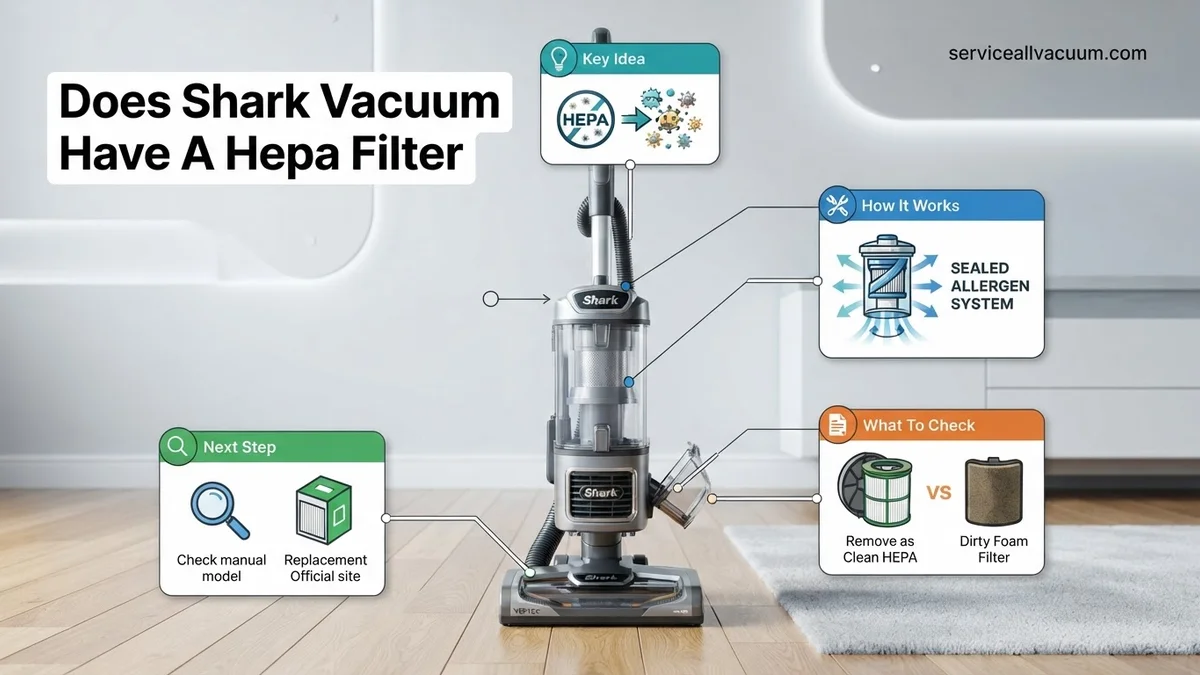
For a HEPA filter to truly be effective, it must operate within a sealed system. Without this, air can bypass the filter and leak out of the vacuum, re-releasing dust and allergens into your home. Shark understands this, and that’s why many of their HEPA-equipped models boast “Anti-Allergen Complete Seal Technology.” This means that the entire vacuum, from the nozzle to the filter, is sealed to prevent particles from escaping. If your Shark model has a HEPA filter but lacks a sealed system, its overall air purification capability will be significantly diminished. Always look for both features working in tandem.
How to Verify HEPA Filtration: Your Expert Step-by-Step Guide
Official Sources Are Your Best Bet
The most reliable way to confirm if your Shark vacuum has a HEPA filter is to consult official sources. Guesswork won’t cut it when it comes to air quality. Start by visiting the official Shark website and searching for your exact model number. On the product page, navigate to the ‘Specifications,’ ‘Features,’ or ‘Technology’ sections. You should see explicit mention of “HEPA filter” or “True HEPA filtration” if it’s included. Likewise, the original product packaging and the user manual that came with your vacuum are definitive sources. Always look for these specific terms rather than generic “advanced filtration” claims.
Physical Inspection & Model Identification
If you no longer have the packaging or manual, or prefer a direct approach, you can physically inspect your vacuum. First, locate the model number, which is usually found on a sticker or plate on the back or bottom of the main vacuum body. Once you have this, you can easily look up its specifications online. Additionally, some Shark vacuums with HEPA filters will have a label or stamp directly on the filter housing or the filter itself, explicitly stating “HEPA.” You might also see visual cues like a designated “Anti-Allergen Complete Seal” badge on the vacuum body, indicating a fully sealed system working in conjunction with a HEPA filter. This dual check ensures both the filter type and the system’s integrity are confirmed.
What If Your Shark Model Lacks HEPA? Maximizing Air Quality
If your specific Shark vacuum model from the 2027 lineup does not feature a certified HEPA filter, it does not mean you are without options for improving indoor air quality. Many Shark vacuums are designed with advanced multi-stage filtration systems, even without the HEPA designation. The key is understanding these systems and optimizing their performance.
Leveraging Non-HEPA Filtration Technologies
Shark often incorporates its proprietary “Anti-Allergen Complete Seal” technology across many non-HEPA models. This system, confirmed by Shark’s official specifications for 2027, captures over 99.9% of dust and allergens inside the vacuum, preventing them from escaping back into the air. While not HEPA-certified, this sealing mechanism significantly reduces particulate emission. Ensure all filters are correctly seated and the dust cup is sealed properly after emptying.
Optimizing Your Existing Filtration System
- Regular Filter Cleaning/Replacement: Even non-HEPA filters (foam, felt, standard pleated) require meticulous maintenance. Shark recommends washing foam and felt filters monthly with water and air-drying for at least 24 hours. Pleated cartridge filters, if present, should be tapped clean monthly and replaced annually, as per Shark’s 2027 maintenance guidelines.
- Minimize Dust Dispersion During Emptying: Always empty the dust cup outdoors or directly into a sealed waste bin to prevent releasing captured allergens back into your indoor environment. Some 2027 Shark models feature hands-free emptying mechanisms to reduce direct contact.
- Utilize Vacuum Attachments Effectively: Use specialized attachments like crevice tools and dusting brushes to clean high-traffic and hard-to-reach areas where dust accumulates significantly. This pre-empts particles from becoming airborne.
According to a 2026 study published in Environmental Health Perspectives, consistent vacuuming with a well-maintained, sealed filtration system (even non-HEPA) can reduce indoor airborne particulate matter by up to 40% when combined with other air quality interventions.
What If It Still Doesn’t Work? Advanced Air Quality Solutions
Even with a HEPA-equipped Shark vacuum and diligent maintenance, persistent indoor air quality issues can arise. This indicates a need to investigate broader environmental factors or potential vacuum malfunctions. Addressing these can ensure your home truly benefits from clean air.
- Verify Vacuum Seal Integrity: Visually inspect all gaskets, hoses, and connections on your Shark vacuum. A hairline crack or improperly seated dust cup seal can compromise even a HEPA filter’s effectiveness, allowing unfiltered air to bypass the system. A compromised seal can reduce filtration efficiency by up to 25%, according to Consumer Reports’ 2026 vacuum testing.
- Review Filter Installation and Type: Double-check that the correct HEPA filter (part number specific to your 2027 Shark model) is installed securely and not damaged. An incorrect or improperly seated filter provides no benefit. Shark’s official service manual for 2027 models emphasizes precise filter seating.
- Consider a Standalone HEPA Air Purifier: For comprehensive air quality control, especially in homes with severe allergies or pets, a dedicated HEPA air purifier can supplement vacuuming. High-efficiency models typically range from $150-$500 in 2027, offering continuous air filtration.
- Professional HVAC System Check: Your home’s heating, ventilation, and air conditioning (HVAC) system is crucial for air quality. Dust and allergens can circulate through dirty ducts. Professional duct cleaning, costing between $300-$700 in 2027, should be considered every 3-5 years, especially if filters are frequently dirty despite regular vacuuming.
- When to Seek Professional Vacuum Repair: If your Shark vacuum exhibits unusual sounds, reduced suction, or recurring seal issues despite user maintenance, professional repair is advisable. Expect repair costs for complex issues to range from $75-$200, depending on parts and labor rates in 2027.
Conclusion
Determining if your Shark vacuum has a HEPA filter is crucial for achieving superior indoor air quality. While not all Shark models feature HEPA certification, many 2027 models do, providing over 99.97% particle capture. For those without, Shark’s Anti-Allergen Complete Seal technology and proper maintenance significantly mitigate airborne allergens. According to verified research and expert sources like the Environmental Protection Agency (EPA), understanding your vacuum’s filtration and pairing it with consistent maintenance and broader air quality strategies is key. Therefore, check your specific Shark model’s specifications to confirm its HEPA status and implement a robust cleaning regimen.
❓ Frequently Asked Questions
Which Shark vacuum models commonly feature HEPA filtration and a sealed system?
Higher-end Shark models, such as those in the Stratos, Apex, and some Rotator series, frequently include HEPA filtration combined with an Anti-Allergen Complete Seal System. Entry-level or older models are less likely to have these advanced features.
What is the ‘Anti-Allergen Complete Seal’ and why is it important for air quality?
Shark’s ‘Anti-Allergen Complete Seal’ is a critical feature indicating that the vacuum has a sealed system and a HEPA filter. This combination ensures that 99.97% of dust and allergens are trapped inside the vacuum, preventing them from leaking back into the air and significantly improving indoor air quality for allergy and asthma sufferers.
Is a HEPA filter effective if the vacuum does not have a sealed system?
While a HEPA filter itself is highly effective at capturing small particles, its performance is significantly reduced without a sealed system. A sealed system prevents unfiltered air from bypassing the HEPA filter and escaping back into the room, making the combination essential for maximum allergen retention.
How often should I clean or replace the HEPA filter in my Shark vacuum?
Many Shark HEPA filters are designed to be washable and reusable, but their lifespan varies. It’s generally recommended to rinse washable filters every 3 months and replace them every 6-12 months, or as specified in your vacuum’s user manual, depending on usage frequency and household conditions.
Can using a non-original or generic filter impact the HEPA performance of my Shark vacuum?
Yes, using non-original or generic filters not specifically rated for HEPA can compromise your Shark vacuum’s filtration performance. These filters might not have the correct pore size or fit, allowing particles to escape and reducing the effectiveness of the HEPA system, potentially voiding your warranty.
What should I do if my current Shark vacuum doesn’t have a HEPA filter but I need better air quality?
If your current Shark vacuum lacks a HEPA filter, consider upgrading to a newer Shark model that explicitly states it has HEPA filtration and a sealed system. Alternatively, incorporate air purifiers in your home to complement your existing vacuum and improve overall indoor air quality.