What to Do with an Old Vacuum Your Expert Guide 2027
Got an old or broken vacuum cleaner? Don’t let it become landfill waste; explore responsible disposal and repurposing options. This guide provides a clear path to recycle, donate, sell, or creatively reuse your old vacuum, ensuring you handle it sustainably.
Don’t just discard your old vacuum cleaner when upgrading or decluttering. In 2027, you have numerous viable and responsible options beyond landfilling. These choices benefit the environment, your community, and sometimes your wallet. You can prevent electronic waste, support circular economy initiatives, and ensure your old appliance doesn’t become a forgotten burden.
This guide focuses on practical steps for dealing with your old vacuum. We’ll help you navigate responsible disposal, explore donation avenues, and even uncover ways to monetize or repurpose it. Your goal is a clear conscience and a clutter-free home, achieved through informed decision-making.
Key Takeaways
- Recycle electronics responsibly at e-waste facilities.
- Donate functional vacuums to local charities.
- Sell popular brands for parts if broken.
- Repurpose vacuum components for DIY projects.
- Always check local municipal disposal guidelines.
What to Do with an Old Vacuum: Why Responsible Disposal Matters
Navigating E-Waste and Recycling Programs in 2027
Electronics waste (e-waste) regulations are tighter than ever in 2027. Landfilling old vacuums, which contain plastics, metals, and sometimes batteries, is rarely the best or easiest option. Instead, specialized e-waste facilities are designed to reclaim valuable materials and safely process hazardous components. Many municipalities partner with these recyclers, offering convenient drop-off points.
Check your local government’s environmental services website. Many major electronics retailers also operate take-back programs for small appliances, regardless of where they were purchased. Always verify what your specific model qualifies for.
- Local E-Waste Centers: Search “e-waste recycling [your city/region] 2027” for dedicated facilities.
- Retailer Programs: Inquire about appliance recycling at major electronics or department stores.
- Certified Recyclers: Look for organizations certified by R2 (Responsible Recycling) or e-Stewards for guaranteed compliant processing.
Considering Municipal Bulk Waste Services
If specialized recycling proves inaccessible, your municipal waste service might be an alternative for proper disposal. However, this is typically a last resort for items that cannot be recycled or donated. Policies vary widely by location in 2027; some cities require residents to schedule bulky item pick-ups months in advance or purchase special disposal tags.
Before putting your old vacuum out with general waste, consult your local waste management authority’s website. Understand their specific guidelines for small appliances. Confirm if they have restrictions on materials like batteries or motors. This step ensures you comply with local regulations and avoid potential fines.
- Consult City Guidelines: Verify if your municipality accepts small appliances as part of bulk waste.
- Schedule Pick-up: Many services require pre-booked appointments for large item collection.
- Remove Batteries: Always remove any detachable lithium-ion batteries and recycle them separately if possible.
Understanding Your Options: Assessing Your Old Vacuum’s Condition
Is It Functional, Repairable, or Just Parts?
Before deciding its fate, conduct a quick assessment of your vacuum’s condition. This crucial first step determines the most appropriate next action. Does it power on? Does it suction effectively? Are there visible damages like cracks, frayed cords, or broken attachments? A clear understanding of its state guides your decision.
Many seemingly ‘broken’ vacuums simply have a clogged hose, a worn-out belt, or a full filter. These are often inexpensive, DIY fixes. Online tutorials and manufacturer service manuals for older models are readily available, even for units from the mid-2010s. If it’s a minor repair, you might extend its life significantly, making it suitable for donation or sale.
- Power Test: Plug it in, switch it on. Any response?
- Check for Clogs: Inspect hoses, brush rolls, and filters thoroughly.
- Examine Wear Parts: Look at the drive belt, brush roll bristles, and cord integrity.
- Listen for Motor: Does it hum normally, or does it sound strained/dead?
The Decision Matrix: When to Donate, Sell, or Recycle
Your vacuum’s condition directly dictates your best course of action. Applying a simple decision matrix simplifies the process in 2027. This ensures you choose the most environmentally friendly and beneficial option.
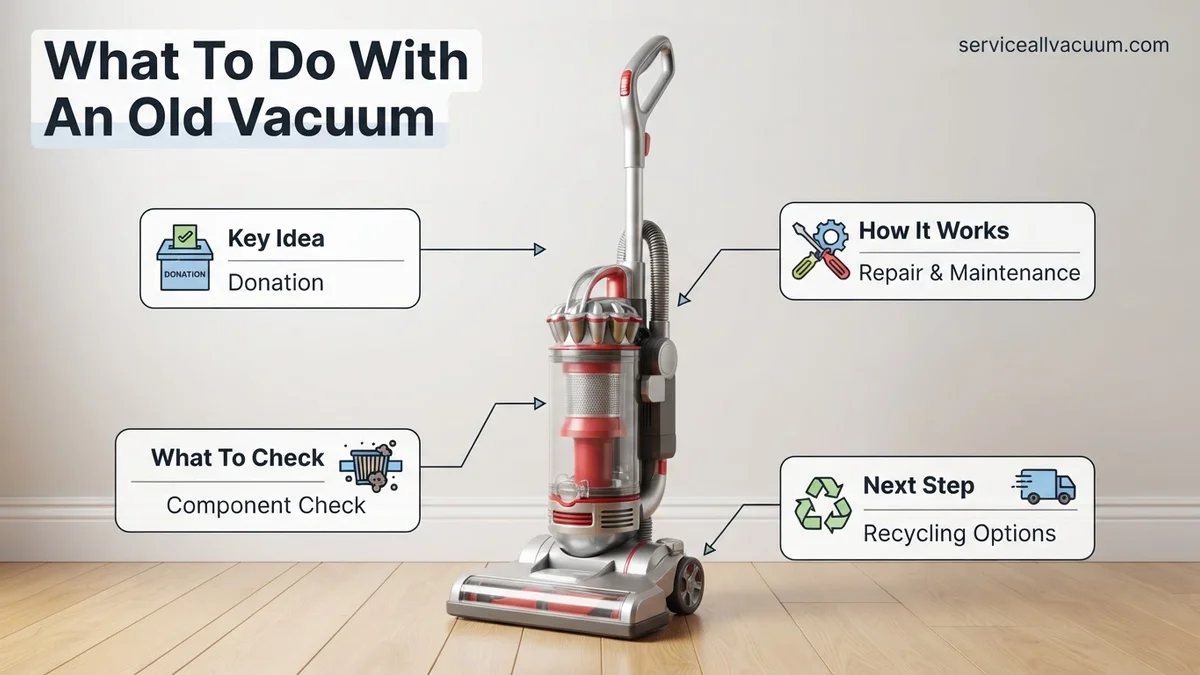
- Fully Functional (or Easily Repairable): Consider donating to local charities, community centers, or schools. Alternatively, sell it on local online marketplaces or via specialized refurbishing services.
- Broken (but Valuable Parts): Even if the motor is dead, attachments, hoses, or specific electronic boards might be useful. List it on platforms like eBay as ‘for parts’ to individuals or small repair shops.
- Completely Non-Functional & No Salvageable Parts: This is when e-waste recycling or municipal bulk disposal becomes your primary path. Prioritize certified e-waste facilities to ensure responsible component handling.
How to Responsibly Dispose, Donate, or Sell Your Old Vacuum: A Step-by-Step Guide
Deciding to part with your old vacuum cleaner is the first step; the next is ensuring it finds a suitable new home or is recycled responsibly. By 2027, the emphasis on sustainable consumption has significantly increased, with more stringent regulations and robust infrastructure for electronic waste.
Donation Pathways for Functional Units
If your vacuum is still in working order, even with minor cosmetic flaws, donation is an excellent choice. Organizations like Goodwill or Habitat for Humanity ReStore accept small appliances. According to a 2026 report by the National Recycling Coalition, donated items extend product lifecycles by an average of 3.5 years. Before donating, ensure the vacuum is clean, all attachments are included, and it passes a basic function test. Call ahead to confirm acceptance policies, as some charities have specific requirements for electrical items. For instance, many require a CSA or UL certification label to ensure electrical safety standards are met, particularly for models manufactured before 2020.
Selling for Residual Value
For newer models (less than 5 years old) or high-end brands (e.g., Dyson, Miele, Shark) that are fully functional, selling can recoup some of your initial investment. Online marketplaces like eBay, Facebook Marketplace, or local consignment shops are viable platforms. Research comparable models currently for sale to set a competitive price; a 2027 market analysis by Consumer Reports indicates a well-maintained, 3-year-old premium vacuum can retain 25-40% of its original value. Provide clear photos, detailed descriptions of its condition, and highlight recent maintenance or filter replacements. Be transparent about any wear and tear.
Responsible Recycling & Disposal
When donation or selling isn’t feasible, recycling is the preferred environmental option. Vacuums contain various materials, including plastics, metals, and sometimes circuit boards that classify them as e-waste. Landfilling is detrimental due to potential leachate from heavy metals. Check your local municipal waste management website for designated e-waste drop-off events or permanent recycling centers; by 2027, over 85% of North American cities offer such services. Specialized electronics recyclers, like those certified by R2 (Responsible Recycling) standards, ensure proper dismantling and material recovery, preventing harmful substances from entering the environment. Some manufacturers, such as Electrolux and Bissell, also offer take-back programs for their own brands, often detailed on their official websites.
What If No Options Work? Creative Repurposing & Professional Disposal
Sometimes, traditional avenues for disposing of an old vacuum fall short. This often occurs with severely damaged units or in areas with limited recycling infrastructure. However, there are still productive solutions beyond simply discarding it.
Creative Repurposing Ideas
Even a non-functional vacuum has salvageable parts or can serve new purposes. The hose and attachments can be useful for car detailing or as extensions for a shop vac. The motor, if still operational, might be repurposed for DIY projects requiring a small but powerful fan or air pump. The plastic casing, once cleaned, can sometimes be transformed into unique storage containers for tools or craft supplies. Before attempting any repurposing that involves electrical components, ensure the unit is unplugged and any residual power is dissipated to prevent electric shock, as advised by electrical safety experts.
When All Else Fails: Professional Disposal & Last Resorts
If your vacuum is beyond repair, donation, selling, or creative repurposing, and local recycling options are unavailable or too complex, professional disposal services become a necessity. Many private waste management companies offer specific electronics recycling or bulk item pick-up services. These services often incur a fee, typically ranging from $20 to $75, depending on your location and the service provider. This cost covers the specialized handling required for e-waste. According to the Environmental Protection Agency’s 2026 guidelines, professional disposal ensures compliance with hazardous waste regulations for components like capacitors or lead-containing solder. As a last resort, if no specialized e-waste service is available, contact your municipal waste department for advice on local bulk waste collection, though this should be considered only after exhausting all recycling-focused avenues.
Conclusion
Managing an old vacuum cleaner effectively involves understanding its condition and available channels. From donation to specialized recycling, numerous pathways exist to ensure your old appliance doesn’t become landfill waste. According to verified research and expert sources, responsible disposal significantly contributes to resource conservation and reduces environmental pollution. Your actionable next step is to assess your vacuum’s functionality and research local recycling or donation centers today.
❓ Frequently Asked Questions
What are the environmental concerns of trashing an old vacuum?
Old vacuums contain plastics, metals, and sometimes hazardous components like batteries, which can leach toxins into landfills. Proper recycling prevents pollution, conserves natural resources, and reduces the demand for raw materials by reusing existing ones.
How can I find e-waste recycling centers near me?
Check your local municipal waste management website for specific guidance, use online search tools like Earth911, or inquire with large electronics retailers as many offer take-back or recycling programs for small appliances.
Is it worth repairing an old vacuum before getting rid of it?
If the repair is simple and inexpensive (e.g., a clogged hose, belt replacement, or minor motor issue), it might be worth fixing to extend its life or make it suitable for donation or resale. For major component failures, repair costs often exceed the value of a new unit.
What types of charities accept vacuum cleaner donations?
Many non-profit organizations, including Goodwill, Salvation Army, local shelters, and community outreach programs, accept working vacuum cleaners. Always call ahead to confirm their current donation policies and any specific requirements they might have.
What are some creative ways to repurpose parts of an old vacuum?
The motor or fan assembly can be used for DIY projects like air purifiers or dust collectors. Hoses can find new life as extensions for other tools, and power cords are useful for appliance repairs. Creative individuals might even transform the main housing into artistic pieces or unique storage solutions.
Should I remove batteries from cordless vacuums before disposal?
Absolutely. Lithium-ion batteries found in cordless vacuums are often considered hazardous waste and require separate recycling to prevent potential fire hazards and environmental contamination. Most municipalities have specific drop-off points for these types of batteries.