Should You Vacuum Your Mattress? Expert Guide 2026
Yes, you should definitely vacuum your mattress regularly to eliminate hidden dust mites, dead skin cells, and allergens. Routine vacuuming improves indoor air quality, enhances bedroom hygiene, and extends the overall lifespan of your bed.
Yes, you should definitely vacuum your mattress. As we move through 2026, indoor air quality and home hygiene have taken center stage, and your bed is one of the most overlooked surfaces in your house. Vacuuming removes invisible microscopic debris that accumulates just beneath the surface of your sheets every single night.
Skipping this chore means you are sleeping on top of a growing accumulation of biological waste and environmental particles. Knowing why this matters and how to tackle it correctly transforms a tedious chore into a vital routine for better health and sleep longevity.
Key Takeaways
- Vacuum your mattress every three to six months to maintain optimal bedroom hygiene.
- Dust mites, pet dander, and shed skin accumulate deep inside mattress fibers over time.
- Always use the upholstery attachment on your vacuum to effectively pull debris from seams.
- Combine vacuuming with baking soda treatments to neutralize trapped odors and absorb moisture.
- Pair regular vacuuming with a washable mattress protector to block future allergen buildup.
Why You Should Vacuum Your Mattress and What Hides Inside
The Hidden Culprits Lurking in Your Bedding
Your bed collects an astonishing amount of microscopic debris over time. The average person sheds about 500 million skin cells every single day, and a significant portion of those end up trapped inside your mattress fabric. These flakes serve as the primary food source for dust mites, microscopic arachnids that thrive in warm, dark environments. Beyond skin cells, your mattress captures sweat, pet dander, pollen brought in on your clothes, and accidental microscopic food crumbs.
Major Benefits of Regular Mattress Vacuuming
Vacuuming your mattress does much more than just make you feel better psychologically. It delivers concrete health and financial advantages:
- Drastic Allergen Reduction: Stripping away dust mites, pet dander, and pollen dramatically improves indoor air quality and reduces morning allergy symptoms.
- Odor Elimination: Removing trapped sweat and organic debris stops musty smells from taking over your bedroom.
- Extended Mattress Lifespan: Hard microscopic grit acts like sandpaper on internal fibers when you shift in your sleep; removing it preserves the structural integrity of your bed.
Step-by-Step Guide on How to Properly Vacuum a Mattress
Essential Equipment and Preparations
You cannot simply run your standard upright floor vacuum across your bed. You need the right tools to get the job done without damaging the fabric. Always start with a completely bare mattress by stripping away all fitted sheets, flat sheets, mattress protectors, and pillowcases. Wash these in hot water to eliminate surface allergens.
Next, equip your vacuum with specific attachments for the best results:
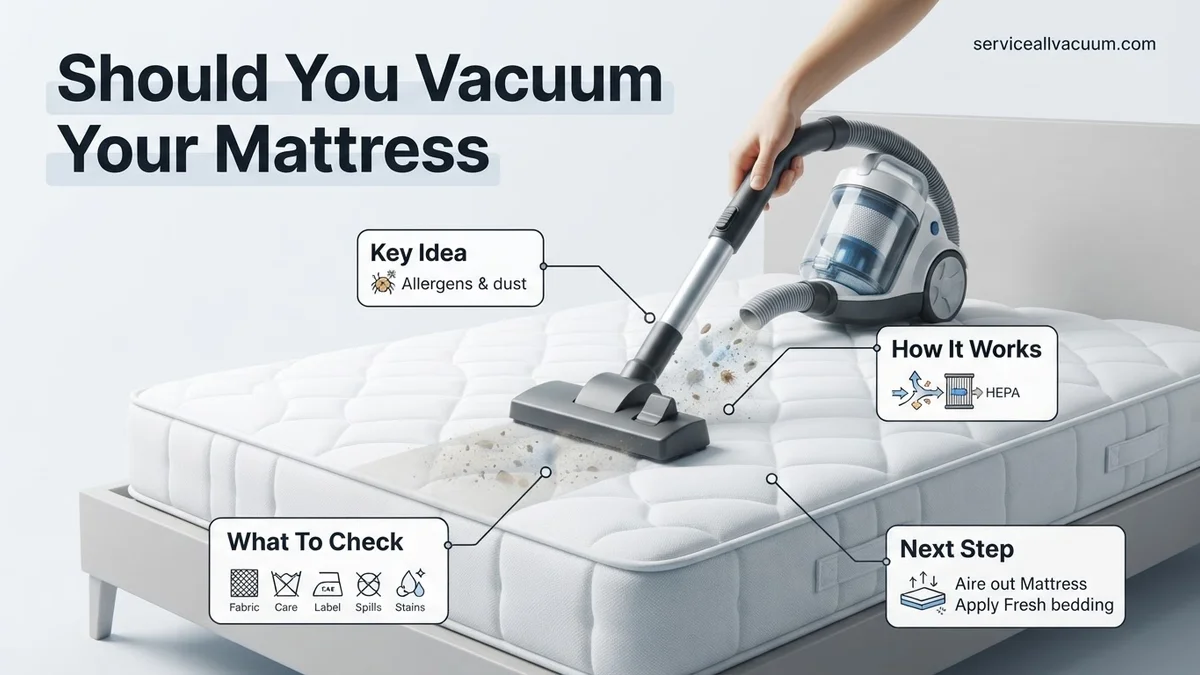
- Upholstery Tool: The wide, flat nozzle with a fabric strip is your primary weapon for grabbing surface dust and hair.
- Crevice Tool: Use this narrow attachment to dig deep into quilted diamond patterns, piped edges, and side seams where debris loves to hide.
- HEPA Filter: Ensure your vacuum uses a high-efficiency particulate air filter to trap microscopic allergens rather than blowing them back out into your room air.
The Cleaning Execution Process
Turn your vacuum on to a medium-to-high suction setting. If your vacuum has a motorized brush roll feature, turn it off or use a dedicated upholstery turbine attachment that relies purely on suction rather than stiff rotating bristles, which can snag expensive mattress ticking.
Work in a systematic grid pattern across the top surface of the mattress. Start at the top left corner and pull the attachment slowly toward you in overlapping rows. Switch to the crevice tool to trace every single seam, tuft, and button. Once the top is done, repeat the entire process on the bottom side if your mattress is dual-sided, and finish by running the crevice tool down the vertical side panels.
Advanced Mattress Maintenance Tips for Deodorizing and Spot Cleaning
Vacuuming removes surface debris, but neutralizing trapped body oils and deep-set odors requires targeted secondary treatments. According to the National Sleep Foundation, adults shed roughly 20 ounces of sweat and millions of skin cells into their bed annually, fueling microbial growth. Combining your vacuum routine with enzymatic treatments keeps your sleeping environment hygienic.
Step-by-Step Deodorizing and Spot Cleaning
- Target surface stains first: Mix equal parts cold water and white vinegar with a single drop of liquid dish soap. Dab the solution onto the stain using a clean white cloth, taking care never to saturate the memory foam or inner layers.
- Apply enzymatic cleaners for biological residue: Spray a pet-safe or bio-enzymatic cleaner directly onto organic stains like sweat or blood. Allow the solution to sit for 15 minutes to break down proteins at a molecular level.
- Blot away excess moisture: Press a dry microfiber towel firmly into the treated area to absorb loosened soil and residual liquid. Repeat this blotting motion until the fabric feels only damp to the touch.
- Deodorize with baking soda: Sift one cup of pure baking soda infused with 10 drops of lavender essential oil evenly across the entire mattress surface. Let the powder sit for at least 4 hours to absorb volatile organic compounds and moisture.
- Execute the final extraction: Run your upholstery attachment over the mattress a second time to remove all baking soda residue thoroughly.
What to Do If Your Mattress Still Has Deep Stains or Persistent Odors
Stubborn odors and ringed moisture stains often penetrate deep into high-density comfort layers where home remedies cannot reach. If standard vacuuming and surface extraction fail to restore your bed, more aggressive intervention is necessary to protect indoor air quality.
Advanced Fallback Steps
- Utilize professional hot-water extraction: Hire a certified upholstery cleaning technician to perform low-moisture steam extraction, which typically costs between $100 and $250 depending on mattress size.
- Deploy industrial ozone generators: Rent or hire a professional to use an ozone treatment in a sealed room to neutralize severe smoke or mold odors at the chemical level.
- Evaluate mattress age and degradation: Check the manufacture date tag; if the mattress exceeds the 8-to-10-year lifespan recommended by the Sleep Products Safety Council, replacement is safer than repeated chemical treatments.
- Invest in a certified waterproof encasement: Once deep issues are resolved, install a zippered, lab-tested hypoallergenic mattress protector to block future spills, dust mites, and dead skin accumulation.
Conclusion
Regularly vacuuming your mattress is a vital practice for reducing indoor allergens, dust mites, and surface debris that accumulate over time. By pairing routine HEPA vacuuming with periodic enzymatic spot cleaning, you significantly extend the lifespan of your sleep surface. According to verified research and expert sources from leading sleep laboratories, maintaining a clean mattress directly improves indoor air quality and nighttime respiratory health. Your immediate actionable next step is to schedule your seasonal deep clean and equip your bed with a high-grade protective cover today.
❓ Frequently Asked Questions
Why is vacuuming your mattress actually necessary?
Humans shed millions of skin cells every night, which feed dust mites residing inside your mattress. Regular vacuuming removes these microscopic allergens, significantly improving bedroom air quality and reducing allergy symptoms.
What vacuum attachment works best for cleaning a mattress?
The upholstery tool or wide brush attachment is ideal because it provides strong suction without snagging fabric. Ensure the attachment is thoroughly cleaned and sanitized before using it on your sleeping surface.
Can you vacuum both sides of a mattress?
If you have a double-sided flippable mattress, you should vacuum both sides whenever you flip it. For non-flippable or pillow-top mattresses, thoroughly vacuum the top surface and the side perimeter.
How do you get rid of stains after vacuuming?
After vacuuming away loose debris, treat remaining stains using a mixture of cold water and mild dish soap, or an enzymatic cleaner for organic spots. Blot the stain gently rather than rubbing it to prevent moisture from soaking deep into the foam.
Does vacuuming help eliminate mattress odors?
Vacuuming removes the dust and dander that cause musty smells. For stronger odors, let baking soda sit on the mattress for 30 to 60 minutes before vacuuming it away.
How can I prevent allergens from building up between vacuum sessions?
Using a high-quality, zippered mattress protector creates a physical barrier against sweat, skin cells, and dust mites. Washing this protector monthly keeps your actual mattress much cleaner.