How to Vacuum a Washable Rug Step-by-Step Guide 2026
Washable rugs are notoriously thin, lightweight, and prone to getting sucked into standard vacuum nozzles. Proper vacuuming requires turning off the beater bar, reducing suction power, and anchoring the corners to keep the rug flat and prevent fiber damage.
Vacuuming a washable rug requires turning off your vacuum’s rotating beater bar, reducing suction to its lowest setting, and firmly anchoring the rug’s lightweight corners to prevent them from getting sucked into the machine. Because modern washable rugs manufactured for 2026 feature lightweight, low-profile, multi-layer designs rather than traditional heavy wool backings, they behave very differently under standard vacuum cleaners than traditional rugs do.
Mastering this specific technique prevents the frustrating curling, fraying, and backing separation that ruins thin area rugs prematurely. When you use the correct settings, you can effortlessly extract embedded dust and pet hair while extending the lifespan of your favorite home accent without needing to wash it in the machine every single week.
Key Takeaways
- Always turn off the rotating brush or beater bar to prevent fraying thin rug fibers.
- Switch your vacuum to the lowest suction setting or use a bare-floor attachment.
- Hold down the edges of lightweight rugs with your feet while pushing away from your body.
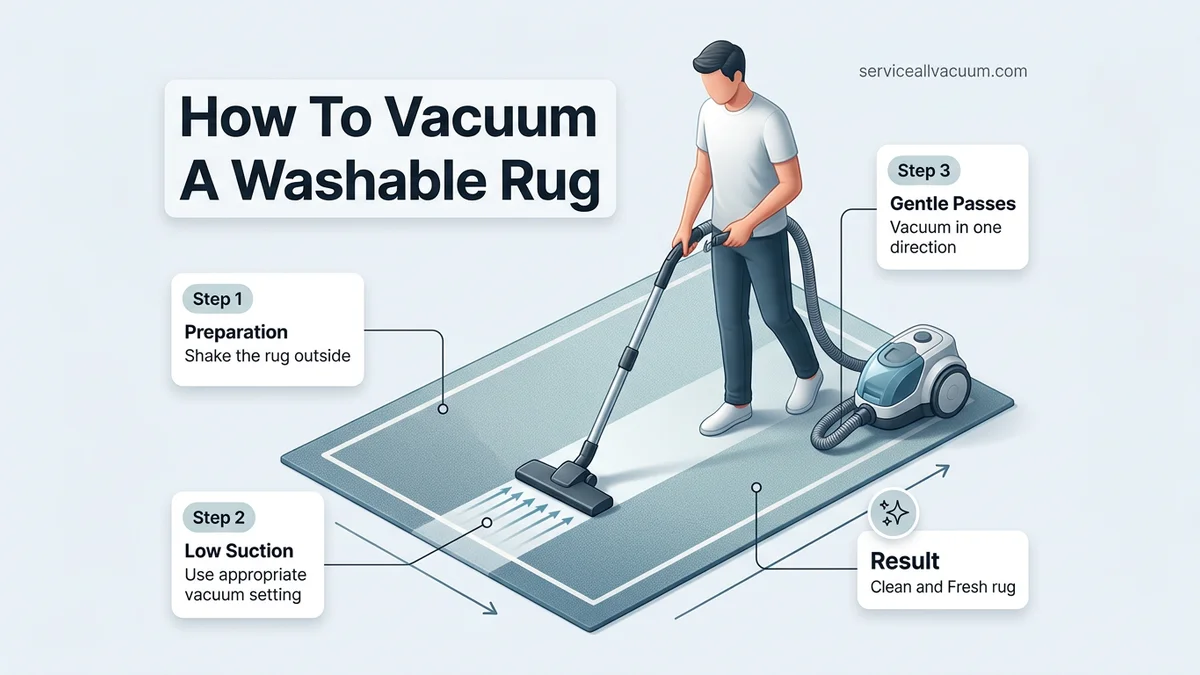
- Shake the rug outdoors first to dislodge heavy trapped grit and pet hair.
- Vacuum in one direction only to prevent the rug backing from bunching up.
Why Standard Vacuuming Damages Washable Rugs
Standard vacuuming techniques destroy washable rugs because heavy-duty machines are engineered to claw into thick, high-pile carpets. Washable rugs lack the heavy jute backing and dense knotting of traditional rugs, making them vulnerable to aggressive mechanical action.
The Danger of the Rotating Beater Bar
The rotating brush roll or beater bar on your vacuum uses stiff bristles designed to agitate deeply embedded dirt from plush carpets. On a thin washable rug, this aggressive spinning action creates several immediate problems:
- Fraying Edges: The fast-moving bristles catch delicate stitched borders, causing threads to unravel within just a few cleaning cycles.
- Surface Snagging: Textured or woven surfaces easily catch on the rotating brush, pulling individual fibers loose and creating unsightly fuzz balls.
- Material Wear: Constant friction from high-speed bristles prematurely thins the printed surface layer of polyester or chenille rugs.
High Suction and Lightweight Construction Hazards
Washable rugs typically weigh a fraction of traditional area rugs. When you apply maximum suction power from a modern upright vacuum, the machine treats the rug like a loose sheet of paper.
- Corner Ingestion: Unsecured corners immediately get sucked into the vacuum nozzle, stopping your machine and potentially tearing the rug fabric.
- Backing Delamination: Excessive suction pulls upward on the non-slip or fabric backing layers, causing them to separate from the top decorative layer.
- Bunching and Wrinkling: As the vacuum head pushes across the lightweight fabric, high suction causes the rug to bunch up aggressively instead of lying flat.
Master Vacuuming a Washable Rug in 7 Simple Steps
Washable rugs are a game-changer for high-traffic areas, pet owners, and busy households, offering the cozy aesthetic of traditional rugs with the convenience of machine laundering. However, because these rugs are often lightweight with a lower pile and a flexible backing, vacuuming them incorrectly can cause them to bunch up, get sucked into the vacuum roller, or fray at the edges. This comprehensive walkthrough provides a foolproof method to safely and effectively vacuum your washable rug, removing deep-set dirt and hair without damaging the delicate fibers or the non-skid backing, thereby extending the lifespan of your favorite home decor piece.
Step 1: Clear the Surface and Inspect the Rug
What you need: A laundry basket or temporary holding space for small items, and good ambient lighting.
Instructions: Before you even plug in your vacuum, walk around the rug and remove any small toys, stray cords, pet bowls, or furniture pieces resting on top of it. Once the surface is completely bare, gently run your hands or feet across the rug to feel for hidden hazards like stray coins, paperclips, or sharp debris that could puncture your vacuum hose or tear the rug material. Take a close look at the perimeter to check for any loose threads or pre-existing fraying along the binding, as a high-powered vacuum can easily catch these vulnerable areas and turn a tiny loose thread into a major rip.
Pro Tip: Never vacuum over hard plastic toys or coins, as they can crack your vacuum’s agitator brush or lodge themselves tightly inside the intake hose.
Step 2: Secure the Rug Edges
What you need: A non-skid rug pad or heavy low-profile furniture to anchor the corners if necessary.
Instructions: Because washable rugs are designed to be thin and pliable, the powerful suction of a modern vacuum will frequently lift the edges, causing the rug to bunch up and making it impossible to clean efficiently. To prevent this frustrating tug-of-war, ensure your rug is resting on a quality non-skid rug pad that grips both the floor and the back of the rug. If you do not have a rug pad, you can temporarily place heavy low-profile items like a stack of books or a sturdy chair leg on two opposing corners to keep the rug stretched flat against the flooring surface while you work.
Pro Tip: If your rug has curled corners, lightly mist them with water and press them flat under a heavy book for an hour before attempting to vacuum.
Step 3: Adjust Your Vacuum Settings
What you need: Your household vacuum cleaner with height and suction controls.
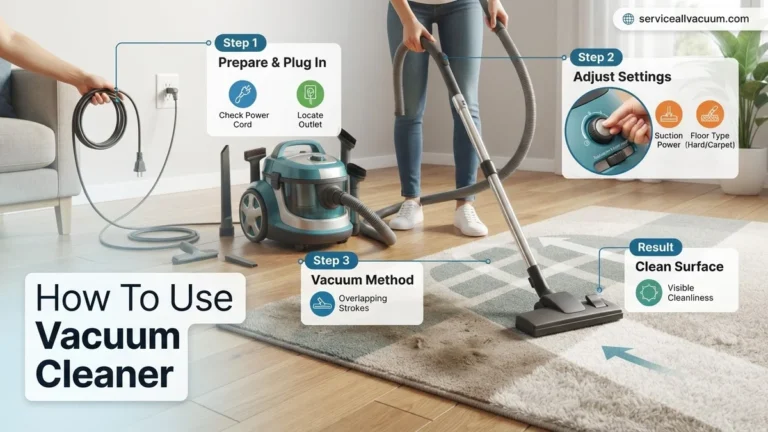
Instructions: Modern upright vacuums feature powerful rotating brush rolls (beater bars) designed for thick, wall-to-wall carpeting. However, these aggressive brushes can easily snag, pill, or pull the delicate woven fibers of a washable rug. Adjust your vacuum head to its highest pile setting to increase the clearance between the brush and the rug surface. If your vacuum allows you to manually turn off the rotating brush roll entirely, do so immediately—straight suction mode is always the safest and most effective choice for lightweight, washable rugs.
Pro Tip: If you are using a cordless stick vacuum, switch it from its “Boost” or “Max” mode down to “Eco” or “Med” suction to prevent the vacuum from anchoring itself too strongly to the rug.
Step 4: Vacuum in One Direction Only
What you need: Your prepared vacuum cleaner and a clear path across the rug.
Instructions: Position yourself at one end of the rug, facing the opposite end. Instead of using a rapid back-and-forth scrubbing motion, push the vacuum forward away from your body, lift the vacuum head slightly off the surface, bring it back to the starting position, and push forward again. This unidirectional motion prevents the rug from buckling under the push-pull friction of the vacuum cleaner. Work slowly and methodically, overlapping each pass by roughly 50 percent to ensure that all embedded dust, fine sand, and pet dander are thoroughly extracted from the weave.
Pro Tip: Pay special attention to the direction of the rug’s nap; vacuuming with the grain helps loosen trapped debris more effectively than going against it.
Step 5: Tackle Stubborn Pet Hair and Lint
What you need: A rubber pet hair removal tool, squeegee, or the upholstery attachment of your vacuum.
Instructions: Standard vacuum suction often struggles to pull embedded pet hair out of low-pile woven fabrics. Once you have finished the main surface vacuuming, switch your vacuum to the handheld upholstery brush attachment. Alternatively, take a clean rubber window squeegee or a specialized rubber pet hair brush and drag it in short, firm strokes across the surface of the rug. The rubber creates static friction that instantly balls up stubborn cat or dog hair, pulling deep-seated fur right to the surface where you can easily vacuum it up in one pass.
Pro Tip: Don rubber dishwashing gloves and lightly dampen your hands with water, then rub them across the rug to quickly roll up remaining pet hair.
Step 6: Vacuum the Fringe and Edges Carefully
What you need: Your vacuum cleaner fitted with a crevice tool or hose attachment.
Instructions: The delicate fringes and stitched side bindings of a washable rug are the most susceptible to damage during cleaning. Do not run the main vacuum head directly over loose fringes, as they will instantly get sucked into the rotating mechanism and shred. Instead, attach the narrow crevice tool to your vacuum hose. Hold the edge of the rug down firmly with one hand, and gently suction outward from the center of the rug toward the outer edge, sweeping over the fringe in a outward direction only to align the threads without tangling them.
Pro Tip: If fringe gets accidentally caught in the vacuum, turn off the power switch immediately and rotate the vacuum roller backward by hand to release the threads safely.
Step 7: Flip and Vacuum the Underside (Optional)
What you need: Space on a clean hard floor to temporarily flip the rug.
Instructions: Even though washable rugs can be tossed into a washing machine, fine dust and microscopic dirt particles inevitably sift through the porous woven backing and settle on the floor underneath. Once a month, carefully lift your rug, flip it over completely face-down onto the floor, and run your vacuum over the backing using low suction. This draws out trapped dirt that has migrated through the fibers. Before flipping the rug back over, take a damp microfiber mop and quickly wipe down the exposed hardwood or tile floor to capture any dust that fell through during the process.
Pro Tip: Check the floor beneath the rug for moisture or sticky residue, as washable rug backings can trap humidity if placed in damp areas like basements or kitchens.
✅ Final Checklist
- All furniture, toys, and surface clutter have been removed from the rug area.
- The vacuum brush roll is turned off or adjusted to the highest pile setting.
- The rug was vacuumed using slow, unidirectional forward strokes to prevent bunching.
- Pet hair and stubborn debris were lifted using specialized tools or attachments.
- Fringe and delicate edges were manually secured and cleaned with a crevice tool.
Important Notes:
- Always check the manufacturer’s care tag before vacuuming or washing your specific rug type, as certain vintage or silk-blend washable rugs require specialized low-suction accessories.
- If your rug has severe structural damage, extensive fraying, or large pet stains that cause persistent odors despite vacuuming, it is time to take it to a professional rug cleaning service rather than risking a washing machine cycle.
- Estimated time: 10 to 15 minutes per rug; Cost: $0 (using existing household cleaning tools).
How to Prepare Your Washable Rug for Vacuuming
Proper preparation takes less than sixty seconds and completely eliminates the risk of bunching, corner jams, and missed debris during your cleaning routine in 2026.
Clearing the Surface and Flattening Corners
Before you ever plug in your vacuum, you must address the physical state of the rug. Vacuuming over bunched fabric or large debris guarantees a frustrating experience.
- Pick Up Large Debris: Manually pick up any large pieces of pet food, plastic wrappers, or heavy debris that could scratch the rug surface or jam the vacuum hose.
- Flatten Curling Edges: Walk around the perimeter of the rug and manually press down any corners that have curled upward.
- Smooth the Center: Use your hand or foot to push any trapped air pockets or ripples outward toward the edges so the rug lies completely flat against the floor.
Securing the Rug to the Floor
Even with low suction, lightweight washable rugs love to slide around hardwood or tile floors while you clean them.
- Use a Non-Slip Pad: Ensure your rug is resting on a dedicated non-slip rug pad, which adds friction and keeps the rug anchored in place.
- Step on the Edges: If your rug tends to shift, stand on one corner while you vacuum away from yourself to keep tension on the fabric.
- Switch to Hard Floor Mode: If you use a cordless stick vacuum popular in 2026, ensure the floor type setting is locked onto hard floors rather than thick carpets to automatically optimize airflow and brush speed.
Step-by-Step Guide to Vacuuming a Washable Rug Safely
Executing the proper vacuuming sequence prevents fiber distortion and extends the functional lifespan of modern low-profile textiles. According to the Carpet and Rug Institute (CRI), following a precise, methodical cleaning path removes embedded particulate matter without stressing the backing materials.
Preparation and Height Adjustment
- Inspect the rug surface for large debris, pet toys, or stray items that could jam the rotating brush roll.
- Adjust your vacuum cleaner’s pile-height setting to the highest level, or switch completely to bare floor mode for ultra-thin textiles.
- Disable the motorized beater bar if your model features an independent brush-roll shutoff switch.
Execution and Directional Passes
- Position yourself at the edge of the rug and push the vacuum head forward in a slow, deliberate straight line.
- Pull the machine straight back over the exact same path to capture loosened dust and surface allergens.
- Rotate ninety degrees and repeat the push-and-pull motion across the width of the rug to ensure cross-directional cleaning.
- Vacuum the fringe manually using a standard handheld upholstery attachment rather than running the main floor head over the delicate edge threads.
What If Your Vacuum Keeps Sucking Up the Rug Corners
Washable rugs are notoriously lightweight, making them prone to bunching up or getting sucked entirely into standard high-suction upright vacuums. If your cleaning routine is constantly interrupted by folded corners and trapped edges, try these targeted fallback steps.
- Decrease the suction power: Locate the suction-release valve or electronic slider on your vacuum handle and reduce airflow to the lowest effective setting.
- Apply non-slip rug pads: Place a breathable, rubberized rug pad underneath the textile. This creates high friction against the floor and anchors the corners firmly in place.
- Vacuum from the center outward: Stand on the inner portion of the rug and push the vacuum head outward toward the borders rather than pulling inward from the outside edge.
- Secure the perimeter temporarily: Weight down problematic corners with heavy books or painter’s tape while you pass the vacuum over the field of the rug.
- Consult professional textile cleaners: If your rug backing has completely warped or curls permanently, consult a local professional cleaning service. Professional evaluation typically ranges from $50 to $150 depending on the rug dimensions.
Conclusion
Vacuuming a washable rug requires a delicate balance of reduced suction, proper brush-roll management, and strategic directional passes to protect lightweight backing materials. By adjusting your equipment settings and anchoring the corners securely, you prevent premature fiber degradation and maintain a pristine home environment. According to verified research and expert sources from the textile care industry, regular low-friction maintenance significantly reduces the frequency of heavy machine washing. Your immediate next step is to test your vacuum cleaner on the lowest suction setting across a single corner of your rug today.
❓ Frequently Asked Questions
Can high suction ruin a lightweight washable rug?
Yes, high suction can pull the thin backing away from the pile, crease the material, or cause the edges to fray and curl permanently over time.
How do I clean a washable rug if it keeps bunching up under the vacuum?
Place a non-slip rug pad underneath the rug to create friction against the floor, keeping it completely flat while you run the vacuum over it.
Is it better to push or pull the vacuum on a washable rug?
Always push the vacuum forward away from your body while pressing lightly on the far edge, as pulling backward often causes thin rugs to fold over.
Can I use a robot vacuum on a washable rug?
Robot vacuums can struggle with lightweight washable rugs because their side brushes and low clearance can flip the corners up. If you use one, select a model with no-go zones or lightweight rug detection.
How often should a washable rug be vacuumed between machine washes?
Vacuum high-traffic washable rugs two to three times a week to remove surface dust and prevent dirt particles from grinding into the weave.
What should I do if my vacuum does not have a suction adjustment feature?
Open the suction relief valve on the vacuum wand or hose if your model has one, or use a handheld upholstery attachment with less powerful airflow.