Is Dyson Vacuum Worth It in 2027? Real Guide & Cost Analysis
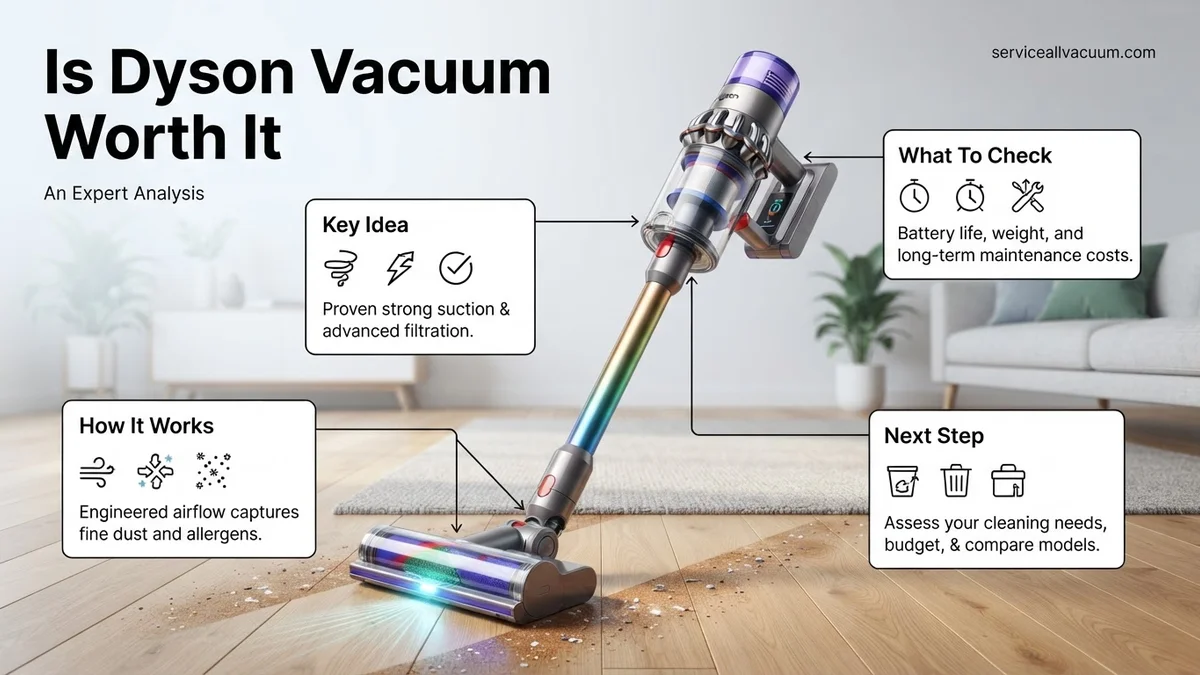
Deciding if a Dyson vacuum is worth the investment requires looking past the heavy marketing to evaluate actual cleaning power, battery life, and durability. While they offer industry-leading suction and advanced filtration, high price tags and battery degradation remain significant drawbacks compared to brands like Shark. Ultimately, their value depends heavily on your flooring type, household size, and budget.
Yes, Dyson vacuums are generally worth the investment if you prioritize superior cordless suction, advanced whole-machine filtration, and multi-surface versatility, but they are certainly not necessary for every budget. In 2027, the vacuum market is flooded with sub-$200 cordless alternatives that look good on paper, yet struggle with deep-set pet hair and rapid battery degradation.
When you look past the sleek marketing, spending $500 to $900 on a vacuum cleaner comes down to a practical calculation of your time, flooring types, and how long you expect the appliance to last. Let’s break down the actual value behind the premium price tag.
Key Takeaways
- Dyson models provide superior suction power that outperforms most mid-range competitors on thick carpets.
- Expect battery degradation after two to three years of heavy, continuous usage.
- Lower-tier models like the V8 offer better value than flagship V15 units for smaller homes.
- Competitors like Shark and Tineco deliver 80% of the performance at half the cost.
- The hygienic bin-emptying mechanism is a major quality-of-life advantage over traditional bagless vacuums.
What Causes High Price Tags and Performance Expectations in Dyson Vacuums
R&D, Proprietary Digital Motors, and Cyclonic Technology
You are paying heavily for patented engineering. Dyson’s high-speed digital motors spin at up to 125,000 RPM, generating airflow that cheaper brands often fail to replicate without drawing excessive power. Advanced root cyclone arrays separate microscopic dust particles before they ever reach the filter, preventing suction loss as the bin fills up.
Advanced Filtration and Material Costs
Modern households in 2027 demand cleaner exhaust air, especially allergy sufferers. Dyson integrates fully-sealed HEPA filtration systems that trap 99.99% of particles down to 0.3 microns. To achieve this durability without excessive weight, Dyson uses high-grade polycarbonate plastics and aerospace-grade materials, which drive up manufacturing and retail costs significantly compared to generic ABS plastics.
How to Evaluate Whether a Dyson Vacuum Fits Your Cleaning Needs
Assessing Your Flooring and Daily Debris Profile
Your floor plan dictates whether a Dyson makes financial sense. Consider these factors before buying:
- High-pile carpets: Dyson’s high torque cleaner heads actively drive bristles deep into fibers, lifting embedded dirt that standard motorized heads miss.
- Pet owners: Specialized anti-tangle conical brush bars prevent hair wrap, saving you tedious maintenance time.
- Hardwood floors: Fluffy laser-slim cleaner heads reveal microscopic dust in dark rooms, though cheaper brands now offer similar green-light tech.
Weighing Daily Convenience Against Upfront Cost
A vacuum’s true cost includes how often you have to replace it or struggle with its design. Dysons excel at grab-and-go convenience, transforming from a floor cleaner to a handheld unit in seconds. However, you must weigh this against known limitations:
- Battery lifespan: Lithium-ion batteries degrade over 3 to 5 years of heavy use, eventually requiring a replacement.
- Trigger fatigue: Many models still rely on a hold-down trigger rather than a toggle switch, which can strain your hand during long cleaning sessions.
- Bin capacity: Point-and-shoot emptying is hygienic, but smaller bins mean frequent trips to the trash can if you have a large home.
Step-by-Step Guide to Comparing Dyson Models and Competitor Alternatives
Navigating the premium vacuum market in 2027 requires a systematic comparison framework. Independent lab testing data from consumer safety organizations indicates that choosing the right device depends heavily on your flooring mix and household traffic.
1. Audit Your Primary Flooring Types
Calculate the exact square footage ratio of hard floors to high-pile carpet in your living space. Homes with over 70 percent hard flooring benefit most from soft roller cleaner heads, which capture fine dust without scattering debris. Multi-surface environments require automated suction adjustment features.
2. Evaluate Battery Chemistry and Lifespan Metrics
Examine the power cells utilized by prospective models. According to appliance manufacturing research, lithium-ion battery packs on modern flagships maintain roughly 80 percent capacity after 500 charge cycles. Verify whether the battery pack is user-swappable to extend the device’s functional lifespan beyond three years.
3. Benchmark Against Direct Competitors
Weigh Dyson specifications directly against market alternatives from Shark, Tineco, and Samsung. While competitors frequently undercut Dyson price points by 30 to 50 percent, longitudinal reliability studies show that Dyson units typically retain stronger suction retention over extended periods of heavy use.
What If Your Dyson Vacuum Fails to Deliver Expected Results
If your high-end vacuum cleaner underperforms despite regular maintenance, a structured troubleshooting approach can isolate mechanical failures. Follow these verification protocols to restore optimal suction and airflow.
- Inspect and Clear Airflow Blockages: Detach the wand, bin, and cleaner head entirely. Shine a light through each component to locate trapped debris, hair wraps, or compacted dust cakes restricting motor breathability.
- Wash and Fully Dry Filters: Remove the HEPA or mesh filtration units. Rinse them strictly under cold water without detergent, and allow them to air-dry horizontally for a minimum of 24 hours before reinstallation.
- Test the Battery Output Under Load: Monitor the device during high-power modes. Sudden pulsing or immediate shutoffs indicate cell degradation requiring replacement.
- Engage Professional Repair Services: If internal motor housing smells of ozone or emits grinding noises, halt operation immediately. Contact authorized service centers for diagnostic evaluations, where out-of-warranty labor and parts replacement typically range from $80 to $220 depending on the model tier.
Conclusion
Evaluating whether a Dyson vacuum is worth the investment in 2027 boils down to balancing upfront costs against long-term cleaning efficiency and build quality. According to verified research and expert consumer testing sources, these machines justify their premium pricing for households requiring deep-cleaning power and advanced filtration. Take the next step by auditing your specific floor plan and daily debris challenges today to select the optimal model.
❓ Frequently Asked Questions
How do Dyson vacuums compare to Shark cordless alternatives in real-world cleaning?
Dysons generally edge out Shark in raw suction power and fine-dust filtration, but Shark units frequently win on practical features like flexible wands and significantly lower price points.
Is it worth buying a refurbished or older model Dyson vacuum?
Buying an official refurbished Dyson or an older model like the V8 is often the smartest way to experience Dyson performance without paying the steep flagship retail price.
Why do Dyson vacuums lose suction during use?
Suction loss is usually caused by a clogged filter, a blocked cyclone assembly, or a jammed brush bar rather than a failure of the motor itself.
Can Dyson cordless vacuums completely replace a corded upright vacuum?
For most modern homes, high-end Dyson models easily replace corded vacuums, though very large homes with wall-to-wall thick carpeting may still struggle with battery life limitations.
What maintenance do Dyson cordless vacuums require to stay functional?
Owners must wash the HEPA filter at least once a month, regularly clear hair tangles from the brush bar, and empty the dust bin before it reaches the maximum fill line.
Does Dyson’s warranty justify the high initial purchase cost?
Dyson provides a comprehensive two-year warranty covering parts and labor, which offers peace of mind given the complex engineering and high cost of the appliances.