How Long Does Vacuum Sealed Meat Last in the Freezer 2027
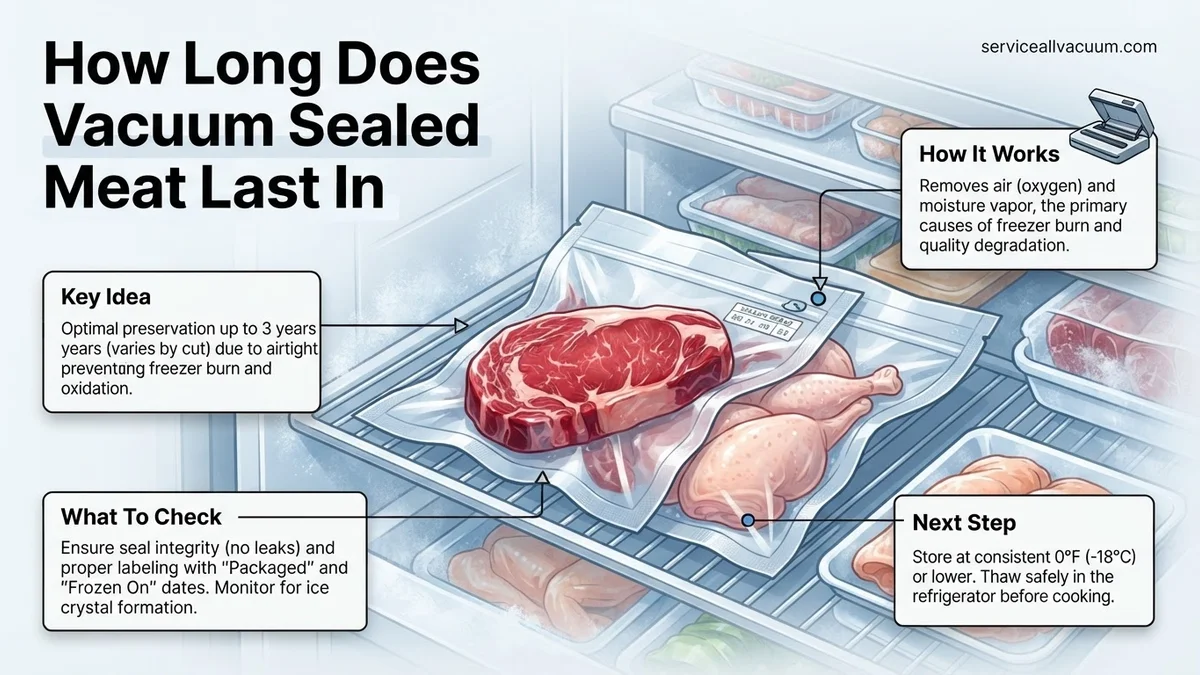
Vacuum-sealed meat can last anywhere from 1 to 3 years in the freezer, drastically outlasting standard butcher paper or plastic wrap packaging. While food safety remains indefinite at 0°F, quality and taste depend heavily on the type of meat and proper sealing technique.
Vacuum-sealed meat safely lasts in the freezer anywhere from 1 to 3 years, depending heavily on the cut of meat and how it was prepared. While standard plastic wrap or freezer bags protect meat for 6 to 12 months, removing oxygen through vacuum sealing dramatically extends that window by preventing moisture loss and lipid oxidation. By 2027, advanced kitchen sealers have made home food preservation easier than ever, but knowing exact storage limits prevents freezer burn and wasted meals.
Maximizing this extended shelf life requires understanding the exact timelines for different proteins and the variables that impact freezer longevity. Even the best commercial-grade sealer cannot preserve meat indefinitely, making proper handling before and during the sealing process essential for optimal quality.
Key Takeaways
- Vacuum-sealed beef and lamb last 2 to 3 years in the freezer.
- Poultry maintains peak quality for 2 to 3 years when properly sealed.
- Ground meats last 1 to 2 years due to increased surface area exposure.
- Consistent 0°F freezer temperatures prevent freezer burn and oxidation.
- Initial meat freshness at the time of sealing dictates maximum shelf life.
What Causes Freezer Burn and Quality Loss in Vacuum-Sealed Meat
Even when you remove all the air from a package, your meat is still susceptible to slow chemical changes and structural breakdown over long periods. Vacuum sealing stops surface dehydration, but it cannot entirely halt internal enzymatic activity or extreme temperature fluctuations inside your appliance.
The Role of Oxidation and Lipid Breakdown
Oxygen is the primary enemy of frozen meat, causing fats to rancidify and proteins to tough out. Vacuum sealers eliminate this threat, but microscopic amounts of trapped air or tiny seal failures can still trigger oxidation. Fatty meats like pork and ground beef are more vulnerable to this breakdown than lean poultry or game.
- Unsaturated fats: Oxidize faster, leading to off-flavors even at sub-zero temperatures.
- Enzyme activity: Continues at a microscopic level, slowly degrading meat texture over multi-year storage.
- Protein denaturation: Extreme cold pulls moisture from muscle fibers, causing a dry texture upon thawing.
The Impact of Temperature Fluctuations
Your freezer’s internal climate dictates whether your vacuum-sealed meat reaches its maximum 3-year lifespan. Every time your freezer door opens, microscopic ice crystals inside the meat sublimate and recrystallize. This process creates the dry, grayish patches known as freezer burn, even within a sealed bag.
- Constant 0°F (-18°C) or lower: Halts major structural degradation and bacterial growth completely.
- Auto-defrost cycles: Temporary temperature spikes can melt surface frost, which refreezes into damaging ice crystals.
- Placement matters: Storing bags toward the back of the freezer maintains a more stable temperature than door storage.
How to Properly Vacuum Seal Meat for Maximum Freezer Storage Life
Achieving the maximum multi-year storage window requires more than just pressing the start button on your machine. Proper preparation ensures that your meat maintains its original texture, color, and nutritional value throughout its time in the freezer.
Pre-Freezing and Moisture Control
Excess moisture is the biggest hurdle to achieving an airtight seal. When a machine attempts to vacuum a wet package, it often draws liquid into the seal channel, resulting in a weak closure that fails months down the road.
- Pat dry: Always use paper towels to remove surface moisture from steaks, chops, and roasts before sealing.
- Flash freezing: Place juicy cuts like marinated chicken or raw steaks on a tray in the freezer for 1 hour before sealing to solidify surface liquids.
- Double sealing: Create a second seal line right below the first one to provide a foolproof barrier against air leaks.
Choosing the Right Materials
Not all vacuum-sealed bags are engineered for multi-year freezer storage. Thin, cheap rolls often puncture easily from sharp bone fragments or develop micro-fractures during long-term freezing.
- Heavy-duty embossed bags: Use bags at least 4 mils thick with channel patterns that allow efficient air removal.
- Bone protection: Wrap sharp bones in parchment paper or an extra piece of bag material before vacuum sealing to prevent punctures.
- Proper headspace: Leave at least 3 inches of empty space between your meat and the top of the bag to ensure a secure melt seal.
Step-by-Step Freezer Storage Time Chart for Every Meat Type
Understanding exact preservation timelines requires looking at specific protein categories. According to the USDA Food Safety and Inspection Service, standard freezing only keeps meat safe for a few months before quality degrades. Vacuum sealing drastically extends these limits by blocking oxidation entirely.
Beef, Pork, and Lamb Storage Limits
Dense red meats handle cryogenic and deep-freezing conditions exceptionally well. Standard freezing keeps beef steaks and roasts safe for 6 to 12 months. When properly vacuum sealed, beef, pork, and lamb easily last between 2 to 3 years at a consistent 0 degrees Fahrenheit without developing freezer burn.
Poultry and Ground Meat Timelines
Whole chickens and turkey pieces normally last 12 months in standard packaging. Vacuum sealing pushes poultry shelf life to 2 to 3 years. Ground meats, including beef, pork, and sausage, contain more surface area and fat exposure. Standard storage caps them at 3 to 4 months, but vacuum sealing safely extends ground meat usability to 1 year.
What If Thawed Vacuum-Sealed Meat Shows Signs of Spoilage
Even with advanced preservation technology, improper initial handling or fluctuating freezer temperatures can compromise stored proteins. Home cooks must inspect thawed meat rigorously before preparation, relying on strict sensory evaluations rather than expiration timelines alone.
Recognizing Compromised Vacuum Seals
A compromised package often features loose plastic, the accumulation of ice crystals inside the bag, or a hissing sound when opened indicating air intrusion. If air enters the package during long-term storage in 2027, aerobic bacteria can proliferate once thawed, regardless of the initial vacuum seal quality.
Sensory Inspection Protocol
When evaluating thawed meat for safety, follow these mandatory evaluation steps:
- Rinse the meat under cold water and observe the surface texture; slimy or excessively sticky surfaces indicate advanced bacterial growth.
- Check the color carefully, noting that while beef may darken slightly due to lack of oxygen, gray or greenish hues signify spoilage.
- Smell the protein immediately after rinsing; a sour, sulfur-like, or ammonia odor means the meat must be discarded immediately.
- Inspect the packaging for any liquid pooling that smells rancid before cooking begins.
What If It Still Doesn’t Work?
If your vacuum sealer consistently fails to remove air or maintain a proper hermetic seal, standard troubleshooting may not suffice. Implement these advanced fallback steps to resolve equipment failures:
- Inspect the foam gaskets around the sealing bar for cracks, compression wear, or debris, replacing them if they fail to form an airtight chamber.
- Switch to heavy-duty, commercial-grade embossed channel bags, as thin or smooth consumer film often leaks micro-air over extended freezing periods.
- Clean the sealing strip with isopropyl alcohol to remove accumulated grease or protein residue that prevents thermal bonding.
- If mechanical suction pumps fail entirely, consult a certified small-appliance technician or invest in a new chamber-style vacuum sealer, with replacement units typically ranging from $150 to $400 for reliable domestic performance.
Conclusion
Maximizing freezer storage life requires combining airtight vacuum packaging with consistent sub-zero temperatures. By eliminating oxygen exposure, home cooks can safely preserve expensive cuts of meat for years without sacrificing flavor or texture. According to verified research and expert sources from food safety authorities, maintaining a strict 0 degrees Fahrenheit freezer environment remains the single most effective defense against lipid oxidation and bacterial degradation. Take the next step today by auditing your current freezer setup and upgrading to commercial-grade embossed vacuum sealer bags for your next bulk meat purchase.
❓ Frequently Asked Questions
How long does vacuum sealed meat last in the freezer compared to regular packaging?
Standard plastic wrap or grocery store packaging keeps meat fresh for only 4 to 12 months. Vacuum sealing removes air entirely, extending that timeline to 2 to 3 years for most cuts.
What is the difference between food safety and food quality in frozen meat?
Food safety means the meat is free of harmful bacteria and won’t make you sick, which lasts indefinitely at 0°F. Food quality refers to taste, moisture, and texture, which declines over time.
Does freezing meat kill bacteria present in vacuum-sealed bags?
Freezing does not kill bacteria; it merely pauses their growth. Any bacteria present before sealing will become active again once the meat thaws.
How can you tell if thawed vacuum-sealed meat has gone bad?
Check for a sour or off odor, a slimy texture, or an unusual discoloration. If any of these are present after thawing, discard the meat immediately.
Can you freeze meat in a vacuum sealer without pre-freezing liquids?
Juices can get sucked into the vacuum channel and ruin the seal. It is best to freeze juicy meats for an hour or use the pulse/moist setting on your sealer.
Does freezer temperature fluctuations affect vacuum-sealed meat shelf life?
Yes, fluctuating temperatures cause microscopic ice crystals to melt and refreeze inside the meat fibers, degrading texture and shortening the realistic storage window.