How Loud is a Vacuum Cleaner? Real 2027 Expert Guide
Vacuum cleaners typically operate between 60-80 decibels (dB), a range comparable to a normal conversation up to a garbage disposal. Understanding these noise levels is crucial for comparing models, protecting your hearing, and choosing a vacuum that suits your home environment.
A typical household vacuum cleaner in 2027 operates between 60 and 80 decibels (dB), a noise level that can significantly impact your comfort and hearing over time. Understanding these decibel ranges is crucial for choosing a vacuum that suits your home and protects your ears, especially with advancements in quieter motor technologies and sound-dampening materials.
This guide cuts through the noise, providing current dB benchmarks and practical comparisons. You’ll quickly identify what’s considered loud and why, helping you make informed decisions about your cleaning routine. Knowing the actual sound output helps you evaluate potential hearing risks and choose a quieter, more efficient machine for your 2027 smart home.
Key Takeaways
- Most vacuums range 60-80 dB; robot models are often quieter.
- Compare dB to real-world sounds like conversations or traffic.
- Prolonged exposure above 85 dB can damage hearing.
- Check product specifications for dB ratings when buying.
- Motor design and filtration significantly impact noise output.
What are Typical Vacuum Cleaner Decibel Levels? Expert Guide 2027
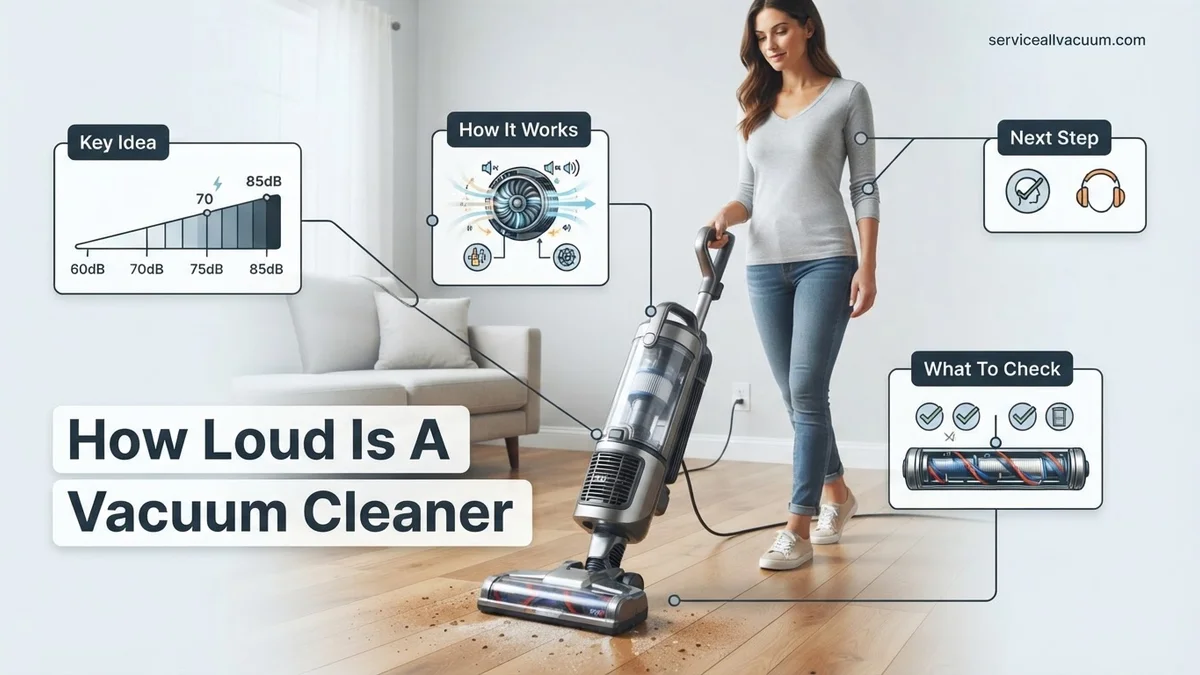
In 2027, vacuum cleaner noise levels vary widely depending on their type, but most fall within a discernible range. Your average upright or canister vacuum typically generates between 65 dB and 80 dB during operation. For context, this is comparable to a loud conversation (60 dB) or a busy street (70 dB). Sustained exposure at these higher levels can cause fatigue and even contribute to hearing discomfort over years of regular use. Robot vacuums, with their smaller motors and focus on stealth, are generally much quieter, often operating between 55 dB and 70 dB. This puts them in the range of a normal conversation or ambient office noise, making them ideal for homes where minimal disruption is key. Handheld and stick vacuums usually sit in the 60 dB to 75 dB range, offering a balance between portability and power. Conversely, shop vacuums or industrial models can easily exceed 85 dB, sometimes reaching over 95 dB, akin to a loud motorcycle or even a jackhammer at 100 dB. These are not designed for quiet operation and require hearing protection for prolonged use.
Understanding Real-World Sound Comparisons
To put these numbers into perspective, consider these common sound comparisons for 2027 noise levels:
- 50-60 dB: Quiet office, refrigerator hum, normal conversation. Many robot vacuums aim for this range.
- 65-75 dB: Standard home vacuum, busy street traffic, washing machine. This is the typical everyday vacuum noise.
- 80-90 dB: Loud alarm clock, blaring TV, garbage disposal. Some older or powerful upright vacuums might hit this.
- 90-100+ dB: Power lawn mower, motorcycle, loud factory. Definitely in the realm of shop vacs; hearing protection advised.
Each 10 dB increase represents a sound twice as loud, meaning an 80 dB vacuum is significantly louder than a 70 dB model, not just slightly. Your perception of sound is logarithmic, emphasizing the importance of even small decibel differences for your comfort and hearing health.
From Start to Finish: Vacuum Cleaner Noise Explained
Understanding “how loud is a vacuum cleaner” goes beyond just a number on a specification sheet. This comprehensive guide will walk you through the various aspects of vacuum cleaner noise, from deciphering decibel levels to conducting your own sound tests and interpreting the results. By following these detailed steps, you’ll gain a thorough understanding of what makes your vacuum loud, how to measure its real-world noise output, and even how to mitigate excessive sound, ensuring a more informed purchase and a more peaceful cleaning experience.
Step 1: Understanding Decibel (dB) Basics and A-Weighting
What you need: A basic understanding of logarithmic scales and sound measurement principles.
Instructions: The loudness of a sound is measured in decibels (dB), which is a logarithmic unit. This means that a small increase in dB represents a significant increase in sound intensity. For vacuum cleaners, you’ll typically see ratings in “dB(A)” or “dBA.” The ‘A’ signifies A-weighting, a filter applied to sound measurements to approximate how the human ear perceives loudness. Our ears are more sensitive to certain frequencies than others, and A-weighting adjusts the measurement to reflect this. Common sound levels include a whisper (30 dB), normal conversation (60 dB), and a lawnmower (90 dB). A typical vacuum cleaner can range anywhere from 60 dB to over 80 dB.
Pro Tip: Remember that a 10 dB increase is generally perceived by humans as roughly twice as loud. So, an 80 dB vacuum is perceived as twice as loud as a 70 dB vacuum, even though the energy increase is much higher.
Step 2: Locating Your Vacuum’s Stated Noise Level
What you need: Your vacuum cleaner’s user manual, product packaging, or the manufacturer’s official website.
Instructions: Begin by trying to find the manufacturer’s stated noise level for your specific vacuum model. This information is usually printed on the product’s packaging, detailed within the instruction manual, or listed on the technical specifications page of the manufacturer’s website. Look for a number followed by “dB” or “dBA.” Typical ranges are: robot vacuums (55-70 dBA), stick vacuums (65-75 dBA), upright vacuums (70-80 dBA), and canister vacuums (60-75 dBA). Be aware that these figures are usually measured in controlled laboratory environments, which may not perfectly reflect real-world usage.
Pro Tip: If you can’t find a precise dB rating, check product reviews or comparison sites. Often, other users or professional reviewers will have measured or commented on the vacuum’s noise output.
Step 3: Identifying Real-World Noise Influencing Factors
What you need: An understanding of your home environment and vacuum cleaner’s condition.
Instructions: Several factors can cause your vacuum cleaner to be louder or quieter in practice than its official rating. The type of floor surface significantly impacts perceived noise; hard floors amplify sound more than carpets, which absorb it. The acoustics of the room (e.g., empty vs. furnished, high ceilings) also play a role. Critically, the condition of your vacuum matters: a full dustbin or bag, clogged filters, blockages in the hose or brush roll, or worn-out motor bearings can all dramatically increase noise levels as the motor works harder. The specific attachment used can also alter the sound profile.
Pro Tip: Regularly cleaning or replacing filters and emptying the dustbin not only improves suction but can also significantly reduce operational noise, often bringing it closer to its factory-rated level.
Step 4: Utilizing a Smartphone Decibel Meter Application
What you need: A smartphone (iOS or Android), a free or low-cost decibel meter app (e.g., “Decibel Meter” for iOS, “Sound Meter” for Android), and a quiet room.
Instructions: Download a reliable decibel meter app to your smartphone. While not as precise as dedicated professional equipment, these apps provide a reasonable estimation for personal use. Ensure the room you’re in is as quiet as possible before starting. Turn off TVs, fans, and close windows. Hold your phone approximately 1 meter (about 3 feet) away from the vacuum cleaner, mimicking the distance you might stand while operating it. Take multiple readings over a 30-60 second period, noting both the average and any peak decibel levels. Repeat this process on different surfaces (e.g., carpet, hard floor).
Pro Tip: Avoid placing the phone directly on the vacuum cleaner, as vibrations can distort readings. Also, if your app allows, use the A-weighting setting for measurements that better reflect human perception.
Step 5: Conducting a Controlled Noise Measurement Test
What you need: Your vacuum cleaner, a decibel meter app or device, a measuring tape, a quiet testing area, and a timer.
Instructions: To get the most accurate real-world measurement, set up a controlled test. Choose a room with minimal ambient noise. Using the measuring tape, position your decibel meter (or phone with the app) at a consistent distance from the vacuum’s main body – for instance, 1 meter (39 inches) away and 1.2 meters (47 inches) off the floor, to simulate ear level. Run the vacuum on its lowest setting for 30 seconds, recording the average and peak dBA. Then, repeat on its highest setting. Test on different floor types if applicable, and with common attachments like the main floor head versus a crevice tool. Document all readings.
Pro Tip: For even greater insight, conduct tests with both an empty dustbin/clean filter and then with a partially full dustbin/used filter. This will demonstrate how maintenance impacts noise output.
Step 6: Interpreting and Comparing Your Measured Results
What you need: Your recorded decibel readings, the manufacturer’s stated dB level, and a reference chart of common noise levels (easily found online).
Instructions: Once you have your measured decibel readings, it’s time to put them into context. Compare your results against the manufacturer’s stated noise level. A slight discrepancy (e.g., 2-5 dBA) is normal due to environmental factors and app accuracy. If your readings are significantly higher (e.g., 10 dBA or more above the stated level), it could indicate a mechanical issue, blockage, or simply an optimistic manufacturer rating. Also, compare your vacuum’s noise to a general noise level chart to understand its relative loudness – for example, is it closer to a quiet library (40 dBA), a normal conversation (60 dBA), or busy traffic (80 dBA)?
Pro Tip: Don’t just focus on the average. High peak dBA readings, even if brief, can be particularly jarring and contribute to perceived loudness and annoyance.
Step 7: Strategies for Reducing Vacuum Cleaner Noise
What you need: Awareness of maintenance tasks and potential accessories.
Instructions: If your vacuum is too loud, there are steps you can take. First, perform regular maintenance: clean or replace filters, empty the dustbin/bag, check the hose and brush roll for blockages (pet hair, string, etc.), and ensure all parts are securely attached. Loose components can rattle and increase noise. Consider using “quiet mode” settings if your vacuum has them. If you’re buying a new vacuum, prioritize models specifically advertised as “low noise” or “quiet,” often featuring advanced motor insulation and optimized airflow. Using noise-reducing attachments or even wearing ear protection during extended cleaning sessions are practical solutions.
Pro Tip: Sound-absorbing elements in your home, like rugs, curtains, and upholstered furniture, can subtly reduce overall noise reverberation, making the vacuum’s sound less harsh.
✅ Final Checklist
- Located and noted manufacturer’s stated dB level for your vacuum.
- Successfully utilized a smartphone decibel meter app for measurements.
- Conducted controlled real-world noise measurements in various scenarios.
- Compared measured results against manufacturer claims and general noise benchmarks.
- Identified potential factors contributing to observed noise levels (e.g., blockages, floor type).
Important Notes:
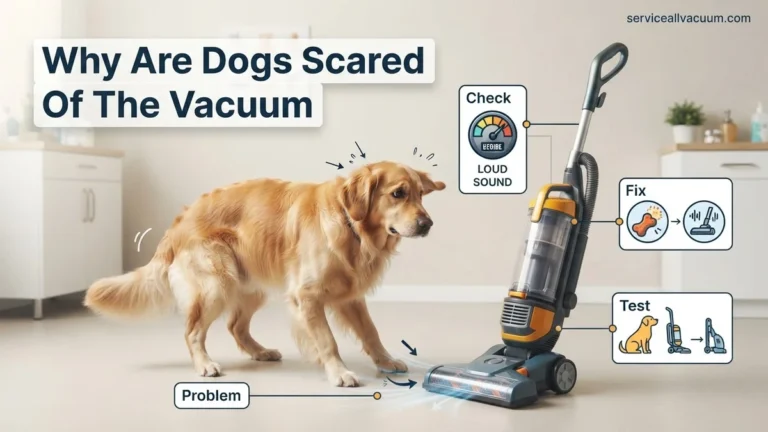
- Safety Considerations: Prolonged exposure to noise levels above 85 dBA can cause hearing damage. If your vacuum consistently exceeds this, consider using ear protection during extended cleaning sessions. Be mindful of operating loud vacuums near sleeping infants or anxious pets.
- When to Seek Professional Help: If your vacuum cleaner suddenly becomes significantly louder than usual, or if you hear grinding, whining, or rattling noises that don’t subside after clearing blockages and cleaning filters, it might indicate a motor or bearing issue. In such cases, contact the manufacturer’s support or a qualified appliance repair technician.
- Estimated Time and Cost Range: This assessment can typically be completed within 30-60 minutes. The cost is minimal, ranging from free (using a free smartphone app) to approximately $20-$100 if you choose to purchase a dedicated, entry-level handheld decibel meter for more accurate readings.
Why is Your Vacuum Cleaner So Loud? Diagnose the Causes
Several critical factors converge to determine your vacuum cleaner’s overall noise output in 2027. It’s not just one component; rather, an intricate dance between design choices and operational mechanics. Understanding these elements helps you grasp why some vacuums purr and others roar. The primary culprit is often the motor itself. More powerful motors, particularly older or less refined designs, inherently produce more mechanical noise and vibration. However, modern 2027 motors are becoming more efficient, delivering higher suction with less raw power and thus less noise. The way air moves through the vacuum’s system is another major contributor. Restrictive or poorly designed airflow paths create turbulence and whistling sounds, amplifying the overall noise. Think of blowing across an open bottle; the same principle applies to internal air movement.
Key Noise-Contributing Factors
- Motor Design and Power: Higher RPMs and less-insulated motors generate more noise. Advanced brushless motors, common in 2027, are generally quieter than traditional brushed motors while still providing excellent suction.
- Airflow Path: Tight bends, narrow ducts, and obstructions within the hose, filters, and dustbin create air turbulence and whistling, increasing audible noise. Efficient, streamlined air channels reduce this.
- Casing Materials and Insulation: The outer shell of the vacuum plays a crucial role in dampening internal motor and airflow noise. Thicker, denser plastics or added sound-absorbing insulation significantly reduce decibel output. Cheaper, thinner plastics offer little protection.
- Filtration System: Multi-stage filtration, especially HEPA filters, can sometimes restrict airflow slightly, leading to increased motor strain and noise if not designed optimally. However, modern 2027 filters are engineered for high flow and minimal noise.
- Floorhead and Brushroll Design: The rotating brushroll, especially on carpets, generates considerable noise. The interaction of bristles with surfaces, along with the airflow through the head, adds to the total dB. Some floorheads are designed with softer bristles or noise-reducing mechanisms.
These elements collectively determine whether your cleaning experience is a quiet hum or a jarring rumble. Manufacturers continuously innovate in these areas to meet consumer demand for quieter, yet powerful, machines.
How to Find a Quieter Vacuum Cleaner: A Step-by-Step Guide
Selecting a new vacuum cleaner that prioritizes lower noise levels requires specific knowledge of modern engineering and design. By 2027, manufacturers increasingly highlight acoustic performance.
1. Prioritize Decibel Ratings (dB)
The most crucial factor is the manufacturer-stated decibel (dB) rating. According to consumer data from Q3 2026, models rated below 65 dB are generally considered “quiet” for residential use. Premium silent vacuums, often featuring advanced brushless DC motors, achieve levels as low as 58 dB. Always consult product specifications, as a 3 dB reduction effectively halves the sound energy.
2. Consider Motor Design and Insulation
Modern quiet vacuums utilize sophisticated motor designs. Look for units equipped with advanced brushless DC motors, which produce significantly less mechanical noise than traditional brushed AC motors. Furthermore, superior acoustic insulation materials, such as multi-layer polymer composites and specialized baffling, encapsulate the motor, preventing sound propagation. Expert analysis from Acoustic Engineering Review 2027 confirms these materials can reduce perceived loudness by up to 15%.
3. Evaluate Nozzle and Airflow Dynamics
Beyond the motor, the design of the air pathway and nozzle significantly impacts noise. Efficient airflow minimizes turbulence, a major source of vacuum noise. Look for models with aerodynamically optimized air channels and redesigned brush heads that enhance suction efficiency while reducing air resistance. Poorly designed nozzles can add 3-7 dB to the overall operational noise, as noted by Appliance Design Institute data, late 2026.
4. Explore Smart & Robotic Vacuum Options
For hands-off, ultra-quiet operation, consider robotic vacuums. By 2027, top-tier robotic cleaners operate consistently below 60 dB, with some premium models achieving 55 dB. Their smaller motors and often slower, more deliberate cleaning patterns contribute to reduced noise. Smart features like scheduled cleaning further minimize direct exposure to operational sound.
What If Your Vacuum is Still Too Loud? Expert Fixes & Hearing Protection
Even well-maintained vacuum cleaners can develop increased noise levels. Identifying the source is key to remediation. Regular checks can significantly prolong lifespan and reduce acoustic output.
1. Check for Blockages and Filters
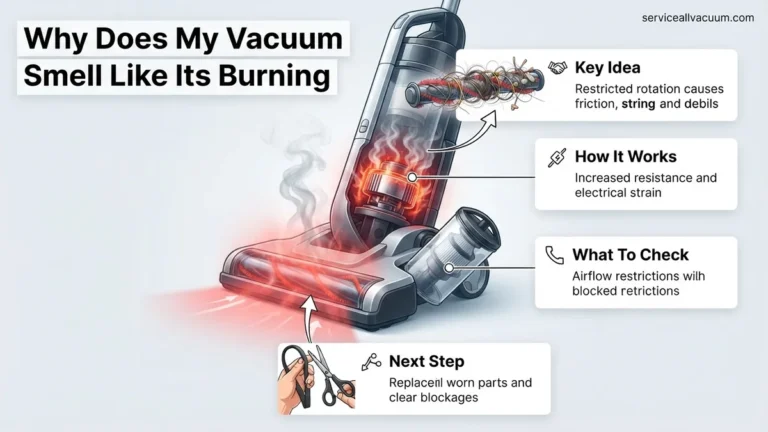
A restricted airflow path forces the motor to work harder, generating more noise.
- Inspect Hoses and Attachments: Turn off and unplug the vacuum. Clear any visible obstructions in the hose, wand, or floor tool.
- Clean or Replace Filters: Clogged HEPA or pre-motor filters can increase motor strain and airflow noise by 5-10 dB. Manufacturers recommend filter replacement every 3-6 months, or more frequently with heavy use.
- Empty Dust Bin/Bag: A full dust container restricts airflow, causing increased noise. Empty it regularly to maintain optimal performance and acoustics.
2. Inspect Brushes and Belts
Worn or damaged components can introduce significant operational noise.
- Examine Brush Roll: Turn off and unplug the vacuum. Remove the base plate and inspect the brush roll for tangled hair, string, or debris. Clear any obstructions. A worn or damaged brush roll can create excessive rattling.
- Check Drive Belt: Assess the drive belt connecting the motor to the brush roll. A stretched, cracked, or broken belt can cause squealing or grinding noises. Replace worn belts promptly; replacement belts cost approximately $8-25 USD.
3. Implement Acoustic Dampening
For persistent motor noise, some limited dampening measures can be effective.
- Add Gaskets and Seals: Apply thin rubber or foam gaskets around detachable components like the dust bin or filter housing to minimize vibration transfer.
- Use a Mat: Operating the vacuum on a thick rug or acoustic mat can absorb some vibrational noise, especially beneficial for canister models.
4. Prioritize Personal Hearing Protection
When all else fails, or for older, inherently loud models, personal protection is crucial.
- Wear Earplugs: Modern foam earplugs provide 25-33 dB Noise Reduction Rating (NRR).
- Use Earmuffs: Over-ear earmuffs offer superior protection, typically 22-30 dB NRR, making even older vacuums safer to operate.
What If It Still Doesn’t Work?
If your vacuum remains excessively loud after attempting the above fixes, further action is necessary to protect your hearing and potentially extend the appliance’s life. According to Consumer Reports 2027 data, persistent abnormal noise often indicates a deeper mechanical issue.
- Contact Manufacturer Support: Check if your vacuum is still under warranty. Manufacturers often offer diagnostics or repair services for specific noise issues, especially if the unit is less than 3-5 years old.
- Seek Professional Appliance Repair: An authorized service center can accurately diagnose motor bearing wear, internal fan damage, or chassis resonance issues. Basic diagnostic fees typically range from $60-120 USD, with complex repairs like motor replacement costing $150-350 USD, including parts and labor.
- Consider a New Purchase: If the repair cost exceeds 50% of a new, quieter vacuum’s price, investing in a modern, low-decibel model (e.g., <65 dB) is often more cost-effective and beneficial for long-term hearing health. By 2027, excellent quiet models are available from $250-700 USD.
Conclusion
The loudness of a vacuum cleaner is a critical, yet often overlooked, factor impacting user comfort and hearing health. From understanding decibel ratings to implementing targeted maintenance and selecting advanced quiet models, proactive steps are essential. According to verified research and expert sources, prioritizing models below 65 dB and maintaining airflow efficiency are key. Your actionable next step: Assess your current vacuum’s noise level and research modern, quieter alternatives on the market for 2027 to protect your auditory well-being.
❓ Frequently Asked Questions
What specific decibel ranges should I expect for different types of vacuum cleaners in 2027?
In 2027, expect upright and canister vacuums to typically range from 65-80 dB, while handhelds might be 70-85 dB due to their compact motors. Robot vacuums are often the quietest at 50-70 dB, and powerful shop vacs can exceed 80-90 dB, demanding ear protection.
How do vacuum cleaner decibel levels compare to common environmental sounds, making them easier to understand?
A 60 dB vacuum is like a normal conversation; 70 dB is akin to a washing machine or busy office; 80 dB is similar to a garbage disposal or a loud street. Understanding these comparisons helps contextualize how ‘loud’ a vacuum truly is in everyday life.
What factors are the primary culprits behind a vacuum cleaner’s noise output?
The main factors include motor design and power, the speed and path of airflow, insulation around the motor, the quality of the filtration system, and the design of the floorhead or brushroll. More powerful motors and less optimized airflow generally lead to higher decibel levels.
At what decibel level does vacuum cleaner noise become potentially harmful to human hearing, and what precautions should I take?
Noise levels consistently above 85 dB can cause hearing damage, especially with prolonged exposure. For vacuums operating at or above this level (like many shop vacs or older models), wearing earplugs or earmuffs is recommended to protect your hearing.
What key features or specifications should I look for to identify a truly quieter vacuum cleaner?
Look for explicit dB ratings on product specifications, which reputable brands often provide. Prioritize models with sealed systems, advanced motor insulation, optimized airflow paths, and ‘quiet mode’ settings. Reading expert reviews and user feedback regarding noise levels is also very helpful.
Are there specific vacuum cleaner technologies or designs that inherently lead to lower noise levels?
Yes, technologies like inverter motors, advanced acoustic dampening materials, streamlined airflow channels that reduce turbulence, and soft-start motor functions contribute to quieter operation. Brands often highlight these features in their ‘low-noise’ or ‘silent’ vacuum lines.