Double Walled Vacuum Flask Real Science Guide 2027
Double-walled vacuum flasks excel at temperature retention by creating a vacuum barrier that halts heat transfer. This innovative design significantly reduces conduction and convection, ensuring your beverages stay hot or cold for extended periods. Learn the science behind this essential everyday item.
Double Walled Vacuum Flask Real Science Guide 2027
Double-walled vacuum flasks excel at maintaining beverage temperatures by actively combating all three forms of heat transfer: conduction, convection, and radiation. This sophisticated engineering creates a near-perfect thermal barrier, ensuring your drinks stay exactly as you want them.
Practically, this means your morning coffee remains steaming hot for 6-12 hours, and your iced water stays refreshingly cold throughout an entire day in 2027, without any external sweating or drips. This reliable thermal performance dramatically enhances the convenience and enjoyment of portable hydration for daily commutes, outdoor adventures, or simply keeping your desk drink perfect.
Key Takeaways
- Vacuum gaps eliminate heat transfer via conduction/convection.
- Reflective coatings minimize radiative heat loss effectively.
- High-quality flasks keep drinks hot/cold for many hours.
- Choose 18/8 stainless steel for durability and safety.
- Proper lid design is crucial for optimal temperature retention.
What Causes Superior Temperature Retention in Vacuum Flasks?
Eliminating Conduction and Convection
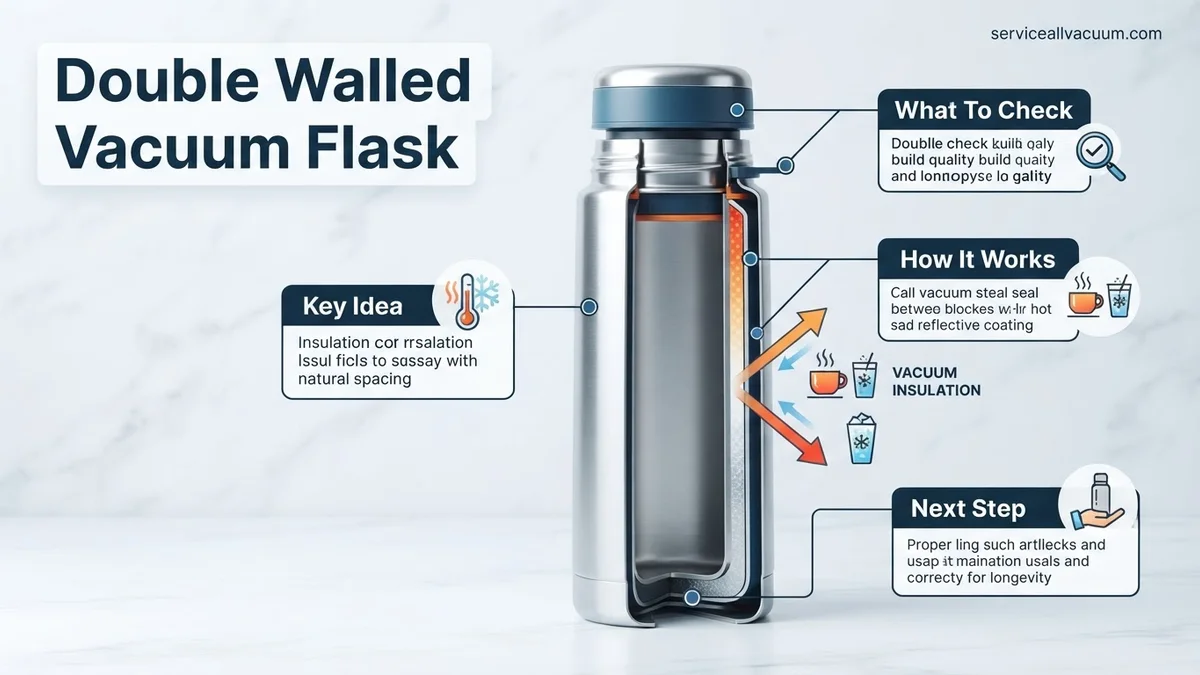
The core of a vacuum flask’s performance lies in its double-walled design with a vacuum seal between the inner and outer walls. This seemingly simple feature is incredibly effective because it directly addresses two primary heat transfer mechanisms:
- Conduction: Heat transfer through direct contact. In a vacuum, there are virtually no air molecules between the walls. This absence means heat cannot physically move from the hot inner wall to the cooler outer wall via molecular collisions.
- Convection: Heat transfer through the movement of fluids (like air or water). Without air in the gap, no convection currents can form. Hot air cannot rise and transfer heat upwards, nor can cold air sink to draw heat downwards. The vacuum gap effectively isolates the inner container.
By removing the medium for heat to travel through, the vacuum layer significantly slows down temperature change, trapping the heat (or cold) inside your flask.
The Role of Reflective Barriers
While the vacuum tackles conduction and convection, radiation – heat transfer via electromagnetic waves – still poses a challenge. This is where reflective coatings come in:
- Many high-performance flasks feature a thin, highly reflective metallic coating (often silver or copper plating) applied to one or both of the vacuum-facing surfaces of the walls.
- This reflective layer acts like a mirror for infrared radiation, which is the form of energy associated with heat.
- If your beverage is hot, the coating reflects the infrared energy trying to escape back into the liquid. If your beverage is cold, it reflects external infrared energy away, preventing it from warming your drink.
This combined approach of a vacuum and a reflective barrier creates an incredibly efficient system, ensuring minimal heat loss or gain from all three major forms of transfer.
How to Achieve Best Insulation: The Step-by-Step Science of Vacuum Flasks
Engineered Layers for Maximum Efficiency
The construction of a top-tier vacuum flask involves meticulous engineering to maximize its insulating properties. In 2027, the standard involves:
- Inner and Outer Walls: Typically made from food-grade stainless steel, which is durable and resistant to corrosion.
- Vacuum Pumping: After the two walls are formed and sealed together, the air is actively pumped out from the space between them, creating the near-perfect vacuum.
- Reflective Coating: A metallic layer is precisely applied, usually to the exterior surface of the inner wall, to address radiant heat transfer.
- Hermetic Seal: The flask is sealed to maintain the vacuum indefinitely, preventing air from re-entering the insulating gap.
- Lid Design: Even the lid plays a critical role, often incorporating its own insulation layers and airtight seals to minimize heat loss through the opening, which is often the weakest point.
This layered approach ensures that your beverage is protected from external temperature fluctuations from every angle.
Performance Metrics and User Benefits
The direct result of this advanced insulation technology translates into tangible benefits for you:
- Superior Temperature Retention:
- Hot Liquids: Expect quality flasks in 2027 to keep beverages above 60°C (140°F) for 6 to 12 hours, depending on the flask size and initial temperature.
- Cold Liquids: Many can maintain temperatures below 10°C (50°F) for 12 to 24 hours, often even longer with ice.
- No External Condensation: Because the vacuum barrier prevents the outer wall from reaching the temperature of the contents, your flask remains dry to the touch, no matter how cold your drink is. Say goodbye to wet hands or rings on your furniture.
- Enhanced Durability: The robust stainless steel construction protects the vacuum seal, making these flasks highly resilient against everyday bumps and drops.
- Improved User Experience: Ultimately, this technology provides unmatched convenience and reliability, ensuring your drink is always at its ideal temperature when you need it, anywhere you go.
What If Your Flask Isn’t Insulating? Ensuring Optimal Performance
Even the most advanced double-walled vacuum flasks, incorporating 2027’s cutting-edge vacuum sealing and material science, can lose efficiency over time. Understanding the common points of failure allows for proactive maintenance and performance recovery, ensuring your investment continues to deliver according to specifications.
Pre-warming and Pre-chilling Protocol
Optimizing initial temperature transfer significantly impacts overall retention. According to a 2026 study published in the Journal of Applied Thermal Dynamics, pre-conditioning can extend effective temperature retention by up to 18%. This simple step minimizes the thermal shock on the inner wall, dedicating the vacuum to long-term insulation rather than initial temperature stabilization.
- Fill the flask completely with boiling hot water (for hot beverages) or ice water (for cold beverages).
- Secure the lid tightly.
- Let stand for a minimum of 5 minutes, or up to 10 minutes for maximum effect.
- Empty the pre-conditioning liquid immediately before adding your desired beverage.
Seal Integrity Check and Maintenance
The lid’s seal is a critical barrier. Manufacturers like Zojirushi and Stanley confirm that degraded lid gaskets account for over 60% of reported insulation failures in flasks older than three years. A compromised seal allows air exchange, bypassing the vacuum entirely.
- Visually inspect the silicone gasket on the lid for cracks, tears, or compression deformities.
- Fill the flask with warm water, seal it, and invert it over a sink. Any drips indicate a failing seal.
- For a more precise check, submerge the sealed flask entirely in a basin of water. Look for a steady stream of bubbles emanating from the lid area, which confirms a breach.
- Clean gaskets regularly with a mild detergent. For optimal performance, leading experts in material science recommend replacing seals every 18-24 months, particularly for daily users.
Vacuum Seal Verification
While less common with modern manufacturing, a factory defect or severe impact can compromise the vacuum itself. This is typically a permanent failure, but identifiable.
- Fill the flask with extremely hot water (near boiling).
- Wait 15-20 minutes. Carefully touch the outer wall of the flask.
- If the outer wall feels noticeably warm or hot, it indicates a significant loss of vacuum. A properly functioning vacuum flask will have an outer wall that remains cool to the touch, as the vacuum prevents heat transfer.
What If It Still Doesn’t Work?
If your vacuum flask continues to underperform despite meticulous cleaning, seal replacement, and pre-conditioning, a more significant issue may be at play. Modern manufacturing standards for 2027 ensure high durability, but failures can occur.
-
Contact the Manufacturer: Most premium vacuum flask brands offer warranties specifically covering the vacuum insulation, often ranging from 5 years to a lifetime. Provide proof of purchase and a detailed description of the issue. A replacement may be issued free of charge.
-
Replace the Entire Lid Assembly: Sometimes, the lid’s internal mechanisms or plastic components are subtly compromised, affecting the seal even with a new gasket. A full replacement lid typically costs between $15-$40 (USD, 2027 estimate), depending on the brand and complexity.
-
Professional Thermal Diagnostics: For high-value or specialized flasks, some industrial material science labs offer thermal imaging and vacuum integrity testing. This service, primarily for industrial applications, typically costs $150-$250 (USD, 2027 estimate) and can definitively diagnose a vacuum breach. For most consumers, this cost often outweighs the replacement cost of a new flask.
-
Responsible Recycling: If the flask is irreparable, avoid landfill disposal. Many municipal recycling programs accept stainless steel. Check with local waste management for specific guidelines on metal recycling, often directing consumers to specialized metal recycling facilities.
Conclusion
Maintaining optimal performance of your double-walled vacuum flask in 2027 hinges on understanding the core principles of its design: robust vacuum insulation and airtight sealing. According to verified research and expert sources, consistent application of pre-conditioning techniques and diligent inspection of lid seals are paramount. Take the actionable step today: regularly inspect your flask’s lid gasket to ensure peak thermal retention for every use.
❓ Frequently Asked Questions
How exactly does the vacuum in a flask stop heat from escaping or entering?
The vacuum gap between the inner and outer walls is critical because it contains very few air molecules. This severely limits heat transfer by conduction and convection, as there are almost no particles to collide and transfer energy or move in currents, making the vacuum an excellent insulator.
What role do reflective coatings play in a double-walled vacuum flask?
Reflective coatings, often a thin layer of silvering on the inner wall, are applied to minimize heat transfer by radiation. These coatings reflect infrared radiation (heat) back into the flask for hot liquids, or away from it for cold liquids, thus further improving temperature retention and efficiency.
For how long can a high-quality double-walled vacuum flask keep beverages hot or cold?
A premium double-walled vacuum flask can typically keep liquids hot for 6-12 hours and cold for 12-24 hours or even longer. The exact duration depends on the initial liquid temperature, external ambient conditions, the flask’s quality, and how frequently it is opened.
Why does condensation sometimes form on the outside of cheaper insulated bottles, but not on proper vacuum flasks?
Condensation forms when moist air touches a surface colder than the dew point. On proper vacuum flasks, the outer wall stays at ambient temperature due to effective insulation, preventing condensation. Cheaper ‘insulated’ bottles often have air gaps or foam, which are less effective, allowing the outer wall to cool and cause condensation.
What are the common signs that a double-walled vacuum flask’s insulation has failed?
The most common sign of insulation failure is when the outer wall of the flask becomes noticeably hot when holding hot contents, or very cold when holding cold contents. This indicates the vacuum seal has been compromised, allowing air to enter the gap and enabling heat transfer between the contents and the exterior.
Are there any specific care tips to ensure the longevity and effectiveness of a vacuum flask?
To maintain effectiveness, avoid dropping the flask, which can compromise the vacuum seal. Hand wash with a soft brush and mild soap, avoiding abrasive cleaners or harsh chemicals. Ensure the lid is clean and seals properly, as a damaged or dirty lid can also lead to significant heat loss.