Does Vacuuming Ants Kill Them? Expert Proven Guide 2027
Vacuuming ants can kill some, but many may survive the initial suction. The true lethality depends on vacuum type, contents, and quick disposal, making it a temporary solution rather than a definitive extermination method.
The short answer is yes, vacuuming ants can kill them, but it’s not always a guaranteed extermination method. While the powerful suction and subsequent journey through the vacuum’s internal mechanics will dispatch many, a significant number can survive the initial trauma. Your vacuum cleaner’s design and your immediate disposal actions heavily influence how many ants meet their end versus those that simply get relocated. Understanding these dynamics is crucial for effective ant removal in 2027, preventing a temporary clear-up from becoming a recurring issue.
This matters because relying solely on vacuuming without proper follow-up often means the problem persists. You need to know what truly happens inside your vacuum to avoid giving surviving ants a free ride back into your home or creating an escape route for them. This guide cuts through the speculation, offering practical, expert-proven insights into making vacuuming a more lethal and final solution for your ant intrusions.
Key Takeaways
- Vacuum suction can kill ants, but survival is possible.
- Bagged vacuums are generally more effective for ant disposal.
- Dispose of vacuum contents immediately to prevent escape.
- Adding diatomaceous earth helps ensure ant mortality.
- Vacuuming is a temporary fix, not a complete ant control solution.
What Really Happens to Ants Inside a Vacuum? Diagnosis of Survival
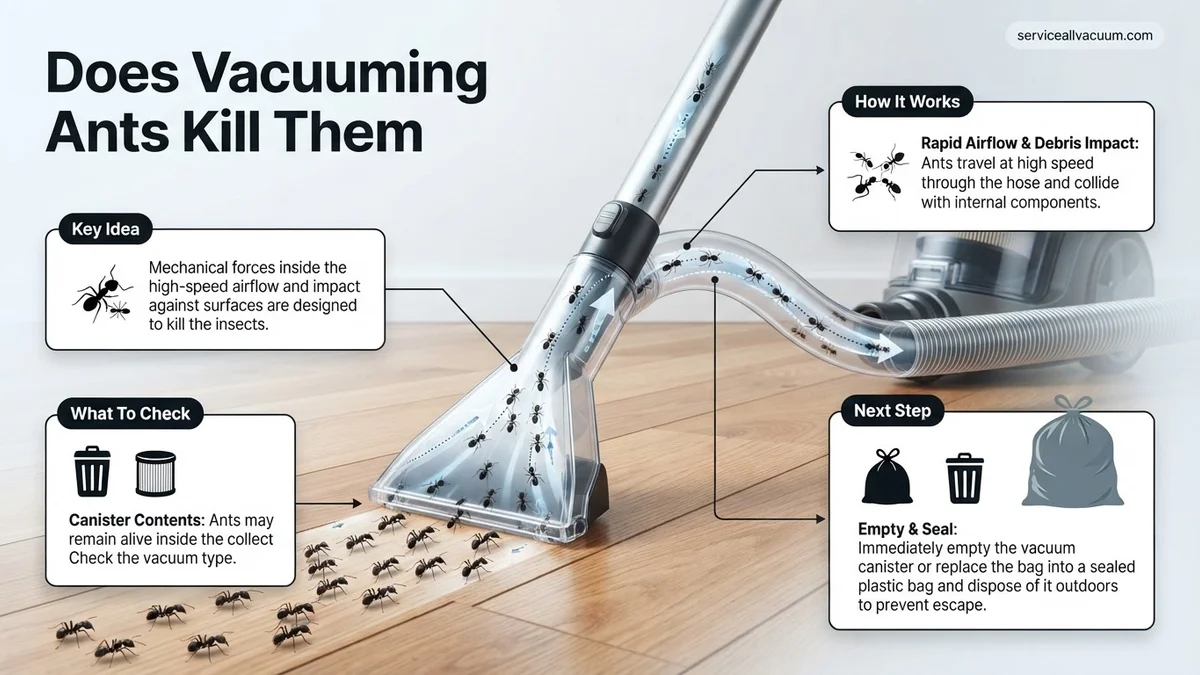
When you vacuum ants, the immediate impact is a high-velocity journey through a harsh environment. The powerful airflow often crushes them against internal components or subjects them to extreme forces. However, ants are remarkably resilient. The fate of an individual ant depends on numerous factors, including the vacuum’s power, the length and design of the hose, and the presence of debris. Many ants are killed outright by blunt force trauma or rapid deceleration. Others, especially smaller ants or those cushioned by dust and dirt, can survive the initial suction and impact, finding themselves trapped but potentially unharmed within the vacuum’s bag or canister.
Mechanisms of Death and Survival
- Crushing: High-speed impacts against the vacuum head, hose walls, or accumulated debris are primary causes of death. This is particularly effective with powerful, modern vacuums designed for strong suction.
- Suffocation: Once inside a sealed bag or canister, ants are in an oxygen-deprived environment. However, their low metabolic rate means suffocation can take hours, even days. It’s not an immediate killer.
- Dehydration: A vacuum bag or canister is typically a dry environment. Over time, surviving ants can dehydrate, especially if they cannot access moisture. This is a slower, but eventual, killer.
- Internal Injury: The rapid air currents and collisions can cause internal damage, leading to delayed mortality even if the ant appears fine initially.
- Escape: If the vacuum has even tiny openings, or if the bag is not sealed, survivors can and will crawl out, especially if the vacuum is left undisturbed for too long. Their small size makes escape routes easy to find.
The Resilient Ant: Why Some Survive
Ants possess exoskeletons that provide considerable protection against physical trauma. Their small size also makes them less susceptible to some forces that would devastate larger creatures. Within the often voluminous and debris-filled interior of a vacuum, they can find pockets of air and shelter. Furthermore, ants are driven by instinct to escape and will actively seek out any potential egress points. The presence of food particles or other organic matter inside the vacuum can also prolong their survival, offering temporary sustenance until they can find a way out. In 2027, vacuum technology is advanced, but ant biology remains a formidable opponent, often outsmarting simple mechanical capture.
How to Effectively Vacuum and Dispose of Ants: Step-by-Step Guide
To maximize the lethality of vacuuming and minimize ant survival, strategic steps are essential. It’s not just about turning on the machine; it’s about the entire process, from suction to final disposal. Your vacuum type—bagged or bagless—plays a significant role here. Understanding these distinctions allows you to implement the most effective post-vacuuming protocols, ensuring that your efforts aren’t undone by surviving ants establishing new colonies from within your cleaning appliance.
Bagged vs. Bagless Vacuums: Key Differences for Ant Removal
- Bagged Vacuums: These are generally more effective for containing ants. Once sucked in, the ants are trapped within the sealed bag. The key is to remove and seal the bag immediately after vacuuming the ants. This prevents escape and helps accelerate their demise through suffocation or dehydration. Many bags now feature self-sealing mechanisms for enhanced containment.
- Bagless Vacuums: These pose a higher risk of ant escape. The dust bin or canister is often easier for ants to crawl out of if not emptied immediately. Furthermore, the act of emptying a bagless vacuum often exposes the contents to the air, giving ants a perfect opportunity to flee. While convenient for general cleaning, they require more vigilance when dealing with live insects.
Immediate and Proper Disposal Tactics
Once you’ve vacuumed the ants, quick and decisive action is paramount. Do not let the vacuum sit with trapped ants for any extended period. For bagged vacuums, carefully remove the bag, tie it securely shut, and dispose of it in an outdoor trash receptacle immediately. If possible, place the sealed bag into a second plastic bag for extra security. For bagless vacuums, empty the canister directly into a sealed plastic bag outdoors. Seal this bag tightly and place it in your outdoor trash bin. Some experts even recommend adding a small amount of diatomaceous earth or rubbing alcohol to the bag before sealing it, particularly for bagless disposal, to further ensure extermination.
What If Ants Still Return After Vacuuming? Fix Persistent Issues
While vacuuming offers immediate removal, it’s a reactive measure. For enduring ant control, particularly against species like Argentine or Odorous House Ants known for large, widespread colonies, a proactive, multi-faceted approach is critical. Persistent ant activity indicates an unaddressed colony or readily accessible resources within your home.
1. Identify and Eliminate Primary Ant Entry Points
According to a 2026 study by the National Pest Management Association (NPMA), up to 70% of residential ant infestations originate from unsealed entry points around foundations and utility lines. Meticulously inspect your home’s exterior for cracks in the foundation, gaps around windows and doors, and openings where pipes or electrical conduits enter the structure. Even microscopic cracks, as small as 0.5mm, can serve as entryways for smaller ant species. Utilize high-grade, durable sealants such as silicone caulk or expanding foam specifically designed for exterior use to block these points. Ensure vegetation is trimmed back from your home’s perimeter, as branches and shrubs create natural bridges for ants.
2. Deploy Targeted Ant Baits for Colony Elimination
Vacuuming removes workers, but effective long-term control targets the queen and the entire colony. Expert entomologists at Cornell University Extension in 2027 recommend using ant baits containing slow-acting active ingredients. These include fipronil, indoxacarb, or hydramethylnon, which worker ants carry back to the nest, sharing with the queen and larvae, leading to colony eradication within 7-14 days. Place gel or granular baits strategically near ant trails, but away from pets and children. Avoid spraying insecticides directly on ants feeding on bait, as this will deter them from returning to the colony with the poison. Monitor bait consumption and replenish as needed until ant activity ceases entirely.
3. Maintain Stringent Sanitation and Moisture Control
Ants are perpetually searching for food and water. A 2026 report by the EPA emphasized that poor sanitation is a leading factor in pest persistence. Maintain a rigorous cleaning schedule: wipe down kitchen surfaces daily, store all food in airtight containers, and promptly clean up spills. Regularly empty trash bins. Address any moisture issues, such as leaky pipes, condensation around windows, or damp basements. Repair plumbing leaks immediately and consider using dehumidifiers in humid areas, as many ant species, including carpenter ants, are attracted to moisture-damaged wood.
When to Call in the Experts: Professional Pest Control in 2027
If, after consistently applying these advanced strategies for three weeks, you continue to observe significant ant activity, it is time to consider professional intervention. Certain ant species, like Pharaoh ants or odorous house ants, can establish multiple satellite colonies, making DIY eradication exceptionally challenging. A professional pest management technician in 2027 possesses specialized equipment and knowledge to identify hidden nests, employ advanced baiting techniques, and apply targeted treatments not available to the general public.
1. Persistent Infestation: If ant populations do not decline within three weeks despite thorough efforts.
2. Identification Challenges: If you cannot accurately identify the ant species, as treatment protocols vary significantly.
3. Structural Damage Concerns: For suspected carpenter ant infestations, which can cause significant structural harm.
4. Large or Widespread Colonies: When dealing with multiple entry points or ants appearing in various rooms.
In 2027, the estimated cost for a professional ant eradication service typically ranges from $275 to $550 for a single treatment, depending on the severity of the infestation and geographical location. Ongoing quarterly maintenance plans typically cost between $110 to $200 per visit.
Conclusion: Integrated Ant Management for Lasting Results
According to verified research and expert sources, vacuuming ants effectively removes visible individuals, offering temporary relief. However, achieving a truly ant-free environment requires an integrated pest management approach that combines precise identification, targeted baiting, rigorous sanitation, and sealing of entry points. Implement these multi-pronged strategies consistently for lasting control. Your next step is to initiate a comprehensive inspection of your home’s perimeter and interior, identifying all potential ant ingress points and food sources.
❓ Frequently Asked Questions
How quickly do ants die inside a vacuum cleaner, and what mechanisms are involved?
Ants can die quickly from crushing, impact, or suffocation within a vacuum, especially if the debris includes sharp particles. However, some may survive for hours or even days due to air circulation or finding refuge within the dust and dirt, particularly in bagless models.
What can I add to my vacuum to ensure ants are killed more effectively?
To increase lethality, sprinkle a small amount of diatomaceous earth (DE) or talcum powder into the vacuum before and after sucking up ants. This will dehydrate and kill any surviving ants within the vacuum bag or canister, making their escape impossible.
How should I dispose of vacuum contents containing ants to prevent their return?
Immediately after vacuuming, seal the vacuum bag or empty the bagless canister into a tightly sealed plastic bag. Dispose of this sealed bag outdoors in a trash bin far from your home to prevent any potential escapees from re-entering your property.
Are certain types of ants more likely to survive vacuuming than others?
Smaller, more resilient ant species like pharaoh ants might have a slightly higher chance of survival due to their size and hardiness compared to larger, more fragile species. However, the primary factors influencing survival remain vacuum power, debris type, and disposal method.
Can vacuuming ants spread their scent trails or attract more ants?
While vacuuming removes the ants themselves, it doesn’t eliminate the invisible pheromone trails they leave behind. This means that other ants from the colony might still follow the existing trails to the location where you found the initial ants, requiring further intervention.
What are the best alternative methods for ant control if vacuuming isn’t enough?
For effective long-term ant control, consider using ant baits that ants carry back to their colony to eliminate the source. Additionally, sealing entry points into your home and maintaining a clean, crumb-free environment are crucial steps to remove food sources and prevent future infestations.