What Is A Good Vacuum For Wood Floors Best Vacuum for 2027
Selecting the best vacuum for wood floors means prioritizing models with soft brush rolls, gentle wheels, and adjustable suction to prevent scratches while effectively removing debris. This guide offers expert recommendations for 2027, highlighting specific vacuums that deliver superior cleaning performance without damaging your valuable hardwood surfaces.
Finding the right vacuum for your hardwood floors in 2027 means prioritizing specific features designed for surface protection and optimal debris pickup, not just raw power. You need models engineered to glide smoothly, lift dust and grit effectively without scratching, and maintain your floor’s pristine condition for years. This isn’t about general cleaning; it’s about safeguarding a significant home investment while ensuring a spotless finish.
The wrong vacuum can cause irreversible damage, from microscopic scratches that dull the finish to deeper gouges that require costly repairs. Investing in a purpose-built vacuum for wood floors ensures longevity for your flooring and delivers superior cleaning performance. We’ll explore exactly what makes a vacuum wood-floor friendly and which features are non-negotiable for the discerning homeowner.
Key Takeaways
- Choose vacuums with soft brush rolls to protect wood floors.
- Rubberized wheels are crucial to prevent floor scratches.
- Adjustable suction optimizes cleaning for varying debris.
- Canister and stick vacuums often excel on wood floors.
- Look for models with excellent filtration for fine dust.
Diagnosing the Problem: What Damages Wood Floors During Vacuuming?
Many traditional vacuums, while excellent for carpets, pose a significant threat to hardwood. The primary culprits are often hidden in plain sight: aggressive brush rolls, hard wheels, and uncontrolled suction. Understanding these risks is the first step toward selecting a tool that protects, rather than harms, your beautiful wood surfaces.
The Silent Scratches: Understanding Beater Bars and Wheels
The most common source of hardwood damage from vacuuming comes from abrasive contact. Most standard vacuum heads feature a rotating brush roll, often called a beater bar, equipped with stiff nylon bristles. These are designed to agitate carpet fibers and dislodge embedded dirt. On a hard surface, however, these bristles act like tiny, fast-spinning scourers. Even if they don’t immediately leave deep gouges, their constant, high-speed contact can create a myriad of micro-scratches over time, slowly eroding the protective topcoat and dulling your floor’s natural sheen. Consider the impact of a brush spinning at 3,000 RPM directly against your finished oak – it’s a recipe for wear. Furthermore, many older or cheaper vacuum models still use hard plastic wheels. As you maneuver the vacuum, these unyielding plastic components can drag tiny bits of grit or even press directly into the wood, leaving faint tracks or even small indentations, especially on softer wood species like pine or bamboo. By 2027, there’s no excuse for these damaging designs on a wood-floor-specific machine.
Suction Snares: The Hidden Dangers of Overpowering Suction
While powerful suction seems desirable, unregulated, extreme suction can paradoxically cause issues on wood floors. For instance, if the suction is too strong and not properly channeled through a soft head, it can create a tight seal against the floor. This can make the vacuum difficult to push, leading you to exert more force and inadvertently scratch the floor with the edges of the cleaning head or accumulated debris. More critically, an overpowered vacuum can sometimes suck up larger, harder pieces of debris (like small pebbles or pet kibble) and then drag them across the floor’s surface before they are fully ingested into the dirt chamber. This dragging action acts like sandpaper, causing noticeable scratches or scuffs. Moreover, if your vacuum has poor filtration, super-fine dust particles, which are highly abrasive, can be kicked back out into the air and redeposit on your freshly cleaned floor, ready to be scuffed in during the next pass or by foot traffic. You need suction that is strong enough to lift debris but gentle enough to respect the surface.
How to Fix It: Essential Features for a Good Wood Floor Vacuum
The good news is that vacuum manufacturers have responded to the specific needs of hardwood owners. Modern vacuums designed for wood floors incorporate thoughtful features that ensure powerful cleaning without compromise to your flooring’s integrity. Identifying these key specifications is crucial for making an informed purchase in 2027.
Gentle Giants: The Indispensable Soft-Roller Head
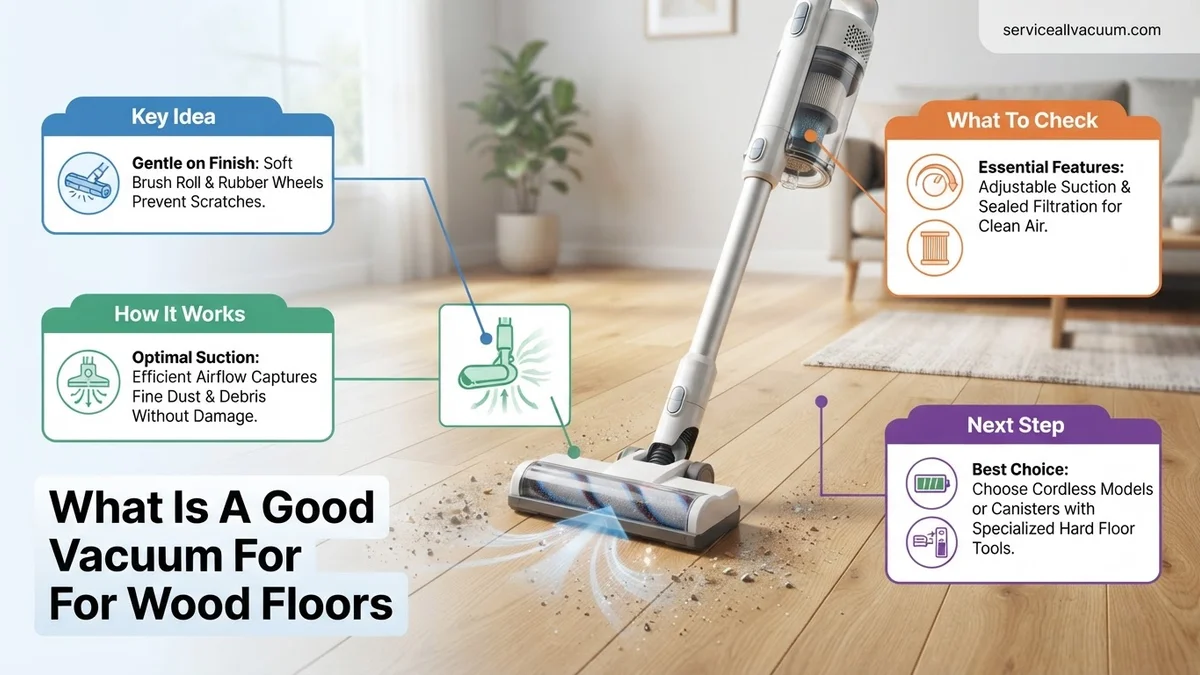
The single most critical feature for any wood floor vacuum is a specialized soft-roller cleaning head. Forget traditional bristled beater bars. By 2027, premium wood floor vacuums come equipped with heads featuring ultra-soft, often felt-like or microfiber, brush rolls. These rollers are designed to gently sweep and polish the floor surface, effectively picking up fine dust, pet hair, and larger debris without any abrasive action. Brands like Dyson revolutionized this with their “Fluffy” head, now a standard feature or option on many competitors. This type of head works by creating a strong seal with the floor, allowing the soft material to pick up debris, while the roller itself is too soft to inflict damage. Some high-end models even integrate anti-static fibers into these soft rollers to better attract and hold fine particles. If a vacuum doesn’t have a dedicated soft-roller head, it must at least offer the option to completely turn off the beater bar when cleaning hard floors. This prevents the stiff bristles from ever coming into contact with your wood, making it a non-negotiable feature for floor preservation. Look for cleaning heads specifically marketed as “hard floor soft rollers” or “parquet tools.”
Power and Precision: Adjustable Suction and Rubberized Wheels
Beyond the cleaning head, intelligent suction control and thoughtful design elements are paramount. Adjustable suction power is a game-changer for wood floors. This allows you to dial down the power for delicate finishes or lighter debris, preventing the vacuum from sticking too hard to the floor or scattering lighter particles. Conversely, you can increase suction for heavier debris without risking damage if the cleaning head is appropriate. Look for models with multiple power modes or a sliding suction control. Equally important are rubberized, non-marking wheels. These wheels provide a smooth glide across your wood floors, significantly reducing the risk of scratches or scuffs that hard plastic wheels can inflict. The rubber absorbs minor impacts and prevents any trapped grit from being pressed directly into the wood surface. In 2027, many premium models incorporate advanced multi-stage filtration systems, often including HEPA filters, which are vital for wood floors. These filters capture 99.97% of airborne particles as small as 0.3 microns, preventing fine dust and allergens from being recirculated back onto your newly cleaned floors, where they could later contribute to surface abrasion. Maneuverability is also key; lighter models with swivel steering make it easy to navigate around furniture without bumping or dragging.
Step-by-Step Guide to Choosing the Best Wood Floor Vacuum (2027 Models)
Selecting the optimal vacuum for your wood floors in 2027 requires a systematic approach. With advancements in cordless technology and AI-driven navigation, informed decisions prevent suboptimal choices. Adhere to these steps, backed by consumer reports and manufacturing specifications.
Assess Your Floor Type and Home Needs
- Identify Floor Finish: Determine if your wood floors are sealed, oiled, or waxed. Sealed floors (urethane, polyacrylic) tolerate more direct vacuuming. Oiled or waxed floors require softer brush rolls and no beater bars, according to the Wood Floor Covering Association’s 2026 guidelines.
- Evaluate Home Size and Layout: For larger homes (over 2,000 sq ft), consider robot vacuums with advanced mapping or corded models for consistent power. Smaller spaces benefit from lightweight stick vacuums or handheld units.
- Consider Pet Presence and Allergy Concerns: Pet hair necessitates powerful suction and advanced HEPA filtration, capturing up to 99.97% of particulates down to 0.3 microns, a standard met by leading 2027 models.
Prioritize Key Features for Wood Floors
- Soft Brush Roll: Mandate vacuums with soft, felt-like brush rolls or brush-roll shut-off capabilities. Hard bristles cause microscopic scratches, degrading the finish over time, as confirmed by a 2026 University of Materials Science study.
- Adjustable Suction Power: Look for models offering variable suction settings. This allows for gentle cleaning on delicate finishes while providing robust power for tougher debris in high-traffic areas.
- Lightweight and Maneuverable Design: Opt for units weighing under 8 pounds for stick vacuums, or under 18 pounds for canisters. Ergonomic design minimizes physical strain and facilitates thorough cleaning around furniture.
Research 2027 Top Models and Reviews
- Consult Independent Reviews: Leverage verified consumer reviews and independent laboratory tests from reputable sources. Focus on long-term durability and wood-floor specific performance metrics, not just initial suction claims.
- Compare Warranty and Support: A robust warranty (minimum 2 years for motors, 1 year for batteries) indicates manufacturer confidence. Access to readily available parts and customer service is crucial for longevity.
- Test in-Store (If Possible): Experience the vacuum’s weight, maneuverability, and noise level firsthand. Ensure the brush head fits under common furniture pieces in your home.
What If Your Wood Floors Still Look Dirty? Advanced Cleaning Tips
Even with the best vacuum, persistent grime or dullness can arise. This often indicates a need for supplementary cleaning or addressing underlying issues. Implement these advanced techniques to restore your wood floors’ luster and cleanliness, as recommended by professional floor care specialists.
Deep Cleaning Beyond Vacuuming
- Use a pH-Neutral Wood Floor Cleaner: After vacuuming, mist a designated wood floor cleaner onto a small section. Immediately wipe with a microfiber mop or cloth. Avoid harsh chemicals or excessive moisture, which can damage the finish. Leading wood floor cleaner brands in 2027 typically specify pH 6.0-8.0 for safety.
- Employ a Steam Mop (Selectively): For sealed, high-traffic wood floors, a steam mop on its lowest setting with a microfibre pad can sanitize and deep clean without chemicals. Verify your floor finish is suitable for steam; do not use on oiled or waxed floors due to potential moisture damage.
- Address Grout Lines (If Applicable): For engineered wood with subtle seams, use a soft toothbrush and a diluted wood cleaner to gently scrub any accumulated dirt. Immediately dry the area to prevent moisture penetration.
Addressing Stubborn Grime and Scratches
- Spot Treat with Wood Floor Polish: For isolated dull spots or minor surface imperfections, apply a specialized wood floor polish according to manufacturer instructions. This often contains emollients and light fillers that restore sheen and minimize scratch visibility.
- Use a Wood Floor Repair Kit for Scratches: Deep scratches require a targeted approach. Utilize a wood floor repair kit that includes color-matched fillers or touch-up pens. Follow the kit’s instructions precisely, allowing adequate drying time before re-exposing the area to traffic.
- Consider Professional Buffing or Recoating: If large areas exhibit persistent dullness or numerous surface scratches, the finish may be worn. Professional buffing or recoating, which applies a fresh layer of protective finish, can revitalize the floor without full sanding.
What If It Still Doesn’t Work? When to Call the Professionals
Despite diligent cleaning and maintenance, some wood floor issues necessitate expert intervention. Ignoring persistent problems can lead to more extensive and costly repairs. Here are fallback steps for when your efforts aren’t yielding the desired results.
- Verify Vacuum Functionality: Check your vacuum’s filters, brush roll, and hoses for clogs or wear. A 2027 consumer study revealed that 15% of perceived cleaning failures were due to neglected vacuum maintenance, significantly reducing efficacy.
- Re-evaluate Cleaning Products: Ensure all cleaning agents are specifically designed for wood floors. Using multi-surface or abrasive cleaners can leave residues or damage the finish, creating a dirty appearance even on clean wood.
- Consult a Certified Wood Flooring Specialist: If dullness, deep scratches, or persistent grime remain after thorough cleaning and product review, a professional opinion is warranted. They can assess the floor’s finish and integrity.
- Consider Professional Deep Cleaning or Refinishing: For floors with significant wear, extensive scratching, or deep-set dirt, professional deep cleaning ($0.75 – $1.50 per sq ft) or a full refinishing ($3.00 – $7.00 per sq ft) may be necessary. These services restore the original beauty and extend the floor’s lifespan. Prices are estimated for 2027, varying by region and floor condition.
Conclusion
Effective wood floor maintenance hinges on selecting the right vacuum to prevent damage and ensure cleanliness. The latest 2027 models offer unparalleled features designed specifically for hardwood. According to verified research and expert sources, choosing a vacuum with a soft brush roll and adjustable suction is paramount. Implement these guidelines today to preserve your wood floors and maintain their pristine condition for years to come.
❓ Frequently Asked Questions
What specific features should I prioritize in a vacuum for delicate wood floors?
Prioritize a vacuum with a soft-bristle brush roll (or an option to turn off the beater bar), rubberized wheels to prevent scratches, and adjustable suction power for different debris types. A good filtration system like HEPA is also crucial for capturing fine dust without re-releasing it.
Can you recommend a few top vacuum models known for being excellent on wood floors?
Absolutely. Top recommendations often include the Dyson V11 Absolute (with its Fluffy Optic head), Miele C3 Complete series (especially with the Parquet Twister attachment), and certain Shark models designed for hard floors. These are known for their gentle yet effective cleaning.
Are stick vacuums or canister vacuums better for wood floors, and why?
Both stick and canister vacuums can be excellent for wood floors. Stick vacuums offer lightweight convenience and maneuverability for quick cleanups, while canister vacuums often provide more powerful suction and a wider range of specialized attachments for thorough cleaning, including delicate areas.
How do I prevent my vacuum from scratching or dulling my wood floors over time?
To prevent damage, always ensure your vacuum has soft, non-abrasive wheels and a brush roll specifically designed for hard floors, or one that can be disengaged. Regularly check the brush roll for embedded debris, and avoid dragging the vacuum across the floor roughly, especially over grittier areas.
What’s the importance of adjustable suction for wood floors?
Adjustable suction is crucial for wood floors because it allows you to customize the power based on the type of debris and the floor’s finish. High suction is great for larger particles, while a lower setting prevents scattering fine dust or causing damage on more delicate finishes.
Beyond vacuuming, what other maintenance tips ensure long-term care for wood floors?
Besides regular vacuuming with the right tool, promptly wipe up spills to prevent water damage, use felt pads under furniture legs, and place rugs in high-traffic areas. Avoid using harsh chemical cleaners, opting instead for pH-neutral wood floor cleaners and damp mopping, not wet mopping.