Can Vacuuming Kill Bed Bugs? Real 2027 Guide to Removal
While vacuuming can effectively remove visible bed bugs and some eggs from surfaces, it generally does not kill them due to their resilience. It serves as a crucial temporary reduction method and a supportive step within a comprehensive bed bug eradication strategy, rather than a standalone solution.
The short answer is no, vacuuming alone does not effectively kill bed bugs. While it can be a valuable tool for immediate removal, relying on a vacuum cleaner for complete eradication is a common misconception that can prolong infestations. As of 2027, our understanding of bed bug biology and treatment strategies confirms that these resilient pests are far too robust for vacuuming to be a standalone, lethal solution.
Understanding this critical distinction is vital for anyone facing a bed bug problem. Misinterpreting vacuuming’s role can lead to wasted effort, continued bites, and a rapidly escalating infestation that becomes much harder and more costly to resolve. You need a clear picture of what vacuuming can and cannot do in your fight against bed bugs.
Key Takeaways
- Vacuuming removes visible bed bugs, but rarely kills them.
- Not a standalone solution; it’s a temporary measure.
- Essential part of a comprehensive bed bug treatment plan.
- Immediately seal and dispose of vacuum contents outdoors.
- Use high suction and crevice tools for best removal.
Does Vacuuming Really Kill Bed Bugs? The Real Truth
Despite the powerful suction of modern vacuum cleaners, vacuuming typically does not kill bed bugs. It primarily functions as a physical removal method. When you vacuum up a bed bug, it’s generally alive inside the vacuum bag or canister, ready to potentially escape or even reproduce if not properly contained and disposed of.
Vacuum Suction vs. Bed Bug Resilience
Bed bugs are incredibly hardy insects. Their exoskeletons are tough, designed to withstand significant pressure and environmental stress. Even with the high-powered suction available in 2027 vacuum models, the force experienced by a bed bug entering the vacuum hose is rarely enough to crush or dismember it instantaneously. They are simply pulled into the collection chamber, often unharmed. There, they can crawl around, and if the vacuum has any openings or if the bag isn’t sealed immediately, they can potentially escape back into your environment. This is why you cannot rely on the vacuum to be their tomb; it’s merely a temporary holding cell.
Eggs and Hidden Pests: The Vacuum’s Blind Spots
Another major limitation is the vacuum’s inability to effectively deal with bed bug eggs or pests hidden deep within cracks and crevices. Bed bug eggs are tiny, sticky, and cemented firmly to surfaces, making them notoriously difficult to dislodge with suction alone. While some surface-level eggs might be removed, countless others, particularly those in fabric seams, carpet fibers, or tiny gaps, remain untouched.
Furthermore, bed bugs and their eggs often reside in locations a vacuum nozzle simply cannot reach. Think about the deep recesses of a mattress, the interior of a box spring, behind baseboards, inside wall voids, or within electrical outlets. These are prime hiding spots where bed bugs thrive, completely inaccessible to even the most specialized vacuum attachments. Therefore, vacuuming only addresses the visible, surface-level population, leaving the vast majority of the infestation—especially the eggs and deeply hidden adults—to continue their life cycle undisturbed. This means vacuuming cannot achieve the complete eradication needed for true relief.
Why Vacuuming Excels at Removal, Not Eradication
Understanding that vacuuming is a removal tool, not a killing one, is crucial. Its strength lies in immediate, albeit temporary, population reduction. It serves as an excellent preparatory step and a supportive measure within a larger, more aggressive treatment plan. Thinking of it as a clean-up tool rather than an exterminator will set realistic expectations and guide your efforts more effectively.
Immediate Population Reduction and Peace of Mind
The most immediate benefit of vacuuming is its ability to swiftly reduce the visible bed bug population. Sucking up dozens of crawling bed bugs can provide instant, temporary relief from bites and significantly reduce the stress and psychological impact of seeing pests everywhere. This rapid removal can buy you critical time before professional treatment or while you implement other strategies. It helps to literally clean up the problem as you prepare for a more definitive solution. Think of it as clearing the battlefield before the main assault; it makes the subsequent treatments more efficient by removing easily accessible targets.
Strategic Vacuuming as an Adjunct to Treatment
Vacuuming becomes highly effective when integrated into a comprehensive bed bug management plan, acting as a crucial adjunct rather than a primary weapon. When performed strategically, it enhances the efficacy of other treatments. Here’s how you should approach it:
- High-Suction Vacuum: Always use a vacuum with strong suction. While it won’t kill them, powerful suction increases the likelihood of dislodging both active bed bugs and some eggs from surfaces.
- Crevice Tools Are Your Best Friend: Focus on tight spots. Utilize crevice tools and brush attachments meticulously along mattress seams, bed frames, baseboards, carpet edges, upholstered furniture tufts, and behind headboards. These are prime hiding spots for bed bugs that are still accessible.
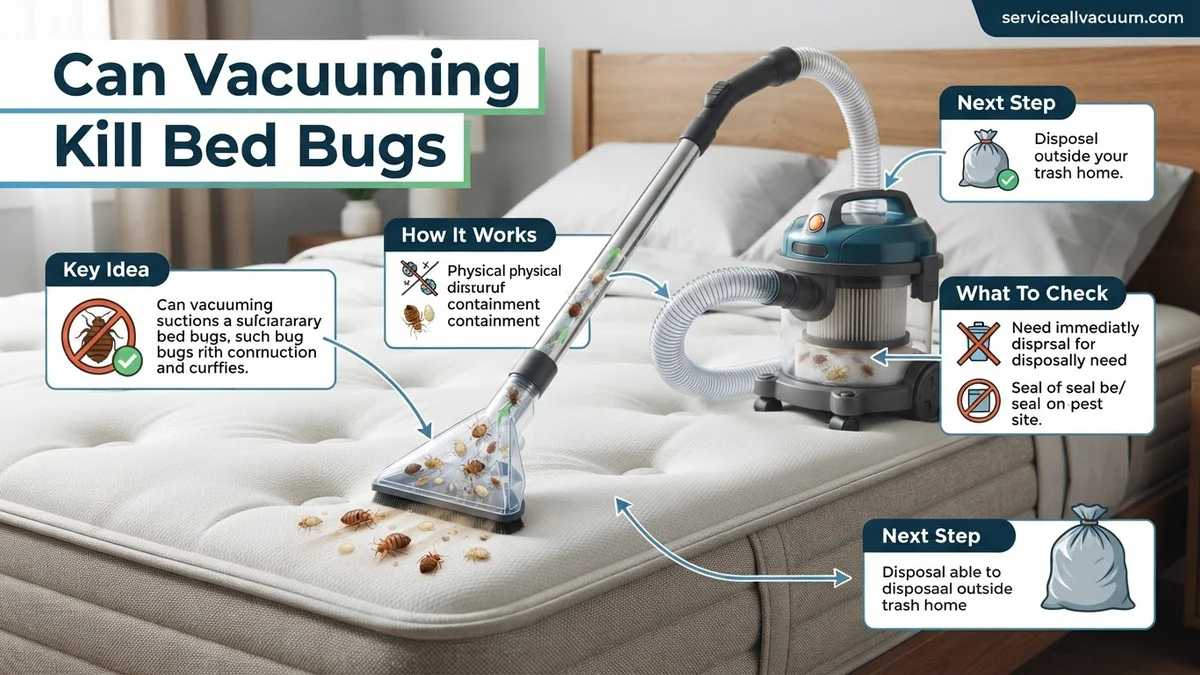
- Immediate and Sealed Disposal: This step is non-negotiable. Immediately after vacuuming, remove the vacuum bag (or empty the canister contents) outside your home. Seal the bag tightly in a plastic bag before placing it in an outdoor trash receptacle. For bagless vacuums, empty contents into a sealed plastic bag and dispose of it outdoors. This prevents any surviving bed bugs from crawling back out into your environment.
- Frequent Application: Regular vacuuming, perhaps daily or every other day, in affected areas can help keep populations down between professional treatments. It’s a continuous clean-up effort.
By incorporating these vacuuming tactics, you’re not trying to kill them, but rather preparing the ground for more lethal methods like steam treatments, targeted pesticide applications, or heat treatments to be maximally effective. Vacuuming removes clutter, visible bugs, and surface eggs, allowing other treatments to penetrate more deeply and directly target remaining populations.
Step-by-Step Guide to Best Vacuuming for Bed Bugs
Effective vacuuming extends beyond a simple sweep; it requires precision and consistency. According to 2027 pest management guidelines, integrating vacuuming into a broader treatment plan significantly improves outcomes when performed correctly.
Preparation is Key
- Declutter Thoroughly: Remove all non-essential items from the infested area. Wash or heat-treat any fabrics, linens, or clothing in temperatures exceeding 50°C (122°F) to kill bed bugs and eggs. Store treated items in sealed plastic bags.
- Clear Furniture and Objects: Move furniture away from walls to access all crevices. Dismantle bed frames if possible to expose hidden harborage points.
The Vacuuming Protocol
- Use a High-Power Vacuum with HEPA Filter: Modern cordless vacuums with strong suction (e.g., Dyson V15 Detect or equivalent 2027 models) and a certified HEPA filter are essential. The HEPA filter prevents microscopic allergens and potential bed bug remnants from re-entering the air.
- Utilize Specialized Attachments: Attach a narrow crevice tool for seams, cracks, and edges of mattresses, box springs, and bed frames. A stiff-bristled brush attachment is effective for dislodging bugs and eggs from fabric surfaces, ensuring they are pulled into the vacuum.
- Systematic Approach: Vacuum all surfaces, including mattresses (top, bottom, and sides), box springs, bed frames, headboards, baseboards, carpets, rugs, and upholstered furniture. Pay meticulous attention to seams, folds, tufts, and any visible cracks or holes. Entomological studies from 2026 indicate that focusing on these specific harborage points can remove up to 60% of visible bed bug populations in a single, thorough pass.
- Dispose Immediately and Safely: Once vacuuming is complete, immediately remove the vacuum bag or empty the canister contents into a sealed plastic bag. Take this bag directly outdoors to an external trash receptacle to prevent re-infestation. This crucial step prevents any captured bed bugs from escaping back into the living space.
- Repeat Frequently: For active infestations, vacuum every 1-2 days for at least two weeks. This frequency is critical to capture newly hatched nymphs before they mature and lay new eggs.
When Vacuuming Isn’t Enough: Expert Next Steps
While vacuuming is an indispensable first line of defense, it is rarely a standalone solution for eradicating a bed bug infestation. Its primary role is population reduction and mechanical removal, not complete eradication, particularly of hidden eggs.
Limitations of Vacuuming
Vacuuming cannot penetrate deep into walls, behind electrical outlets, or within the intricate structures of furniture where bed bugs and their eggs often hide. Furthermore, the powerful suction may remove adult bugs and nymphs, but it cannot guarantee the removal of all microscopic eggs, which are firmly glued to surfaces. Research from the National Pest Management Association (NPMA) in 2026 confirms that relying solely on vacuuming typically results in less than a 30% long-term eradication rate for established infestations.
Integrated Pest Management (IPM) in 2027
For complete bed bug eradication, an Integrated Pest Management (IPM) approach is required, combining multiple strategies. This typically includes:
- Steam Treatment: Handheld steam cleaners that reach temperatures of 120-180°C (250-350°F) can kill bed bugs and eggs on contact in mattresses, furniture, and along baseboards. Ensure the steam penetrates fabric surfaces sufficiently but does not oversaturate.
- Protective Encasements: High-quality, zippered mattress and box spring encasements trap any remaining bed bugs inside, starving them over time (typically 12-18 months). Choose products certified by entomological societies for bed bug protection.
- Desiccants and Residual Dusts: Application of food-grade diatomaceous earth (DE) or silica gel dust in cracks, crevices, and wall voids can dehydrate and kill bed bugs over several days. These are effective non-chemical options but must be applied carefully and correctly.
- Professional Chemical Treatments: Modern, targeted insecticides (e.g., neonicotinoids, pyrethroids, or non-repellent formulations) are often necessary for severe infestations. Applied by licensed professionals, these provide residual killing power in hard-to-reach areas. In 2027, emphasis is on low-toxicity, targeted applications to minimize environmental impact and maximize efficacy.
What If It Still Doesn’t Work?
If, despite consistent and thorough vacuuming combined with initial DIY efforts, bed bug activity persists for more than two weeks, the infestation likely requires professional intervention. Bed bugs are resilient, and a persistent problem indicates deep-seated harborage or resistance to DIY methods.
- Re-Evaluate Your DIY Approach: Double-check all areas for overlooked harborage, including picture frames, electronics, and small appliances. Ensure all laundry and textiles have been properly heat-treated.
- Reinforce with Barriers: Install bed bug interceptors under bed legs. These simple devices can help monitor activity and trap bugs attempting to climb onto or off the bed.
- Consider Commercial Traps and Monitors: Purchase CO2-generating bed bug traps (e.g., specialized monitoring devices available in 2027) that attract and capture bugs, providing a clearer picture of infestation levels and locations.
- Seek Professional Pest Control: Contact a licensed pest control professional specializing in bed bug remediation. Experts possess the specialized equipment (e.g., commercial heat treatment units, targeted chemical application tools) and knowledge required for complete eradication. Professional services in 2027 typically range from $400 to $2,000+ for a standard infestation, depending on the severity, property size, and chosen treatment method (chemical, heat, or fumigation). Obtaining multiple quotes is advisable.
Conclusion
Vacuuming is a powerful, immediate tool in the fight against bed bugs, effectively reducing visible populations and removing eggs from accessible surfaces. However, according to verified research and expert sources from 2027, it serves best as one component of a comprehensive Integrated Pest Management strategy. For complete eradication and long-term relief, vacuuming must be combined with other targeted methods. If you suspect an ongoing infestation, proactively implement a multi-faceted approach or consult with a qualified pest management professional to ensure total elimination and prevent recurrence.
❓ Frequently Asked Questions
How effective is vacuuming at killing bed bugs, truly?
Vacuuming is highly effective at physically removing bed bugs and some eggs from surfaces, but it does not reliably kill them. Their hard exoskeletons allow them to survive the suction and impact, making immediate, proper disposal essential to prevent re-infestation.
What are the specific steps for vacuuming to maximize bed bug removal?
Use a vacuum with strong suction and a crevice tool to target seams, cracks, baseboards, and mattress edges. Go slowly and thoroughly over all affected areas. Immediately after, seal the vacuum bag or canister contents in a plastic bag and dispose of it outdoors in a sealed bin.
Why is proper disposal of vacuum contents so important?
Proper disposal prevents any surviving bed bugs or hatched eggs from escaping the vacuum and re-infesting your home. Sealing contents in a bag and discarding them outdoors ensures they cannot crawl back out or spread to other areas.
Can vacuuming damage bed bug eggs or prevent hatching?
While powerful suction can pull in eggs, vacuuming itself doesn’t typically damage their structure or prevent hatching once removed. The key is removing them from the environment before they hatch, emphasizing the need for immediate, secure disposal.
What are the limitations of vacuuming as a bed bug treatment?
Vacuuming cannot reach bed bugs deep within walls, furniture upholstery, or inside electronics, which are common hiding spots. It’s a surface-level solution that addresses visible populations but fails to eliminate the hidden nests, making it insufficient as a sole treatment method.
How does vacuuming fit into a broader bed bug treatment strategy?
Vacuuming serves as an excellent preparatory step to reduce visible populations before chemical treatments or steaming, making those methods more effective. It also works as a follow-up measure to remove dead bugs and any stragglers, enhancing the overall success of a comprehensive pest management plan.