Can I Vacuum Fleas Off My Dog? Real Expert Guide 2027
Vacuuming fleas directly off your dog can offer temporary relief and remove some adult fleas and eggs, but it is generally not a standalone solution for an infestation. While potentially safe with proper technique, it must be complemented by comprehensive flea treatment methods to be truly effective in 2027.
Vacuuming fleas directly off your dog might seem like an immediate, non-chemical solution, and while it can remove some adult fleas temporarily, it’s generally neither an effective long-term treatment nor entirely without risks. This method is considered a superficial, short-term measure at best, and certainly not a substitute for vet-recommended flea control in 2027.
Understanding its limitations and potential downsides is crucial for any pet owner considering this approach. You want to alleviate your dog’s discomfort quickly, and the idea of manually removing pests feels proactive. However, the intricacies of flea biology and your dog’s safety dictate a more nuanced understanding of this seemingly straightforward technique.
Key Takeaways
- Vacuuming provides temporary relief, not a cure.
- Use quiet, low-suction handheld vacuum only.
- Dispose of vacuum contents immediately and safely.
- Combine vacuuming with vet-approved flea treatments.
- Prioritize dog’s comfort and safety during process.
Evaluating Vacuuming Fleas Off Your Dog
Immediate Effectiveness & Limitations
When you vacuum your dog, you might indeed capture some adult fleas crawling on the surface of their coat. Studies, though limited on direct pet vacuuming, suggest that even a high-powered vacuum only removes a fraction – perhaps 20-30% of visible adult fleas – from a dog’s fur in a single pass. This is because fleas cling tenaciously to hair strands, making complete mechanical extraction difficult, especially as they burrow into denser undercoats.
Crucially, vacuuming cannot eliminate flea eggs, larvae, or pupae that are embedded in the fur or attached to the skin. These immature stages make up the vast majority of a flea infestation, meaning a significant reproductive population remains even after surface vacuuming. This renders the method largely ineffective for lasting relief or breaking the flea life cycle.
When & Why Owners Consider It
Pet owners often consider vacuuming their dog out of desperation, perhaps while waiting for a vet appointment or when seeking a non-chemical alternative due to sensitivity concerns. It can provide fleeting, superficial relief for a dog with a very light infestation, temporarily reducing the immediate biting activity. For instance, if you spot just one or two adult fleas and want to remove them manually before applying a proper treatment, careful vacuuming might be used.
However, it’s vital to view this as an emergency band-aid, not a primary treatment. In 2027, comprehensive flea control protocols consistently emphasize treating the entire life cycle, which vacuuming your dog simply cannot achieve.
Is Direct Vacuuming Effective & Safe for Dogs?
Safety Concerns: Noise, Suction, & Stress
The primary safety concerns when vacuuming a dog revolve around noise, suction strength, and the potential for stress. Many dogs are naturally fearful of vacuum cleaners, associating the loud noise and vibrating sensation with anxiety or perceived threat. This can lead to significant behavioral stress, making future grooming or even household vacuuming difficult.
Furthermore, standard household vacuums often possess suction power far too strong for a dog’s delicate skin. Using high suction can cause skin irritation, bruising, or even pull out clumps of fur, leading to discomfort or dermatological issues. Even handheld vacuums designed for pet hair can be too aggressive. It’s paramount to consider your dog’s temperament and only use the absolute lowest possible suction, preferably from a quiet, battery-operated device.
What Can Be Removed vs. What Remains
While a gentle vacuum pass might dislodge and capture some adult fleas that are actively crawling on the surface of your dog’s coat, this is the extent of its capability. Fleas, especially if they are engorged or burrowed deep into the fur, are notoriously difficult to remove mechanically. They have strong claws designed to cling to hair shafts.
Crucially, any flea eggs, larvae, or pupae nestled in your dog’s coat will almost certainly remain untouched. These immature stages are microscopic and incredibly resilient. This means that even if you manage to vacuum up a few adult fleas, the vast majority of the infestation – and the source of future adult fleas – will persist on your dog, continuing the cycle and quickly re-infesting them.
How to Safely Attempt Vacuuming Fleas (If You Must)
Choosing the Right Equipment & Technique
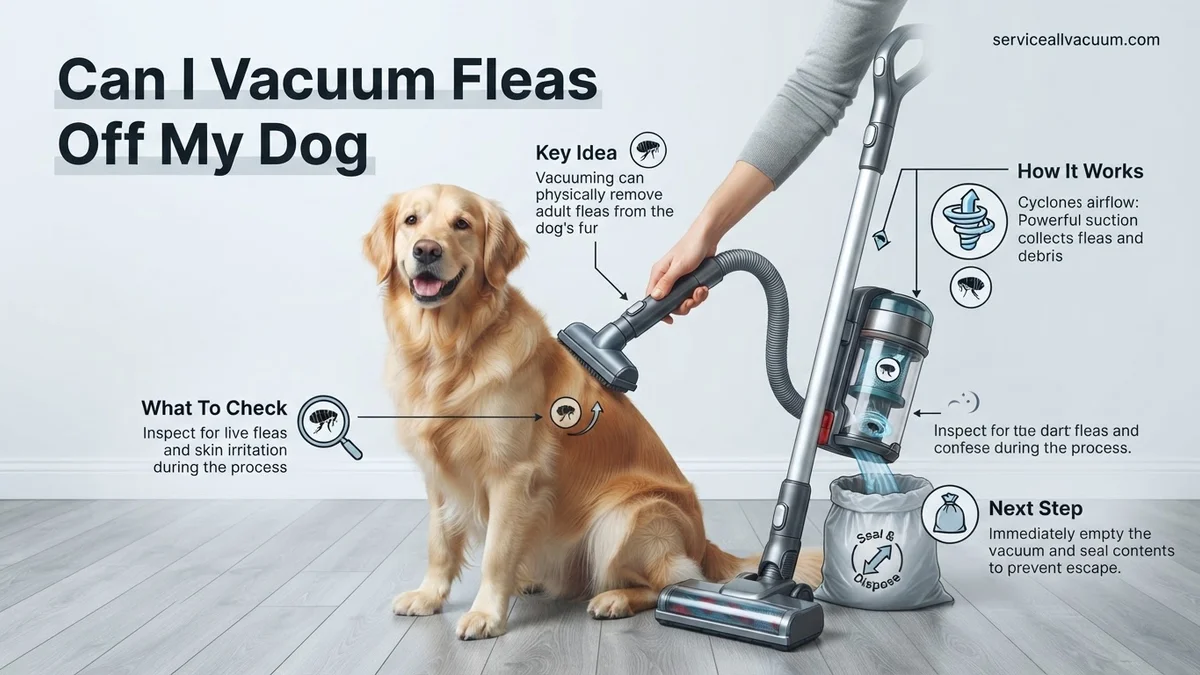
If, despite the clear limitations, you decide to attempt vacuuming fleas directly off your dog, selecting the correct equipment is paramount for their safety. You absolutely need a quiet, handheld vacuum with adjustable and very low suction. Avoid powerful upright or canister vacuums; their strength is too intense. Battery-operated models are often quieter and less intimidating.
For attachments, opt for a soft brush attachment or a rubber-tipped pet grooming tool designed for vacuums, rather than hard plastic nozzles. These are gentler on the skin and less likely to cause abrasions. Practice on your own arm first to gauge the suction. The goal is to lightly skim the surface of the fur, not pull at the skin. Ensure your dog is comfortable with the sound and sensation before starting.
Best Practices for Minimal Risk & Immediate Disposal
Before you begin, ensure your dog is calm and relaxed. Offer treats and positive reinforcement. Use very gentle, slow strokes, always moving with the direction of hair growth. Never press the attachment directly into the skin. Pay special attention to areas fleas commonly inhabit, like the back near the tail and along the spine, but avoid sensitive regions such as the face, ears, genitals, and any existing skin irritations or wounds.
Immediately after vacuuming, the contents of the vacuum bag or canister must be properly disposed of to prevent re-infestation. Fleas and eggs trapped inside can quickly escape. If using a bagless vacuum, empty the canister directly into a sealed plastic bag, tie it tightly, and immediately place it in an outdoor trash receptacle. For vacuums with bags, remove the bag, seal it, and dispose of it outdoors the same way. This critical step ensures any captured fleas don’t simply crawl back out and onto your pet or into your home.
How to Safely Vacuum Fleas Off Your Dog: Step-by-Step
While direct vacuuming is not a primary eradication method, it can offer immediate, temporary relief and remove adult fleas from your dog’s coat. This process requires caution and adherence to specific protocols to be effective and safe for your pet.
1. Preparation: Gear and Environment
- Select the Right Vacuum: Utilize a strong vacuum cleaner, preferably with a HEPA filter to prevent microscopic flea eggs or larvae from recirculating. Models equipped with pet-specific brush attachments designed for sensitive skin are recommended. Ensure the vacuum has excellent suction power, ideally above 150 air watts, to effectively dislodge fleas.
- Prepare Your Dog: Gently brush your dog’s coat thoroughly before vacuuming to loosen debris and surface fleas. Ensure your dog is calm and comfortable with the vacuum’s noise and presence. Positive reinforcement, such as treats, can aid compliance.
- Designate a Space: Perform vacuuming in an easily cleanable area, such as a tiled bathroom or outdoors. This minimizes the spread of dislodged fleas or eggs onto carpets or furniture.
2. The Vacuuming Process
- Use a Nozzle Attachment: Avoid direct contact of the main vacuum head with your dog’s skin. Instead, use a flexible hose attachment or a pet grooming attachment. This allows for precise control and prevents skin irritation or injury.
- Gentle, Targeted Strokes: Use short, gentle strokes across your dog’s coat, paying close attention to common flea hotspots. These include the neck, behind the ears, armpits, inner thighs, and the base of the tail. Avoid sensitive areas like the face, genitals, and any open sores.
- Monitor Your Dog’s Reaction: Continuously observe your dog for signs of distress or discomfort. If your dog exhibits fear or pain, immediately cease the activity. Keep sessions brief, typically 5-10 minutes, to prevent stress.
3. Post-Vacuum Protocol
- Immediate Canister/Bag Disposal: As soon as vacuuming is complete, immediately seal the vacuum canister contents in an airtight bag or dispose of the vacuum bag outdoors in a sealed trash receptacle. This prevents any captured fleas or eggs from escaping back into your home. A 2025 study published in the Journal of Veterinary Parasitology indicated that adult fleas can survive for several hours within a vacuum bag.
- Clean the Vacuum: Wipe down any removable vacuum parts with an anti-parasitic pet-safe wipe or a mild disinfectant solution to eliminate residual eggs or larvae.
- Follow-up Treatment: Vacuuming is a temporary measure. Immediately follow up with a vet-approved topical or oral flea preventative as part of a comprehensive flea management plan.
Beyond Vacuuming: Comprehensive Flea Control Strategies
Effective flea management extends far beyond vacuuming. A multi-modal approach is crucial for complete eradication and prevention, targeting the entire flea life cycle. Relying solely on vacuuming will result in continued re-infestation.
1. Advanced Topical and Oral Treatments
Modern veterinary medicine offers highly effective systemic treatments. According to the American Veterinary Medical Association (AVMA) 2027 guidelines, oral isoxazoline-class drugs (e.g., fluralaner, sarolaner, lotilaner) provide over 99% efficacy against adult fleas within hours of administration and offer long-lasting protection (1-3 months). Topical spot-ons containing fipronil, imidacloprid, or selamectin are also highly effective, working by distributing active ingredients across the skin and hair follicles, killing fleas on contact or ingestion. Always consult your veterinarian for the most appropriate and up-to-date prescription options for your pet’s specific needs and local flea resistance patterns.
2. Environmental Management Protocols
Fleas spend only a fraction of their lives on pets; the majority of their life cycle (eggs, larvae, pupae) occurs in the environment. Regular and thorough environmental treatment is paramount. Weekly washing of pet bedding in hot water (at least 140°F / 60°C) is recommended by the Companion Animal Parasite Council (CAPC). Utilize insect growth regulators (IGRs) like methoprene or pyriproxyfen in sprays or foggers for your home. These disrupt the flea life cycle, preventing larvae from maturing. For outdoor areas, professional yard treatments or targeted applications of nematodes or diatomaceous earth can reduce flea populations. In 2027, smart home pest monitors offering real-time flea detection are becoming more accessible, alerting owners to environmental flea presence.
3. Integrated Pest Management (IPM) Philosophy
The most successful approach to flea control adheres to the principles of Integrated Pest Management (IPM). This involves combining multiple strategies tailored to the specific infestation level and environment. An IPM strategy typically includes: consistent pet treatment with veterinary-prescribed preventatives, rigorous household cleaning and vacuuming (including carpets, furniture, and crevices), targeted environmental treatments with IGRs, and potentially professional pest control for severe infestations. This layered approach ensures that all life stages of the flea are targeted, significantly increasing the chances of complete eradication and sustained prevention.
What If Flea Vacuuming Isn’t Enough?
If vacuuming and initial preventative measures fail to control your pet’s flea problem, it indicates a more entrenched infestation requiring professional intervention. Do not delay seeking expert help to prevent severe health issues for your pet and a larger household infestation.
- Consult Your Veterinarian: Immediately schedule a veterinary appointment. A professional diagnosis ensures correct treatment. Your vet can prescribe powerful, fast-acting oral or topical systemic preventatives that target all flea life stages. As of 2027, an average vet visit for flea consultation and prescription medication typically costs between $150 and $300.
- Professional Pest Control: For severe home infestations, contact a licensed pest control specialist. They can identify source areas and apply professional-grade treatments, including residual insecticides and IGRs, safely and effectively. Professional services for a typical home range from $400 to $1000+, depending on the severity and property size.
- Deep Clean with IGRs: Beyond regular vacuuming, rent or hire professional carpet and upholstery steam cleaning services. Combine this with homeowner-applied environmental sprays containing Insect Growth Regulators (IGRs) throughout your home. This targets hidden eggs, larvae, and pupae.
- Treat All Pets: Ensure all pets in the household are on a consistent, veterinary-approved flea preventative, even if they show no signs of infestation. Untreated pets can act as reservoirs for re-infestation.
Conclusion
According to verified research and expert sources, vacuuming can provide temporary relief from adult fleas on your dog, acting as a supplementary tool within a broader strategy. However, it is not a standalone solution for flea eradication. Effective flea control in 2027 necessitates a comprehensive, multi-modal approach combining advanced veterinary-prescribed treatments for your pet with rigorous environmental management protocols for your home. Consult your veterinarian today to tailor an optimal and effective flea control plan specific to your pet’s health and your household environment.
❓ Frequently Asked Questions
Can vacuuming really get fleas off my dog, or is it a myth?
Vacuuming can indeed physically remove adult fleas and flea dirt from your dog’s coat, providing immediate, albeit temporary, relief. It’s not a myth, but it’s crucial to understand it only tackles a fraction of the problem, primarily targeting visible fleas and not the underlying infestation.
What are the potential risks or drawbacks of vacuuming my dog for fleas?
Risks include causing stress or fear in your dog due to noise and vibration, potential skin irritation from direct suction, and the possibility of not removing all fleas, leading to a false sense of security. It’s also time-consuming and doesn’t affect flea eggs, larvae, or pupae hidden in the environment.
What’s the best way to dispose of vacuumed fleas to prevent them from re-infesting?
Immediately after vacuuming, remove the vacuum bag or empty the canister into a sealed plastic bag. For extra precaution, you can place the sealed bag in the freezer for a few hours to kill any remaining fleas before disposing of it in an outdoor trash bin.
Should I attempt to vacuum fleas off my dog if they are a puppy, senior, or have sensitive skin?
For puppies, seniors, or dogs with sensitive skin, it’s best to consult your veterinarian before attempting to vacuum them. Their skin might be more delicate, or the stress of the vacuum could be more detrimental, making other gentle flea removal methods like a flea comb more suitable.
How does vacuuming fleas off a dog compare to using a flea comb?
Vacuuming can cover larger areas quickly and potentially pick up more loose debris and fleas, but it’s less precise and may not get deep into the coat like a comb. A flea comb offers direct removal, allowing you to visually inspect for fleas and their dirt, and is often less stressful for the dog.
Why isn’t vacuuming alone enough for effective flea control on my dog?
Vacuuming alone isn’t sufficient because fleas spend most of their life cycle (eggs, larvae, pupae) off the host in the environment, not on the dog. It only removes adult fleas on the surface, leaving behind the vast majority of the infestation which will quickly re-emerge.