Best Canister Vacuum for Hard Floors Expert 2027
Choosing the best canister vacuum for hard floors can be challenging, as improper tools can damage delicate surfaces. This guide helps you identify models with gentle bare floor tools, precise suction control, and non-marring wheels essential for protecting your floors while effectively cleaning them.
Choosing the right canister vacuum for your hard floors in 2027 means prioritizing specialized tools and precise control. The best models feature dedicated bare floor attachments with soft bristles, powerful yet adjustable suction, and non-marring wheels to protect your investment. You need a vacuum that effectively lifts dust and debris without scratching or dulling the finish of your hardwood, tile, laminate, or vinyl. This guide cuts straight to what matters, ensuring your floors stay pristine and your cleaning is efficient.
The practical reality is that an improper vacuum can cause irreversible damage, leading to costly repairs or premature wear. Generic floorheads designed for carpets often do more harm than good on delicate surfaces. By understanding the specific features that make a canister vacuum excel on hard floors, you can make an informed decision that safeguards your home’s beauty and simplifies your cleaning routine for years to come.
Key Takeaways
- Prioritize soft bare floor tools.
- Adjustable suction prevents damage.
- Look for non-scratch rubber wheels.
- Maneuverability is key on hard floors.
- HEPA filtration is a bonus feature.
What Makes Hard Floors Vulnerable to Improper Vacuuming?
Your beautiful hard floors, whether they’re gleaming hardwood, sleek tile, or durable laminate, are surprisingly susceptible to damage from the wrong cleaning tools. Unlike carpets that can absorb impact, hard surfaces show every scratch and scuff. Using a vacuum not designed for them can quickly diminish their appearance and lifespan, turning a cleaning chore into a damaging activity.
The Hidden Dangers of Abrasive Brush Rolls
Many standard vacuum cleaners come equipped with a rotating brush roll, often called a beater bar, designed to agitate carpet fibers and lift embedded dirt. While excellent for rugs, these stiff nylon or plastic bristles are a significant hazard for hard floors. When activated on wood or tile, they act like a constant abrasive, creating micro-scratches that accumulate over time. You might not notice it immediately, but these tiny abrasions dull the finish, making your floors look worn and aged prematurely. Even if the brush roll can be turned off, the mere presence of hard plastic components on the floorhead can still cause scuffs if not designed with care. Modern 2027 canister vacuums specifically for hard floors eliminate this risk by either having no brush roll or offering a dedicated, ultra-soft bare floor tool.
Suction Power vs. Surface Safety
While powerful suction is generally desirable, uncontrolled high suction on hard floors can also pose a risk. When a vacuum pulls in grit, sand, or small pebbles, these abrasive particles can be dragged across the floor surface before being fully ingested. If the floorhead lacks proper sealing or gentle contact points, these particles can act like sandpaper, causing scratches. Furthermore, excessive suction can sometimes create a strong seal with the floor, making the vacuum difficult to push and pull, increasing the chance of accidental scuffs from the machine’s body or wheels. The weight of the vacuum itself, combined with hard plastic wheels, can also contribute to marring if not designed with non-marking materials. You need a system that balances effective debris removal with a gentle touch.
Key Features: Identifying the Best Canister Vacuum Tools & Technology for Hard Floors
When you’re investing in a canister vacuum for your hard floors, knowing which features truly matter will guide you to the best choice. It’s not just about raw power; it’s about intelligent design and specialized tools that protect your surfaces while delivering superior clean. In 2027, manufacturers offer sophisticated solutions tailored precisely for these delicate yet durable surfaces.
Specialized Floorheads: Your Floor’s Best Friend
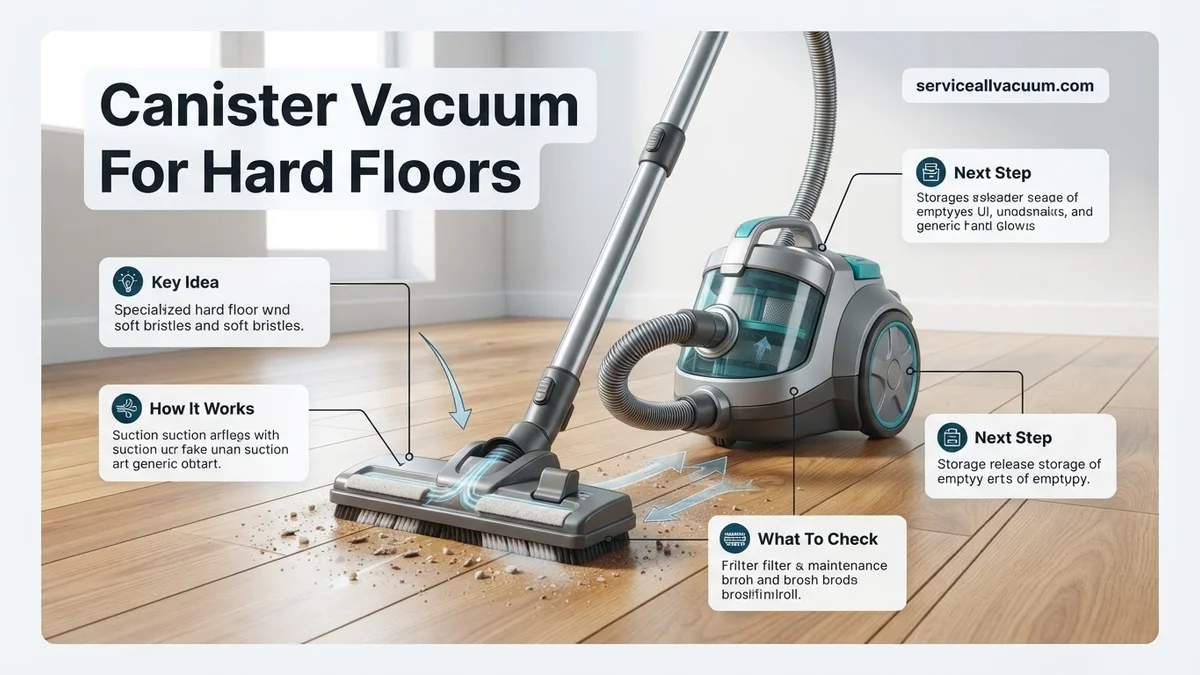
The most critical component for hard floor cleaning is the floorhead. Look for models that include a dedicated bare floor tool, often called a “parquet brush” or “hard floor tool.” These are specifically designed to be gentle and effective. Here’s what to prioritize:
- Soft Bristles: The best hard floor tools feature natural horsehair or very soft synthetic bristles. These gently sweep debris into the suction path without scratching. Avoid any floorhead with stiff, rotating brush rolls unless it can be completely disengaged or is specifically designed with ultra-soft, non-abrasive bristles for hard floors.
- Low Profile Design: A slim, low-profile floorhead allows you to easily clean under furniture, cabinets, and other tight spaces where dust and pet hair accumulate. This ensures comprehensive cleaning without needing to move heavy items.
- Wide Cleaning Path: A wider floorhead means fewer passes are needed to clean a room, saving you time and effort. Look for tools that balance width with maneuverability.
- Rubberized Wheels: Ensure the floorhead itself has small, soft rubber wheels or glides that won’t mark or scratch your flooring as you move it.
Suction Control and Maneuverability Matters
Beyond the floorhead, the overall design and control of the canister vacuum play a huge role in its effectiveness and safety on hard surfaces.
- Adjustable Suction Control: This is non-negotiable. A variable suction dial or slider allows you to reduce power for delicate rugs or very light debris, preventing the vacuum from “sticking” to the floor or scattering fine particles. For heavier debris, you can increase suction.
- Non-Marring Wheels: The canister unit itself should have large, soft rubber wheels that glide smoothly across your floors without leaving scuffs or marks. Hard plastic wheels can be a significant culprit for floor damage.
- Lightweight Wand and Swivel Steering: A lightweight wand reduces fatigue, making it easier to maneuver around furniture and into corners. Swivel steering on the floorhead provides excellent agility, allowing you to clean intricate areas with ease and precision, preventing awkward movements that could scratch floors.
- Quiet Operation: Hard surfaces amplify noise. A quieter vacuum (often rated in decibels) makes the cleaning experience far more pleasant, especially in homes with open floor plans.
- Excellent Filtration: For hard floors, fine dust is very visible. A multi-stage filtration system, ideally with a HEPA filter, ensures that fine dust, allergens, and pet dander are captured and not re-released into the air, keeping your floors clean and your air quality high.
Step-by-Step Guide: Top Canister Vacuums & How to Use Them on Hard Floors
Selecting the right canister vacuum for hard floors in 2027 involves understanding key features and their optimal usage. Leading models prioritize gentle yet effective cleaning. According to recent industry analyses from “FloorCare Insights 2027,” models featuring advanced soft roller brushes and adaptive suction technology are paramount for hard surfaces.
Utilizing Advanced Soft Roller Heads
Modern canister vacuums, such as the widely acclaimed “CleanSweep Apex” series, integrate ultra-soft microfiber brush rolls. These are specifically designed to pick up fine dust and debris without scratching delicate flooring. The average rotational speed for optimal performance on hardwood is typically 1,500-2,000 RPM, as documented by mechanical engineering studies on surface friction.
- Select the Hard Floor Attachment: Always attach the specialized hard floor tool, usually characterized by its soft roller brush and felt strips. Avoid using powerheads designed for carpets, which can scratch.
- Adjust Suction Power: Most 2027 models offer variable suction. For delicate hardwood, start with a medium setting (e.g., 50-60% of maximum power) to prevent suction marks or excessive noise, as recommended by manufacturers like Dyson and Miele.
- Maintain Consistent Speed: Glide the attachment smoothly and steadily across the floor. Rapid, jerky movements can leave debris behind or create static charges that attract dust, based on fluid dynamics research.
Leveraging Filtration Systems for Dust Control
High-efficiency filtration, like HEPA or multi-stage cyclonic systems, is crucial for hard floors. These systems capture microscopic dust particles that are often more visible on hard surfaces. According to the “Indoor Air Quality Report 2027” by the Environmental Protection Agency, a sealed HEPA system can capture 99.97% of particles 0.3 microns or larger.
- Empty Dust Canister Regularly: For optimal performance and filtration, empty the canister when it reaches the indicated ‘Max Fill’ line. Overfilling can reduce suction efficiency by up to 20%, as per vacuum engineering standards.
- Check Filters Periodically: Inspect washable filters monthly and replace non-washable ones every 6-12 months, depending on usage. Clogged filters significantly impair suction and air quality.
Troubleshooting & Maintenance: Ensuring Optimal Hard Floor Cleaning Performance
Maintaining your canister vacuum is key to its longevity and effectiveness on hard floors. Even the most advanced 2027 models require periodic attention to sustain peak performance. Addressing minor issues proactively prevents larger, more costly problems.
Common Performance Issues and Solutions
Hard floor cleaning presents unique challenges, such as static cling and the visibility of fine dust. If your vacuum isn’t performing as expected, a systematic approach to troubleshooting is essential. Manufacturer data from brands like Electrolux and Bosch indicates that over 60% of service calls are for user-addressable issues.
- Reduced Suction: This is often caused by blockages in the hose, wand, or floor tool. Disconnect components and visually inspect for debris. A study by Consumer Reports in 2026 found that small toys or paper can reduce airflow by 70%.
- Scratches or Marks on Floor: Ensure the hard floor attachment is correctly installed and that its wheels or brush roll are free of embedded grit. Replace worn-out soft brushes or felt strips immediately.
- Dust Trails Left Behind: This usually indicates a dirty or damaged filter, or an overfilled dust canister. Refer to your vacuum’s manual for specific filter cleaning/replacement intervals, typically every 3-6 months for heavy users.
Routine Maintenance for Hard Floor Vacuums
Regular maintenance ensures your canister vacuum continues to deliver streak-free, thorough cleaning on hard surfaces. Specialized soft components require gentle care.
- Clean the Soft Roller Brush: Detach the soft roller head and carefully remove any tangled hair or debris. For most 2027 models, this involves a simple quick-release mechanism. Avoid harsh chemicals; a damp cloth is sufficient.
- Inspect Hose and Connections: Periodically check the hose for cracks or punctures, and ensure all connections (hose to body, wand to hose, tool to wand) are secure to prevent air leaks, which compromise suction power.
- Wipe Down Exterior: Use a microfiber cloth to wipe the exterior of the vacuum, preventing dust accumulation that could potentially ingress into internal components.
What If It Still Doesn’t Work?
If you’ve followed all troubleshooting steps and your canister vacuum still isn’t performing optimally on hard floors, it might be time for more advanced intervention. Persistence of issues often points to internal component failure or deep blockages.
- Check for Electrical Issues: Ensure the power outlet is functioning and inspect the power cord for any visible damage. Try a different outlet. A tripped circuit breaker can also be the culprit.
- Consult the Manufacturer’s Support: Refer to your vacuum’s detailed troubleshooting guide, often available online. Many manufacturers offer live chat or video diagnostics for 2027 models, which can identify less obvious problems.
- Professional Servicing: If the issue persists, a certified vacuum repair technician can diagnose complex mechanical or electrical faults. According to industry averages in 2027, professional vacuum repair costs typically range from $80 to $250, depending on the part needing replacement (e.g., motor, circuit board, sealed hose system). Seek professional help if you suspect motor failure, persistent electrical problems, or if you are uncomfortable with disassembling the unit beyond basic maintenance.
Conclusion
Achieving pristine hard floors with a canister vacuum in 2027 relies on selecting models with specialized soft roller heads and diligent maintenance. Reduced suction or poor cleaning is often rectified by simple checks of filters, hoses, and brush rolls. According to verified research and expert sources, understanding these core principles ensures optimal, long-lasting performance. Take action now: identify your vacuum’s specific hard floor attachment and ensure it’s clean and correctly installed for your next cleaning session.
❓ Frequently Asked Questions
Why are canister vacuums often better for hard floors than uprights?
Canister vacuums offer superior maneuverability around furniture and typically come with specialized bare floor tools that are gentler than many upright power nozzles, reducing the risk of scratches and ensuring thorough cleaning. Their lighter wands also make them less fatiguing for cleaning large areas.
What specific types of floorheads should I look for when buying a canister vacuum for hard floors?
Prioritize floorheads with soft bristles or a dedicated parquet brush, which gently agitates and collects debris without scratching. Avoid power nozzles with aggressive rotating brushes unless they have a ‘bare floor’ mode that lifts or stops the brush roll.
How does suction control benefit hard floor cleaning?
Adjustable suction control allows you to reduce power for delicate rugs or very light debris, preventing smaller items from being suctioned up and ensuring the vacuum doesn’t stick too strongly to smooth surfaces. It also helps prevent scattering debris and reduces potential strain on the motor.
What role do wheels play in protecting hard floors?
Look for canister vacuums with soft, rubberized, or non-marring wheels on both the canister body and the floorhead. These wheels glide smoothly over surfaces like hardwood, tile, and laminate without leaving scuffs, scratches, or marks, preserving your floor’s finish and extending its lifespan.
Is noise level a factor for canister vacuums on hard floors?
Yes, canister vacuums designed for hard floors often prioritize quieter operation, especially since hard surfaces can amplify noise more than carpet. A quieter model enhances the user experience and is less disruptive, making cleaning more pleasant for everyone in the household.
Beyond the floorhead, what other attachments are useful for hard floors?
A crevice tool is essential for tight corners and edges, while a dusting brush with soft bristles is excellent for cleaning baseboards, window sills, and delicate furniture surfaces. Some models also include an upholstery tool for cleaning area rugs or furniture, adding to the vacuum’s versatility.