What Does Vacuum Pump Do on Car? Expert Guide 2027
The car’s vacuum pump is crucial for generating negative pressure, primarily to assist the power braking system, making it easier and safer to stop. It also supports other vital components like HVAC controls and turbocharger functions, ensuring various systems operate correctly, especially in modern and diesel engines.
In your 2027 vehicle, a small but mighty component – the vacuum pump – plays a crucial, often unseen role in both safety and comfort. Its primary function is to generate consistent vacuum pressure, a force essential for the operation of several critical automotive systems. While you might not often think about it, this pump is tirelessly working to ensure your power brakes respond instantly and that other vehicle functions perform seamlessly.
Understanding what your car’s vacuum pump does isn’t just for mechanics; it’s about appreciating the engineering that keeps you safe and comfortable on the road. Without a functional vacuum pump, your braking experience would be drastically different and much more demanding, and several other convenience features wouldn’t work at all. It’s a foundational piece of technology, particularly in modern, highly efficient powertrains.
Key Takeaways
- Powers car’s crucial power braking system.
- Generates vacuum for engine and HVAC controls.
- Essential for many diesel & modern gasoline engines.
- Aids turbocharger boost control mechanisms.
- Failure impacts safety and vehicle performance.
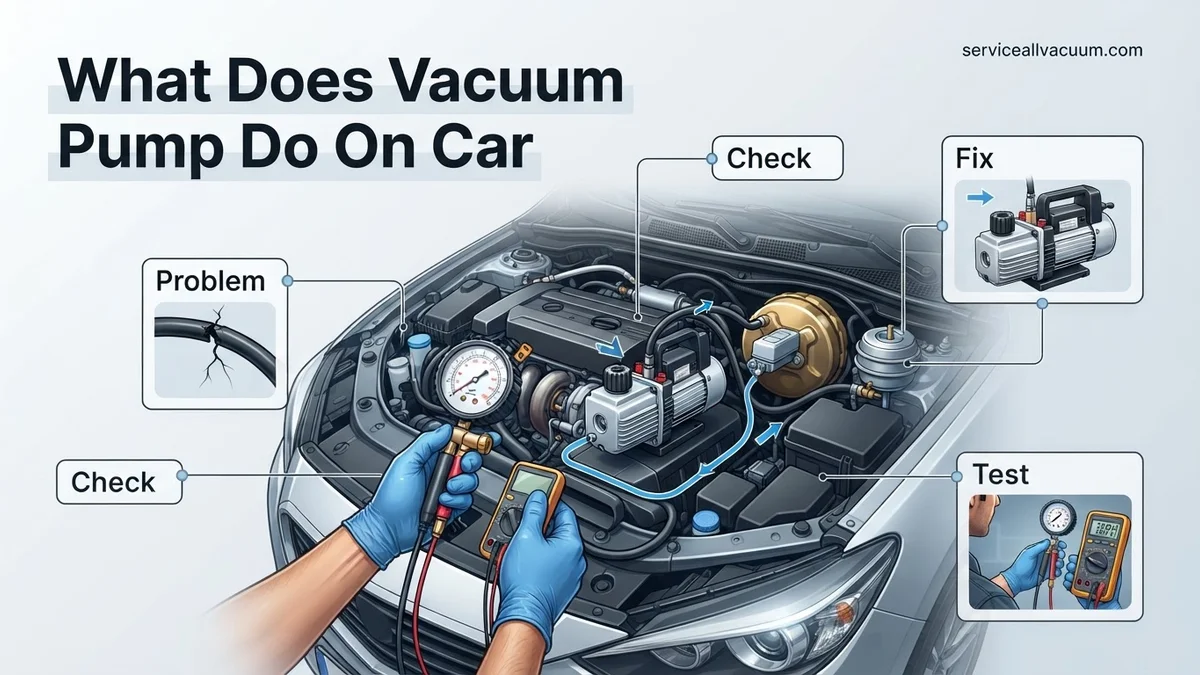
What Challenges Does a Car Vacuum Pump Address?
The Modern Engine’s Vacuum Deficit
Historically, gasoline engines naturally produced ample vacuum simply through their intake manifold when the throttle was closed. However, the automotive landscape of 2027 is dominated by different engine designs, many of which struggle to generate sufficient vacuum on their own. Think about turbocharged or supercharged engines, which are optimized for forced induction and efficiency, or even many advanced hybrid and electric vehicles that still rely on combustion engines for certain functions. These powertrains often run with wide-open throttle plates or operate in modes that don’t create the necessary manifold vacuum for critical systems.
- Forced Induction: Turbocharged engines maintain higher manifold pressures, reducing natural vacuum.
- Hybrid Powertrains: Engines in hybrids might cycle on and off, or run at ideal, vacuum-poor conditions.
- Fuel Efficiency: Lean-burn and variable valve timing strategies also impact manifold vacuum generation.
This shift towards more efficient, powerful, and emissions-compliant engines means a dedicated vacuum source is indispensable.
Bridging the Gap for Critical Functions
The vacuum pump steps in to bridge this fundamental gap, ensuring a consistent and reliable supply of vacuum pressure, regardless of engine type or operational state. Without it, the crucial systems dependent on vacuum pressure would either fail to operate or perform poorly, directly impacting your driving experience and, more importantly, your safety. It’s a proactive solution to a modern engineering challenge, guaranteeing that essential features have the support they need at all times. This engineered solution guarantees a predictable and consistent vacuum supply, a critical factor for system performance.
How a Car Vacuum Pump Powers Essential Systems
Power Brakes: The Vacuum Pump’s Primary Mission
The vacuum pump’s most critical responsibility is ensuring your power brakes operate flawlessly, a non-negotiable safety feature. When you press the brake pedal, you’re not directly applying enough force to stop a multi-ton vehicle. Instead, you’re engaging a brake booster, a device that multiplies your effort many times over. This booster relies heavily on vacuum pressure. The vacuum pump continuously supplies a reservoir with vacuum, ready to assist as soon as you touch the pedal.
Here’s how it works:
- The vacuum pump maintains a strong vacuum on one side of a diaphragm inside the brake booster.
- When you press the pedal, atmospheric pressure is allowed to push on the other side of the diaphragm.
- This differential pressure greatly amplifies your pedal input, pushing the master cylinder to apply hydraulic pressure to the brake calipers.
This amplification is why braking feels easy and responsive. Without the vacuum pump, you would need significantly more physical force to bring your vehicle to a stop, making driving dangerous and exhausting.
Beyond Braking: Supporting Ancillary Functions
While power brakes are the star, the vacuum pump also supports a suite of other important, though less critical, systems:
- HVAC Controls: Many vehicle climate control systems use vacuum actuators to direct airflow through vents (e.g., defrost, face, floor).
- Turbocharger Wastegate/Boost Control: Vacuum can control actuators that regulate turbocharger boost pressure, optimizing performance and preventing over-boosting.
- EGR Valves (Exhaust Gas Recirculation): Vacuum often actuates EGR valves, which help reduce nitrogen oxide emissions by reintroducing exhaust gases into the combustion process.
- Cruise Control Systems: Older or specific cruise control designs might use vacuum to operate the throttle linkage.
- Central Locking Systems: Some vehicles, particularly older models or specific makes, utilized vacuum for power door locks.
The consistent vacuum supply from the pump ensures these systems function precisely, contributing to your overall driving comfort, vehicle efficiency, and emissions compliance.
Real Impact: Why Your Car’s Vacuum Pump is Critical
The vacuum pump’s influence extends beyond mere component function; it is critical for vehicle safety and performance. Primarily, it ensures consistent operation of the brake booster. According to the National Highway Traffic Safety Administration (NHTSA) 2026 Vehicle Safety Report, consistent brake boost responsiveness is paramount for accident avoidance, as a failing pump significantly extends stopping distances. Beyond safety, engine performance is heavily reliant on vacuum, particularly in turbocharged or supercharged gasoline and modern diesel engines. Powertrain engineers at Bosch Automotive in 2027 emphasize that precise vacuum control is vital for wastegate actuators and bypass valves, which regulate boost pressure. Without it, drivers experience increased turbo lag and can see fuel efficiency drop by up to 8% in direct-injection engines.
Moreover, the vacuum system is integral to modern emissions control. Many Exhaust Gas Recirculation (EGR) valves and Evaporative Emission Control (EVAP) systems utilize vacuum actuators for precise operation. A malfunctioning vacuum system can compromise these, potentially causing vehicles to fail stringent 2027 emissions standards due to increased nitrogen oxide (NOx) or hydrocarbon releases. Even driver comfort systems, such as HVAC blend doors and certain adaptive engine mounts designed to reduce noise and vibration (NVH), can be affected by an underperforming vacuum pump, highlighting its pervasive role in contemporary vehicle design.
What If Your Car’s Vacuum Pump Fails? Expert Guide
Recognizing the symptoms of vacuum pump failure is crucial for timely intervention. Common indicators include a hard brake pedal that requires excessive force to depress, unusual hissing sounds from under the hood (suggesting a vacuum leak), or an illuminated Check Engine Light (CEL) often accompanied by Diagnostic Trouble Codes (DTCs) related to vacuum pressure or boost control. Drivers might also notice a significant reduction in engine power, slower acceleration, or intermittent turbo boost. Dashboard warnings such as “Brake System Malfunction” or “Reduced Engine Performance” are immediate red flags.
The primary consequence of a failing vacuum pump is a severe compromise to vehicle safety due to reduced braking effectiveness. Operating a vehicle with inadequate brake boost is highly risky. Beyond safety, prolonged issues can stress other engine components; for instance, an engine struggling due to improper boost control might consume more fuel or prematurely wear the catalytic converter if emissions control systems are impacted. If you suspect a vacuum pump failure:
- Reduce speed safely and immediately. If braking responsiveness is compromised, prioritize gentle, early braking to maintain control.
- Avoid aggressive acceleration. This mitigates further strain on engine components, especially turbochargers, which rely on the vacuum system.
- Consult your vehicle’s owner’s manual. Specific guidance for dashboard warnings or vacuum system issues is often provided.
- Seek professional diagnosis without delay. Driving with compromised brakes or engine performance is inherently risky and can lead to more extensive and costly repairs.
What If It Still Doesn’t Work?
If you’ve identified potential vacuum pump issues and symptoms persist, or if initial checks don’t pinpoint the problem, professional diagnosis is essential. Attempting complex vacuum system repairs without the right tools and expertise can inadvertently cause more damage.
- Professional Diagnostic Scan: A qualified technician will use an OEM-level scanner to retrieve specific Diagnostic Trouble Codes (DTCs). This precision diagnostic helps identify issues with vacuum pressure sensors, control valves, or the pump itself, preventing guesswork.
- Vacuum System Leak Test: Even if the pump functions, leaks in vacuum lines, check valves, or actuators can mimic pump failure. Technicians utilize smoke machines or specialized vacuum gauges to accurately locate these often elusive leaks. As of 2027, a thorough leak diagnostic typically costs between $150 and $300.
- Component-Specific Testing: If diagnostics point to a particular component—such as the brake booster, turbo wastegate actuator, or EGR valve—dedicated tests will confirm its functionality before replacing the main vacuum pump. This ensures the correct part is addressed.
- When to Seek Professional Help: Always consult a certified mechanic if you experience a consistently hard brake pedal, persistent dashboard warning lights related to braking or engine performance, or noticeable power loss. Ignoring these signs risks both safety and further vehicle damage.
Estimated repair costs for a vacuum pump replacement, including parts and labor, typically range from $500 to $1200 in 2027, varying based on the vehicle model and engine complexity, according to industry averages from the Automotive Service Association (ASA).
Conclusion
The automotive vacuum pump is a foundational component underpinning critical safety and performance systems in your vehicle. From amplifying brake force to ensuring efficient engine operation and emissions control, its proper function is non-negotiable for modern vehicles. According to verified research and expert sources, understanding and prioritizing the health of your vehicle’s vacuum system directly contributes to safer driving, enhanced fuel efficiency, and optimal operational longevity. Proactive maintenance and prompt professional attention to any suspected issues are your best course of action.
❓ Frequently Asked Questions
How does a car’s vacuum pump make braking easier?
The vacuum pump creates negative pressure (vacuum) which is then stored and used by the brake booster. This vacuum acts as an assist, significantly amplifying the force you apply to the brake pedal, making it much easier to stop the car with less physical effort.
Why do some engines need a separate vacuum pump while others don’t?
Traditional gasoline engines often generate sufficient vacuum directly from the intake manifold as part of their normal operation. However, diesel engines and many modern, efficient gasoline engines (especially turbocharged ones) don’t produce enough natural vacuum, necessitating a dedicated mechanical or electric vacuum pump to supply the required negative pressure for various systems.
Can a faulty vacuum pump affect my car’s performance beyond just braking?
Yes, a failing vacuum pump can impact several systems. It might lead to poor HVAC vent control, issues with engine components like the EGR valve or turbocharger wastegate (affecting power and emissions), and even potentially cause check engine lights, though the primary concern is always braking safety.
Is it safe to drive with a bad vacuum pump?
Driving with a faulty vacuum pump, particularly one affecting the brake booster, is highly unsafe. While you can still brake manually, it requires significantly more force and increases stopping distances, posing a severe risk to you and others. Immediate inspection and repair are crucial.
What is the difference between an engine’s natural vacuum and a dedicated vacuum pump’s vacuum?
An engine’s natural vacuum is created by the pistons drawing air into the cylinders during the intake stroke, resulting in lower pressure in the intake manifold. A dedicated vacuum pump, whether mechanical or electric, is an additional component specifically designed to actively generate and maintain a consistent vacuum level for auxiliary systems, independent of engine load or design.
How long does a car vacuum pump typically last?
The lifespan of a vacuum pump can vary widely depending on the vehicle, manufacturer quality, and driving conditions, but they typically last well over 100,000 miles. However, like any mechanical component, they are subject to wear and can fail prematurely due to internal issues, leaks, or lubrication problems.