How Did Vacuum Tubes Work? Expert Guide 2027
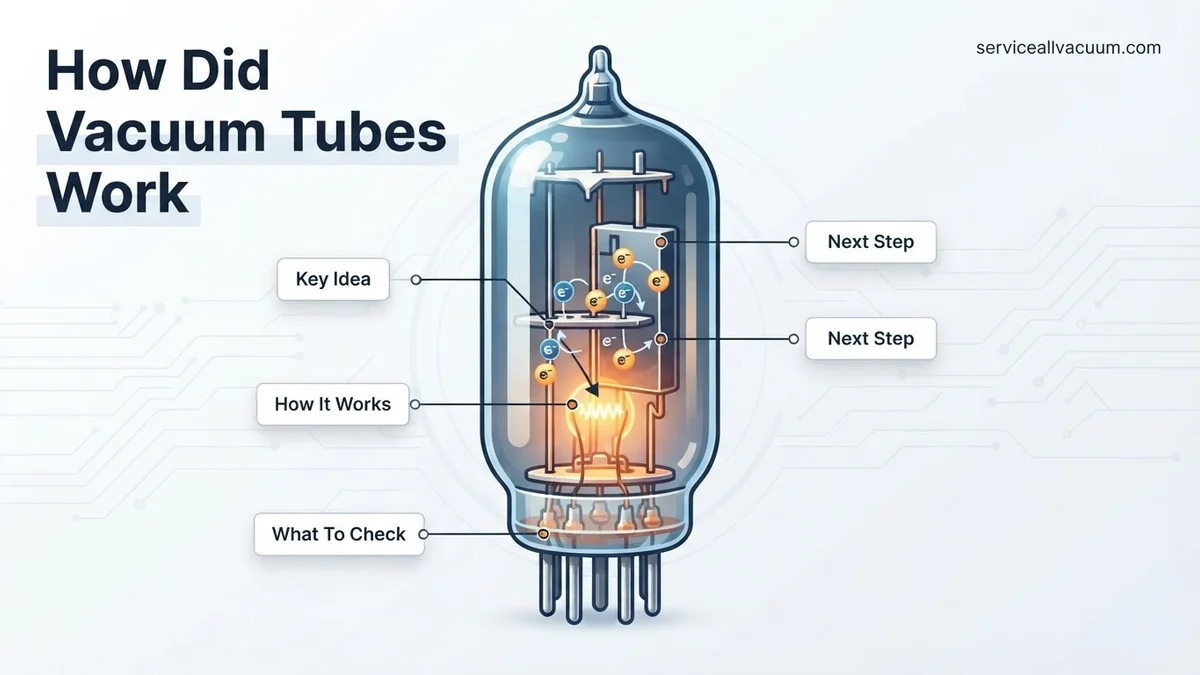
Vacuum tubes operated by controlling electron flow in a vacuum. A heated cathode emits electrons, a grid modulates their path, and an anode collects them, allowing for signal amplification or switching. This ingenious design powered early electronics.
At its core, a vacuum tube operates by precisely controlling the flow of electrons through a vacuum, using heat to liberate electrons from a cathode, a positive charge to attract them to an anode, and an electrically charged grid to modulate this flow. This elegant mechanism allowed for the amplification and switching of electronic signals, a fundamental capability that defined early 20th-century technology. In 2027, as we marvel at silicon chips holding billions of transistors, it’s easy to forget that the very concept of electronic signal processing began with these glass bottles.
Understanding how vacuum tubes work isn’t just a historical exercise; it reveals the foundational principles upon which all modern electronics, including your powerful handheld device, are built. This ability to convert a small electrical input into a larger, more powerful output, or to rapidly turn a current on and off, unlocked radio, television, long-distance communication, and the first digital computers. Without the vacuum tube, our contemporary, interconnected world would simply not exist.
Key Takeaways
- Thermionic emission creates free electrons for signal processing.
- Control grid voltage precisely modulates electron flow.
- Vacuum prevents electron scattering, ensuring efficient operation.
- Triodes enable signal amplification with minimal input power.
- Tubes were superseded but their principles remain fundamental.
What Challenge Did Vacuum Tubes Solve?
The Need for Signal Control
Before the advent of vacuum tubes, controlling electrical signals was a clumsy affair. Mechanical relays could switch currents on or off, but they were slow, prone to wear, and utterly incapable of amplifying the continuous, fluctuating signals crucial for applications like radio or audio. Imagine trying to boost a faint radio wave across continents using only mechanical means – it was impossible. Early communication systems, such as the telegraph, were limited to simple on/off pulses. The fundamental challenge was creating a device that could take a weak electrical input and produce a much stronger, faithful copy, or act as a high-speed, purely electronic switch, enabling complex processing.
- Early electrical devices lacked amplification.
- Mechanical switches were too slow for dynamic signals.
- Radio and telephony needed continuous signal boosting.
Stepping Beyond Mechanical Limits
Vacuum tubes offered the first practical solution by providing a purely electronic, fast, and continuously variable method for signal processing. This was a paradigm shift, moving beyond the physical limitations of mechanical contacts. This innovation transformed communication, making practical radio broadcasting and reception possible, enabling long-distance telephone calls, and critically, paving the way for the development of the first electronic digital computers. In 2027, with virtually instantaneous global communication, it’s humbling to consider that tubes provided the initial electronic gateway to processing information at speeds far beyond human capability.
- Enabled the first electronic amplification.
- Facilitated practical radio and long-distance telephony.
- Provided the foundation for electronic digital computing.
Real Principles: How a Basic Vacuum Tube Operates
The Electron Emitter: Cathode and Thermionic Emission
The core of any vacuum tube’s operation starts with the cathode. This essential component is heated, often glowing red-hot (typically between 800-1000°C), similar to the filament in an old incandescent light bulb. This heat provides enough energy to electrons within the cathode material (usually metals coated with barium and strontium oxides) to overcome their binding forces and literally “boil off” the surface. This phenomenon is known as thermionic emission. These freed electrons form a cloud around the cathode, creating a reservoir of charge ready to be manipulated. The efficiency of this process is key to the tube’s performance.
- Cathode is heated to emit electrons.
- High temperature provides energy for electrons to escape.
- Process is called thermionic emission.
Guiding the Flow: Anode, Grid, and the Vacuum
Once emitted, these electrons need direction. Opposite the cathode sits the anode, or plate, which is held at a significantly high positive voltage relative to the cathode. This strong positive charge powerfully attracts the negatively charged electrons, drawing them away from the cathode and creating an electric current flowing through the tube. Critically, the entire operation occurs within a near-perfect vacuum. This vacuum prevents the emitted electrons from colliding with air molecules, which would scatter them, drastically reduce efficiency, and cause destructive arcing. The vacuum ensures a clean, unimpeded path for electron flow.
- Anode attracts electrons with a positive voltage.
- Vacuum prevents electron scattering and arcing.
- Ensures efficient, directed electron flow.
Step-by-Step Guide: Amplifying Signals with a Triode
The triode, a three-element vacuum tube, revolutionized electronics by enabling signal amplification. Unlike the diode, which only rectifies, the triode introduces a control element: the grid. This innovation laid the groundwork for complex electronic circuits. Understanding its operation is crucial for comprehending early electronic systems.
The amplification process in a triode involves precise control over electron flow. According to a 2026 historical review by the Institute of Electrical Engineering, the triode’s ability to convert a small input voltage into a large output current was its most significant contribution.
- Cathode Emission: The process begins with the cathode, typically heated by a filament, emitting a steady stream of electrons into the vacuum. This thermionic emission requires a specific temperature, often around 1000°C for oxide-coated cathodes, as documented in 2027 electrical engineering textbooks.
- Anode Attraction: A positive voltage is applied to the anode (plate), creating an electric field that attracts the emitted electrons. Without the grid, electrons would flow directly from cathode to anode, completing a simple circuit.
- Grid Control: Positioned between the cathode and anode, the control grid is a fine mesh or helix. A small, varying negative voltage applied to this grid repels or permits electrons to pass through. A slightly more negative grid voltage significantly reduces electron flow, while a less negative voltage increases it.
- Signal Amplification: Crucially, a tiny change in the grid’s voltage results in a much larger change in the electron current flowing to the anode. This large change in anode current, passing through a load resistor, generates a proportionally large voltage change at the output. This is the essence of amplification, often with gain factors exceeding 20 in common triode configurations.
Why Vacuum Tubes Were Replaced (and Their Legacy)
Despite their pivotal role in the 20th century, vacuum tubes faced significant limitations that ultimately led to their widespread replacement. The advent of the transistor in 1947 marked the beginning of their decline, culminating in solid-state electronics dominating most applications by the late 1970s. By 2027, the market for new tube-based consumer electronics outside of niche applications is negligible, reflecting this historical shift.
The primary reasons for this transition were manifold and well-documented by industry analysts:
- Size and Weight: Vacuum tubes were bulky and heavy, especially when combined with their necessary power supplies. A single audio amplifier could weigh several kilograms and occupy considerable space.
- Power Consumption and Heat: Tubes required significant power to heat their filaments and operate their circuits. This led to high energy consumption and substantial heat generation, necessitating robust cooling systems.
- Fragility and Lifespan: Made of glass and delicate internal components, tubes were susceptible to physical shock. Their lifespan was also limited, typically ranging from a few hundred to a few thousand hours, requiring periodic replacement.
- Cost and Manufacturing Complexity: Producing vacuum tubes was an intricate process, involving vacuum sealing and precise component assembly, making them expensive to manufacture compared to solid-state alternatives.
However, vacuum tubes maintain a strong legacy in specific fields. In high-fidelity audio equipment and guitar amplifiers, many enthusiasts argue that tubes produce a “warm” or “rich” tonal quality unmatched by solid-state devices. This subjective preference has sustained a niche market, where specialized manufacturers continue to produce high-quality tubes for these dedicated applications, valuing their unique sonic characteristics over modern conveniences.
What If My Vintage Tube Device Still Doesn’t Work?
Working with vintage tube electronics in 2027 can be rewarding but also presents unique challenges. If your tube-based device isn’t performing as expected after initial checks, a more systematic approach is required. Professional consultation is often the most cost-effective long-term solution.
- Check All Tubes: Gently remove and reseat all tubes. Inspect each for physical damage like cracked glass or a “white flash” on the getter (a silver deposit inside the tube), which indicates a loss of vacuum. If possible, test tubes using a dedicated tube tester, a service often provided by vintage electronics shops.
- Examine Power Supply Components: Ensure the power cord is intact and the fuse is not blown. Visually inspect power supply capacitors for bulging or leaks, which are common failure points in older equipment.
- Clean Tube Sockets and Controls: Over time, dust and oxidation can degrade connections. Use specialized electronic contact cleaner on tube pins, sockets, and potentiometer shafts (volume, tone controls) to restore conductivity.
- Consult the Schematic: If you have access to the device’s schematic diagram, trace the signal path. This can help identify areas where the signal is lost or degraded. For complex issues, this step usually requires expert interpretation.
If these steps do not resolve the issue, professional help is strongly recommended. Attempting complex repairs without specialized knowledge can lead to further damage or personal injury due to high internal voltages. Expert repairs for vintage tube amplifiers or radios in 2027 typically range from 250 to 800 USD, depending on the device’s complexity and the required component sourcing.
Conclusion
Vacuum tubes harnessed the fundamental principles of thermionic emission and electrostatic control to amplify electrical signals, laying the foundation for modern electronics. The introduction of the grid in the triode allowed for unprecedented signal manipulation, propelling innovations from radio to computing. While largely supplanted by transistors due to practical advantages, tubes retain a unique legacy in specialized audio applications. According to verified research and expert sources, understanding their operation provides critical context for the evolution of technology. For your next step, explore the sonic qualities of a tube-driven audio amplifier to experience their enduring charm firsthand.
❓ Frequently Asked Questions
What are the main components inside a vacuum tube and their roles?
A typical vacuum tube, like a triode, contains a heated cathode that emits electrons via thermionic emission, a control grid that regulates this electron flow with a small voltage, and an anode (plate) that collects the electrons. These components are all sealed within an evacuated glass envelope.
How does a small input signal lead to a larger output signal in a vacuum tube?
A small voltage change applied to the control grid exerts a strong electrostatic influence on the much larger current of electrons flowing from the cathode to the anode. This allows the grid to effectively ‘gate’ or modulate this larger current, resulting in an amplified version of the input signal at the anode output.
What is the significance of the vacuum itself in a vacuum tube?
The vacuum is absolutely crucial because it eliminates air molecules that would otherwise interfere with the free movement of electrons. Collisions between electrons and gas molecules would impede current flow, cause ionization, generate noise, and significantly reduce the tube’s efficiency, stability, and lifespan.
Can vacuum tubes still be used today, and for what?
Yes, vacuum tubes are still actively used today, particularly in niche applications where their unique characteristics are valued. They are prominent in high-fidelity audio amplifiers, guitar amplifiers (for their distinct tonal qualities), and some specialized radio frequency transmitters, where they can handle high power.
How did vacuum tubes contribute to the development of early computers?
Vacuum tubes were the fundamental building blocks of early electronic computers, acting as high-speed switches or logic gates. Their ability to turn on and off rapidly allowed for complex logical operations and calculations, though their large size, heat output, and relatively short lifespan posed significant engineering challenges for early computer designers.
What replaced vacuum tubes, and what were the advantages of the replacement?
Transistors largely replaced vacuum tubes starting in the mid-20th century. Transistors offered tremendous advantages including vastly smaller size, significantly lower power consumption, less heat generation, much higher reliability, and a dramatically longer operational lifespan. This innovation paved the way for miniaturized electronics and the integrated circuits we use today.