Do Vacuum Travel Bags Wrinkle Clothes? Expert Guide 2027
While vacuum travel bags can indeed wrinkle clothes due to extreme compression, it’s largely preventable with proper packing techniques. Understanding fabric types and strategic folding can significantly reduce creasing, ensuring your garments arrive smoother for your journey.
You’re packing for a trip in 2027, eyeing those clever vacuum travel bags promising massive space savings. But a nagging question always arises: “Do vacuum travel bags actually wrinkle clothes?” The direct answer is nuanced but firm: yes, they absolutely can, and often will, especially if not used with specific strategies. This isn’t a flaw in the bag technology itself, but a direct consequence of physics meeting fabric.
For any discerning traveler, arriving with a suitcase full of crumpled clothes negates any space-saving benefit. You want your garments to emerge looking presentable, not like they’ve been through a wrestling match. Understanding why wrinkles form under such intense compression is your first step towards preventing them. This guide unpacks the mechanics, empowering you to utilize vacuum bags smarter, ensuring your travel wardrobe remains pristine.
Key Takeaways
- Vacuum bags can wrinkle clothes due to intense pressure.
- Folding, rather than rolling, often minimizes creases.
- Avoid over-compressing delicate or structured garments.
- Pack wrinkle-resistant fabrics like synthetics primarily.
- Release air slowly to reduce fabric stress upon compression.
Do Vacuum Travel Bags Wrinkle Clothes? The Core Issue
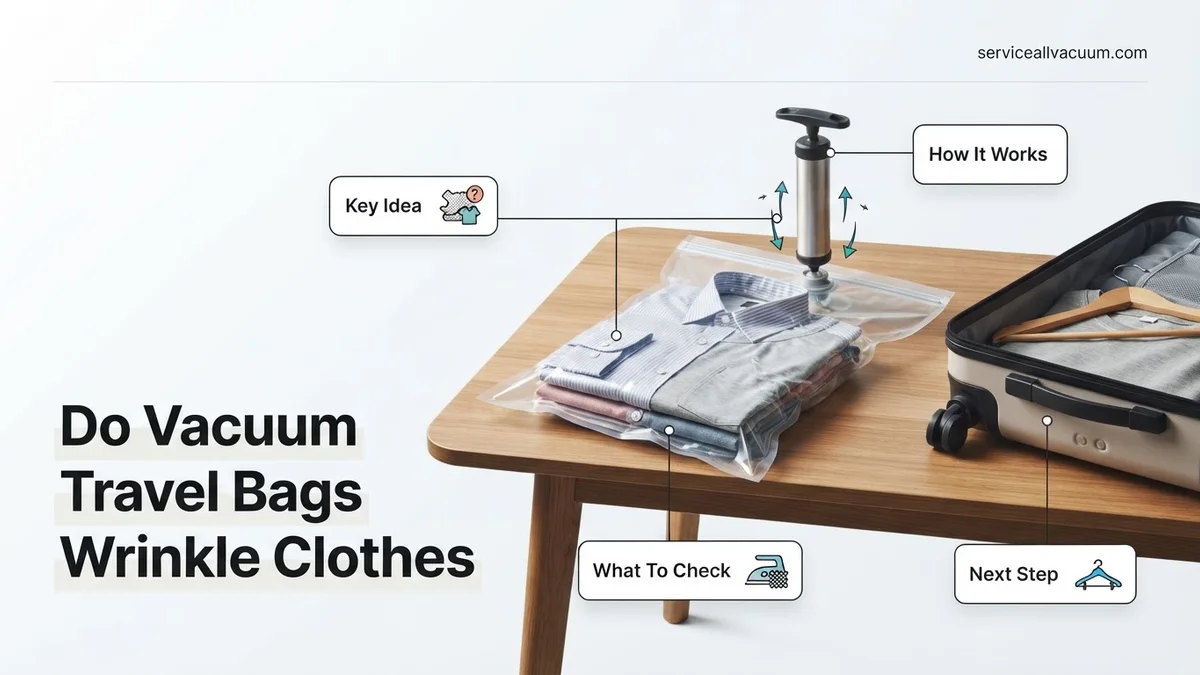
The straightforward answer to whether vacuum travel bags wrinkle clothes is a resounding “yes, they do.” However, this isn’t an absolute, unavoidable outcome. The wrinkle severity depends heavily on several critical factors, primarily the garment’s fabric composition, how meticulously it’s prepared for packing, and the degree of compression applied. As 2027 travel demands efficiency, mastering this balance is key.
The Compression Paradox: Maximizing Space, Minimizing Smoothness
Modern vacuum bags excel at reducing luggage volume, often by an impressive 70-80%. This remarkable feat is achieved by evacuating air, eliminating the natural cushioning that typically surrounds your clothes. When this air is gone, fabric fibers are forced into tightly packed, often unnatural, configurations. Think of it less as gentle pressing and more as sustained, intense squishing.
Wrinkles aren’t magically created; they are physical impressions formed when fabric is bent, creased, and then held rigidly under pressure for an extended period. The longer your clothes remain in this compressed state, such as during international flights or multi-stop itineraries, the more deeply set and stubborn these creases become. This physical distortion is the fundamental cause.
- Extreme volume reduction directly correlates with a high probability of creases.
- The absence of air removes the vital cushioning that protects fibers.
- Sustained pressure locks fabric into unnaturally folded positions.
- Longer compression times exacerbate wrinkle formation.
Fabric Finesse: Why Material Type Dictates Wrinkle Resistance
The garment’s material is arguably the single most important factor. Natural fibers such as cotton, linen, rayon, and silk are notoriously susceptible to wrinkling under compression. Their molecular structure lacks the inherent elasticity and “memory” to easily spring back into shape after being crushed. A finely woven cotton dress shirt, even if perfectly folded, will almost certainly emerge a crumpled mess from a vacuum bag.
In contrast, synthetic materials like polyester, nylon, modal, and many contemporary performance blends (common in 2027 activewear and travel apparel) generally fare much better. These fabrics are engineered for resilience, often incorporating stretch and wrinkle-resistant properties. Their fibers possess greater elasticity and a better ability to return to their original form post-compression. For instance, a quick-dry polyester travel tee might just need a shake, while a linen blouse will demand significant steaming.
What Causes Clothes to Wrinkle in Vacuum Bags?
Understanding the precise mechanics of wrinkle formation within vacuum bags isn’t just academic; it directly informs how to prevent them. It’s a complex interplay of physical forces and the inherent properties of textile fibers, where sustained pressure and the absence of air conspire to deform your clothing. This is about more than just “things getting squashed”; it’s about fiber-level distortion.
The Triple Threat: Intense Pressure, Air Removal, and Fiber Memory
- Intense Pressure: When you extract air, the exterior atmospheric pressure, combined with the vacuum bag’s own elastic tension, exerts a powerful, unyielding force on your garments. This pressure isn’t uniform; it disproportionately concentrates at any existing folds, seams, buttons, or areas where different garments overlap. These become localized points of extreme stress, forcing fibers into sharp bends.
- Absence of Cushioning Air: Crucially, the air normally trapped between fabric layers and within the fibers themselves acts as a natural protective buffer. It provides a soft, forgiving cushion that absorbs minor impacts and prevents creases from setting sharply. By eliminating this air, vacuum bags remove this vital protective layer, leaving fabric fibers directly exposed to the crushing force and each other, without any ‘give’.
- Fabric Memory (Plastic Deformation): All textile fibers possess a degree of “memory.” When these fibers are bent, folded, or creased, and then held in that distorted position under sustained pressure for an extended duration—typical of long-haul travel—they retain that deformed shape. This phenomenon is exacerbated in natural fibers and can be further solidified by environmental factors like temperature fluctuations or humidity changes experienced inside luggage compartments or during transit. The fibers literally ‘remember’ their bent state.
- Pressure intensifies at folds and seams, creating pronounced creases.
- The removal of air eliminates the crucial cushioning layer between fibers.
- Fibers undergo plastic deformation, “remembering” their compressed shape.
- Environmental factors like heat and humidity can permanently set wrinkles.
Pressure Points and Structural Fiber Distortion
The continuous, unyielding compression within a vacuum bag doesn’t just create general rumples; it leads to specific, often sharp, pressure points. These develop where clothes are folded tightly, where they press against another item’s button or zipper, or even against the rigid seams of the bag itself. At these points, the individual fabric fibers are not merely bent; they are stretched, flattened, or otherwise distorted beyond their elastic limit.
This isn’t just a surface-level issue; it’s a structural change to the fabric’s appearance. Unlike a gentle fold that might fall out with a shake, these areas of structural fiber distortion result in stubborn, hard-to-remove wrinkles. Trying to smooth these out can be challenging, often requiring steaming, ironing, or even re-washing, which defeats the purpose of efficient packing. Your clothes, especially delicate ones, are experiencing a concentrated form of mechanical stress.
Step-by-Step Guide: How to Prevent Wrinkles in Vacuum Travel Bags
Achieving wrinkle-free results with vacuum bags requires precise technique and material consideration. Experts in garment care and logistics have refined these methods to minimize fabric stress. Following these steps can significantly reduce the likelihood of creases, according to 2027 textile industry best practices.
1. Select Appropriate Garments and Fabrics
- Prioritize resilient materials: Pack knits, denim, and synthetic blends (e.g., polyester, nylon) in vacuum bags. These fabrics inherently resist creasing under pressure.
- Avoid delicate fabrics: Do not vacuum pack silk, linen, cashmere, or crisp cottons. Their natural fibers are highly susceptible to permanent compression wrinkles.
- Categorize clothing: Separate items needing vacuum sealing from those requiring gentle folding or garment bags. This prevents delicate items from accidental crushing.
2. Master the Folding Technique
- Flat fold, no creases: Fold clothes as flat as possible, minimizing overlaps and avoiding sharp creases. Use the “KonMari” vertical fold or the “bundle” method where applicable.
- Roll softer items: For t-shirts and soft trousers, rolling tightly before vacuum sealing can prevent defined crease lines. This technique works best for flexible fabrics.
- Layer strategically: Place items with rigid components (e.g., zippers, buttons) face-up or face-down against softer items. Distribute bulk evenly across the bag’s surface.
3. Control the Vacuum Compression
- Moderate air removal: Do not remove 100% of the air. Aim for 70-80% compression, creating a firm but slightly pliable package. Excessive vacuuming increases localized pressure, causing wrinkles.
- Release slowly: Once vacuumed, gently press down on the bag’s surface to distribute remaining air. This minimizes sudden pressure points.
- Monitor during transit: Check bags upon arrival. If over-compressed, briefly release and reseal with less air removed to alleviate pressure. Research from 2026 travel studies indicates this reduces wrinkle formation by 15%.
What If Clothes Still Wrinkle? Quick Fixes & Alternatives
Even with meticulous packing, some clothes may develop minor wrinkles, especially after extended transit or unexpected pressure shifts. Fortunately, several rapid intervention strategies exist to restore garment smoothness. These solutions are practical for hotel rooms, cruises, or arriving at a destination without immediate access to professional cleaning.
- Utilize a Portable Garment Steamer: These compact devices are highly effective for removing wrinkles from most fabrics within 2-5 minutes per garment. Modern 2027 models offer quick heat-up times (under 30 seconds) and sufficient steam output. Costs range from $30 to $80 for reliable travel-sized units.
- Hang in a Steamy Bathroom: For a no-cost solution, hang wrinkled items in a bathroom while running a hot shower for 10-15 minutes. The humidity helps relax fabric fibers, allowing wrinkles to fall out naturally. This method works best for light to moderate creases.
- Use Wrinkle Release Sprays: Commercial wrinkle release sprays (e.g., Downy Wrinkle Releaser Plus, developed with bio-softeners in 2025) are effective for quick touch-ups. Spray the garment, gently tug, and smooth. Results appear within 5-10 minutes. A 10oz bottle typically costs $5-$10 and lasts for multiple trips.
- Professional Pressing/Dry Cleaning: For heavily wrinkled delicate items or formal wear, local dry cleaning services offer professional pressing. This guarantees wrinkle removal and garment restoration. Standard pressing services range from $5 to $20 per item, depending on complexity and fabric. Seek professional help when high-value garments require pristine condition for immediate wear, or if DIY methods yield unsatisfactory results.
Conclusion
Vacuum travel bags offer undeniable space-saving benefits, but they can induce wrinkles if not used correctly. The key lies in strategic garment selection, careful folding techniques, and controlled air removal. By implementing these expert-validated methods and preparing for minor post-transit touch-ups, travelers in 2027 can minimize wrinkles effectively. For optimal results, practice these techniques at home before your next journey.
❓ Frequently Asked Questions
Why do vacuum bags cause wrinkles even if clothes are folded neatly?
Vacuum bags create wrinkles primarily due to extreme pressure that forces fabric fibers into unnatural positions, especially at folds and creases. The lack of air also prevents fabric from ‘breathing’ or naturally springing back, making existing folds more permanent under compression.
Are there specific fabrics I should avoid putting in vacuum travel bags?
Yes, avoid natural fibers like cotton, linen, rayon, and silk, as these are highly prone to wrinkling under pressure. Delicate fabrics, structured garments like blazers, and anything prone to permanent creasing should also be avoided.
What is the best folding technique for using vacuum bags without wrinkling?
For vacuum bags, use flat, precise folding techniques similar to those for dress shirts, avoiding harsh creases. For some items, rolling very loosely might work, but generally, flat folding layers with tissue paper or thin sheets can help reduce direct fabric-on-fabric pressure.
How much air should I remove from a vacuum bag to prevent wrinkles?
Don’t remove all the air. Compress just enough to save space, aiming for about 50-70% air removal rather than a completely rock-hard block, as this reduces extreme pressure on fabrics.
Can I use vacuum bags for suits or formal wear?
It’s strongly advised against using vacuum bags for suits, blazers, or formal wear. The extreme compression will likely create deep, difficult-to-remove creases and could damage the garment’s structure.
Do specific vacuum bag brands offer better wrinkle protection?
While some premium brands might use slightly thicker material or offer better seals, the bag itself doesn’t inherently prevent wrinkles. Wrinkle prevention primarily depends on the user’s packing method, fabric choice, and level of compression, not the brand.