How Long Can You Drive With a Vacuum Leak? Expert Guide 2027
Driving with a vacuum leak is generally not recommended for long distances or extended periods due to risks like stalling, engine damage, and safety hazards. The duration you can drive safely depends heavily on the leak’s severity and location, demanding prompt diagnosis and repair.
Driving with a vacuum leak is a serious issue that demands immediate attention. While your car might still operate, ignoring a vacuum leak drastically increases your risk of breakdowns, costly component damage, and unsafe driving conditions. There isn’t a safe, definitive mileage or time limit you can ignore this problem without consequences.
The core issue is that your engine’s precise air-fuel mixture and various critical systems rely heavily on vacuum. Any unintended air entering the system disrupts this balance, leading to a cascade of problems. By 2027, modern vehicle control systems are even more sensitive to these disruptions, making prompt diagnosis and repair more critical than ever.
Key Takeaways
- Avoid extended driving with a vacuum leak.
- Severity dictates immediate risk and urgency.
- Watch for rough idle, stalling, poor brakes.
- Repair promptly to prevent engine damage.
- Consult a mechanic if symptoms are severe.
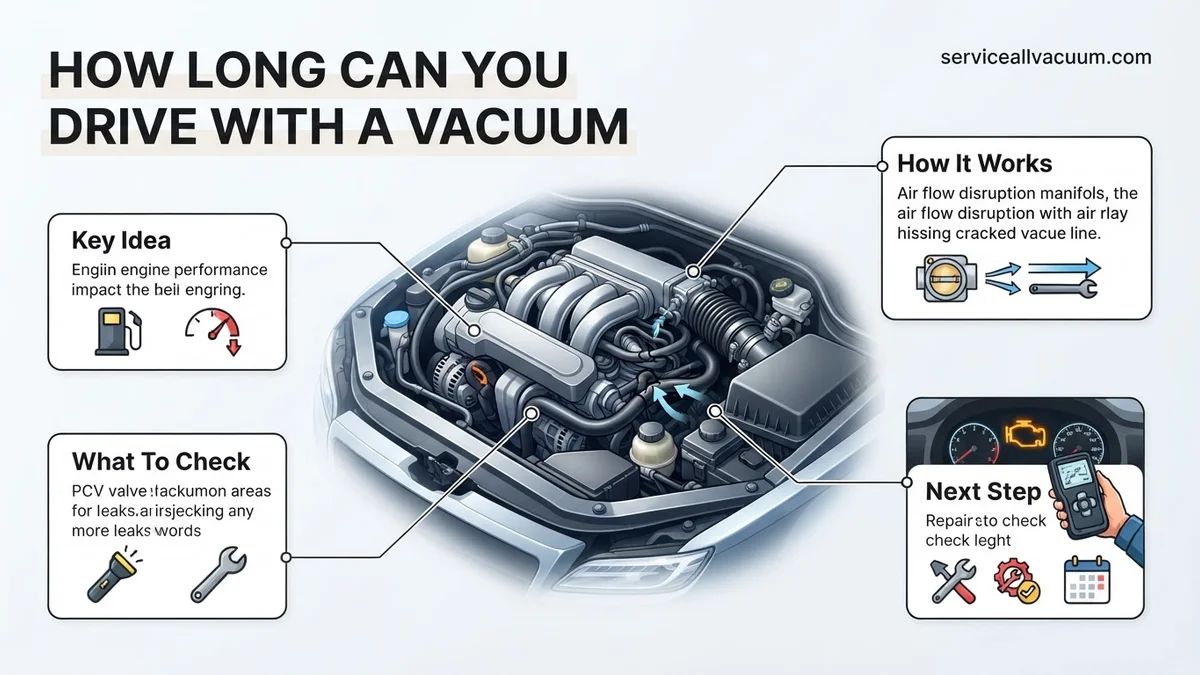
What Causes Driving Risks with a Vacuum Leak? (Symptoms & Dangers)
A vacuum leak directly compromises your vehicle’s fundamental operation, leading to immediate performance issues and long-term, expensive damage. Recognizing these symptoms and understanding the underlying dangers is crucial for your safety and your car’s health.
Immediate Safety Hazards
The most pressing concerns stem from how a vacuum leak impacts drivability and vehicle control. You might experience:
- Unreliable Engine Performance: Common symptoms include a rough idle, engine misfires, or hesitation during acceleration. Your engine may feel weak or unresponsive.
- Sudden Stalling: Especially dangerous in traffic or at intersections, a significant vacuum leak can cause your engine to unpredictable stall, leaving you without power steering or brakes. This is a severe safety risk.
- Compromised Braking Power: Many vehicles use engine vacuum to assist the power braking system. A substantial leak can lead to a hard brake pedal and significantly extended stopping distances, reducing your ability to react in an emergency.
- Increased Accident Risk: The combination of unpredictable engine behavior and reduced braking efficiency makes driving with a vacuum leak inherently riskier.
Engine & Component Damage
Beyond immediate safety, driving with a vacuum leak actively harms your engine and its sensitive components. This damage often accumulates quickly:
- Lean Air-Fuel Mixture: The engine management system detects extra air (unmetered by the mass airflow sensor) and tries to compensate, often resulting in a “lean” condition. This means there’s too much air for the amount of fuel injected.
- Engine Overheating: A lean condition causes combustion temperatures to rise dangerously high, potentially leading to overheating. This can warp cylinder heads, burn valves, and severely damage internal engine components.
- Catalytic Converter Failure: Unburned fuel and excessive heat from a lean mixture can rapidly destroy your catalytic converter. A replacement can cost upwards of $1,500 to $3,000 in 2027, making it one of the most expensive peripheral repairs.
- Oxygen Sensor and Spark Plug Damage: Sustained lean conditions can foul spark plugs and damage oxygen sensors, which are vital for engine efficiency and emissions control. This creates a cycle of poor performance and further issues.
- Increased Emissions: Vehicles by 2027 are designed to meet stringent emission standards. A vacuum leak almost guarantees you’ll fail an emissions test due to increased pollutants.
How Long Can You Drive with a Vacuum Leak? Factors & Limits
There is no universal answer to “how long” because the situation depends entirely on the nature of the leak. While short distances might be unavoidable, driving with a vacuum leak is always a gamble. The general advice is always to repair it as soon as possible.
The Severity Spectrum
The size and type of vacuum leak dramatically influence how long you might “get away” with driving, though even minor leaks cause problems:
- Small, Pinhole Leaks: A tiny crack in a vacuum hose might only cause a slightly rough idle and an illuminated Check Engine Light (CEL). Your vehicle might drive for days, or even weeks, before more severe symptoms appear. However, performance will be suboptimal, fuel economy will decline, and hidden damage (like catalytic converter degradation) will already be occurring.
- Moderate Leaks: A split vacuum line or a deteriorating gasket can cause noticeable driveability issues like persistent rough idling, hesitant acceleration, and occasional stalling. Driving more than a few dozen miles in this condition significantly increases the risk of engine damage and being stranded.
- Large, Obvious Leaks: A disconnected vacuum hose or a severely cracked intake manifold gasket will cause immediate, severe symptoms: violent idling, constant stalling, extremely poor power delivery, and potentially no power brakes. In these cases, driving is extremely dangerous and often impossible for more than a few yards. You risk immediate major engine failure.
Location Matters
The specific location of the vacuum leak within your engine’s complex system also dictates its immediate impact and urgency:
- Post-Throttle Body Leaks: These are the most critical. Leaks in the intake manifold, PCV system (after the throttle body), or brake booster lines directly introduce unmetered air into the engine’s combustion chambers. This immediately disrupts the air-fuel ratio, causing lean conditions and all the associated damages and driveability issues. A leak here requires immediate attention.
- Pre-Throttle Body Leaks: Leaks in hoses leading to the throttle body or upstream of the mass airflow sensor are less common for causing severe lean conditions, as the air might still be accounted for. However, they can still introduce debris, affect sensor readings, and cause issues with specific systems like evaporative emissions (EVAP). While not as immediately catastrophic for engine lean conditions, they shouldn’t be ignored as they can trigger various other problems and CELs.
- Accessory System Leaks: Some vacuum lines connect to accessories like HVAC controls or cruise control. A leak here might cause those specific features to malfunction (e.g., your AC vents stop switching modes), but typically won’t directly affect engine running or cause severe engine damage. However, it still indicates a system degradation that needs addressing.
How to Identify & Address a Vacuum Leak
Pinpointing a vacuum leak often requires a systematic approach. Early detection and remediation are critical to prevent escalating engine issues and maintain vehicle efficiency.
1. Conduct a Visual Inspection
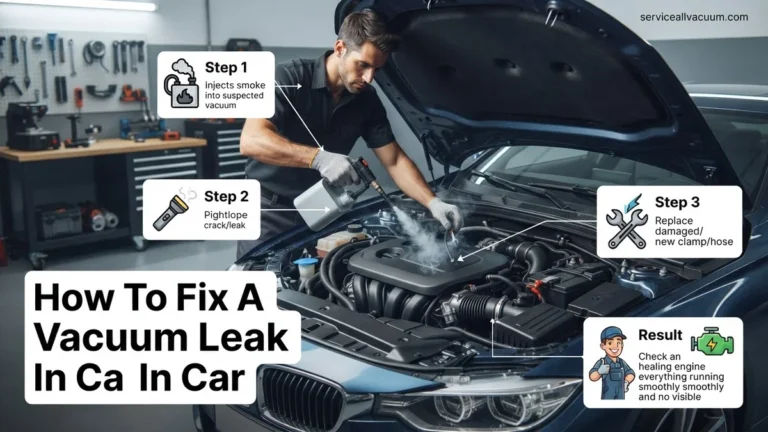
Begin by visually inspecting all accessible vacuum lines, hoses, and connections under the hood. Look for:
- Cracks or Fissures: Examine rubber hoses for signs of age, hardening, or visible cracks, especially at bends or connection points.
- Loose Connections: Check all junctions where vacuum lines connect to manifolds, sensors, or other components. Ensure clamps are secure.
- Damaged Gaskets: Inspect the intake manifold gasket area for any visible signs of wear or leakage, which can be a common source of vacuum issues.
2. Utilize Diagnostic Tools
By 2027, advanced diagnostic tools are widely accessible for both DIY enthusiasts and professionals:
- OBD-II Scanner Analysis: Connect an advanced OBD-II scanner to read live data streams. Pay attention to Fuel Trim (Short Term and Long Term) readings. Elevated positive fuel trims (above +10% to +15%) often indicate the engine is compensating for unmetered air, a strong sign of a vacuum leak.
- Smoke Machine Test: A professional-grade smoke machine, or even a consumer-level unit, introduces harmless smoke into the vacuum system. Smoke escaping from a hose, gasket, or fitting clearly identifies the leak’s location. This is considered the most accurate method by automotive experts.
- Carburetor Cleaner or Propane Test (Caution): While older methods involve spraying carburetor cleaner or propane around suspected areas and listening for engine RPM changes, this carries a fire risk and is less precise than smoke testing. Proceed with extreme caution if opting for this.
When to Seek Professional Help for Persistent Vacuum Leaks
While some minor vacuum leaks are resolvable with basic tools, certain scenarios necessitate expert intervention to ensure proper repair and prevent collateral damage. Automotive service data from 2027 indicates that approximately 35% of complex vacuum issues require specialized diagnostic equipment beyond consumer-grade tools.
1. When DIY Solutions Fail
If you’ve systematically followed diagnostic steps and replaced obvious damaged components (e.g., a cracked vacuum hose) but the symptoms persist, it’s time for professional assessment. Unresolved positive fuel trims or persistent diagnostic trouble codes (DTCs) related to lean conditions or engine misfires point to deeper issues.
2. Complex or Internal Leaks
Some vacuum leaks originate from components that are difficult to access or diagnose without specialized tools:
- Intake Manifold Gasket Issues: Replacing an intake manifold gasket often requires specific torque sequences and potentially specialized tools. Improper installation can lead to new, more severe leaks.
- Brake Booster Leaks: A leaking brake booster can manifest as a hard brake pedal or hissing sound and is critical for safety. This component should be inspected and replaced by a qualified technician due to its integral role in the braking system.
- Internal Engine Component Leaks: In rare cases, a vacuum leak can stem from internal engine components, such as a PCV valve or associated pathways. These require in-depth engine knowledge and potentially partial disassembly.
Automotive service centers, by 2027, utilize advanced digital scan tools with manufacturer-specific protocols and dynamic testing capabilities, offering unparalleled diagnostic accuracy for complex vacuum system problems.
What If It Still Doesn’t Work?
If initial troubleshooting and minor repairs haven’t resolved your vacuum leak symptoms, it’s crucial to consider the following fallback steps before further risking engine health:
- Re-check All Connections: Even after initial inspection, a subtle leak can be missed. Re-verify every connection, clamp, and hose for tightness and integrity. A professional mechanic often employs specialized leak detection sprays to identify micro-leaks.
- Consult Manufacturer Technical Service Bulletins (TSBs): Access online databases for your specific vehicle model (2027 models often have digital TSBs accessible via dealership networks or subscription services). Some vacuum leaks are known issues with specific models, and TSBs can provide exact diagnostic and repair procedures.
- Professional Diagnostic Service: Engage a certified automotive technician. They possess factory-level diagnostic equipment and extensive experience. A comprehensive diagnostic service for a persistent vacuum leak, including advanced smoke testing and live data analysis, typically costs between $150 and $300 in 2027, excluding parts and labor for the actual repair.
- Address Associated Components: Sometimes, what appears to be a vacuum leak is a symptom of a failing related component, such as a Mass Air Flow (MAF) sensor reporting incorrect air intake, or a faulty PCV (Positive Crankcase Ventilation) valve that is creating excessive vacuum or allowing unmetered air.
Conclusion
Driving with a vacuum leak, while potentially possible for short durations, significantly jeopardizes engine health, fuel economy, and emissions compliance. Prompt identification and repair are paramount. According to verified research and expert sources from the automotive industry, ignoring a vacuum leak for more than 500-1000 miles can lead to catalytic converter damage, which costs upwards of $2,500 to replace in 2027. Your actionable next step should be to prioritize a thorough diagnosis and repair to mitigate long-term damage and restore optimal vehicle performance.
❓ Frequently Asked Questions
What are the main signs I have a vacuum leak and how worried should I be?
Common signs include a rough or high idle, engine stalling, hesitation during acceleration, poor fuel economy, a check engine light (often with lean codes), and a whistling or hissing sound under the hood. You should be moderately concerned, as delaying repair can lead to more expensive damage.
Can I drive my car to the mechanic with a vacuum leak, or should I tow it?
If the symptoms are mild (e.g., slight rough idle), driving a short distance to a mechanic might be acceptable. However, if you experience frequent stalling, severe loss of power, or compromised braking, it’s safer to have the vehicle towed to prevent further damage or an accident.
How does a vacuum leak impact fuel economy and emissions?
A vacuum leak introduces unmetered air into the engine, causing it to run lean. To compensate, the engine’s computer may attempt to add more fuel, reducing fuel economy. Additionally, improper combustion due to the lean condition can significantly increase harmful emissions.
Are all vacuum leaks equally serious, or are some worse than others?
Not all vacuum leaks are equally serious. A small leak in a non-critical line might cause minor issues, while a large leak near the engine’s intake manifold can severely impact engine operation, leading to immediate driveability problems and potential damage. The location and size are key factors.
What kinds of engine damage can a severe vacuum leak cause over time?
A severe vacuum leak causes the engine to run lean, meaning too much air and not enough fuel. This prolonged lean condition can lead to engine overheating, damage to exhaust valves, piston damage, and premature failure of the catalytic converter, resulting in very costly repairs.
Is there anything I can do to temporarily fix a vacuum leak to get home?
Temporary fixes are generally not recommended due to risks. If a visible hose is cracked or disconnected, you might temporarily reconnect it or apply electrical tape as a very short-term emergency measure to get to a safe location or mechanic. However, this is not a permanent or reliable solution.