Will Vacuuming Kill Fleas? Expert Step-by-Step Guide 2026
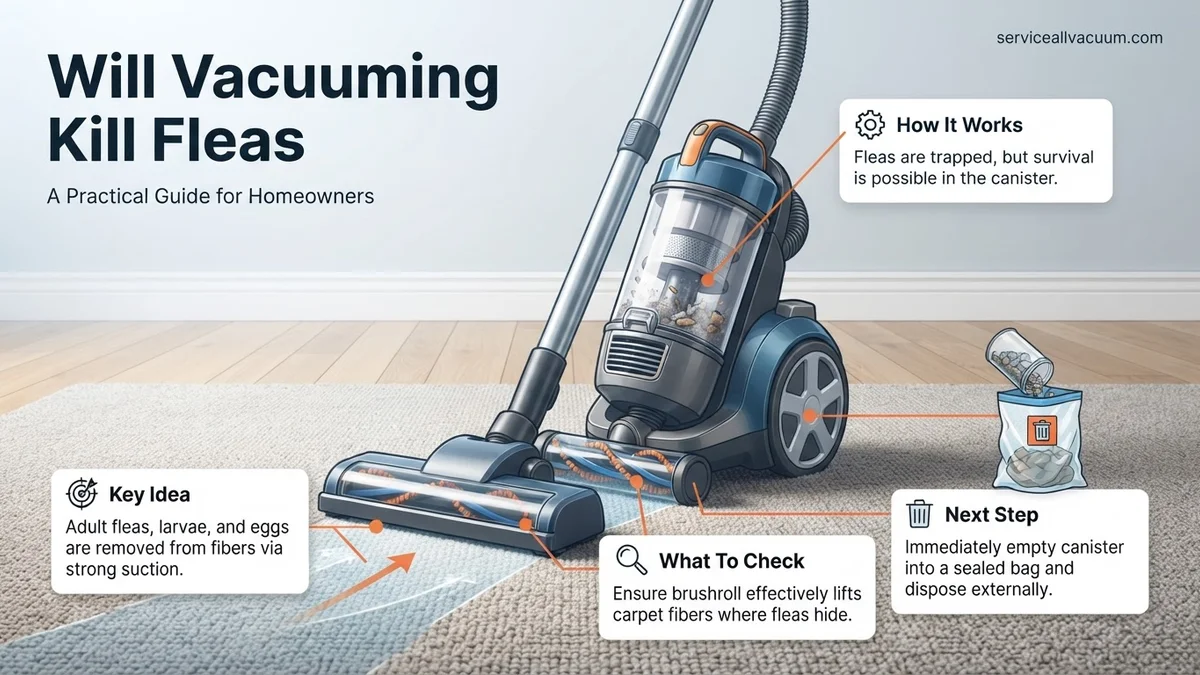
Vacuuming does kill many adult fleas, larvae, and eggs through the physical force of suction and friction, but they do not always die instantly inside the machine. To prevent surviving pests from escaping, you must immediately empty the canister or throw away the vacuum bag outside. Vacuuming is a vital mechanical tool, but it must be paired with premise and pet treatments to completely eliminate an infestation.
Vacuuming is one of the most effective mechanical weapons you have against a flea infestation in 2026, but it does not automatically guarantee that every flea dies on contact. The brutal physical force of a vacuum cleaner—combined with intense airflow and suction—actually kills a significant percentage of adult fleas, eggs, and larvae by crushing their bodies. However, many hardy adults and protected pupae survive the trip through the hose and can crawl right back out of your collection bin or bag to re-infest your home.
To successfully stop an outbreak, you need to understand exactly how the vacuum impacts these pests and why proper disposal is just as important as the cleaning process itself. Skipping the containment step turns your vacuum cleaner into a mobile breeding ground.
Key Takeaways
- Vacuuming physically destroys and kills many adult fleas, larvae, and eggs on contact.
- Fleas can survive inside a vacuum bag or canister, making immediate disposal critical.
- Always empty your vacuum bag or sealed canister directly into an outdoor trash bin.
- Combine vacuuming with pet treatments and surface sprays for a complete solution.
- Focus heavy vacuuming on high-traffic pet areas, rugs, and baseboards.
What Causes Fleas to Survive Inside Your Vacuum Cleaner
The Resilience of Flea Eggs and Pupae
While the suction force easily kills many adult fleas, flea eggs and cocoons are structurally tough. Vacuuming lifts them from deep carpet fibers, but they often survive the journey into the canister completely unharmed. Flea cocoons are particularly resistant to physical pressure and home insecticides, acting like a protective shield until the adult flea emerges days later.
Escaping the Dust Bin
Once inside a standard vacuum bag or bagless canister, surviving adult fleas find an environment rich in pet dander and organic debris. Without immediate intervention, these resilient insects crawl out through the intake port or escape when you empty the container into an open kitchen trash can. If you do not seal and throw away the contents immediately, you are essentially releasing the enemy back onto your floors.
- Adult fleas can survive for days or weeks without feeding inside a vacuum container.
- Bagless vacuums offer more opportunities for fleas to crawl back out through the cyclones.
- Vibration during vacuuming can actually stimulate flea pupae to hatch faster inside the machine.
How to Fix a Flea Infestation with Proper Vacuuming Steps
Pre-Treatment and Vacuuming Technique
Maximizing the mechanical kill rate requires the right technique. Start by sprinkling a borate-based carpet powder or baking soda across your rugs twenty minutes before you begin; this dries out any remaining eggs and weighs down mobile adults. Move your vacuum slowly in overlapping, grid-like patterns to maximize suction time over every square inch of high-traffic pet areas.
Immediate Disposal Protocol
Your vacuuming routine is completely useless if you leave the debris sitting in the closet. As soon as you finish cleaning your home in 2026, take strict containment measures to ensure zero survivors escape.
- If you use a bagged vacuum, remove the bag immediately, seal it tightly inside a heavy-duty plastic garbage bag, and carry it to an outdoor dumpster.
- If you use a bagless vacuum, empty the plastic canister directly into a plastic grocery bag, tie it shut securely, and dispose of it outside.
- Wash bagless collection bins thoroughly with hot, soapy water to drown any microscopic larvae clinging to the plastic seams.
Step-by-Step Guide to Safely Emptying Your Vacuum After Use
Captured fleas and viable eggs can easily escape a standard vacuum canister if not handled immediately. According to entomology experts, adult fleas can survive inside a dark, debris-filled vacuum bag for days, waiting for a host.
Handling Bagless Vacuums
Bagless models require strict containment protocols to prevent reinfestation. Follow these precise steps immediately after finishing your cleaning session:
- Take the vacuum canister directly to an outdoor garbage bin to avoid indoor contamination.
- Empty the contents into a sealable plastic trash bag and tie it tightly shut.
- Wash the plastic canister thoroughly with warm water and liquid dish soap.
- Wipe down the inner cyclone system with a disinfectant wipe before reassembling.
- Store the vacuum outside of living areas, such as in a garage or shed, until the next use.
Handling Bagged Vacuums
Vacuums that use disposable bags offer a safer containment barrier. Adhere to this procedure for maximum safety:
- Unplug the vacuum and carefully remove the full filter bag in a well-ventilated outdoor space.
- Seal the opening of the vacuum bag securely with heavy-duty packing tape.
- Place the sealed bag inside a second heavy-duty plastic trash bag and knot it securely.
- Dispose of the double-bagged waste in an outside municipal bin immediately.
- Inspect the bag compartment for stray debris and wipe the interior with an insecticidal spray.
What If It Still Doesn’t Work?
Persistent infestations often indicate that immature life stages are continuing to hatch deep within carpet fibers. When mechanical removal alone fails to halt the cycle, escalating intervention becomes necessary. According to pest control data for 2026, professional eradication services average between $200 and $400 depending on home square footage.
- Apply an Insect Growth Regulator (IGR) such as methoprene or pyriproxyfen to neutralize flea eggs and larvae.
- Wash all household pet bedding, blankets, and human linens in water heated to at least 130 degrees Fahrenheit.
- Treat your domestic pets with a veterinarian-recommended oral or topical preventative medication to break the biting cycle.
- Hire a licensed pest management professional for comprehensive chemical treatment if the infestation persists past three weeks.
Conclusion
Vacuuming is a powerful mechanical tool that significantly reduces active flea populations, but it rarely eliminates an entire infestation on its own. Success requires pairing high-suction cleaning with strict disposal habits and targeted growth regulators. According to verified research and entomological studies, combining rigorous vacuuming with pet treatments remains the gold standard for home eradication. Take the next step today by inspecting your pet’s sleeping areas and scheduling a deep-cleaning routine for the entire house.
❓ Frequently Asked Questions
Does vacuuming kill flea eggs before they hatch?
Yes, the abrasive action and pressure inside the vacuum hose often crush and destroy fragile flea eggs. However, any eggs that survive intact can still hatch inside a dark vacuum bag unless it is thrown away.
Do I need to throw away my vacuum bag after every use?
During an active infestation, it is best to seal and throw away disposable vacuum bags after every single use. If you have a bagless vacuum, empty the plastic canister directly into an outdoor trash bag immediately.
Can I vacuum up baking soda or salt to kill fleas?
Vacuuming up fine desiccants like baking soda or salt can help dry out fleas inside the bag. Be cautious, as very fine powders can easily bypass standard filters and damage your vacuum motor.
Will a robot vacuum help eliminate a flea infestation?
Robot vacuums offer great daily maintenance because their consistent vibration and suction stimulate cocoons to hatch. However, they lack the intense suction depth of a heavy-duty upright vacuum.
How do I know if fleas are surviving inside my vacuum cleaner?
If you notice new flea bites appearing or live fleas moving around the plastic rim of a bagless canister shortly after cleaning, pests are surviving. Ensure you empty the unit outside immediately after every cleaning session.
Is vacuuming alone enough to get rid of a severe flea infestation?
No, vacuuming is strictly a mechanical control method that only targets surface and near-surface pests. You must simultaneously treat your pets with veterinarian-approved medications and treat premises with insect growth regulators.