Does Vacuuming Kill Ants in 2026? Expert Guide & Fix
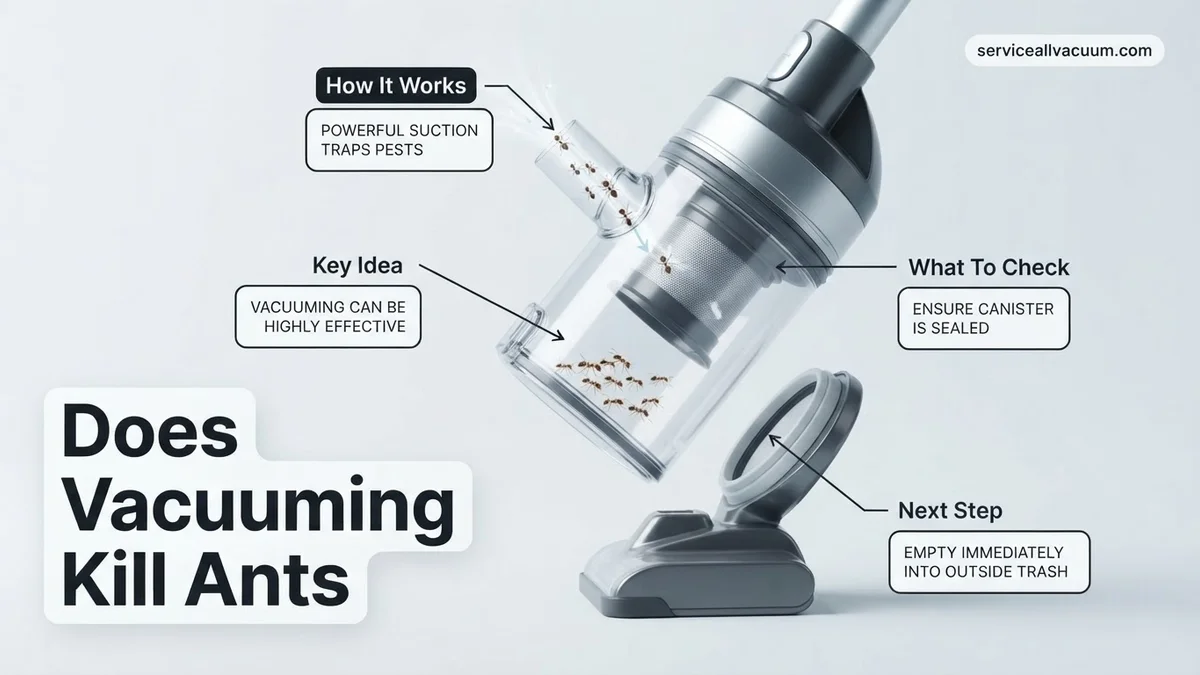
Does vacuuming kill ants? The short answer is no, not reliably; while physical turbulence destroys some insects, many survive the trip up the hose and crawl right back out. To prevent an escape, you must take immediate post-vacuuming action by sealing bags or treating the canister.
Vacuuming up a line of invading ants feels like an instant victory, but the harsh reality of pest control in 2026 is that many of those bugs will survive the trip into your machine and simply crawl right back out. While the intense physical suction, rapid acceleration, and turbulent airflow of a modern vacuum kill a percentage of the insects on impact, an alarming number walk away from the ride completely unscathed.
If you leave a captured colony sitting inside your vacuum bag or plastic canister, you are essentially providing them with a dark, debris-filled temporary shelter rather than an execution chamber. Understanding how these resilient pests survive the vacuuming process is the first step toward keeping your floors genuinely ant-free this season.
Key Takeaways
- Vacuum suction kills some ants, but many survive the journey and canister environment.
- Always empty your vacuum bag or wash the canister immediately after sucking up ants.
- Add diatomaceous earth or insecticide powder inside the vacuum bag to kill survivors.
- Vacuuming removes visible pests but fails to destroy hidden colonies or queens.
- Use targeted baits alongside vacuuming for complete, long-term ant extermination.
What Causes Ants to Survive Vacuuming and Escape the Canister
The Physics of Suction Versus Ant Physiology
You might assume that traveling through a long hose at high speeds would crush any tiny insect. However, ants possess unique biological advantages that help them withstand heavy turbulence. Their exoskeletons are remarkably flexible and tough relative to their body weight, allowing them to absorb rapid impacts against the inside of plastic hoses and collection bins without sustaining fatal trauma. Furthermore, workers of common household species like pavement ants or odorous house ants measure only about 2 to 3 millimeters in length, meaning they can easily slip through the minor pressure pockets and wind-buffeted areas inside a vacuum system.
Why the Vacuum Bag or Canister Acts as a Safe Haven
Once the ants reach the interior of your vacuum, the immediate danger passes. Instead of a lethal trap, they find themselves surrounded by pet hair, dust bunnies, and organic food crumbs—which actually serve as an immediate food source. Modern bagless vacuums and multi-cyclonic systems use tight seals to trap dust, but those same seals prevent escaping ants from getting out into the room immediately, though they can easily navigate through internal seals, extension ports, or empty out when you open the bin. If you turn off your vacuum and walk away, surviving worker ants will quickly regroup and search for an exit seam.
-
Key survival factors include:
- Lightweight exoskeletons that deflect minor blunt-force impacts against plastic walls.
- Abundant organic debris inside the canister that provides immediate cover and nourishment.
- Loose seals or attachment points that give agile insects a pathway back out into your home.
How to Fix an Ant Infestation Using Proper Vacuuming Steps
Immediate Post-Vacuuming Protocols
To ensure that the ants you vacuum up never make a return trip to your kitchen counters, you must intercept them immediately after you finish cleaning. Leaving a canister full of live pests sitting in your utility closet is a recipe for a secondary indoor outbreak. If you are using a bagged vacuum cleaner, detach the bag immediately, seal the opening tightly with heavy-duty tape or a plastic zip tie, and carry it straight to an outdoor garbage bin. If you are using a bagless model, take the dust cup outside before emptying its contents into a sealed plastic trash bag.
Sanitizing and Securing Your Machine
Once the bulk of the colony is discarded, you need to clean the internal components to finish off any stragglers clinging to the filters or cyclonic cones. Wash removable plastic canisters thoroughly with warm, soapy water to eliminate lingering ant pheromone trails that might attract future invaders. For extra protection in 2026, many homeowners spray a small burst of residual insecticide directly inside the empty vacuum canister or toss a crushed pest-control strip into the bag compartment. Always check your manufacturer guidelines before introducing chemical sprays to motorized housing units.
-
Your step-by-step cleanup checklist:
- Turn off the vacuum immediately after finishing the targeted area to prevent escape attempts.
- Seal bagged units entirely or empty bagless canisters directly into an outdoor trash receptacle.
- Wash out the collection bin with soapy water to remove chemical scent markers.
- Wipe down the vacuum hose nozzle with a vinegar-water solution to break remaining pheromone trails.
Step-by-Step Guide to Cleaning Your Vacuum After Sucking Up Ants
Sucking up ants means dealing with thousands of survivors inside your machine. Without proper cleanup, those trapped insects can escape back into your home or cause foul odors as they decompose. Modern 2026 vacuum models require careful maintenance after managing pest infestations.
Clearing the Dust Cup or Bag
If your vacuum uses a bagless canister, empty it immediately into an outdoor garbage bin. Seal the trash bag tightly to prevent any surviving ants from crawling back out. For bagged vacuums, remove the bag outdoors, seal the opening with tape, and dispose of it right away.
Washing and Sanitizing
Follow these steps to thoroughly sanitize your vacuum internal components:
- Detach the dust canister, filters, and hose completely from the main vacuum body.
- Wash plastic components thoroughly in warm, soapy water to eliminate any remaining pheromone trails.
- Rinse all washable foam or HEPA filters under running water until completely clear of debris.
- Allow all parts to air dry completely for at least 24 hours before reassembling the unit.
- Wipe down the interior of the vacuum housing with a disinfectant wipe to kill lingering bacteria.
What If It Still Doesn’t Work?
If vacuuming fails to stop the ant invasion, the colony’s queen remains safe inside a hidden wall void or nest. When DIY methods fall short, structured escalation is necessary to regain control of your living space.
Consider these fallback steps if the problem persists:
- Deploy professional-grade commercial bait stations containing slow-acting toxins like fipronil or boric acid, allowing worker ants to carry poison back to the queen.
- Seal all visible entry points, cracks, and baseboard gaps using exterior-grade silicone caulk to block new arrivals.
- Consult licensed pest control professionals for severe or recurring infestations, particularly with destructive species like carpenter ants.
- Expect professional ant extermination services in 2026 to cost between $150 and $400 depending on the property size and treatment type.
Conclusion
Vacuuming offers a fast, mechanical way to instantly remove visible surface ants, but it rarely destroys an entire underground or structural colony. While high suction pressures and bagless centrifugal forces kill a significant percentage of the insects, survivors will quickly re-establish trails unless you empty the canister outdoors and sanitize the equipment. According to verified research and entomology experts, permanent ant elimination requires targeted baiting combined with strict structural sealing. Take action today by emptying your vacuum canister outside and deploying slow-acting bait stations along active ant pathways.
❓ Frequently Asked Questions
Does vacuuming actually kill ants or do they just get stunned?
While the high-speed turbulence and impact kill a percentage of the ants, a large number survive completely unharmed. They are often just stunned temporarily by the trip up the hose and will resume normal activity inside your vacuum bag.
Can carpenter ants chew their way out of a vacuum bag?
Carpenter ants have powerful mandibles and can potentially chew through standard paper vacuum bags. If you vacuumed large wood-destroying ants, you should empty the bag or canister into an outdoor trash bin immediately.
How do I stop ants from escaping my bagless vacuum canister?
Immediately take the canister outside to your garbage bin, empty the contents into a sealed plastic trash bag, and wash the canister thoroughly with soapy water. Spraying a bit of household insecticide inside the clean canister also helps kill stragglers.
Will baking soda or cornstarch inside the vacuum kill the ants?
Yes, vacuuming up a spoonful of baking soda, cornstarch, or diatomaceous earth helps dry out and kill the ants trapped inside the bag. These fine powders coat the insects’ exoskeletons and cause dehydration.
Does vacuuming solve an ant problem permanently?
No, vacuuming is only a superficial cleaning method that removes visible foraging worker ants. It does nothing to eliminate the queen or the hidden colony, meaning new ants will continue to appear until you use proper baits.
Can I vacuum up liquid insecticide or ant spray?
Never vacuum up wet pesticide liquids or large amounts of wet materials, as this can ruin your vacuum motor and create a dangerous electrical hazard. Stick to dry powder treatments or physical cleanup.