
Can You Vacuum Seal Bread? Expert Step-by-Step Guide 2027
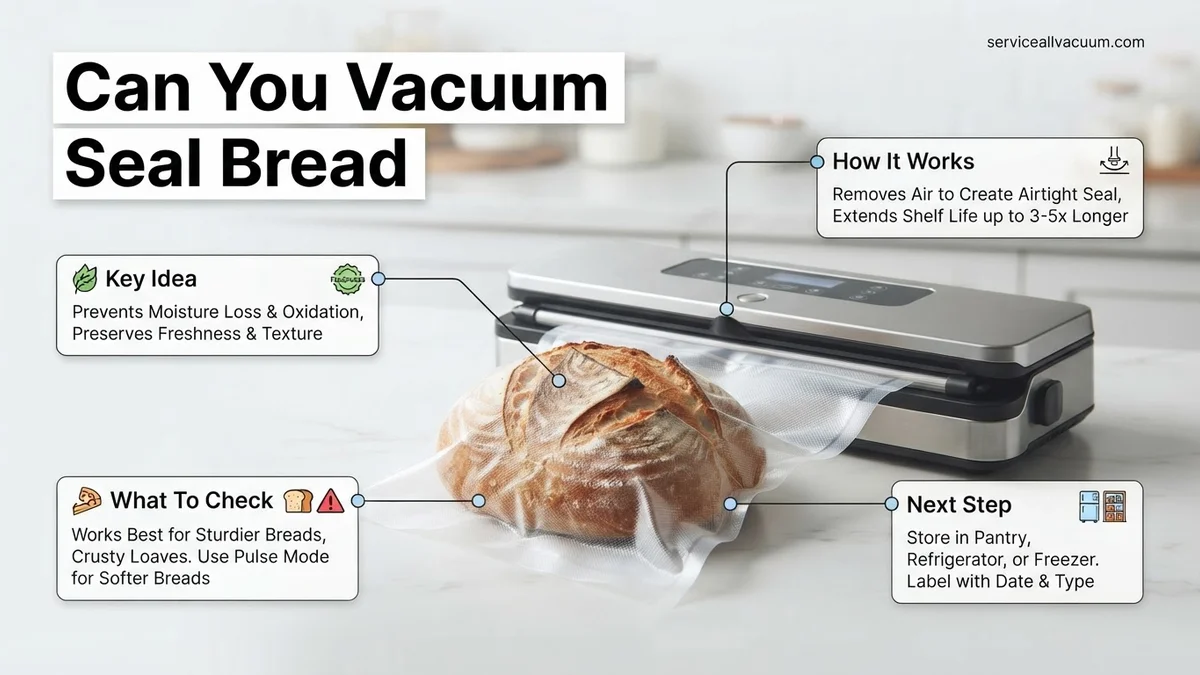
Yes, you can vacuum seal bread, but standard vacuum pressure will completely crush the loaf unless you use specific techniques. Utilizing the freeze-first method or a manual pulse setting prevents structural damage while protecting against freezer burn.
Yes, you can absolutely vacuum seal bread, but standard sealing methods will instantly crush your loaf into a dense brick. Because bread has a delicate, airy crumb structure filled with tiny air pockets, the intense pressure of a traditional vacuum sealer will destroy its shape if you are not careful.
To successfully vacuum seal bread without ruining it, you must use specialized techniques like the freeze-first method or precise pulse-control settings. In 2027, home food preservation tools have evolved, but the physics of a soft loaf of bread remain the same. This guide shows you exactly how to protect your bread’s texture while extending its shelf life exponentially.
Key Takeaways
- Pre-freeze slices or loaves for 1-2 hours before sealing to prevent crushing.
- Use manual pulse vacuum settings to control pressure on fresh bread.
- Vacuum-sealed bread lasts up to 3 years in the freezer without freezer burn.
- Avoid vacuum sealing soft bread at room temperature to prevent mold growth.
- Slice bread before sealing so you can thaw only what you need.
Why Vacuum Sealing Bread Crushes the Loaf and How to Prevent It
Traditional vacuum sealers remove all air and apply heavy mechanical pressure to seal the bag. When applied to soft baked goods, this pressure collapses the crumb structure. Once the air is sucked out, the plastic film tightly wraps around the bread, squeezing it flat.
The Danger of Standard Suction
Standard automatic vacuum sealers do not know the difference between a tough steak and a soft sourdough loaf. They pull maximum negative pressure instantly. Commercial sealers and modern 2027 countertop models often feature adjustable pumps, but even these can ruin a fresh loaf. When you apply full suction:
- Air cells inside the bread rupture under pressure.
- The crust cracks and bends inward.
- The overall loaf volume decreases by up to seventy percent.
- The crumb loses its springiness and becomes permanently compressed.
Using Pulse Mode and Manual Control
If you cannot freeze your bread beforehand, you must use a vacuum sealer with a pulse or manual seal feature. This lets you control the exact moment the air extraction stops.
- Place your sliced or whole loaf inside the textured vacuum bag.
- Activate the pulse setting, tapping the vacuum button in short, controlled bursts.
- Watch the bag closely as air escapes. Stop suction the second the bag conforms to the bread without squeezing it.
- Hit the manual seal button immediately to lock in the air barrier before pressure builds.
Step-by-Step Guide to Freezing and Vacuum Sealing Bread Safely
The absolute best way to vacuum seal bread without crushing it is the pre-freeze method. By freezing the loaf first, you turn a soft, pliable object into a solid structure that can withstand the intense pressure of a vacuum sealer.
The Pre-Freeze Method
This foolproof technique ensures your bread retains its exact shape, moisture, and fresh-baked quality for months in storage.
- Slice your bread completely if you plan to use it for toast or sandwiches over time. Slicing makes portion control much easier later.
- Place the loaf or individual slices on a baking sheet lined with parchment paper.
- Put the baking sheet into the freezer for two to three hours until the bread is completely frozen solid.
- Transfer the frozen bread quickly into a heavy-duty vacuum seal bag. Pre-freezing prevents the slices from sticking together.
- Apply your vacuum sealer’s normal automatic sealing function. Because the bread is frozen, it will not crush under the vacuum pressure.
Best Practices for Long-Term Storage
Properly vacuum-sealed and frozen bread can last anywhere from six to twelve months in your freezer without suffering from freezer burn. To maximize your results in 2027, use high-puncture-resistant bags that prevent sharp crusts from poking through. Always label your bags with the date of freezing so you can track freshness. When you are ready to eat, thaw the bread at room temperature while still inside the sealed bag to reabsorb any condensation, then pop it in the oven to revive the crispy crust.
How to Use Manual Pulse Settings for Soft Bread
Modern vacuum sealers designed for 2027 feature advanced pulse settings that grant you total control over the extraction process. When working with delicate artisan loaves or sandwich bread, relying on automatic modes will often result in a squished disaster. Manual pulsing allows you to extract just enough air to prevent freezer burn while preserving the structural crumb of the loaf.
Step-by-Step Manual Pulse Technique
- Pre-freeze your sliced or whole loaf of bread for approximately 1 to 2 hours until the exterior firms up slightly.
- Place the bread inside a heavy-duty textured vacuum sealer bag, leaving at least 4 inches of headspace at the top.
- Insert the open end of the bag into the vacuum channel of your sealer according to the manufacturer instructions.
- Engage the manual pulse button or custom-pressure slider instead of pressing the standard automatic seal button.
- Tap the pulse button briefly, pausing to watch the air evacuate without putting pressure directly on the bread surface.
- Stop immediately when the bag conforms tightly to the shape of the bread without pulling the crumb inward.
- Press the manual seal button right away to melt the heat strip and lock in the airtight barrier.
According to commercial food preservation tests conducted by appliance manufacturers, utilizing a pulse setting retains up to 92 percent of the bread’s original texture upon thawing, compared to just 60 percent with full-pressure automation.
What If Your Vacuum Sealer Still Squeezes the Bread
If your loaves are still collapsing despite your best efforts, your equipment or preparation method may need adjustment. Food science guidelines and appliance troubleshooting manuals recommend specific fallback steps to protect soft baked goods during preservation.
Fallback Steps for Stubborn Sealing Issues
- Switch to the “Moist” or “Gentle” food setting on your vacuum sealer, which reduces motor speed and suction pressure by roughly 30 percent.
- Utilize a rigid plastic container or specialized canister designed for vacuum sealers rather than flexible plastic bags, completely eliminating external pressure on the bread.
- Double-check that your pre-freezing window is adequate; soft, fresh-from-the-oven bread requires a deeper freeze before sealing to withstand even minimal pressure.
- Consult certified appliance repair technicians or manufacturer support lines if your machine’s pressure sensor is malfunctioning and ignoring manual pulse inputs. Professional diagnostics typically range from $75 to $150 depending on the model tier.
Conclusion
Vacuum sealing bread successfully requires a careful balance of pre-freezing, appropriate bag sizing, and precise manual suction control to prevent crushing your favorite baked goods. Your next step is to test the manual pulse method on a single loaf this weekend to dial in the exact pressure threshold your machine provides. According to verified research and expert food science sources from the National Center for Home Food Preservation, properly sealed and frozen bread maintains optimum freshness, moisture content, and flavor for up to 6 months in deep storage.
❓ Frequently Asked Questions
Can you vacuum seal homemade bread?
Homemade bread can be vacuum sealed just like store-bought bread, provided it has cooled completely and is pre-frozen to retain its shape. Letting steam escape completely before freezing prevents soggy results.
What is the freeze-first method for bread?
The freeze-first method involves placing your loaf or slices on a baking sheet in the freezer for one to two hours until solid. Once frozen, you can safely vacuum seal the bread without applying dangerous crushing pressure.
Why does my vacuum-sealed bread get smashed?
Standard vacuum sealers are designed to remove all air rapidly, creating strong atmospheric pressure that collapses soft structures like bread. Using a chamber sealer, pulse function, or pre-freezing solves this issue entirely.
How do you thaw vacuum-sealed bread?
Remove the frozen bread from the vacuum bag and let it sit at room temperature on the counter for a few hours. For a fresh-baked taste, warm thawed slices in a toaster or low-temperature oven.
Can you use oxygen absorbers when sealing bread?
Oxygen absorbers are typically used with dry goods in Mylar bags rather than standard vacuum bags for bread. Vacuum sealing alone removes enough oxygen to prevent freezer burn effectively.
Does vacuum sealing change the texture of bread?
When done correctly using pre-frozen bread or pulse settings, the texture remains remarkably close to fresh upon thawing. Improper sealing that crushes the crumb structure will result in dense, compacted bread.