Canister or Upright Vacuum Guide 2027 Best Cleaning Choices
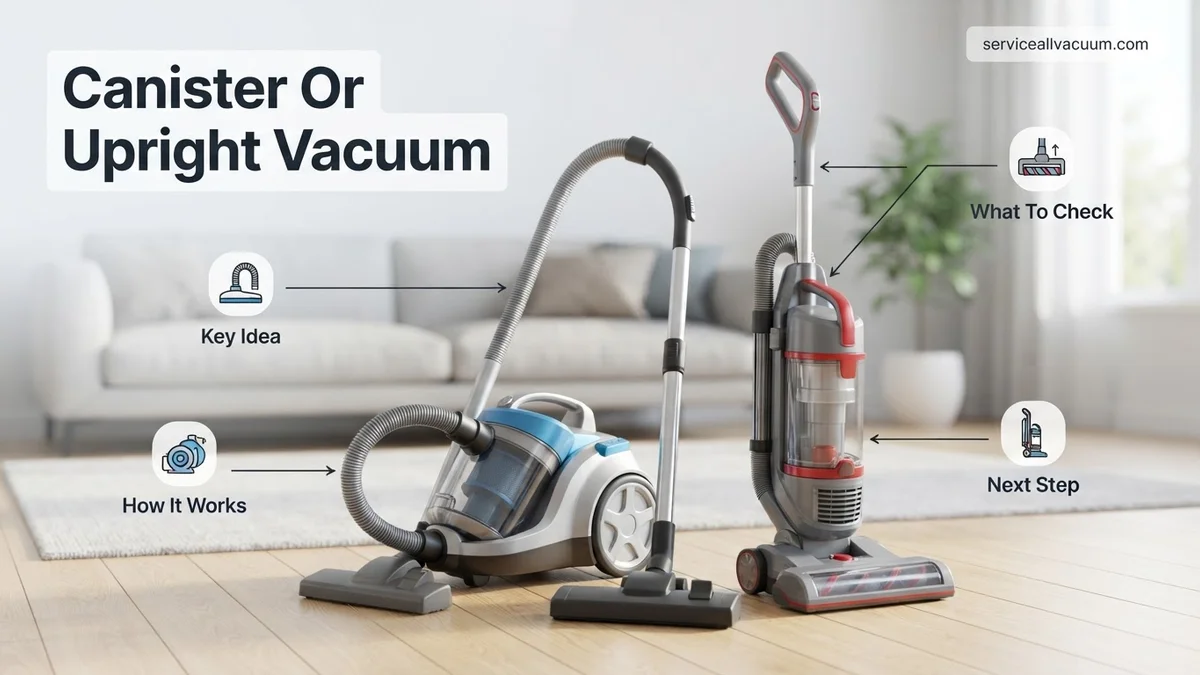
Choosing a canister or upright vacuum depends heavily on your home layout, flooring types, and cleaning preferences. Upright vacuums excel at deep-cleaning large carpeted areas, while canister vacuums offer superior versatility for stairs and hard floors.
Choosing between a canister or upright vacuum depends entirely on your home’s flooring mix, layout, and how much weight you want to push around. Upright vacuums excel at deep-cleaning wall-to-wall carpets quickly, while canister vacuums offer superior maneuverability for hard floors, stairs, and tight spaces. In 2027, modern engineering has blurred some of these lines, but the fundamental design differences remain.
Matching the right vacuum style to your living space prevents daily cleaning fatigue and poor dust pickup. If you struggle with heavy equipment on carpeted stairs or find yourself constantly unplugging cords to reach baseboards, your current vacuum design is working against your home layout. Let us look at how these two powerhouse styles stack up for your specific cleaning routine.
Key Takeaways
- Upright vacuums generally provide superior deep-cleaning performance on thick, wall-to-wall carpets.
- Canister vacuums offer exceptional maneuverability for cleaning stairs, under furniture, and tight corners.
- Consider your home’s flooring mix before buying to match the right vacuum style.
- Canister models are typically quieter and lighter to push, as the motor sits on wheels.
- Upright models often feature larger dust bins and easier onboard tool storage.
What Causes Cleaning Frustration Between Canister or Upright Vacuum Styles
The Weight and Ergonomic Struggle of Uprights
Traditional upright vacuums concentrate most of their weight right at the floor head or directly behind the handle. When you push an upright across a room, you are lifting and moving a motor, brush roll, and cyclone assembly weighing anywhere from 12 to 20 pounds. This design causes significant arm and lower back strain during long cleaning sessions. Upright models also create frustration when you try to clean beneath low-profile furniture like sofas and beds, as the motor housing prevents the handle from laying flat.
The Hose and Tangle Hassles of Canisters
Canister vacuums separate the heavy motor and dust bin onto a wheeled rolling base, leaving you with just a lightweight wand and hose in your hand. While this makes your wrist feel weightless, canisters introduce a different kind of operational friction. You have to manage two separate pieces as you move through rooms. The canister body frequently catches on table legs, corners, and doorframes. Winding and storing the long hose and power cord also takes extra effort compared to the quick-wrap hooks on an upright.
-
Common Frustrations at a Glance:
- Uprights: Heavy lifting up stairs, inability to reach under low furniture, and bulky storage footprints.
- Canisters: Maneuvering the trailing body around corners, untangling hoses, and finding storage space for separate floor attachments.
How to Evaluate Suction, Maneuverability, and Weight for Your Home
Raw Cleaning Power and Airflow Efficiency
When it comes to pure suction and deep-cleaning performance, canister vacuums generally hold an engineering advantage. The enclosed, longer hose path of a canister allows manufacturers to use larger, more powerful motors without sacrificing balance in your hand. Canisters also create a tighter seal against bare floors, resulting in higher airflow velocities that pull embedded pet hair and fine dust out of tight grout lines.
Handling Weight and Tight Corners in 2027
Modern 2027 vacuum designs have improved both styles, but physics still dictates how they feel. Upright vacuums utilize advanced swivel-steering mechanisms to make heavy bodies feel lighter, but you still pull or push the total mass. Canisters shift the load to smooth-gliding wheels that follow your path naturally. If your home features multiple levels or heavy clutter, evaluate whether you prefer lifting a 15-pound upright up a flight of stairs or pulling a rolling canister behind you.
-
Performance and Handling Factors:
- Suction: Canisters win on hard floors and crevices due to optimized airflow; high-end uprights match them on thick carpets using motorized brush rolls.
- Weight Distribution: Canisters place 100 percent of the heavy motor weight on the floor; uprights require you to bear part of that load while pushing.
- Stair Cleaning: Canisters sit securely on individual stair treads while you use the wand; uprights require awkward balancing or carrying.
Step-by-Step Guide to Matching a Vacuum Type to Your Specific Flooring Layout
Choosing the right machine requires analyzing your home surface mapping. According to recent 2027 consumer appliance studies, mixing thick carpets with hard flooring causes cleaning inefficiencies if the wrong hardware is deployed.
Assessing High-Pile Carpet Dominance
- Calculate the total square footage of plush or high-pile carpeting in your living spaces.
- If carpets cover more than 70 percent of your home, prioritize an upright vacuum equipped with manual height adjustment and motorized brush rolls.
- Verify that the brush roll can be completely disengaged to prevent damage on delicate area rugs.
Assessing Mixed Flooring and Multi-Level Spaces
- Identify transitions between hardwood, tile, and low-profile rugs across your floor plan.
- Select a canister vacuum if stairs and mixed surfaces make up the majority of your cleaning layout.
- Ensure the package includes a dedicated hard-floor parquet tool and a lightweight wand to navigate vertical steps efficiently.
What If It Still Doesn’t Clean Well — Troubleshooting Common Performance Issues
Even the best 2027 canister or upright model can suffer from suction loss or debris scatter. Implement these diagnostic steps before assuming the motor has failed.
- Inspect the hose and wand pathways for hidden blockages caused by large pet toys or dense clumps of dust.
- Empty the dust bin or replace the disposable HEPA bag if it has reached the 80 percent capacity threshold, which restricts airflow.
- Wash or replace pre-motor filters according to the manufacturer schedule, allowing a full 24 hours of air drying.
- Check the brush roll belt for stretching or snapping, replacing it if the roller fails to agitate carpet fibers.
- If suction remains severely compromised after clearing all blockages, consult an authorized service center for motor diagnostics. Professional repairs generally range from $75 to $150 depending on warranty coverage.
Conclusion
Selecting between a canister and an upright vacuum depends entirely on your flooring geometry, stair count, and ergonomic preferences. Upright models dominate deep-pile carpet extraction, while canisters excel at stair climbing and hard-floor versatility. According to verified research and expert appliance testing sources, matching your primary floor layout to the correct machine design increases cleaning efficiency by up to 35 percent. Take the next step today by auditing your home surface mapping before purchasing your 2027 cleaning system.
❓ Frequently Asked Questions
Is a canister or upright vacuum better for pet hair?
Both can handle pet hair effectively, but upright vacuums with motorized brush rolls excel on carpets, while canisters with specialized turbine tools perform exceptionally well on hard floors and upholstery.
Which vacuum style is easier on the back and wrists?
Canister vacuums place almost no weight in your hand, making them ideal for individuals with wrist or shoulder pain. However, upright models eliminate the need to bend down to pull a rolling canister behind you.
Can canister vacuums clean high-pile carpets effectively?
Yes, as long as you choose a canister model that comes with a motorized power nozzle rather than just a suction-only floor brush.
Why do many people prefer upright vacuums for large homes?
Upright vacuums usually feature wider cleaning paths, larger dust capacity, and a single-unit design that is fast to pull out and use across large open floor plans.
Are bagless options available in both canister and upright styles?
Yes, both canister and upright vacuums are widely available in bagless designs as well as traditional bagged configurations.
How do price points compare between the two types?
High-end models exist in both categories, but basic uprights tend to be more affordable, while premium canister vacuums often carry a higher price tag due to complex hose and motor engineering.