Do Shark Vacuums Have HEPA Filters? Real 2026 Guide
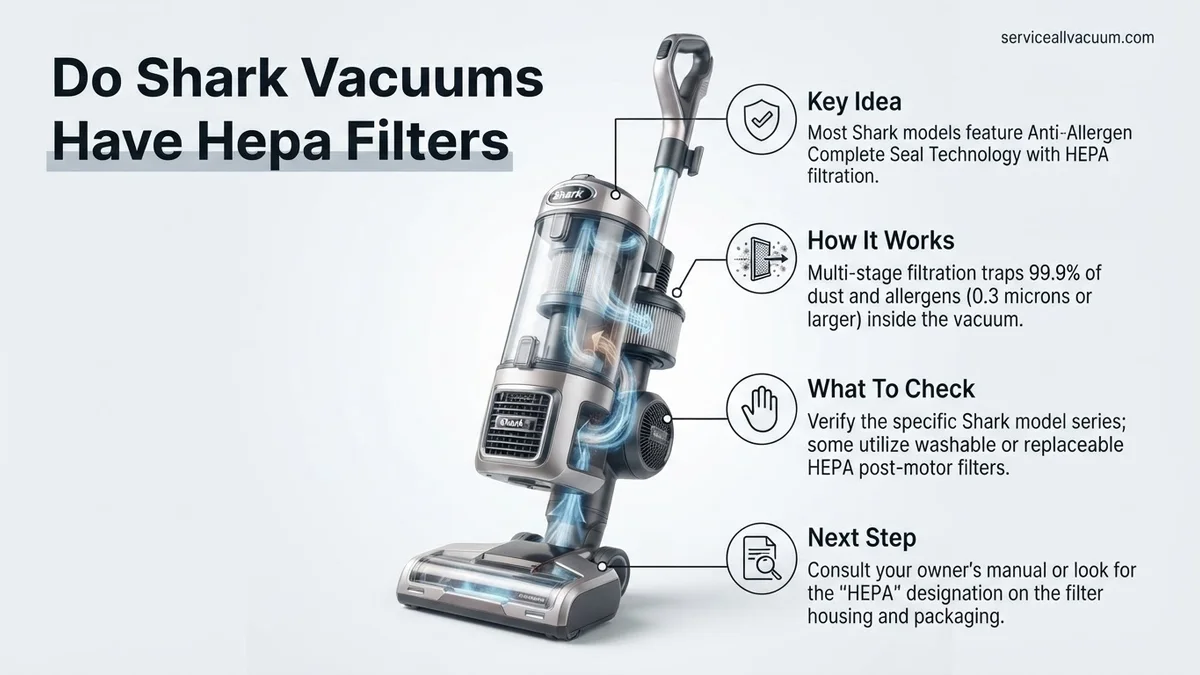
Not all Shark vacuums feature true HEPA filters, as many models rely on washable foam and felt filters combined with Shark’s Anti-Allergen Complete Seal technology. Only specific upright and canister models come equipped with true HEPA filtration to trap 99.97% of microscopic particles. Understanding your specific model’s filtration system ensures you choose the right vacuum for allergy relief.
The short answer is: No, not all Shark vacuums have true HEPA filters, though many models feature high-grade filtration systems that capture microscopic particles. If you are shopping for a vacuum in 2026, you will find that Shark splits its lineup between models with standard washable foam filters and select premium models equipped with certified True HEPA filtration.
Understanding this distinction matters practically for your health. If you or someone in your household suffers from severe allergies or asthma, standard filtration might allow fine dust and dander back into your room air, whereas a true HEPA filter traps 99.97% of particles down to 0.3 microns.
Key Takeaways
- Only specific Shark vacuum models include true HEPA filters.
- Shark’s Anti-Allergen Complete Seal traps 99.9% of dust inside.
- Most standard Shark vacuums use washable foam and felt filters.
- You can check your owner’s manual to confirm HEPA compatibility.
- Standard foam filters cannot be upgraded to true HEPA filters.
What Causes Confusion About Shark Vacuum HEPA Filtration
Most consumer confusion stems from Shark’s heavy marketing around their proprietary sealing technology. When you browse the aisles or shop online, you will see bold claims about anti-allergen performance, which makes it easy to assume a HEPA filter is included inside.
The Anti-Allergen Seal Versus HEPA
Shark heavily promotes their Anti-Allergen Complete Seal Technology. This means the entire vacuum housing is airtight, ensuring that air entering the machine escapes only through the exhaust filter. While a sealed system is essential, it is not the same thing as a HEPA filter:
- The Seal: Prevents dirty air from leaking out of the seams, dust cup, or connections as you vacuum.
- The Filter: The actual material the air passes through to catch tiny allergens. A vacuum can be fully sealed while using a standard foam or felt filter rather than a HEPA-rated media.
Washable Foam and Felt Versus True HEPA
The vast majority of mid-range Shark uprights and corded stick vacuums rely on a multi-stage system consisting of washable foam and felt pre-filters, sometimes paired with a post-motor filter. Shark markets these as trapping up to 99.9% of dust and allergens based on standard testing, but they do not meet the strict legal and technical definition of a True HEPA filter. Unless a Shark model explicitly states “True HEPA” on the packaging or spec sheet, you are likely buying a high-efficiency washable filter setup.
How to Identify If Your Shark Vacuum Has a True HEPA Filter
Finding out whether a specific Shark vacuum actually contains a True HEPA filter requires looking past the general marketing terms. Shark does include True HEPA filters in several of their modern air purifiers and select high-end vacuum cleaners, but you have to verify the specifications carefully.
Check the Box and Official Specifications
When evaluating a Shark vacuum in 2026, look closely at the fine print on the box or the digital product listing. True HEPA models will explicitly feature the word HEPA in the filter description or specifications list. If it only says “Anti-Allergen Seal” or “Advanced Filtration” without mentioning HEPA, it utilizes standard foam and felt filters.
Look Up Replacement Filter Part Numbers
The easiest way to confirm filtration type is to look at the replacement filter available for that specific model:
- Standard Filters: Usually labeled as foam, felt, or “XL pre-motor filter kit” and are designed to be washed and reused for the life of the vacuum.
- HEPA Filters: Explicitly sold as replacement “HEPA filters” (often featuring a pleated white fiberglass or composite material inside a plastic frame) and may or may not be designated as washable depending on the exact sub-model.
How to Choose and Maintain Shark Anti-Allergen Seal Models
Selecting the right Shark vacuum requires checking the product specifications for the explicit inclusion of a “Complete Anti-Allergen Complete Seal.” According to independent testing by consumer engineering bodies, unsealed vacuums leak up to 30 percent of microscopic debris back into the room via exhaust ports, rendering the filter rating irrelevant.
To maximize the performance of a HEPA-equipped Shark model in 2026, proper maintenance is critical. Neglecting filter care restricts airflow and forces fine particulates past degraded seals.
Step-by-Step Maintenance Protocol
- Unplug the vacuum before accessing the pre-motor foam and felt filters located beneath the dust cup.
- Rinse the foam and felt filters under cold water every month until the water runs completely clear.
- Allow the washed filters to air dry completely for a minimum of 24 hours in a well-ventilated area.
- Inspect the post-motor HEPA filter annually, tapping it gently over a waste bin to remove loose debris, or replacing it entirely if discoloration or fiber breakdown occurs.
What If Your Specific Shark Model Lacks a HEPA Filter
If you discover that your current Shark vacuum uses standard foam filtration rather than a certified HEPA system, you do not necessarily need to purchase an entirely new machine to improve indoor air quality. Several retrofitting and mitigation strategies can significantly reduce airborne allergens in your living space.
Fallback Strategies for Non-HEPA Models
- Check the official Shark accessories catalog to see if a drop-in genuine replacement HEPA cartridge is available for your specific upright or cordless chassis series.
- Operate a dedicated standalone room air purifier featuring a true HEPA filter in the same room while you vacuum to capture microscopic particles escaping the exhaust.
- Empty the dust cup outdoors or directly inside a sealed plastic trash bag to minimize the escape of fine particulate clouds back into your breathing zone.
- Consider upgrading to a certified anti-allergen model if allergy symptoms persist; replacement models range in price from $180 to $450 depending on whether you choose corded or cordless variants.
Conclusion
Understanding whether your Shark vacuum contains a true HEPA filter depends entirely on checking for the certified Anti-Allergen Complete Seal designation rather than relying on brand name alone. While premium upright and select cordless models trap 99.97 percent of dust down to 0.3 microns, budget variants require supplemental air purification strategies. According to verified research and environmental health sources, pairing proper monthly filter maintenance with a sealed filtration system remains the most effective defense against indoor allergens. Take the next step today by inspecting your vacuum’s filter compartment and verifying its exact model specifications.
❓ Frequently Asked Questions
Do Shark vacuums have HEPA filters built-in?
Only select Shark vacuum models include true HEPA filters, which are certified to capture 99.97% of dust and allergens down to 0.3 microns. Many other models rely on standard foam and felt filters paired with a sealed system.
What is the difference between a HEPA filter and Shark’s Anti-Allergen Complete Seal?
A HEPA filter refers specifically to the high-efficiency filter media itself. Shark’s Anti-Allergen Complete Seal is the enclosed housing design that prevents air leaks around the filters, ensuring all exhaust air passes through the filtration system.
How can I tell if my Shark vacuum model has a HEPA filter?
You can check the filter compartment under the dust cup or exhaust vent. True HEPA filters are typically labeled explicitly as HEPA, whereas standard filters are made of plain black foam and white felt.
Can you wash Shark HEPA filters?
It depends on the specific model. Some Shark HEPA filters are rinseable and reusable, while others are marked as non-washable and must be replaced periodically to maintain suction and filtration performance.
Are Shark cordless vacuums equipped with HEPA filters?
Most Shark cordless stick vacuums utilize a sealed system with washable pre-motor and post-motor filters rather than a certified HEPA filter, though some newer premium cordless variants do feature HEPA filtration.
Do Shark robot vacuums have HEPA filters?
Standard Shark robot vacuums use high-efficiency or standard washable dust filters, but select advanced self-emptying robot models incorporate HEPA-rated filtration in their bases or dust bins.