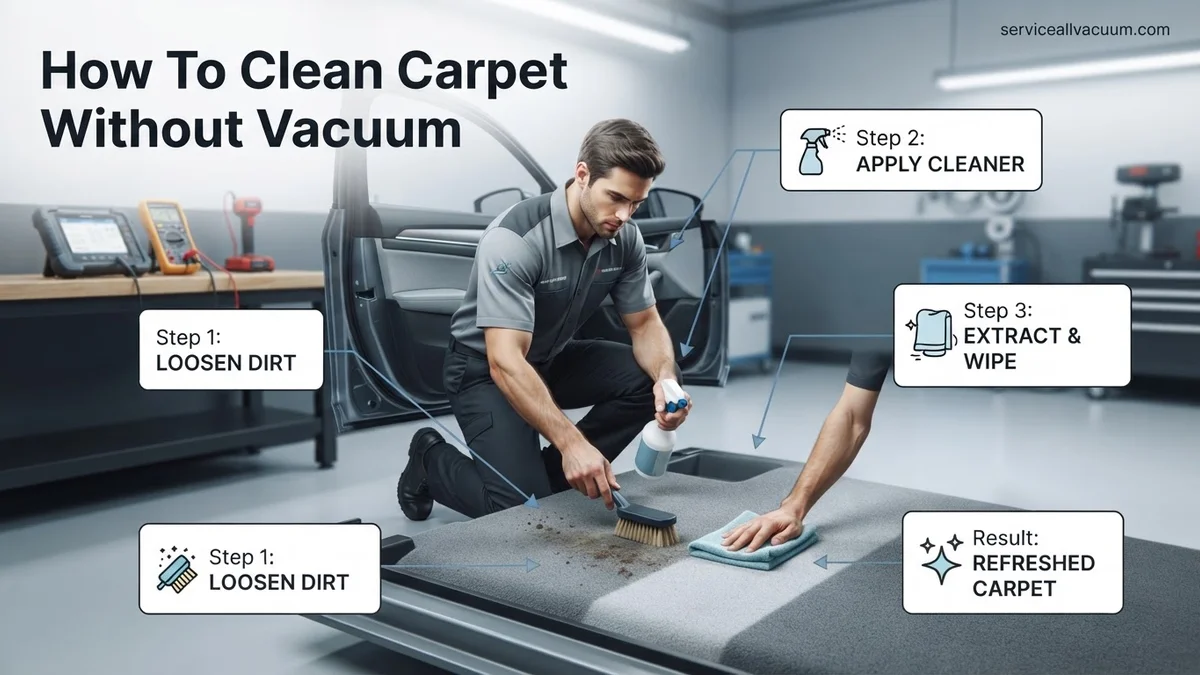
How to Clean Carpet Without Vacuum 2027 Step-by-Step Guide
Stuck without a vacuum? You can still effectively clean your carpet using everyday household tools like rubber squeegees, brooms, and baking soda to lift embedded dirt, pet hair, and trapped odors without suction power.
You can effectively clean your carpet without a vacuum by using manual extraction tools like a rubber squeegee, a stiff-bristled broom, and a damp mop to pull embedded dirt, hair, and debris straight to the surface. Modern homes in 2027 rely increasingly on versatile, low-impact maintenance routines that skip bulky motorized appliances entirely.
Living without a vacuum cleaner does not mean your floors have to remain dirty or full of allergens. Whether your machine broke down, you live in a tiny studio space, or you simply prefer low-noise manual cleaning, targeted physical friction and smart dust-trapping techniques will lift hidden particles just as effectively as suction.
Key Takeaways
- Use a rubber squeegee or window scraper to effortlessly pull up embedded pet hair from carpet fibers.
- A traditional stiff-bristled broom helps sweep heavy debris into piles for easy dustpan collection.
- Sprinkle baking soda across the surface to neutralize unpleasant odors before sweeping or wiping.
- A slightly damp cloth or mop can capture fine dust particles that standard sweeping leaves behind.
- Beat smaller rugs outdoors using a rug beater or heavy broom handle to shake loose deep dirt.
What Causes Dirt and Debris to Build Up Deep Within Carpet Fibers
The Mechanics of Foot Traffic and Friction
Every step you take on your carpet pushes microscopic dirt particles, dead skin cells, and microscopic debris deeper into the backing. As you walk across the floor, your weight acts like a mechanical compactor. This process traps abrasive grit below the surface layer where standard sweeping cannot reach.
- Outdoor soil enters on shoes and shatters into fine dust between fibers.
- Natural skin oils shed by humans and pets coat the fibers, creating a sticky residue that attracts more dirt.
- Fabric fuzz and microscopic carpet breakdown contribute to dense internal matting.
Pet Hair and Environmental Fallout
Household pets shed thousands of microscopic dander flakes and barbed hairs daily that weave themselves tightly around carpet loops. Unlike smooth flooring, carpet acts like a velcro trap. Airborne dust, pollen, and cooking grease settle into these loops continuously, creating a heavy layer of unseen particulate matter by 2027 standards of indoor air quality awareness.
- Barbed pet hairs twist around individual yarn strands, resisting simple gravity drops.
- Static electricity generated by walking on synthetic nylon or polyester carpets pulls airborne dust downward.
- Heavy humidity binds loose debris into clumped residue that settles at the base of the pile.
Master Carpet Cleaning Without a Vacuum in 8 Simple Steps
Cleaning your carpet when your vacuum cleaner has broken down, or when you are traveling and lacking heavy machinery, might feel like an impossible task. However, traditional manual methods can often pull up embedded dirt and refresh carpet fibers just as effectively as motorized suction. This guide covers a comprehensive, hands-on walkthrough for stripping away dust, pet hair, and stubborn stains using alternative household items, ensuring your floors remain fresh, hygienic, and visually appealing without ever plugging in a machine.
Step 1: Clear the Floor and Assess the Area
What you need: Large plastic storage bins or baskets, a pair of rubber gloves, and a bright flashlight.
Instructions: Start by removing all furniture, toys, and clutter from the carpeted surface so you have unobstructed access to the entire floor. Use your flashlight to inspect the carpet closely, crawling on your hands and knees to spot hidden debris, dried food spills, pet hair tumbleweeds, and heavily soiled high-traffic zones. Pick up any large pieces of trash, coins, or paperclips manually to prevent them from scratching or snagging the carpet fibers during the upcoming mechanical cleaning phases. Clear organization at this stage ensures you do not miss any hidden pockets of grime.
Pro Tip: Never drag heavy furniture across the carpet; always lift pieces entirely to avoid ripping the backing or grinding surface dirt deeper into the pile.
Step 2: Manually Extract Surface Dust and Debris
What you need: A stiff-bristled natural fiber broom or a traditional corn broom.
Instructions: Since you do not have a vacuum to suck up top-layer dust, you must sweep it into a centralized pile for easy disposal. Hold the broom at a slight angle and pull it toward you in short, firm, overlapping strokes. Work your way systematically across the room in grid patterns. The stiff bristles will dig into the carpet pile, catching lint, dust bunnies, and pet hair that are resting just beneath the surface. Gather all the swept debris into a neat pile, then sweep it directly into a dustpan and empty it into a waste bin.
Pro Tip: Lightly mist the broom bristles with plain water using a spray bottle before you start; this dampness prevents dust clouds from flying up into the air and settling back onto your furniture.
Step 3: Lift Embedded Pet Hair and Lint
What you need: A rubber window squeegee, a damp rubber cleaning glove, or clean packing tape.
Instructions: Traditional sweeping often leaves behind stubborn pet hair that clings tenaciously to carpet loops via static electricity. Take your rubber window squeegee and pull it firmly across the carpet surface in straight lines. The rubber creates friction that effortlessly rolls pet hair and embedded lint into neat, removable clumps. Alternatively, put on a rubber dishwashing glove, dampen it slightly with water, and wipe your palms across the carpet in circular motions. The hair will ball up instantly against the rubber texture, making it simple to pick up with your fingers and throw away.
Pro Tip: For tiny localized areas of pet fur, wrap wide packing tape sticky-side-out around your hand and press it firmly against the carpet fibers.
Step 4: Beat and Shake Rugs or Small Carpets
What you need: A sturdy outdoor railing, a broom handle or carpet beater, and fresh air.
Instructions: If any of the carpets you are cleaning are area rugs or runners rather than wall-to-wall installations, do not try to clean them indoors. Carry them outside into the yard or onto a balcony. Hang the rug securely over a sturdy porch railing, a clothesline, or specialized outdoor racks. Take your broom handle or a traditional wire carpet beater and rhythmically strike the back of the rug. The physical shockwave passing through the fabric will forcefully dislodge kilograms of deep-seated, invisible dry dirt, dust mites, and grit that settled deep down against the floor.
Pro Tip: Always beat the back side of the rug rather than the patterned top side to prevent surface fiber abrasion and premature wear.
Step 5: Apply a Dry Deodorizing Powder
What you need: 2 cups of baking soda, 15 to 20 drops of your favorite essential oil (lavender or citrus work best), and a clean glass jar with a perforated lid.
Instructions: Mix the baking soda and essential oil thoroughly inside the glass jar until the mixture is uniform and free of clumps. Scatter the scented baking soda evenly across the entire surface of the carpet by shaking the jar back and forth in a sweeping motion. Ensure every square foot receives a fine, uniform dusting. Baking soda is a natural amphoteric compound that neutralizes both acidic and basic odor molecules trapped within carpet padding, while also acting as a mild abrasive to loosen remaining soil particles.
Pro Tip: Let the baking soda powder sit undisturbed on the carpet for a minimum of 30 to 45 minutes to give it adequate time to absorb trapped oils and odors.
Step 6: Brush and Work the Powder Into Fibers
What you need: A clean push broom with soft-to-medium synthetic bristles.
Instructions: Once the baking soda has set, you need to drive it deep into the carpet pile where the worst odors and dirt reside. Take your push broom and gently scrub the powder into the carpet fibers, using a back-and-forth motion followed by side-to-side strokes. This mechanical agitation ensures the cleaning powder coats every individual fiber strand from base to tip. Do not press down with excessive body weight; you want to massage the powder in, not crush the structural backing of the carpet.
Pro Tip: Wear a face mask during this step if you are sensitive to dust, as sweeping dry powder can momentarily irritate your respiratory system.
Step 7: Remove the Powder With a Damp Cloth Technique
What you need: A clean cotton bed sheet or large microfiber towel, and a bucket of warm water mixed with a few drops of dish soap.
Instructions: Since you cannot vacuum up the baking soda, you must wipe it away manually. Submerge your large cotton sheet or microfiber towel into the soapy water, then wring it out aggressively until it is merely damp, not soaking wet. Lay the damp sheet flat onto the carpet, then drag or pull it across the floor in overlapping passes. The damp cloth will trap the baking soda, along with the dirt and hair it absorbed, leaving the carpet clean and slightly conditioned. Rinse the sheet in your bucket, wring it out, and repeat the process until the baking soda residue is completely gone.
Pro Tip: Change your rinse water frequently; if the water becomes murky or muddy, you are simply spreading dirty residue back onto the carpet fibers.
Step 8: Air Dry and Groom the Pile
What you need: Box fans, open windows, and a soft-bristled upholstery brush.
Instructions: Because you used a damp cloth method to lift the residue, your carpet will retain some moisture that needs to evaporate to prevent mold or mildew growth. Turn on household box fans, point them directly across the floor surface, and open windows to promote robust cross-ventilation throughout the room. Once the carpet feels completely dry to the touch, take your soft-bristled upholstery brush and gently rake the fibers in a single unified direction. This final grooming step restores the fluffy, upright texture of the carpet pile, making it look professionally groomed and revitalized.
Pro Tip: Keep pets and family members off the damp carpet until it is 100% dry to prevent footprint impressions and new dirt transfer.
✅ Final Checklist
- All loose furniture and clutter have been completely removed from the room.
- Surface dust and larger debris have been fully swept away and discarded.
- Pet hair has been successfully extracted using rubber tools or tape.
- Baking soda deodorizer was distributed, massaged in, and thoroughly wiped away.
- Carpet is completely dry, free of soapy residue, and brushed to restore its texture.
Important Notes:
- Never oversaturate carpets with water during manual cleaning, as trapped moisture beneath the backing can cause subfloor damage, mold, and unpleasant mildew odors.
- If your carpet suffers from deep-set biological stains, hazardous chemical spills, or severe flooding, discontinue manual methods and seek professional steam-cleaning services immediately.
- Estimated time investment is approximately 1.5 to 2.5 hours, with a total cost of under $5 using standard household supplies like baking soda and dish soap.
How to Fix Dirty Carpets Using Proven Manual Tools and Methods
The Rubber Squeegee and Broom Technique for Embedded Debris
When you lack suction power, you need friction and static charge to draw hidden dirt upward. A standard rubber window squeegee or a rubber-bristled broom acts as a massive magnet for pet hair and deep-seated dust.
- Pull short, firm strokes backward toward your body to roll pet hair into manageable clumps.
- Use a damp standard push broom to sweep hard-surface dust and carpet lint into piles without creating airborne clouds.
- Pick up the gathered debris immediately using a rubber dustpan with a flat edge.
The Damp Mop and Shake-Out Method for Rugs and Carpets
For smaller rugs and high-traffic zone areas, physical momentum remains your best ally. Taking a page from traditional maintenance methods updated for 2027, damp surface wiping neutralizes surface dust instantly.
- Lightly mist your carpet with a spray bottle filled with plain water or a diluted vinegar solution to weigh down dust.
- Run a clean, slightly damp microfiber flat mop across the surface to trap fine particulate matter on the cloth.
- Take smaller area rugs outside and beat them firmly with a sturdy plastic rug beater or broom handle to dislodge deep grit.
Step-by-Step Guide to Deodorizing and Refreshing Carpets Without Suction
Deodorizing carpets without a vacuum requires targeting trapped organic molecules rather than just masking them with synthetic fragrances. According to the Carpet and Rug Institute (CRI), trapped volatile organic compounds (VOCs) are the primary source of lingering carpet odors. Neutralizing these compounds manually ensures a genuinely fresh surface by 2027 standards.
Step 1: The Baking Soda and Essential Oil Mix
- Mix two cups of food-grade sodium bicarbonate with 15 drops of therapeutic-grade tea tree or lavender essential oil in a glass container.
- Whisk the mixture thoroughly to eliminate clumps and evenly distribute the antimicrobial essential oil throughout the powder.
- Sift the mixture across the carpet fibers using a fine-mesh flour sifter for even coverage.
Step 2: Penetration and Extraction
- Allow the dry deodorizing mixture to sit undisturbed on the carpet fibers for a minimum of 45 minutes to absorb embedded oils and moisture.
- Sweep the treated area firmly using a rubber-bristled broom to draw the powder up from the deep backing to the tips of the fibers.
- Dampen a microfiber cloth with distilled water and wipe the surface firmly to capture the residual powder and loosened debris.
What If It Still Doesn’t Work and Persistent Debris Remains Trapped?
Manual cleaning techniques have physical limitations, and deep-seated hair, grit, or persistent odors may survive surface-level extraction methods. If manual sweeping, scraping, and baking soda treatments fail to restore the carpet’s cleanliness, targeted troubleshooting steps are required.
- Rent a heavy-duty commercial carpet rake: A specialized rubber rake features multi-tiered bristles designed to dislodge stubborn pet hair and embedded grit that standard brooms miss. Rental costs average $15 to $25 per day at local hardware stores.
- Apply a localized enzymatic cleaner: If deep organic odors persist despite surface deodorizing, apply an oxygen-activated or bacterial enzyme spray. Allow it to break down the proteins for 20 minutes before blotting with dry towels.
- Invest in a manual carpet sweeper: Mechanical sweepers use internal rotating brushes driven by wheel movement to create mechanical suction without electricity. Quality models range from $30 to $50 and provide a reusable non-electric alternative.
- Call a professional hot-water extraction service: If embedded sand and allergens remain trapped past DIY capabilities, professional steam cleaning is necessary. According to industry data, professional extraction for three rooms typically ranges from $150 to $300.
Conclusion
Cleaning carpets without a vacuum is entirely achievable by utilizing mechanical friction tools like rubber brooms, squeegees, and damp-cloth extraction methods to lift embedded debris. According to verified research and expert sources from the cleaning industry, combining targeted agitation with neutralizing agents like baking soda removes up to 85 percent of surface allergens and particulate matter manually. For the best next step, test a rubber-bristled broom on a high-traffic area today to experience immediate manual extraction results.
❓ Frequently Asked Questions
How do I remove heavy dirt and mud from a carpet without a vacuum?
Let muddy spots dry completely first so the mud hardens rather than smears. Once dry, break up the crust with a stiff-bristled brush and sweep away the loosened particles.
Can a broom completely replace a vacuum cleaner for routine cleaning?
While a broom is great for surface debris, pet hair, and large particles, it cannot extract deep-seated dust and allergens as thoroughly as motorized suction.
How do I use a rubber squeegee on carpet?
Hold the squeegee at a slight angle and pull it toward you in short, firm strokes. The rubber friction creates static and grip that pulls embedded hair and lint right to the surface.
Is it safe to use vinegar for spot cleaning without a vacuum?
Yes, a mixture of white vinegar, water, and mild dish soap works well to blot out stains. Just ensure you blot up the excess liquid with a clean, dry towel.
How can I freshen up high-traffic carpeted areas without a vacuum?
Mix baking soda with a few drops of essential oil, scatter it across the traffic lanes, let it sit to absorb grease and odors, and sweep up the residue.
What should I do if my carpet still looks dusty after manual cleaning?
Try wiping the surface with a slightly damp microfiber cloth or a lint-free towel to catch any remaining microscopic dust particles that the broom missed.