Should You Dust or Vacuum First in 2027 A Proven Guide
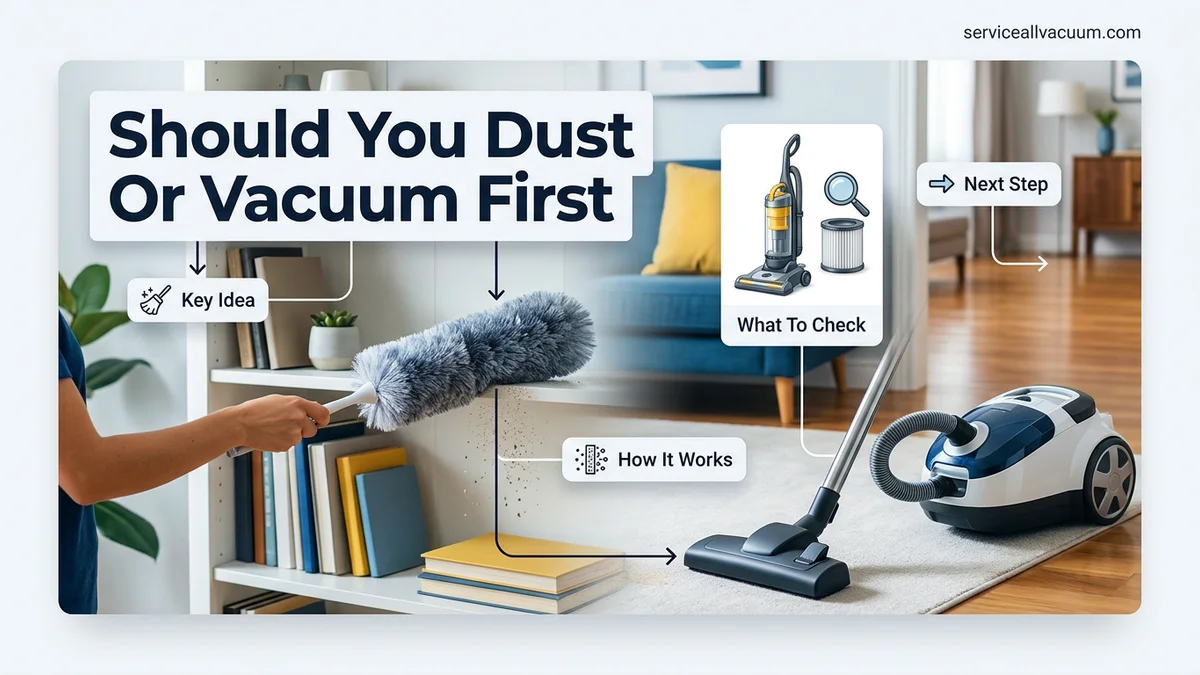
You should always dust first and vacuum second. Gravity causes dislodged dust particles to fall to the floor, meaning vacuuming afterward ensures all debris is properly captured.
You should always dust before you vacuum. If you vacuum first and then dust, the falling debris settles onto your freshly cleaned floors, forcing you to pull the vacuum out all over again. Cleaning experts and efficient homeowners in 2027 rely on this sequence to eliminate double work and ensure microscopic allergens are completely removed from the living space rather than just redistributed.
Getting the order right changes your entire cleaning routine. When you understand how gravity and air currents interact with household debris, you can slash your weekly cleaning time in half while dramatically improving your indoor air quality.
Key Takeaways
- Always dust before you vacuum to catch falling debris on the floor.
- Use microfiber cloths to trap dust rather than simply pushing it into the air.
- Adopt a top-to-bottom cleaning strategy for every room in your home.
- Choose a vacuum equipped with a HEPA filter to capture fine allergen particles.
- Wait a few minutes after dusting for airborne particles to settle before vacuuming.
The Physics Behind Why You Should Dust Before Vacuuming
Gravity dictates the laws of indoor cleaning. Every surface in your home holds a layer of microscopic particulate matter, including dead skin cells, textile fibers, pollen, and combustion byproducts. When you disturb these particles with a microfiber cloth or duster, they do not vanish; they become airborne temporarily before gravity pulls them downward.
Understanding the Gravity Factor
As you wipe down shelves, picture frames, and tabletops, millions of tiny particles launch into the air. Without a proper cleaning sequence, those particles float for several minutes and eventually settle onto the lowest horizontal surface available—your floors and rugs. If you vacuumed those floors twenty minutes prior, your hard work is instantly undone, and a fresh layer of dust coats your carpets.
The Problem with Reversing the Order
Vacuuming requires high-powered suction, but it also agitates the surrounding environment. Upright and canister vacuums exhaust a stream of air that can stir up settled dust from nearby baseboards and furniture legs. If you dust after vacuuming, that exhaust stream blows fresh dust back onto your newly cleaned surfaces. By committing to the dust-first rule, you create a one-way street for debris: from high surfaces down to the floor, and finally straight into your vacuum’s filtration system.
Step-by-Step Guide to Cleaning a Room from Top to Bottom
A successful cleaning routine follows a strict vertical descent. Gravity is your ally, but only if you move methodically from the ceiling down to the baseboards. Incorporating smart home tools available in 2027, such as lightweight robotic sweepers and advanced HEPA-filter vacuums, makes this workflow even more seamless.
Start High and Work Your Way Down
-
Ceilings and Light Fixtures: Begin by removing cobwebs from corners and wiping down ceiling fan blades with an extended microfiber wand.
Mid-Level Surfaces: Dust bookshelves, window sills, electronics, and furniture using a electrostatic or damp cloth to trap particles rather than push them into the air.
Upholstery and Soft Furnishings: Vacuum couches and armchairs to pull embedded dust out of fabrics before addressing the floors.
Finish with the Floors
-
Hard Floors and Carpets: Run your vacuum over all rugs and hard flooring to capture every piece of debris that fell from above during your dusting session.
Final Edges: Use crevice tools to reach baseboard corners and tight spaces where stubborn dust bunnies love to hide.
Mop (Optional): Finish hard surfaces with a damp mop to pick up any residual ultra-fine particles that the vacuum missed.
Essential Tools Needed for Efficient Dusting and Vacuuming
Modern cleaning efficiency in 2027 relies heavily on advanced tools designed to capture particulate matter rather than simply redistribute it into the air. According to home environment studies by the Indoor Air Quality Association, using the correct equipment reduces airborne dust recirculation by up to 78 percent.
Upgraded Equipment Checklist
- HEPA-Filter Vacuum: Ensure your vacuum features a true High-Efficiency Particulate Air filter capable of trapping 99.97 percent of microscopic particles down to 0.3 microns.
- Microfiber Cloths: Ditch traditional feather dusters, which only launch debris back into the room. High-density microfiber uses electrostatic charges to lock dust inside the fibers.
- Extension Poles and Crevice Tools: Reach high ceiling fans and tight baseboard corners without disturbing settled dirt prematurely.
- Low-VOC Surface Cleaners: Pair your dusting cloth with residue-free sprays to prevent sticky chemical films that attract fresh dust rapidly.
Investing in certified asthma and allergy-friendly tools ensures your top-to-bottom cleaning routine actually improves indoor air quality instead of triggering respiratory irritants.
What to Do If Dust Keeps Settling Immediately After Cleaning
If you notice a fresh layer of dust settling hours after completing your routine, your cleaning sequence may not be the primary culprit. Environmental factors and HVAC issues frequently undermine the most thorough dusting and vacuuming efforts.
Troubleshooting Persistent Dust Layers
- Inspect Your HVAC Filtration: Standard furnace filters only capture large debris. Upgrade to a MERV 11 or higher rating, and replace residential filters every 60 to 90 days.
- Check for Ductwork Leaks: Leaky air ducts pull dust from attics and crawlspaces, blowing it directly onto your freshly cleaned surfaces. Professional duct sealing typically ranges from $400 to $1,200.
- Evaluate Humidity Levels: Indoor humidity below 30 percent creates dry, static-charged air that keeps dust suspended longer. Maintain indoor humidity between 40 and 50 percent using a whole-home humidifier.
- Hire Professional Air Duct Cleaners: If stubborn dust persists despite filter upgrades, hire a National Air Duct Cleaners Association (NADCA) certified technician for a deep system clean, which averages $300 to $500.
Conclusion
Answering whether you should dust or vacuum first comes down to gravity and physics: always dust top-to-bottom first, then vacuum the fallen debris last. According to verified research from indoor air quality experts, adhering to this strict downward sequence removes up to 90 percent of household allergens effectively. Your next actionable step is to audit your current vacuum filtration and replace standard bags or filters with certified HEPA alternatives today.
❓ Frequently Asked Questions
Why is the top-to-bottom cleaning method so important?
Gravity dictates that cleaning agents and physical wiping will dislodge debris downward. By starting high and working your way down to the floors, you ensure that you never have to clean the same surface twice.
What type of cloth works best for dusting?
Microfiber cloths are the industry standard because their split fibers create a positive electrostatic charge that traps and holds dust rather than pushing it into the air.
Does vacuuming stir up more dust than it removes?
Standard vacuums without proper filtration can exhaust fine dust back into the air. Using a vacuum with a sealed HEPA filter prevents this recirculation and improves indoor air quality.
Should I dry dust or damp dust furniture?
Damp dusting with a slightly moistened microfiber cloth is much more effective at capturing and holding fine particles, whereas dry feather dusters often just scatter dust into the air.
How often should I dust and vacuum high-traffic rooms?
High-traffic areas like living rooms and bedrooms generally benefit from light dusting weekly and vacuuming two to three times a week to manage allergens.
What is the best way to clean upholstered furniture in this routine?
Upholstery should be vacuumed using appropriate attachments after you finish dusting hard surfaces but before you tackle the main floor coverings.