What Is A Vacuum Pump In A Car What is a Car Vacuum 2027
A car’s vacuum pump is a vital component that generates vacuum pressure, essential for the operation of numerous critical vehicle systems. Unlike older engines, modern direct injection and diesel engines often lack sufficient manifold vacuum, making this pump indispensable for assisting brakes, controlling turbochargers, and managing emissions.
A vacuum pump in your 2027 vehicle is a dedicated mechanical device that generates suction (vacuum) to power crucial systems like your brakes, turbocharger controls, and even emissions systems. It’s essential because many modern engines no longer produce enough natural vacuum on their own. This component ensures a consistent, artificial vacuum supply for vital functions.
Without it, your power brakes wouldn’t assist you, making stopping far more difficult and less safe. The vacuum pump directly impacts your safety, as well as your car’s optimal performance and efficiency, which are non-negotiable in today’s advanced vehicles. Understanding its role helps you appreciate the sophisticated engineering beneath the hood.
Key Takeaways
- Vacuum pumps create essential pressure for car systems.
- Crucial for modern car brake assistance and control.
- Replaces natural engine vacuum in many newer vehicles.
- Failure impacts braking, emissions, and turbo performance.
- Ensures safety and efficiency in today’s automobiles.
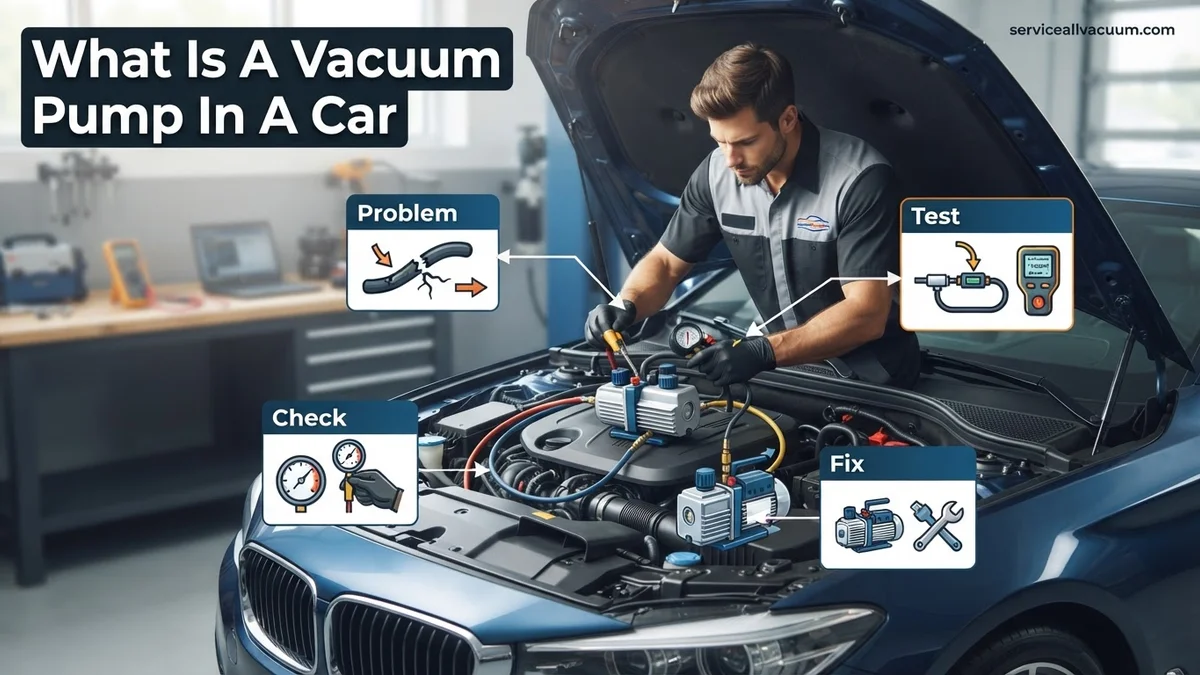
What is a Car Vacuum Pump: Its Real Purpose
Defining the Modern Vacuum Source
A car vacuum pump is a specialized component engineered to create a consistent, reliable vacuum within your vehicle’s systems. Unlike older engines that inherently generated ample vacuum from the intake manifold, most 2027 powertrains simply cannot produce enough natural suction to meet modern demands. The pump’s primary function is straightforward: to actively draw air out of a sealed system, thereby creating the necessary negative pressure.
- It typically operates either mechanically, driven by the engine’s camshaft, or electrically, as a standalone motor.
- Its core job is to serve as an independent “vacuum factory,” ensuring critical vehicle systems always have the suction they need to function correctly and safely.
- This artificial vacuum supply is a cornerstone of modern automotive design, enabling advanced features without relying on variable engine conditions.
Why 2027 Engines Need It More Than Ever
The widespread adoption of direct injection (GDI) and forced induction (turbochargers/superchargers) in gasoline engines, alongside the inherent design of all diesel engines, has significantly reduced or virtually eliminated natural manifold vacuum. This technological evolution makes the dedicated vacuum pump indispensable for today’s cars.
- Direct Injection (GDI) Engines: Most gasoline engines in 2027 utilize GDI. These engines often run with wider-open throttle plates and leaner fuel mixtures, which means less vacuum is pulled from the engine’s intake manifold.
- Diesel Engines: Diesels operate without a throttle plate entirely; consequently, they produce almost no manifold vacuum on their own. Every diesel vehicle manufactured today relies heavily on a dedicated vacuum pump for its various systems.
- Without a dedicated vacuum pump, critical safety and performance features would either fail to operate or demand excessive input from you, the driver.
How a Vacuum Pump Powers Your Car’s Essential Systems
Powering Your Braking System
The most crucial and safety-critical role of the vacuum pump is to provide assistance for your power brakes. It consistently supplies vacuum to the brake booster, which is arguably its most vital contribution to your driving experience. This connection ensures that even the slightest pressure on the brake pedal translates into significant stopping power.
- Brake Booster: This large, circular component, located between the master cylinder and the firewall, uses vacuum to multiply the force you apply to the brake pedal. It effectively reduces the physical effort required to stop your vehicle.
- When you press the brake pedal, the vacuum booster leverages the differential pressure created by the vacuum pump. This assistance makes braking feel effortless and immediate.
- Without proper vacuum assistance from the pump, you would need to exert significantly more physical force on the brake pedal to achieve the same stopping effect. This would be a major safety hazard and lead to driver fatigue.
Beyond Braking: Efficiency and Control
The vacuum pump’s utility extends far beyond just braking in 2027 vehicles. It actively contributes to engine efficiency, emissions control, and even your in-cabin comfort. Its constant vacuum supply enables precise operation of numerous auxiliary systems, optimizing overall vehicle performance and environmental compliance.
- Turbocharger Control: Many modern variable-geometry turbochargers utilize vacuum actuators. These adjust the angle of turbine vanes, optimizing boost pressure and reducing turbo lag. This precise control is vital for modern engine responsiveness and fuel economy.
- Emissions Systems: Components like the Exhaust Gas Recirculation (EGR) valve, crucial for reducing harmful NOx emissions, frequently rely on vacuum actuators for accurate and swift operation. This helps your car meet stringent 2027 environmental standards.
- HVAC System: In some vehicles, vacuum power is still used to operate blend doors and diverters within the heating, ventilation, and air conditioning (HVAC) system. This directs airflow to different vents inside the cabin, ensuring your comfort.
- Active Engine Mounts: Certain advanced engine mounts employ vacuum to adjust their stiffness. This helps to reduce vibrations felt in the cabin, enhancing ride comfort and refinement.
Troubleshooting Common Vacuum Pump Issues: A Quick Fix Guide
Diagnosing a failing vacuum pump or system often begins with recognizing specific symptoms. Timely identification can prevent more severe issues and maintain vehicle safety. According to 2027 automotive service bulletins, common issues relate to vacuum leaks or pump failure.
1. Identifying Vacuum Leaks
Vacuum leaks are a primary cause of system malfunction, leading to symptoms like a hard brake pedal or engine performance issues. They often stem from degraded hoses or gaskets.
- Visual Inspection: Carefully examine all visible vacuum lines, hoses, and connections under the hood. Look for cracks, kinks, disconnections, or hardened sections. Modern PVC and rubber compounds in 2027 vehicles are more durable, but still susceptible to heat and age.
- Auditory Check: With the engine running (and in a safe, well-ventilated area), listen for a distinct hissing sound. This noise typically indicates air being drawn into the vacuum system from an unintended source.
- Wiggle Test: Gently wiggle vacuum lines and connections. A change in engine idle speed or the intensity of a hissing sound can pinpoint a loose or cracked connection.
2. Checking the Vacuum Pump (Mechanical Pumps)
For vehicles equipped with engine-driven mechanical vacuum pumps, specific checks are essential. Many internal combustion engine (ICE) vehicles in 2027 still utilize these.
- Belt Inspection: If your pump is belt-driven, inspect the serpentine belt for signs of wear, fraying, or improper tension. A loose belt can prevent the pump from generating adequate vacuum.
- Oil Leaks: Mechanical vacuum pumps can develop oil leaks, particularly around their seals or mounting points. Check for oil residue on or around the pump housing, which indicates a failing seal.
- Pump Noise: Listen for unusual grinding, whining, or clattering noises originating from the pump itself. These sounds often signal internal component wear or bearing failure, necessitating replacement.
What If Your Car’s Vacuum System Problems Persist?
If initial troubleshooting steps do not resolve your vehicle’s vacuum system issues, further diagnostics are required. Modern automotive systems, especially in 2027 models, are highly integrated and complex, often requiring specialized tools for accurate assessment.
- Scan for Diagnostic Trouble Codes (DTCs): Connect an OBD-II scanner to your vehicle’s diagnostic port. Look for codes related to vacuum system performance, such as P0505 (Idle Control System Malfunction) or manufacturer-specific codes related to brake boost or vacuum pressure.
- Perform a Professional Vacuum Test: A certified technician can use a dedicated vacuum gauge to measure the actual vacuum pressure generated by the pump and present throughout the system. Typical readings for a healthy system range from 18 to 22 inHg at idle, according to Bosch Car Service guidelines.
- Conduct a Smoke Test: For elusive vacuum leaks, a professional smoke test is invaluable. Non-toxic smoke is introduced into the vacuum system, escaping from any leaks and making them visible, even those in hard-to-reach areas. This method is highly effective for pinpointing small cracks or loose fittings.
- Seek Expert Diagnosis: If these steps still yield no clear resolution, it is crucial to consult a certified automotive technician. They possess the advanced diagnostic equipment and expertise to identify complex electrical or mechanical failures within the vacuum pump or its control modules. The estimated cost for professional vacuum pump replacement in 2027, including parts and labor, typically ranges from $450 to $900, depending on the vehicle model and pump type (mechanical vs. electric).
Conclusion
The vacuum pump is a critical, albeit often overlooked, component ensuring proper brake assistance and emission control in many modern vehicles. Promptly addressing symptoms like a stiff brake pedal or unusual engine behavior is vital for safety and vehicle longevity. According to verified automotive engineering standards, regular system checks can prevent major failures. If initial troubleshooting fails, the actionable next step is to schedule a professional diagnostic appointment to ensure your vehicle’s vacuum system operates safely and efficiently.
❓ Frequently Asked Questions
Why do modern cars need a dedicated vacuum pump when older cars didn’t?
Older gasoline engines naturally produced ample manifold vacuum, which was harnessed for various systems. Modern direct injection gasoline engines and all diesel engines produce very little or no manifold vacuum, necessitating a mechanical or electric vacuum pump to create the required pressure for essential functions.
What are the key signs of a failing car vacuum pump?
Common symptoms include a hard brake pedal requiring excessive force, a whistling or groaning noise from the engine bay, dashboard warning lights related to braking or emissions, and sometimes issues with turbocharger performance if it’s vacuum-controlled.
How does a vacuum pump improve braking performance?
The vacuum pump supplies vacuum to the brake booster, which multiplies the force applied by the driver to the brake pedal. Without this assistance, the pedal becomes very stiff, making it extremely difficult to apply the brakes effectively and safely.
Is a vacuum pump always mechanical, or are there electric versions?
While many are mechanically driven by the engine’s camshaft or crankshaft, electric vacuum pumps are increasingly common. Electric pumps offer more precise control and can operate independently of engine speed, improving efficiency and responsiveness.
What are the potential safety risks of a faulty vacuum pump?
The primary safety risk is significantly reduced braking effectiveness due to the loss of power brake assistance. This can lead to increased stopping distances and a higher risk of accidents, making immediate attention to a faulty pump crucial.
Can a failing vacuum pump affect other engine components?
Yes, beyond braking, a malfunctioning vacuum pump can impact systems like variable geometry turbochargers, EGR valves, and even engine mounts that use vacuum for control. This can lead to reduced engine performance, increased emissions, and potentially accelerate wear on related components.