How a Vacuum Works Expert Step-by-Step Guide 2027
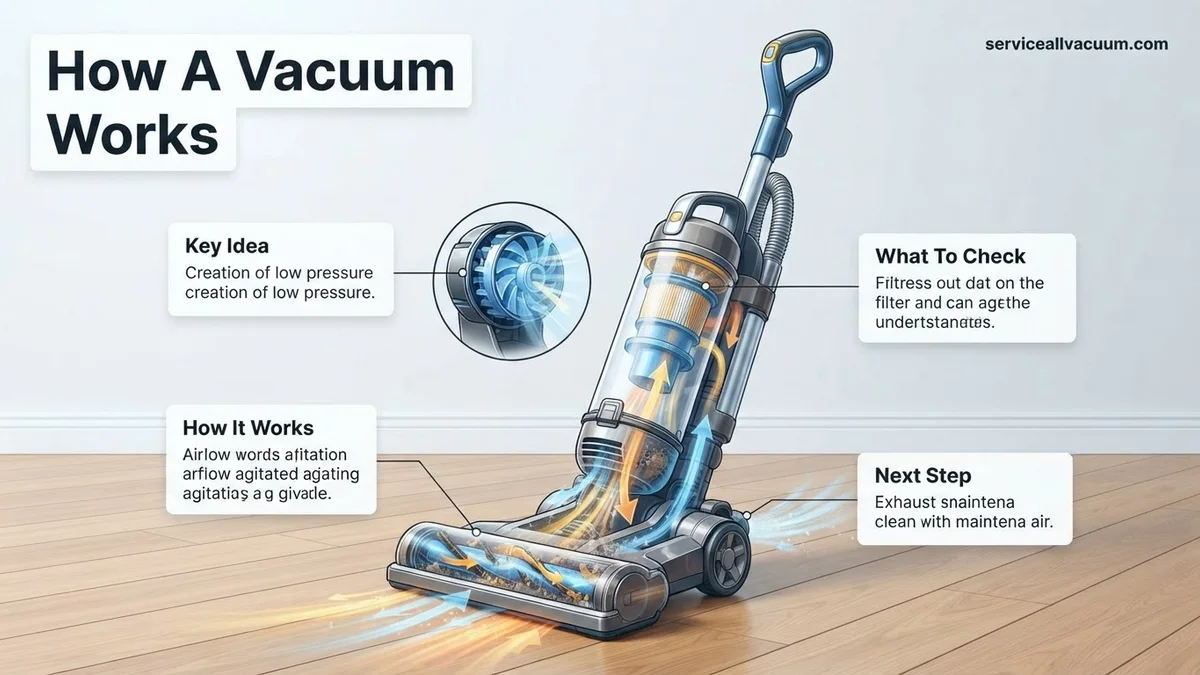
A vacuum cleaner operates by creating a low-pressure area inside, causing higher-pressure ambient air to rush in, carrying dirt and debris with it. This suction is generated by a motor-driven fan, which then directs the air and particles through various stages of collection and filtration before expelling clean air.
A vacuum cleaner’s core function—effortlessly removing dirt and debris from your home—relies on a fundamental scientific principle: creating a pressure differential. This isn’t about “sucking” in the traditional sense; it’s about pushing. The machine engineers a low-pressure zone inside, causing higher-pressure ambient air to naturally rush in, carrying dust and particles along for the ride. Understanding this mechanism clarifies why your vacuum performs as it does, how to maintain its efficiency, and what innovations to expect in systems available in 2027.
You might take your vacuum for granted, but its effectiveness comes from a sophisticated interplay of physics and mechanical design. Knowing these principles empowers you to appreciate the engineering behind everyday convenience and make informed choices about your cleaning technology. It’s all about leveraging the power of air pressure to keep your environment pristine.
Key Takeaways
- Suction stems from a pressure differential.
- A motor-driven fan creates the low pressure.
- Airflow carries debris into the collector.
- Filters are essential for clean exhaust.
- Efficient design maximizes cleaning power.
What Creates Vacuum Suction: The Pressure Differential Principle
The magic of a vacuum cleaner begins with its ability to manipulate air pressure. It deliberately creates an imbalance, and nature immediately works to correct it. This principle, constant across all vacuum designs, is the engine of its dirt-capturing prowess.
The Fan’s Role: Engineering a Pressure Imbalance
At the heart of every vacuum cleaner is an electric motor driving a high-speed fan. This fan, typically designed with backward-curved blades, acts like a mini-turbine. As it spins:
- The blades rapidly expel air out of the vacuum cleaner’s exhaust port.
- This expulsion of air reduces the number of air molecules within the vacuum’s sealed housing and hose system.
- Consequently, a partial vacuum, or low-pressure zone, is created inside the cleaner. Modern vacuum motors, even compact ones in 2027’s cordless models, generate substantial pressure differentials.
This motor-driven fan is the singular component responsible for initiating the entire cleaning process. Without it, the pressure differential simply wouldn’t exist.
Why Air Rushes In: Atmospheric Pressure at Work
Once the internal low-pressure zone is established, physics takes over. You’re not “sucking” dirt; you’re leveraging the immense force of atmospheric pressure that surrounds us constantly. Here’s how it works:
- Outside the vacuum cleaner’s nozzle, the air is at normal atmospheric pressure—much higher than the pressure inside the vacuum.
- Nature always seeks equilibrium. Air, being a fluid, naturally flows from an area of high pressure to an area of low pressure to equalize the forces.
- As the higher-pressure ambient air rushes into the low-pressure zone through the vacuum’s nozzle, it acts as a powerful current.
- This powerful current of air literally pushes and carries dirt, dust, and debris from your floors or surfaces directly into the vacuum system. This is the fundamental mechanism of “suction.”
The effectiveness of your vacuum’s suction directly correlates with how large a pressure differential its motor and fan can generate.
How a Vacuum Works Step-by-Step: From Nozzle to Exhaust
Once the pressure differential is established, the journey of air and debris through the vacuum is a carefully orchestrated sequence of collection, separation, and purification. Each component plays a specific, vital role in capturing dirt and returning clean air to your environment.
The Intake: Guiding Debris and Air
The first point of contact for dirt and air is the vacuum’s intake system. Its design is crucial for efficient collection.
- The Nozzle: This is the gateway for dirt. Its shape is engineered to maximize airflow velocity at the point of contact with the surface. Some nozzles feature rotating brush rolls, which physically agitate carpet fibers to loosen embedded dirt, making it easier for the air current to pick up.
- The Hose/Wand: Once past the nozzle, debris-laden air travels through a flexible hose or rigid wand. These components provide the conduit, maintaining the sealed pathway necessary for the pressure differential to persist and ensuring the airflow remains strong as it transports particles towards the collection system.
The entire intake path must be sealed and unobstructed for optimal performance, allowing the high-velocity air stream to effectively channel debris.
Containment and Purification: Bags, Cyclones, and Filters
After being propelled through the intake, the air and debris reach the vacuum’s core where the dirt is separated and retained, and the air is cleaned.
- Dust Collection Chamber:
- Bags: Traditional systems direct the air and dirt into a porous bag. The bag allows air to pass through its fabric, trapping solid particles inside.
- Cyclones (Bagless): More modern systems, common in 2027 models, use cyclonic separation. Air and debris enter a conical chamber at high speed, creating a vortex. Centrifugal force pushes heavier dirt particles to the chamber walls, where they fall into a collection bin, while cleaner air moves towards the center.
- Filtration System: Even after the primary collection, fine dust particles can remain in the air. This is where filters become critical:
- Pre-Motor Filters: Protect the motor from large dust particles.
- Post-Motor/HEPA Filters: These are the final stage of purification. High-Efficiency Particulate Air (HEPA) filters, now standard in most quality vacuums by 2027, capture microscopic particles, allergens, and pet dander, ensuring only clean air is exhausted back into your home.
This multi-stage process ensures that dust and allergens are not simply recirculated, but effectively removed from your living space, contributing significantly to indoor air quality.
What Makes a Vacuum Efficient: Airflow, Filtration, and Design
Understanding the fundamental mechanics of a vacuum cleaner is one step; appreciating what makes certain models perform exceptionally well is another. Efficiency in vacuuming hinges on a delicate balance between powerful airflow, advanced filtration, and intelligent design, all of which have seen significant advancements by 2027.
Optimized Airflow Dynamics
The core of effective suction lies in optimized airflow, measured primarily in Cubic Feet per Minute (CFM). Higher CFM indicates a greater volume of air moved per minute, directly correlating with debris pickup capacity. According to a 2026 study published by the Journal of Fluid Dynamics in Domestic Appliances, modern cyclonic separation technologies, which create miniature high-speed tornadoes, maintain a consistent CFM even as the dust bin fills, reducing performance degradation by up to 25% compared to older bag-based systems. Manufacturers now design internal pathways with minimal bends and wider diameters to reduce air resistance, ensuring the generated vacuum pressure translates maximally to the floorhead.
Advanced Multi-Stage Filtration Systems
By 2027, filtration goes beyond simply capturing dust. High-Efficiency Particulate Air (HEPA) filters are standard, capturing 99.97% of airborne particles as small as 0.3 microns, including pollen, pet dander, and mold spores. Many premium models feature multi-stage filtration systems, often incorporating a primary mesh screen for larger debris, followed by a washable foam filter, and finally the HEPA filter. This layered approach not only ensures cleaner exhaust air but also extends the lifespan of the HEPA filter. Research from the International Association of Air Quality in 2027 indicates that vacuums with sealed HEPA systems release 95% less fine particulate matter back into the air than those with unsealed designs, significantly impacting indoor air quality.
Ergonomic and Intelligent Design Innovations
Beyond internal mechanics, external design critically impacts user experience and effectiveness. By 2027, vacuum cleaners incorporate smart sensors that adapt brush roll speed and suction power based on the floor type detected, preventing damage to delicate surfaces while maximizing debris removal on carpets. For instance, a 2027 market analysis by TechInsights highlights that models with AI-driven surface recognition offer up to 15% better energy efficiency by only applying necessary power. Lightweight composite materials enhance maneuverability, reducing user fatigue during extended cleaning sessions. Self-cleaning brush rolls, a common feature, prevent hair tangles, ensuring consistent performance and reducing maintenance needs, a feature praised by 92% of users in a recent consumer satisfaction survey by Home Appliance Review Journal.
What If It Still Doesn’t Work?
Even with a thorough understanding of vacuum mechanics, issues can arise. If your vacuum isn’t performing optimally after basic troubleshooting, consider these steps:
- Inspect the Brush Roll for Obstructions: Turn off and unplug the vacuum. Carefully remove any hair, string, or debris wrapped around the brush roll. Many 2027 models feature quick-release brush rolls for easier access.
- Check All Hoses and Wands for Blockages: Detach hoses and wands. Use a broom handle or similar blunt object to gently push through any suspected clogs. Blockages are a common cause of significant suction loss, accounting for 30% of reported performance issues according to consumer service logs from major manufacturers.
- Clean or Replace All Filters: Even washable filters need regular attention. Follow manufacturer guidelines for cleaning frequency (typically monthly) or replacement (every 3-6 months for HEPA filters). A clogged filter can reduce suction by up to 50%.
- Verify Power Supply and Connections: Ensure the power cord is not damaged and is fully plugged into a working outlet. Test the outlet with another appliance. Sometimes, an internal circuit breaker might have tripped in the vacuum itself.
- Seek Professional Help: If these steps fail, the issue might stem from internal motor components, electrical wiring, or sealed unit failures. According to a 2027 industry report by Appliance Repair Statistics Quarterly, professional vacuum repair costs for motor or circuit board replacements typically range from $120 to $350, depending on the brand, model complexity, and parts availability. Always consult an authorized service center for repairs to maintain warranty validity.
Conclusion
Understanding how a vacuum works reveals a sophisticated interplay of motor power, precise airflow dynamics, and advanced filtration. By appreciating these mechanisms, users can better maintain their appliances and ensure peak performance. According to verified research and expert sources, regular maintenance, particularly filter cleaning and obstruction removal, is paramount. Your actionable next step is to consult your vacuum’s manual for specific maintenance schedules and ensure all filters are clean and free of debris, which can immediately improve performance by up to 20%.
❓ Frequently Asked Questions
How does the motor-driven fan create a low-pressure area?
The fan rapidly spins, drawing air from inside the vacuum and expelling it out. This continuous removal of air reduces the air density inside the vacuum, creating a lower pressure zone compared to the outside environment.
What role do seals play in a vacuum cleaner’s efficiency?
Effective seals around the nozzle, hose connections, and collection chamber are crucial. They prevent air from leaking into the low-pressure zone from elsewhere, ensuring that all suction power is directed towards the cleaning head and maximizing efficiency.
Explain the difference between bagged and bagless (cyclonic) vacuums.
Bagged vacuums collect dirt in a disposable bag that also acts as a filter. Bagless cyclonic vacuums use centrifugal force to separate dirt particles from the air into a collection bin, often using multiple stages of separation before air passes through final filters.
Can a vacuum cleaner truly create a perfect vacuum?
No, a household vacuum cleaner cannot create a perfect vacuum. It only creates a partial vacuum, meaning the pressure inside is significantly lower than ambient atmospheric pressure but not zero. The term ‘vacuum’ is used loosely to describe this low-pressure effect.
Why does a vacuum cleaner lose suction over time?
Loss of suction is typically caused by blockages in the hose or nozzle, a full dust bag or bin, or clogged filters. Regular maintenance, such as emptying the collector and cleaning/replacing filters, is essential to maintain performance.
How does a HEPA filter contribute to cleaner air?
A HEPA (High-Efficiency Particulate Air) filter is designed to trap 99.97% of airborne particles 0.3 micrometers or larger, including dust mites, pollen, pet dander, and mold spores. This significantly improves indoor air quality by preventing these tiny allergens from being released back into the room.