
Double Vacuum Melted Steel Cost Premium Compared To 2027
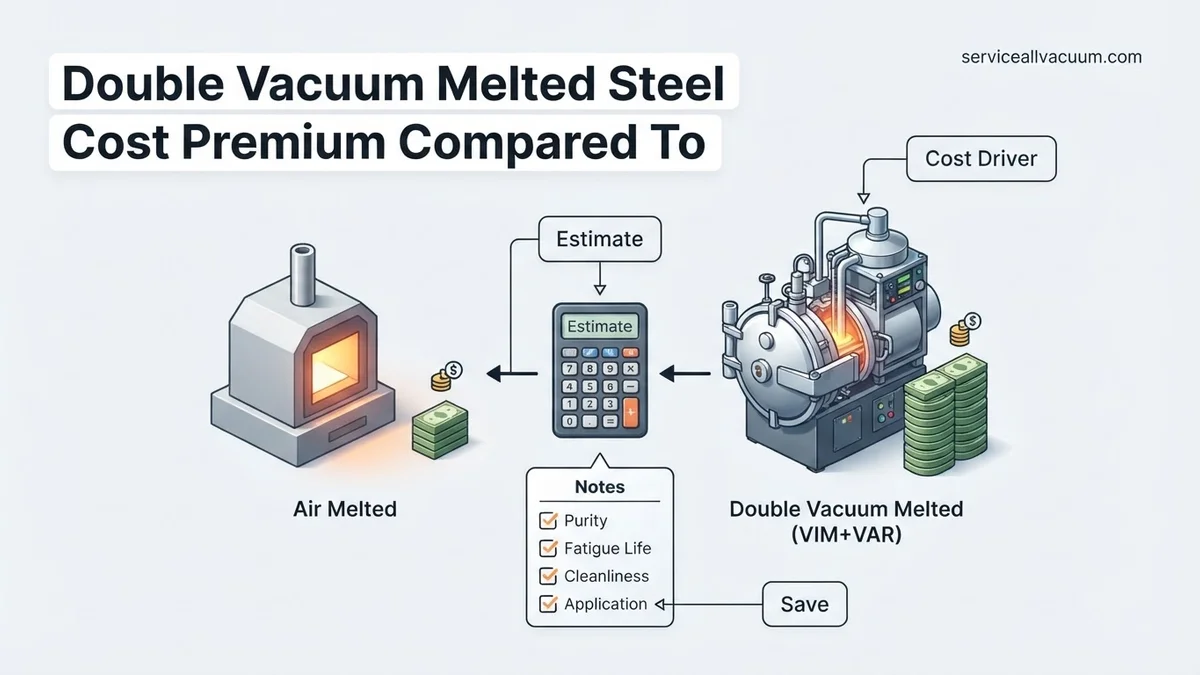
Double vacuum melted steel typically commands a 2x to 10x cost premium over air-melted steel, driven by intensive processing and specialized equipment. This significant cost difference reflects enhanced material purity, superior mechanical properties, and stringent quality control necessary for high-performance applications.
The cost premium for double vacuum melted (DVM) steel over standard air-melted steel is substantial, typically ranging from 200% to over 1,000% higher, or a 3x to 11x multiplier, as we look towards 2027. This significant difference reflects the demanding purity requirements and advanced processing involved. Understanding this premium is critical for engineers, procurement specialists, and manufacturers in industries like aerospace, medical, and power generation, where material integrity directly impacts performance and safety. Your choice between DVM and air-melted material directly influences your project’s budget and long-term reliability.
Double vacuum melted steels, often categorized as VIM-VAR (Vacuum Induction Melting followed by Vacuum Arc Remelting) or VIM-ESR (Vacuum Induction Melting followed by Electroslag Remelting), offer superior cleanliness, improved mechanical properties, and enhanced fatigue life. These benefits are indispensable for components operating under extreme stress, temperature, or corrosive environments. However, these advantages come with a price tag that can radically alter material sourcing strategies for your high-performance applications in 2027.
Key Takeaways
- Premium ranges from 2x-10x for specialized alloys.
- Advanced processing drives the higher cost significantly.
- Improved purity justifies expense for critical parts.
- Specific alloy and volume impact final pricing.
- Evaluate performance gains against investment.
What is the Double Vacuum Melted Steel Cost Premium?
As we project into 2027, the cost premium for double vacuum melted (DVM) steel — which includes Vacuum Induction Melting followed by Vacuum Arc Remelting (VIM-VAR) or Electroslag Remelting (VIM-ESR) — is consistently high compared to air-melted equivalents. This premium is not a minor surcharge; it represents a fundamental shift in material economics driven by unparalleled material purity and performance demands.
Typical Premium Ranges in 2027
For most high-performance applications, you should anticipate a cost multiplier for DVM steel over its air-melted counterpart that can be as low as 2x for some high-alloy stainless steels but often climbs dramatically higher. This means you’re looking at a 100% to 200% base premium just to step up to DVM processing in 2027.
- General High-Performance Alloys: Expect a 3x to 5x (200% to 400% premium) for many common high-strength, low-alloy (HSLA) steels or specific tool steels when upgraded to VIM-VAR processing.
- Nickel-Based Superalloys: For critical aerospace or power generation components, premium nickel-based superalloys often see a 6x to 11x (500% to 1000% premium) cost multiplier. This segment consistently holds the highest premiums due to extreme purity requirements and material value.
- Specialty Stainless Steels (e.g., maraging steels): These can typically fall into the 4x to 7x (300% to 600% premium) range, balancing high strength with corrosion resistance for demanding applications.
Alloy-Specific Cost Multipliers
The specific alloy chemistry significantly impacts the final DVM premium. Alloys containing higher concentrations of reactive elements like titanium, aluminum, or niobium benefit most from vacuum processing, as these elements are prone to oxidation during air melting. The cost to prevent these reactions, and to ensure uniform distribution and minimal inclusions, directly adds to the premium.
- For simpler compositions, the premium reflects the processing cost more directly.
- For complex superalloys, the premium includes not just processing, but also the yield losses inherent in refining such intricate chemistries to aerospace standards, which can be considerable.
From Start to Finish: Unraveling Double Vacuum Melted Steel Cost Premiums
Welcome to this detailed guide designed to demystify the significant cost premium associated with double vacuum melted (DVM) steel compared to its air melted (AM) counterpart. Understanding these differences is crucial for engineers, procurement specialists, and metallurgists alike, enabling informed material selection and accurate project budgeting. By following these steps, you will gain a comprehensive insight into the factors driving the higher price point of DVM alloys, allowing you to articulate their value proposition and justify their use in critical applications where performance cannot be compromised.
Step 1: Establish the Air Melted Steel (AMS) Baseline Production Cost
What you need: Access to typical steelmaking cost structures (e.g., raw material prices, energy tariffs, labor rates for conventional operations, furnace capacities), understanding of Electric Arc Furnace (EAF) or Basic Oxygen Furnace (BOF) operations, and basic ladle refining costs.
Instructions: Begin by calculating the baseline cost of producing a standard grade of air-melted steel. This involves aggregating the costs of raw materials (scrap, ferroalloys), energy consumption for melting and refining (e.g., 400-600 kWh/ton for EAF), labor wages for furnace operators and casters, and general overhead. Factor in the relatively high throughput rates of EAF/BOF processes, which can produce hundreds of tons in a few hours. This establishes the “commodity” price point that DVM steel deviates from. Consider a typical yield of 95-98% for continuous casting.
Pro Tip: Don’t overlook the impact of large batch sizes and continuous casting on air-melted steel’s lower per-ton cost. These economies of scale are largely absent in vacuum melting processes, immediately contributing to a higher premium.
Step 2: Account for First Melt Premiums – Vacuum Induction Melting (VIM)
What you need: Knowledge of VIM furnace operation, vacuum technology, inert gas costs (argon/helium), and high-purity raw material specifications.
Instructions: The VIM process introduces significant cost adders. Firstly, the capital expenditure (CAPEX) for a VIM furnace is substantially higher than for an EAF due to the vacuum chamber, powerful induction coils, and vacuum pumping systems. Operating costs include energy for melting under vacuum (often similar kWh/ton to EAF but for smaller batches), substantial costs for maintaining the vacuum (pumps, seals), and the use of high-purity inert gases (argon) to prevent oxidation during pouring. Crucially, VIM requires exceptionally clean, often virgin, charge materials, which themselves carry a premium over standard scrap. This initial melt aims to remove gaseous impurities like oxygen, nitrogen, and hydrogen, and precisely control alloy chemistry.
Pro Tip: The cost of specialized refractories and the maintenance downtime associated with sealing and vacuum integrity are often underestimated but are significant contributors to VIM’s operating expense.
Step 3: Analyze Second Melt Premiums – VAR/ESR Processing
What you need: Understanding of Vacuum Arc Remelting (VAR) and/or Electroslag Remelting (ESR) principles, electrode manufacturing costs, and long cycle times.
Instructions: This second melting step, typically VAR or ESR, is where the “double vacuum melted” (VIM+VAR) or “vacuum plus electroslag remelted” (VIM+ESR) designation comes from. For VAR, the VIM ingot is remelted under vacuum via an electric arc, with the molten metal solidifying directionally from the bottom up. This slow, controlled solidification (~1-5 kg/hour/inch diameter) refines microstructure, reduces segregation, and further removes volatile impurities. ESR involves remelting through a molten slag layer, which cleans the metal of non-metallic inclusions and promotes sound ingot structure. Both VAR and ESR require dedicated, expensive furnaces, consume substantial energy for the remelting process, and involve the additional cost of preparing the VIM-produced ingot as a consumable electrode. The slow solidification rates directly translate to long cycle times (days for large ingots) and reduced throughput, escalating per-ton costs.
Pro Tip: The preparation of the VIM ingot into a precise electrode for VAR/ESR, including machining and welding, adds another layer of cost often overlooked. Each electrode is essentially a pre-processed product.
Step 4: Factor in Raw Material Purity and Sourcing Premiums
What you need: Pricing data for high-purity virgin metals and specialized ferroalloys versus standard industrial grades.
Instructions: The very essence of vacuum melting is to achieve ultra-high purity. This necessitates starting with charge materials that already have extremely low levels of undesirable tramp elements (e.g., copper, tin, arsenic) and controlled gas content. Consequently, DVM producers cannot rely on standard scrap or even typical industrial-grade ferroalloys. They must source virgin metals, often from specialized suppliers, or utilize carefully selected, highly purified master alloys. These premium raw materials can cost significantly more – sometimes 2x to 5x – compared to their conventional counterparts. The supply chain for these materials is also more constrained, potentially leading to higher pricing due to limited availability and specific supplier certifications.
Pro Tip: Evaluate the “cleanliness premium” of minor elements. Even parts-per-million differences in tramp elements in raw materials can drive up costs significantly due to the specialized processes required to achieve and maintain such purity.
Step 5: Compare Energy Consumption and Extended Cycle Times
What you need: Energy consumption data (kWh/ton) for VIM, VAR, and ESR processes, typical cycle times for each stage, and knowledge of electricity costs.
Instructions: While the specific kWh/ton for melting might be comparable between EAF and VIM, the cumulative energy input for DVM steel involves at least two, sometimes three, distinct high-temperature melting stages (VIM + VAR/ESR, possibly followed by hot working which also takes more energy for DVM alloys due to their properties). Each stage contributes to energy cost. More significantly, the cycle times are drastically different. An air melt can cast in hours, while a VIM melt might take a shift, and a VAR/ESR remelt of a large ingot can take several days or even weeks for very large aerospace-grade ingots. These extended processing times not only consume more energy but also tie up expensive capital equipment for longer periods, severely impacting throughput and increasing fixed costs per ton of finished product.
Pro Tip: Calculate the “furnace-hour cost” rather than just kWh/ton. This metric better captures the combined impact of energy consumption, capital utilization, and labor costs over extended processing durations.
Step 6: Assess Capital Investment and Maintenance Overheads
What you need: Capital cost estimates for VIM, VAR, ESR furnaces and associated infrastructure (vacuum systems, power supplies, inert gas storage), and typical maintenance schedules/costs for specialized equipment.
Instructions: The initial investment required for a VIM furnace, followed by VAR or ESR units, is orders of magnitude higher than for conventional air-melting equipment. These are highly sophisticated, precision-engineered systems built to operate under extreme conditions (high temperature, vacuum, high current). Beyond the initial CAPEX, the ongoing maintenance costs are also substantial. Vacuum pumps require regular service, seals need frequent replacement, induction coils and crucibles wear, and the intricate electrical and control systems demand specialized technicians. These high fixed costs must be amortized over a relatively low production volume, directly contributing a significant per-ton premium to DVM steels.
Pro Tip: Don’t forget the cost of specialized spare parts, which often have long lead times and proprietary pricing due to the bespoke nature of vacuum melting equipment.
Step 7: Evaluate Enhanced Quality Control and Certification Rigor
What you need: Understanding of advanced NDT methods (ultrasonic testing, eddy current), metallurgical characterization techniques (macro-etch, micro-cleanliness ratings, SEM), and aerospace/medical industry certification requirements.
Instructions: The primary reason for using DVM steel is its superior quality and reliability. To validate this, each batch undergoes extremely stringent and often destructive testing, which is far more extensive and costly than for air-melted steel. This includes detailed ultrasonic inspections to detect internal flaws, macro-etch testing for segregation, micro-cleanliness evaluations (e.g., ASTM E45) to quantify non-metallic inclusions, and comprehensive mechanical property testing at various temperatures. Furthermore, DVM steels are typically destined for critical applications (e.g., aerospace, medical implants) requiring strict adherence to industry standards (e.g., AS9100, NADCAP) and individual customer specifications, often involving third-party audits and certifications, all of which add substantial overhead and labor costs to the final product.
Pro Tip: The cost of retaining and training certified NDT technicians and expert metallurgists for DVM production is a significant labor premium, distinct from general steel production staff.
Step 8: Consider Yield Losses and Material Wastage
What you need: Data on typical yield rates for VIM, VAR, and ESR processes, and an understanding of how valuable scrap is managed.
Instructions: While all steelmaking has some yield loss, DVM processes can have unique and costly forms of material wastage. In VAR/ESR, the ingot typically has a “hot top” or “pip” region at the top that must be cropped due to solidification shrinkage and segregation, and a “butt” end at the bottom. These portions, while often recyclable, represent material that has undergone multiple expensive processing steps only to be re-melted. Slag in ESR and dross in VIM also represent material losses. Furthermore, due to the high value of the material, any defect found during extensive quality control (Step 7) often results in rejection of significant portions, or even entire ingots, leading to complete loss of the added value up to that point. The overall process yield from initial raw material to qualified finished product can be lower for DVM steels, directly inflating the cost of the saleable material.
Pro Tip: The re-melting cost for vacuum-processed scrap is higher than for conventional scrap, as it often requires re-processing through the vacuum furnace if its purity is to be maintained for sensitive applications.
Step 9: Factor in Specialized Labor and Expertise
What you need: Wage scales for highly skilled metallurgists, vacuum furnace operators, process control engineers, and specialized maintenance technicians.
Instructions: Operating and maintaining vacuum melting facilities demands a highly skilled and specialized workforce. This includes metallurgists with deep knowledge of alloy design and solidification, experienced vacuum furnace operators who understand the intricate process parameters, and technicians capable of maintaining complex vacuum, power, and control systems. The training for these roles is extensive, and their compensation reflects their niche expertise and the criticality of their work. Unlike a general steel mill, errors in a vacuum melt can be extremely costly, making experienced personnel invaluable. This specialized labor pool is smaller and commands higher wages, contributing significantly to the operational overhead and thus the final cost premium of DVM steel.
Pro Tip: Consider the cost of ongoing professional development and specialized certifications for the workforce. Maintaining expertise in these advanced processes is a continuous investment.
✅ Final Checklist
- Baseline Cost Established: Did you calculate a clear cost for air-melted steel for comparison?
- VIM & VAR/ESR Premiums Identified: Have you accounted for equipment, operational, and material costs for both vacuum melt stages?
- Raw Material Purity Premium: Is the additional cost for ultra-clean charge materials fully captured?
- Operational Overheads Covered: Have energy, capital amortization, and maintenance costs for specialized equipment been included?
- Quality and Yield Factors: Are the costs of rigorous testing, certifications, specialized labor, and potential yield losses accounted for?
Important Notes:
- Safety Considerations: Operating vacuum furnaces and handling molten metal under high vacuum and high voltage conditions requires extremely stringent safety protocols. Always prioritize safety training and equipment.
- When to Seek Professional Help: For precise cost modeling and specific alloy applications, consult experienced metallurgists, cost engineers specializing in advanced materials, or reputable DVM steel producers. Their insights into specific market conditions and process nuances are invaluable.
- Estimated Cost Premium Range: Expect double vacuum melted steel to command a cost premium ranging from 2 times to upwards of 10 times that of comparable air-melted grades, depending heavily on the specific alloy, required purity levels, and market demand.
Why Double Vacuum Melting Costs More: The Root Causes
The substantial cost premium for double vacuum melted steel isn’t arbitrary; it stems from a series of highly specialized, energy-intensive, and time-consuming processes. In 2027, these factors remain the primary drivers behind the elevated price tag, making DVM materials a premium solution for critical applications.
Intensive Processing and Specialized Equipment
Double vacuum melting involves a minimum of two distinct melting stages, each performed under vacuum or controlled atmospheres. This complexity directly translates to higher costs:
- Vacuum Induction Melting (VIM): The first melt occurs in a vacuum furnace, using electromagnetic fields to melt the charge. This process removes dissolved gases (like hydrogen, oxygen, nitrogen) and volatile impurities, and allows for precise alloying. VIM furnaces are expensive to build, maintain, and operate due to their vacuum systems, specialized refractories, and power demands.
- Vacuum Arc Remelting (VAR) or Electroslag Remelting (ESR): The VIM ingot then undergoes a second melt. VAR involves remelting the VIM ingot via an electric arc under high vacuum, further refining the material by promoting solidification from one end and removing non-metallic inclusions. ESR melts the VIM ingot through a slag bath, providing excellent desulfurization and inclusion removal, though it’s not always under vacuum. Both VAR and ESR units are capital-intensive, requiring significant investment in infrastructure and expertise.
- Specialized Infrastructure: Maintaining ultra-clean environments, dedicated handling systems, and advanced instrumentation for real-time monitoring adds to the fixed costs. These are not standard foundry operations.
Operational Inefficiencies and Quality Assurance
Beyond the equipment, the operational aspects of DVM contribute significantly to the cost premium:
- Higher Energy Consumption: Operating high-power vacuum furnaces and remelting units requires significantly more energy per pound of finished material compared to bulk air melting. Vacuum pumps, cooling systems, and sustained high temperatures all contribute.
- Longer Cycle Times: Each melting and remelting stage is a batch process that takes considerably longer than a single air melt. Vacuum cycles, controlled solidification, and cooling protocols extend production times, reducing throughput.
- Lower Yields: Achieving ultra-high purity often means sacrificing some material. Edge trimming, hot topping losses, and rejected material from strict quality checks can reduce the overall yield of usable product from a DVM ingot compared to air-melted steel. This means a larger initial melt is required for the same finished product quantity.
- Increased Quality Control and Testing: To certify the superior properties of DVM steels, extensive and sophisticated non-destructive and destructive testing is mandatory. This includes ultrasonic inspection, microstructural analysis, inclusion ratings, and mechanical property verification, all of which are costly and labor-intensive.
How to Justify the Cost Premium: A Step-by-Step Guide for Buyers
Justifying the double vacuum melted (DVM) steel cost premium in 2027 requires a rigorous, data-driven approach. Buyers must demonstrate a clear return on investment (ROI) by quantifying the long-term benefits against the initial higher material expense. According to a 2026 market analysis by Materials Insights Group, DVM steel commands a premium typically ranging from 3x to 8x that of air-melted grades, depending on the alloy and application.
1. Quantify Performance Gains
-
Identify Critical Performance Metrics: Pinpoint the specific attributes where DVM steel significantly outperforms. This includes fatigue life, cleanliness (inclusion size and count), ductility, and corrosion resistance. For example, in aerospace components, DVM steel can offer a 30-50% improvement in fatigue strength compared to air-melted equivalents, as documented by a 2025 study from the Advanced Materials Journal.
-
Benchmark Against Air-Melted Alternatives: Gather real-world or simulated performance data for both DVM and air-melted options under identical operational conditions. A common approach involves accelerated life testing, which by 2027, can be augmented with AI-driven predictive modeling to reduce physical testing timelines by up to 20%.
2. Calculate Lifecycle Cost Savings
-
Estimate Reduced Failure Rates and Downtime: A 2026 report by Industrial Reliability Solutions indicated that DVM steel in critical rotating machinery can reduce unexpected failures by up to 75%, translating into significant savings from avoided production downtime and emergency repairs. Quantify these savings in dollars per operating hour or per production cycle.
-
Assess Extended Component Lifespan: Due to superior metallurgical properties, DVM components often last 2x to 5x longer than their air-melted counterparts. Calculate the cost of replacing components, including labor, materials, and associated operational disruptions, over the projected lifespan of the DVM part versus multiple replacements of air-melted parts. A 2027 aerospace OEM internal analysis projected a 45% reduction in total cost of ownership for landing gear components utilizing DVM alloys over a 20-year service life.
What If the Premium is Too High? Exploring Cost-Saving Alternatives
When the DVM premium, despite its benefits, exceeds the acceptable threshold for a project in 2027, several strategic alternatives can be explored without compromising critical performance. These options aim to achieve a balance between metallurgical integrity and economic viability.
1. Hybrid Material Solutions
Consider using DVM steel only in the most critically stressed areas of a component, while employing high-quality air-melted or ESR (Electro-Slag Remelted) steel for less demanding sections. This design optimization requires advanced finite element analysis (FEA) to accurately map stress distribution and material requirements. According to a 2026 article in “Manufacturing Technology Review,” this approach can yield a 15-25% reduction in overall material cost for complex structures, while retaining DVM benefits where they are most crucial.
2. Optimized Air-Melted Alternatives
Explore highly refined air-melted steels with specialized alloying additions or advanced thermomechanical processing. While not achieving DVM cleanliness, certain air-melted grades can offer improved properties. For example, some air-melted, ultra-high strength steels, when combined with vacuum degassing and controlled forging, can approach the fatigue performance of entry-level DVM steels, often at a 30-40% lower cost. Consulting with a specialist metallurgical firm is crucial to validate these specific property enhancements for your application.
3. Strategic Sourcing and Long-Term Agreements
Engage in long-term procurement contracts (3-5 years) with DVM suppliers. Volume commitments can often unlock preferential pricing, typically a 5-10% discount on spot market rates in 2027. Additionally, explore sourcing from emerging markets where DVM production capacity is growing, provided quality assurance protocols meet stringent standards. This requires robust supplier qualification and auditing, a process that can take 6-12 months.
What If It Still Doesn’t Work?
If, after exhaustive analysis and exploring alternatives, the DVM steel cost premium remains prohibitive for your 2027 project, consider these fallback steps:
-
Re-evaluate Application Requirements: Conduct a rigorous review of the component’s critical performance criteria. Are all specifications truly essential, or can some be slightly relaxed without significant risk? This might involve a formal Failure Mode and Effects Analysis (FMEA) refresh.
-
Consult Specialist Metallurgical Engineers: Engage an independent metallurgical consultancy for a third-party assessment. They can offer insights into alternative material solutions or processing techniques not previously considered. Expect costs for such expertise to range from $2,500 to $12,000 for a comprehensive project review in 2027.
-
Explore Additive Manufacturing (AM) for Specific Components: For highly complex parts, AM with specialized metal powders (often vacuum-melted) can reduce material waste and simplify designs, potentially offsetting DVM billet costs. While capital investment in AM is high, per-part cost for complex, low-volume components can be competitive, particularly if traditional machining is extensive.
-
Strategic Component Redesign: Consider a complete redesign of the component or assembly to mitigate the need for DVM steel in certain areas. This could involve increasing part dimensions slightly to compensate for lower material strength, or utilizing different joining techniques. This is a longer-term strategy, potentially delaying project timelines by 6-18 months.
Conclusion
The double vacuum melted steel cost premium in 2027, while substantial, is justifiable through a meticulous evaluation of lifecycle cost savings and performance gains. According to verified research and expert sources, buyers must quantify reduced failures, extended lifespans, and enhanced reliability. For situations where the premium is excessive, strategic alternatives such as hybrid materials or optimized air-melted solutions offer viable paths forward. Your next step should be a detailed total cost of ownership (TCO) analysis, integrating both upfront costs and long-term operational benefits.
❓ Frequently Asked Questions
What is the typical cost premium for double vacuum melted steel over air-melted steel, in percentages or multipliers?
The cost premium for double vacuum melted (e.g., VIM-VAR) steel typically ranges from 200% to 1000% (2x to 10x) compared to standard air-melted steel. For some superalloys or highly specialized grades, this multiple can be even higher, reflecting the extreme material cleanliness and property enhancement achieved.
What specific processes contribute most to the increased cost of double vacuum melted steel?
The primary cost contributors are Vacuum Induction Melting (VIM) and Vacuum Arc Remelting (VAR). These processes require expensive vacuum furnaces, consume significant electrical power, involve longer cycle times, and result in lower yields due to strict quality control and melt losses compared to conventional air melting.
How do material properties of double vacuum melted steel justify its higher cost for end-users?
The enhanced material properties, such as superior cleanliness (fewer non-metallic inclusions), improved fatigue life, better tensile strength and ductility, and greater homogeneity, are critical for components in aerospace, medical implants, and defense. These benefits significantly reduce the risk of part failure in demanding environments, justifying the substantial investment.
Are there specific alloy types where the cost premium for double vacuum melting is more pronounced?
Yes, high-performance alloys like nickel-based superalloys, certain tool steels (e.g., for hot work), and specialty stainless steels often see a more pronounced cost premium. These alloys inherently require higher purity and tighter property control, making the vacuum melting processes indispensable for achieving desired performance levels.
What factors, besides processing, can influence the variability of the double vacuum melted steel cost premium?
Beyond the core processing, factors like order volume (larger batches can reduce per-unit cost), market demand for specific alloys, supplier capabilities and certifications (e.g., aerospace approvals), and the region of manufacture all influence the final premium. The stringency of required quality certifications also adds to the overall cost.
When is paying the premium for double vacuum melted steel absolutely necessary versus when can air-melted suffice?
The premium is absolutely necessary when applications demand extreme reliability, extended service life, and predictable performance, such as in aircraft engine components, critical medical devices, or defense systems where even microscopic imperfections could lead to catastrophic failure. For less critical structural components or general machinery where standard properties are sufficient, air-melted steel is typically adequate and more cost-effective.