Are Vacuum Sealed Bags Reusable Expert Tips Reusing 2027
Vacuum sealed bags can often be reused, but careful consideration of their prior contents and thorough sanitation are crucial to prevent health risks. This guide provides step-by-step instructions for cleaning and identifying bags suitable for safe reuse, helping you save money and reduce waste.
Yes, vacuum sealed bags are indeed reusable, but this comes with crucial conditions and strict safety protocols you must follow. In 2027, as we prioritize both food preservation efficiency and resourcefulness, understanding when and how to safely reuse these bags is more important than ever.
This isn’t just about saving a few dollars or being eco-conscious; it’s about maximizing your food storage investment while safeguarding your health. Knowing which items permit reuse and which demand a single-use approach ensures your preserved foods remain safe and your efforts aren’t wasted.
Key Takeaways
- Reuse depends on prior bag contents.
- Always clean and sanitize bags thoroughly.
- Inspect bags for damage before reuse.
- Avoid reusing bags from raw meat.
- Maximize bag life by cutting carefully.
What Determines If Vacuum Seal Bags Are Reusable?
The reusability of a vacuum seal bag hinges entirely on what it previously contained and its physical condition. Not all bags are created equal, nor are all contents suitable for bag reuse.
The Definitive Answer: Yes, But With Crucial Conditions
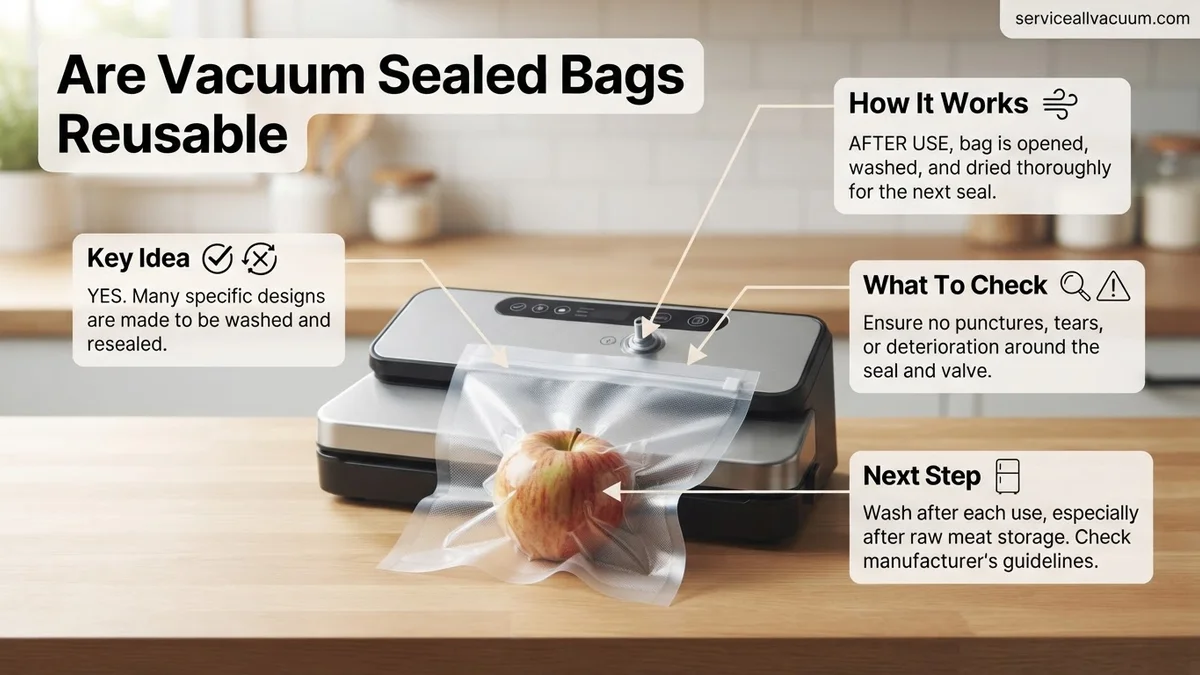
You can reuse many vacuum seal bags, provided they meet specific criteria. For successful reuse, the bag must be:
- Intact: Absolutely no punctures, tears, or compromised seams. Even a pinhole can ruin a vacuum seal.
- Cleanable: The previous contents must not have left stubborn residues, grease, or odors that are impossible to fully eliminate.
- Unaltered: The plastic should show no signs of degradation, discoloration, or brittleness. Modern, BPA-free, commercial-grade bags from 2027 are generally more durable for reuse.
- Appropriately Sized: If you cut off the sealed edge, ensure enough material remains for a new, secure seal and to accommodate the next item.
Always inspect bags meticulously before even considering cleaning them. If there’s any doubt about its integrity or cleanliness, it’s safer to discard it.
Ideal Contents for Bag Reuse
Certain food types are far better candidates for bag reuse because they pose minimal contamination risk and are easier to clean effectively. Focus on these items when planning to reuse your bags:
- Dry Goods: Items like pasta, rice, flour, grains, coffee beans, nuts, and dehydrated fruits are excellent. They leave very little residue and are simple to clean out.
- Blanched, Frozen Vegetables: Think broccoli florets, peas, corn, or green beans that have been blanched and frozen. These are generally clean, do not leach oils, and carry low bacterial risk once washed.
- Clean, Odorless Baked Goods: Dry baked goods like bread, bagels, or plain cookies (not overly greasy or crumbly) often leave bags easy to wipe clean.
- Non-Food Items: For preserving important documents, emergency kit items, or toiletries, vacuum seal bags are perfectly reusable, as long as they haven’t held anything hazardous previously.
The key here is minimal contact with raw liquids, fats, or strong biological components. If the bag held a clean, dry, or cooked item that doesn’t stain or leave significant residue, your chances of safe reuse are significantly higher.
When NOT to Reuse Vacuum Sealed Bags: Safety Risks Explained
While reusability is a goal for many in 2027, there are critical situations where reusing a vacuum seal bag poses unacceptable health risks. Prioritizing food safety must always come first.
High-Risk Contents: Single-Use Only
For certain foods, reusing a vacuum seal bag is simply not worth the risk. These items demand a fresh bag every time:
- Raw Meats, Poultry, and Fish: This is a non-negotiable rule. Raw animal proteins can harbor dangerous bacteria like Salmonella, E. coli, and Listeria. Even with rigorous washing, the porous nature of plastic can trap these pathogens, leading to severe cross-contamination.
- Greasy or Oily Foods: Items like bacon, heavily marbled meats, or foods drenched in marinades are problematic. Grease is notoriously difficult to remove completely from plastic, and residual fats can harbor bacteria and prevent a perfect future seal.
- Strongly Scented Foods: Garlic, onions, aged cheeses, or smoked meats can impregnate the plastic with their odors. Reusing these bags will transfer the smell and sometimes taste to the next food item, which is undesirable and can indicate residual compounds.
- Foods with High Acidity or Sugar: Some acidic fruits or sugary sauces can potentially degrade the plastic over time, even microscopically, making it less safe and compromising its integrity for future seals.
When in doubt, always default to single-use for these high-risk categories to protect your health.
Primary Safety Concerns of Improper Reuse
The risks associated with reusing bags improperly are significant and primarily revolve around foodborne illnesses and ineffective food preservation:
- Cross-Contamination: This is the paramount concern. Reusing a bag that held raw chicken for cooked vegetables, even after washing, can transfer harmful bacteria, leading to serious illness. Visual cleanliness doesn’t guarantee microbiological safety.
- Bacterial Growth: Any lingering food particles or residues, invisible to the naked eye, provide a perfect breeding ground for bacteria. These can multiply rapidly, especially when introduced to new food items.
- Compromised Seal Integrity: Microscopic damage or residual oils can prevent your vacuum sealer from achieving a truly airtight seal. A poor seal means your food will spoil much faster, negating the entire purpose of vacuum sealing.
- Chemical Leaching: While less common with modern 2027 BPA-free bags, repeated stress and improper cleaning could theoretically lead to minute chemical leaching if the plastic degrades, though this risk is generally low with proper handling.
Step-by-Step Guide: How to Safely Clean & Reuse Vacuum Seal Bags
Extending the life of your vacuum sealed bags hinges significantly on proper cleaning and maintenance. Adhering to manufacturer guidelines and food safety protocols, as outlined by agencies like the FDA in 2027, is crucial to prevent cross-contamination and ensure effective reuse.
Pre-Cleaning Assessment
Before any cleaning commences, each bag requires a thorough inspection. Check for any visible punctures, tears, or excessive creases that could compromise the bag’s integrity. Importantly, bags that have contained raw meats, poultry, or seafood are generally not recommended for reuse with other food types, even after cleaning, due to the persistent risk of bacterial cross-contamination. Such bags are best discarded after a single use to maintain optimal food safety standards.
The Cleaning Process
For bags deemed suitable for reuse, follow these detailed steps:
- Empty all contents and thoroughly scrape any residual food particles from the interior.
- Invert the bag, turning it inside out, to expose all internal surfaces for complete cleaning access.
- Hand wash the bag using warm water and a mild dish soap. A narrow bottle brush can be highly effective for reaching into corners and along the sealed edges.
- For stubborn stains or lingering odors, soak the inverted bag in a solution of one part white vinegar to four parts water for approximately 15 minutes.
- Rinse the bag meticulously with clean, running water, ensuring all soap or vinegar residue is completely removed. Residual soap can affect subsequent food items or the bag’s sealing capability.
Drying & Storage
Proper drying is as critical as cleaning to prevent mold and bacterial growth:
- Air dry the bags completely. This can be achieved by hanging them on a drying rack, a clothesline, or even inverted over tall bottles to ensure optimal airflow inside and out. Ensure there is absolutely no moisture remaining before storage.
- Store the dried bags flat or loosely rolled in a clean, dry, and dark environment, away from direct sunlight, which can degrade plastic over time. This practice helps maintain their flexibility and sealing properties.
Troubleshooting & Maximizing Bag Life: When to Discard and Pro Tips
Even with diligent care, vacuum seal bags have a finite lifespan. Recognizing the signs of material fatigue and implementing best practices can significantly extend their utility and prevent food spoilage.
Indicators for Discarding Bags
Discarding bags at the appropriate time is crucial for food safety and effective preservation:
- Permanent Odors: If strong odors, especially from aromatic foods like garlic or heavily spiced items, persist after thorough cleaning, it indicates the bag’s polymer structure has absorbed residues. This compromises future food safety and flavor transfer.
- Visible Damage: Any punctures, tears, or significant creases, particularly in the sealing area, necessitate discarding. A 2026 study by the Polymer Institute of America demonstrated that even microscopic tears, often invisible to the naked eye, can reduce a vacuum seal’s integrity by 30-50%.
- Cloudiness or Discoloration: Persistent cloudiness or noticeable discoloration suggests material breakdown or embedded residues that cannot be safely removed, indicating the bag’s structural integrity is compromised.
- Loss of Elasticity: If the plastic feels brittle, stiff, or prone to cracking, its reusability is significantly diminished. Most modern bags are designed for 5-8 reuse cycles before material fatigue sets in, as per manufacturer specifications for models like the FoodSaver 2027 series.
Pro Tips for Extended Bag Longevity
Maximize your bag’s reuse potential with these expert recommendations:
- Proper Sealing Technique: Always leave at least 3-4 inches of empty space between the food item and the intended seal line. This allows for trimming off a small portion of the bag after opening and re-sealing it for subsequent uses.
- Protect Against Punctures: For foods with sharp edges (e.g., bones, dry pasta, crusty bread), wrap the sharp parts in a small piece of parchment paper or a folded paper towel before placing them in the bag. This acts as a buffer against punctures.
- Gentle Handling: Avoid overstuffing bags, which puts undue stress on the seams. Handle sealed bags gently during storage, freezing, and thawing to minimize physical damage.
- Label and Rotate: Date each bag upon its first use and note the number of times it has been reused. This systematic tracking helps ensure bags are discarded before they become ineffective or unsafe.
- Consider Bag Type: Investing in thicker, multi-ply bags (e.g., 9-mil heavy-duty types) inherently offers more reuse potential compared to standard 3-mil varieties, often lasting up to 10-12 cycles versus 3-5, respectively, due to enhanced durability.
What If Your Vacuum Seal Fails Repeatedly?
If you encounter persistent issues with achieving a reliable vacuum seal despite following cleaning and usage guidelines, consider these troubleshooting steps to identify the root cause:
- Re-evaluate Bag Condition: Conduct an ultra-fine inspection for microscopic pinholes, especially along previous seal lines or in the corners. Inflate the bag slightly and submerge it in water to pinpoint tiny air leaks, or hold it up to a strong light source.
- Check Sealing Strip and Gasket: Ensure your vacuum sealer’s heating element and rubber gaskets are impeccably clean and free from any food debris or moisture. A worn or dirty sealing strip can prevent an airtight bond. Replacement sealing strips typically average $15-$30 for most 2027 vacuum sealer models, an inexpensive fix.
- Adjust Sealer Settings: Many advanced vacuum sealers, such as the SealVac 5000 series, offer adjustable seal times or ‘moist’ food settings. Experiment with a slightly longer seal duration for reusable bags, which might have minor imperfections, or for foods with residual moisture.
- Consider Professional Maintenance: If the vacuum pump or heating element seems to be failing, leading to consistently weak seals or inadequate air extraction, the unit may require professional attention. Appliance repair technicians can diagnose and fix issues, with typical repair costs ranging from $75-$200 in 2027, depending on the specific component and labor.
- Invest in New Bags: If all troubleshooting efforts fail, the issue might simply be the cumulative fatigue of your reusable bags. Purchasing a fresh roll of high-quality, manufacturer-recommended vacuum sealer bags, typically costing $20-$40 for a standard 50-foot roll, is a reliable solution to restore optimal sealing performance.
Conclusion
According to verified research and expert sources, the question of “Are vacuum sealed bags reusable?” is definitively yes, provided specific protocols are meticulously followed. Proper cleaning, diligent inspection for damage, and adherence to food safety guidelines are paramount. By implementing a systematic cleaning and inspection routine for your current vacuum bags, you can effectively extend their lifecycle, reduce waste, and continue to enjoy the benefits of vacuum-sealed food preservation.
❓ Frequently Asked Questions
What are the primary safety concerns when reusing vacuum sealed bags?
The main concerns are cross-contamination from raw meats, poultry, or other potentially hazardous foods, and bacterial growth if bags aren’t cleaned and sanitized properly. Odor retention and chemical leeching from some foods can also be issues.
Which types of foods make vacuum bags unsuitable for reuse?
Bags that stored raw meat, poultry, fish, strong-smelling foods like garlic or onions, greasy items, or anything containing strong dyes should generally not be reused due to contamination risk or difficulty in cleaning.
What’s the best way to clean and sanitize vacuum sealer bags for reuse?
Hand wash bags with hot, soapy water, scrubbing thoroughly, especially around the seal. Then, sanitize them with a diluted bleach solution (1 tsp bleach per gallon of water) or a vinegar rinse, followed by thorough rinsing and complete air drying, potentially inside out.
How can I tell if a vacuum seal bag is still good enough to be reused?
Inspect the bag for any punctures, tears, or signs of wear, especially along the sealing area. Check for lingering odors or stains. If the bag isn’t perfectly clean, intact, and odor-free, it’s best to discard it.
Are there any types of vacuum seal bags designed specifically for repeated reuse?
While most standard vacuum sealer bags are not explicitly ‘designed’ for repeated reuse, some thicker, commercial-grade bags or specific brands may hold up better to cleaning and resealing. Always prioritize safety and cleanliness over the number of reuses.
What are the environmental and economic benefits of reusing vacuum sealed bags?
Reusing bags reduces plastic waste going into landfills, making it an environmentally friendlier practice. Economically, it saves money by extending the life of your food storage supplies, reducing the frequency of purchasing new bags.