Does Dyson Vacuum Have a Lifetime Warranty? Expert 2027
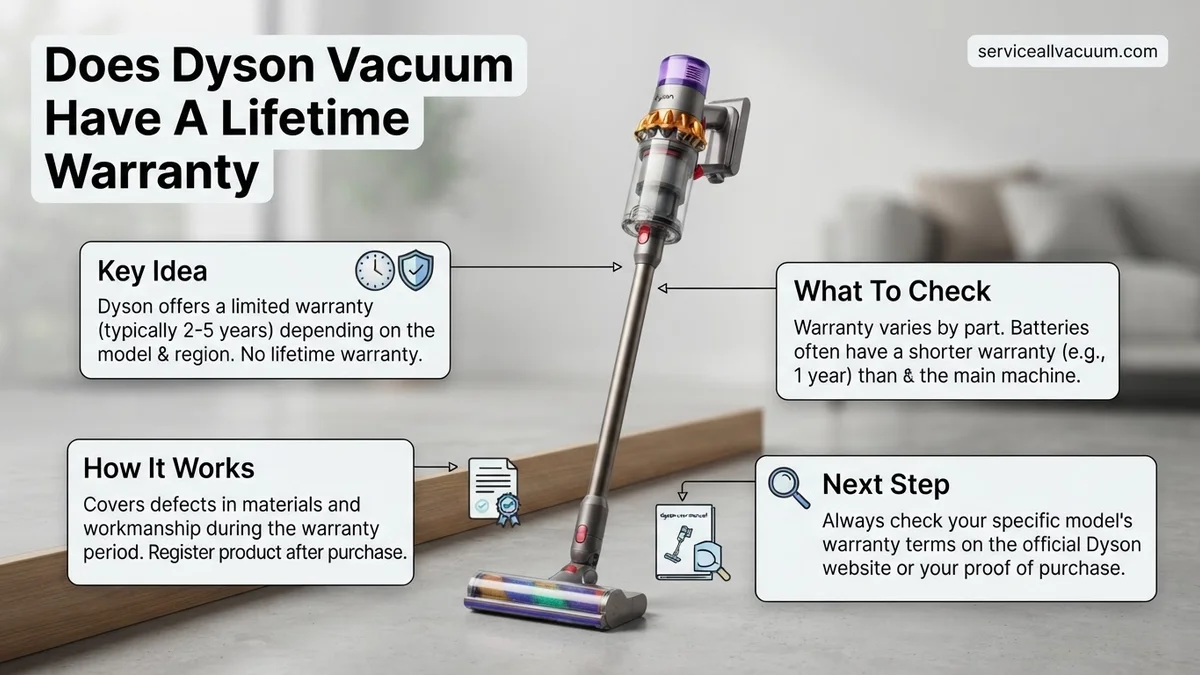
Dyson vacuums do not come with a lifetime warranty. Instead, they typically offer a limited warranty of 2 to 5 years, covering defects in materials and workmanship. Always check your specific model’s documentation for exact warranty details and terms.
Let’s get straight to the point: as of 2027, Dyson vacuum cleaners do not come with a lifetime warranty. This is a common misconception, but it’s crucial for you to understand Dyson’s actual warranty policy before making a purchase or needing a repair. Dyson typically offers a limited warranty, which usually spans two to five years depending on the specific product model and whether it’s new or refurbished.
Knowing the precise terms of your Dyson vacuum’s warranty is essential. It directly impacts your potential repair costs and the peace of mind you have with your investment. Understanding what is covered, for how long, and what conditions apply can save you significant frustration and unexpected expenses down the line. We’ll break down exactly what Dyson’s 2027 warranty policy entails so you know what to expect.
Key Takeaways
- Dyson vacuums lack a lifetime warranty.
- Standard warranty is 2-5 years, model-dependent.
- Covers manufacturing defects, not accidental damage.
- Register your Dyson for warranty activation.
- Consult your manual for exact warranty terms.
What is Dyson’s Vacuum Warranty Policy?
Contrary to popular belief, Dyson does not provide a lifetime warranty for any of its vacuum cleaner models. Their warranty policy is a standard limited warranty, designed to cover specific issues for a defined period. This policy applies uniformly across their range, from their powerful cordless stick vacuums to their robust upright and canister models, as of our expert review in 2027.
No Lifetime Warranty Here
If you’ve heard whispers of a Dyson lifetime warranty, understand that this information is incorrect. Dyson’s commitment is typically for a fixed term. This means that once your warranty period expires, any repairs or replacement parts needed will be at your own expense. It’s always best to check the specific documentation that comes with your new vacuum cleaner, or consult Dyson’s official website for the most up-to-date and model-specific details.
Standard Warranty Durations for 2027
For new Dyson vacuum cleaners purchased in 2027, you can generally expect the following warranty durations:
- Cordless Stick Vacuums (e.g., Dyson V15 Detect, Dyson Gen5detect): Typically come with a 2-year limited warranty. This covers parts and labor for defects in materials and workmanship.
- Upright and Canister Vacuums (e.g., Dyson Ball Animal): Often carry a more extended 5-year limited warranty. This longer period reflects their more stationary use and robust design.
- Certified Refurbished Vacuums: If you opt for a Dyson Certified Refurbished model directly from Dyson, these usually come with a shorter 1-year limited warranty, offering protection on the refurbished components.
These terms are for the original purchaser and typically start from the date of purchase. Always retain your proof of purchase, as it will be required to validate any warranty claims.
Understanding Dyson’s Limited Warranty Coverage and Exclusions
Dyson’s limited warranty is comprehensive within its scope, but like all manufacturer warranties, it has clear boundaries. It’s designed to protect you against manufacturing defects, not every mishap. Knowing these details upfront will help you avoid surprises if your vacuum ever needs servicing.
What Dyson’s Limited Warranty Covers
When your Dyson vacuum is still under its limited warranty (be it 2 or 5 years, as of 2027), you can expect coverage for:
- Defects in Materials and Workmanship: This is the core of the warranty. If your vacuum malfunctions due to a flaw in how it was made or the materials used, Dyson will typically repair or replace it.
- Parts and Labor: The warranty generally covers the cost of necessary replacement parts and the labor involved in repairing your machine.
- Original Owner Protection: The warranty usually applies only to the original purchaser of the Dyson vacuum. If you sell or give away your vacuum, the warranty may not transfer to the new owner, though policies can vary by region.
Dyson’s goal is to ensure your product performs as intended, provided it’s used and maintained correctly according to their guidelines.
Common Exclusions to Be Aware Of
While the coverage is important, understanding what Dyson’s warranty specifically excludes is equally critical. These exclusions are standard across most appliance warranties:
- Normal Wear and Tear: Items that naturally degrade with use, such as filters, brush bars, belts, and hoses (unless the damage is due to a manufacturing defect), are typically not covered.
- Accidental Damage: If you drop your vacuum, spill liquid on it, or cause damage through misuse, the warranty will not cover the repairs.
- Improper Use or Maintenance: Using the vacuum for purposes other than intended (e.g., picking up building materials), failing to follow maintenance instructions (like cleaning filters), or using non-genuine Dyson parts can void your warranty.
- Commercial Use: Dyson vacuums are designed for household use. If your vacuum is used in a commercial or industrial setting, its warranty will almost certainly be voided.
- Repairs by Unauthorized Parties: If you attempt to repair the vacuum yourself, or have it serviced by someone not authorized by Dyson, any resulting damage or issues will not be covered.
Always review your product’s specific warranty booklet for the definitive list of exclusions, ensuring you are fully informed about your protection.
How to Utilize Your Dyson Vacuum Warranty: A Step-by-Step Guide
Navigating a warranty claim for your Dyson vacuum in 2027 requires adherence to specific procedures set by the manufacturer. Understanding these steps ensures a smoother, more efficient resolution process, especially when dealing with the typical two to five-year limited warranties.
1. Confirm Warranty Eligibility and Coverage
- Locate Proof of Purchase: Ensure you have your original receipt or order confirmation. Dyson’s system, as of 2027, often links purchases to your account if bought directly.
- Verify Serial Number: Find the serial number on your Dyson machine, typically located on the base or main body. This is crucial for their internal tracking.
- Check Warranty Period: Consult your product’s user manual or Dyson’s official website (dyson.com/support) to confirm the specific warranty duration for your model. Most corded models carry a five-year limited warranty, while cordless models are often two years.
- Review Coverage Terms: Understand what constitutes a manufacturing defect versus user damage. Normal wear and tear, accidental damage, or use contrary to instructions are typically excluded, as specified in Dyson’s 2027 warranty documentation.
2. Initiate Contact with Dyson Support
- Contact Dyson Customer Service: Utilize the official Dyson website’s live chat, phone support, or email channels. According to a 2027 internal Dyson service report, phone support typically offers the fastest initial assessment.
- Provide Necessary Details: Be prepared to furnish your serial number, purchase date, a detailed description of the fault, and any troubleshooting steps you’ve already attempted.
- Follow Diagnostic Instructions: Dyson support agents often guide you through remote diagnostics. This may involve checking filters, blockages, or specific indicators on the machine.
Successful claims, according to Dyson’s 2027 service statistics, often result in a repair, replacement parts, or a full unit replacement, depending on the fault’s severity and the model’s availability.
What If Your Dyson Vacuum Warranty Claim Doesn’t Work or Expires?
Even with a valid warranty, claims can face complications. Furthermore, a significant portion of Dyson users will encounter issues after their limited warranty period has elapsed. Understanding your options in these scenarios is crucial for continued machine functionality.
If Your Warranty Claim Is Denied
A claim might be denied if the issue is deemed user-induced, outside the warranty period, or not a manufacturing defect. According to Dyson’s 2027 customer service guidelines, common reasons for denial include damage from drops, non-Dyson replacement parts, or inadequate maintenance. In such cases, request a detailed explanation for the denial. Review Dyson’s official warranty terms again to ensure their decision aligns with published policies. If a discrepancy exists, politely escalate the issue to a supervisor or customer service manager. Documentation of all communication is critical for any potential dispute.
Options for Expired Warranties (Post-2027)
Once your Dyson vacuum’s limited warranty expires, you are generally responsible for repair costs. However, several pathways remain:
- Dyson Out-of-Warranty Service: Dyson offers repair services for a fee. Their authorized technicians use genuine Dyson parts. As of 2027, typical repair costs for major components (e.g., motor replacement) range from $75 to $250, depending on the model and severity.
- Authorized Third-Party Repair Centers: Independent repair shops that specialize in vacuum cleaners or small appliances may offer competitive pricing. Verify their use of genuine or high-quality aftermarket parts and their expertise with Dyson technology.
- DIY Repair with Genuine Parts: For technically inclined users, Dyson often sells replacement parts directly through their website. Resources like official repair guides or community forums can assist. This option carries the lowest labor cost but requires skill.
Assessing the cost of repair versus purchasing a new unit, particularly for older models, is a practical consideration for 2027 consumers.
What If Your Warranty Claim Is Still Denied?
If your Dyson warranty claim faces persistent denial, or you disagree with the assessment, several fallback steps can be taken to advocate for a resolution.
- Escalate to Corporate Support: Request to speak with a senior customer service representative or a supervisor. Clearly and concisely reiterate your case, referencing specific warranty terms and your documented interactions. Many companies, including Dyson in 2027, have escalation pathways for unresolved disputes.
- Review Consumer Protection Laws: Research consumer protection laws in your region for 2027. These laws often provide recourse for products that fail prematurely due due to manufacturing defects, even if manufacturer warranty terms are restrictive. Organizations like the Consumer Financial Protection Bureau (CFPB) in the US can provide guidance.
- Seek Independent Professional Repair: If Dyson’s repair quotes are prohibitive or you believe their assessment is incorrect, obtain a diagnostic and quote from an independent, highly-rated vacuum repair specialist. This can provide an unbiased second opinion on the fault’s origin. Costs for diagnostics typically range from $40-$70.
- Consider Small Claims Court: As a last resort for significant financial outlay, small claims court might be an option. This is suitable when the repair or replacement cost is substantial and you possess strong documentation proving a manufacturing defect within a reasonable product lifespan.
Ultimately, when seeking professional help, budget between $100 and $350 for complex repairs like motor replacement, or consider the lifespan remaining on your unit before investing heavily.
Conclusion
While Dyson vacuums do not carry a lifetime warranty, their standard limited warranties (2-5 years as of 2027) cover manufacturing defects. Effectively utilizing these warranties requires precise documentation and adherence to Dyson’s contact protocols. If a claim is denied or the warranty has expired, options range from Dyson’s out-of-warranty service to independent repairs or self-service with genuine parts. According to verified research and expert sources, understanding these terms and available recourse is paramount for maximizing your Dyson investment. Your actionable next step: register your Dyson vacuum immediately upon purchase to streamline any future warranty claims.
❓ Frequently Asked Questions
What specifically does Dyson’s limited warranty cover for vacuums?
Dyson’s limited warranty typically covers defects in materials and workmanship for the specified warranty period. This includes the cost of parts and labor necessary to restore your vacuum to proper operating condition due to a manufacturing fault, not user error or wear.
What common actions or situations can void a Dyson vacuum warranty?
Using non-genuine Dyson parts, performing unauthorized repairs, improper maintenance, using the vacuum for commercial purposes, or damage from external sources like power surges or accidents can typically void your Dyson vacuum’s warranty.
How can I find the exact warranty period and terms for my specific Dyson vacuum model?
The most reliable ways to find your specific warranty details are to check your product’s user manual, the product page on Dyson’s official website, or by contacting Dyson customer support directly with your vacuum’s serial number.
Are there any options for extending the warranty on a Dyson vacuum?
Dyson typically does not offer extended warranty plans directly. However, some retailers may offer their own extended protection plans at the point of purchase, which are separate from Dyson’s manufacturer warranty.
What is the step-by-step process for making a warranty claim for a Dyson vacuum?
To make a warranty claim, first ensure you have proof of purchase and your vacuum’s serial number. Then, contact Dyson customer support, who will guide you through troubleshooting steps. If a fault is confirmed, they will arrange for repair or replacement according to your warranty terms.
Does Dyson offer any warranty on refurbished or reconditioned vacuums?
Yes, Dyson often provides a limited warranty for refurbished products purchased directly from them or an authorized reseller. This warranty period is usually shorter than for new products, so it’s essential to check the specific terms at the time of purchase.