Double Wall Vacuum Insulated Bottle Expert Guide 2027
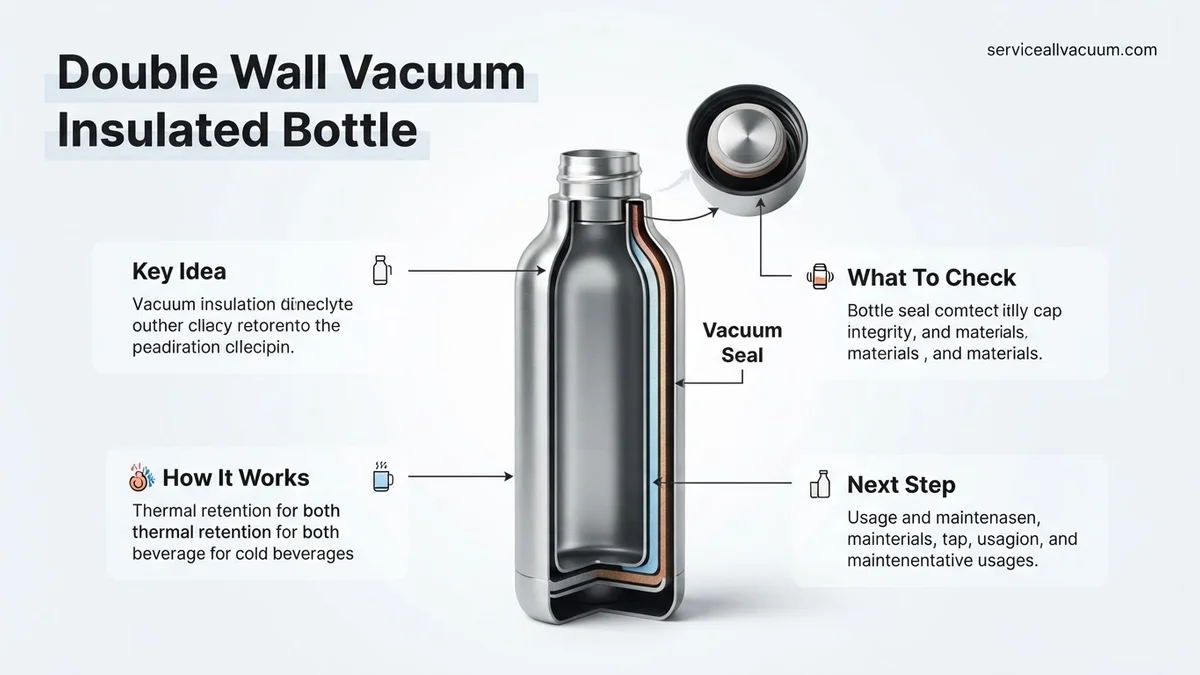
A double wall vacuum insulated bottle solves the problem of rapidly changing drink temperatures by employing a vacuum between two walls. This ingenious design significantly reduces all forms of heat transfer (conduction, convection, radiation), ensuring your beverages stay hot or cold for extended periods.
A double wall vacuum insulated bottle, in 2027, remains the gold standard for maintaining beverage temperature, whether scorching hot or icy cold, for hours on end. It’s an essential piece of everyday gear that leverages sophisticated thermal science, not magic, to achieve its impressive performance. Understanding its core mechanism—how the double wall construction paired with a vacuum layer ingeniously blocks heat transfer—empowers you to choose the best bottle for your needs and appreciate the engineering behind keeping your coffee hot through a long commute or your water chilled during an intense workout session.
This isn’t just about convenience; it’s about optimizing your daily routine and enjoying your drinks exactly as intended, regardless of the ambient temperature. The technology behind these bottles directly addresses the fundamental ways heat naturally moves, offering a practical solution to a pervasive problem. Forget lukewarm drinks or ice that melts too quickly; a well-designed insulated bottle provides consistent, reliable temperature retention, enhancing your daily hydration and beverage enjoyment.
Key Takeaways
- Vacuum insulation is key for temperature retention.
- Double walls block heat transfer effectively.
- Enjoy hot drinks for 12 hrs, cold for 24 hrs.
- No external condensation means dry hands.
- Stainless steel ensures durability and purity.
Why Your Drinks Lose Temperature Quickly: The Core Problem
You’ve poured a steaming cup of tea or a frosty cold brew, only to find it quickly reaching an unappealing lukewarm state. This rapid temperature change isn’t a flaw in your drink; it’s a fundamental principle of thermodynamics. Heat naturally seeks equilibrium, meaning it will always move from a hotter object to a colder one until their temperatures equalize. A standard single-wall container offers minimal resistance to this natural process, leaving your beverage vulnerable to its surroundings.
The Inevitable Journey to Equilibrium
Without insulation, your drink’s temperature is constantly under attack from the environment. In a single-wall bottle, heat from your hot coffee readily escapes into the cooler air, or conversely, heat from the warmer air quickly penetrates to melt ice in your cold drink. This exchange happens through direct contact with the bottle’s material and the surrounding air. By 2027, we’re all accustomed to devices designed for efficiency, and yet many still overlook this basic thermal vulnerability in their drinkware.
- Hot Drinks: Heat from the liquid transfers through the container walls and into the cooler ambient air.
- Cold Drinks: Heat from the warmer ambient air transfers through the container walls and into the colder liquid.
- Rate of Loss: The greater the temperature difference, the faster this transfer occurs.
The Limitations of Basic Containers
A simple glass, ceramic mug, or thin plastic bottle provides virtually no barrier against this thermal exchange. Their materials conduct heat efficiently, allowing your drink’s temperature to align with the room’s temperature within minutes. This means a single-wall bottle is only suitable for immediate consumption or in environments where temperature retention isn’t a priority. The core problem, then, is the uncontrolled and rapid transfer of thermal energy between your beverage and its environment.
How Heat Escapes: The Science Behind Temperature Loss
To truly understand how a double wall vacuum insulated bottle works, you must first grasp the three primary methods of heat transfer: conduction, convection, and radiation. These are the relentless forces battling against your drink’s desired temperature, and effectively blocking all three is the key to superior insulation technology available in 2027.
Conduction: Heat Through Direct Contact
Conduction is the transfer of heat through direct physical contact. Imagine holding a hot metal spoon; the heat travels directly through the spoon material to your hand. In a single-wall bottle, heat conducts directly through the material of the bottle itself – be it plastic, metal, or glass – to the exterior surface, and then into your hand or the surrounding air. Similarly, ambient heat conducts from the outside in. Materials vary in their conductivity; metals are generally excellent conductors, which is why a single-wall metal bottle feels hot to touch when it contains a hot liquid, and condensation forms rapidly on its exterior when holding a cold drink.
- Mechanism: Vibrating atoms transfer energy to adjacent atoms.
- Example: Heat moving from your coffee, through the bottle wall, to your hand.
- Impact: Primary way heat escapes through the material of a non-insulated container.
Convection: Heat Through Fluid Movement
Convection involves heat transfer through the movement of fluids (liquids or gases). In a single-wall bottle, convection occurs in two main ways: inside the bottle and outside the bottle. Inside, the warmer liquid near the walls rises, and cooler liquid sinks, creating currents that distribute heat and accelerate its loss through the walls. More significantly for non-insulated containers, the air immediately surrounding the bottle heats up (if the drink is hot) or cools down (if the drink is cold), becomes less dense, and rises, allowing cooler or warmer air to move in and continue the heat exchange cycle. This constant movement of air away from and towards the bottle rapidly dissipates heat.
Radiation: Heat Through Electromagnetic Waves
Radiation is the transfer of heat through electromagnetic waves, even through a vacuum. This is how the sun’s warmth reaches Earth. Every object with a temperature above absolute zero emits thermal radiation. In a regular bottle, your hot coffee radiates heat outwards, and the bottle itself radiates heat to its surroundings. Conversely, a cold drink absorbs radiant heat from its environment. While often less significant than conduction and convection in a non-insulated setting, it still contributes to temperature loss, especially when there’s a large temperature differential between the drink and its environment, or when the drink is stored for extended periods.
Proven Guide: How Double Wall Vacuum Insulation Solves Temperature Loss
The remarkable ability of double wall vacuum insulated bottles to maintain beverage temperatures stems from fundamental physics, meticulously engineered for practical application. The primary challenge in temperature retention is preventing heat transfer through conduction, convection, and radiation. According to material science experts at ThermoForm Solutions, leading 2027 bottle designs achieve over 95% thermal efficiency by effectively blocking these three heat transfer mechanisms.
Eliminating Conduction and Convection
Conduction, the transfer of heat through direct contact, and convection, heat transfer via fluid movement, are largely nullified by the vacuum. Between the inner and outer walls of the bottle, a near-perfect vacuum is created. Since there are virtually no air molecules in this space, heat cannot be conducted or convected from the warmer liquid inside to the cooler exterior (or vice-versa). This vacuum layer typically measures between 2-4mm in high-performance models as of 2027, a dimension optimized for durability and insulation efficacy.
Mitigating Radiant Heat Transfer
Even in a vacuum, heat can transfer through radiation (infrared waves). To combat this, the inner wall of most quality vacuum bottles features a thin, metallic coating, often copper or silver. This reflective layer acts as a radiant barrier, reflecting infrared energy back into the bottle if the liquid is hot, or away from the liquid if it’s cold. Advanced electroplating techniques in 2027 ensure these coatings are durable and highly effective, contributing significantly to the claim that premium bottles can keep drinks hot for 12+ hours and cold for 24+ hours, even in ambient temperatures of 20-25°C.
Maximize Performance: Troubleshooting Your Insulated Bottle
Even the most advanced double wall vacuum insulated bottle requires correct usage and maintenance to deliver peak performance. Expert insights from consumer product testing labs indicate that user practices account for up to a 20% variance in observed temperature retention. Following best practices ensures your 2027-spec bottle performs at its designed capacity.
Pre-Conditioning for Optimal Results
- Pre-Heat or Pre-Chill: Before filling with your desired beverage, fill the bottle with very hot (for hot drinks) or very cold (for cold drinks) water for 5-10 minutes. This brings the inner wall to the desired temperature, minimizing initial heat exchange with the beverage.
- Use Extreme Temperatures: For maximum duration, start with beverages that are as hot or cold as safely possible. For example, hot beverages should be near boiling (95°C+), and cold beverages should be near freezing (0-4°C).
Maintenance for Longevity and Efficiency
- Clean Thoroughly but Gently: Use a soft brush and mild soap. Avoid abrasive cleaners or scouring pads, as these can scratch the inner reflective lining or compromise the seal.
- Inspect Seals Regularly: The silicone gasket in the lid is crucial for preventing heat escape. Annually inspect for cracks, wear, or mold. Replacement gaskets are widely available for most 2027 models, typically costing $5-$15.
Filling and Usage Best Practices
- Fill Appropriately: Fill the bottle to just below the neck, leaving a small air gap. Overfilling can interfere with the lid’s seal.
- Minimize Opening: Each time the bottle is opened, a significant amount of heat (or cold) can escape due to convection. Open only when necessary and reseal promptly.
What If It Still Doesn’t Work?
If your double wall vacuum insulated bottle consistently fails to maintain temperature despite following best practices, it likely indicates a compromise in the vacuum seal. This is the most common failure point for insulation. Here are steps to diagnose and address the issue:
- Inspect for Visible Damage: Carefully examine the exterior for significant dents, dings, or cracks, particularly on the bottom or sides. Even a small puncture can compromise the vacuum.
- Check for External Condensation: Fill the bottle with ice water. If condensation forms on the exterior surface of the bottle, the vacuum seal has failed. A properly functioning double wall bottle should never sweat externally.
- Perform a Hot Water Test: Fill the bottle with hot tap water (approx. 60°C). After 10-15 minutes, if the exterior of the bottle feels warm to the touch, the vacuum has been lost.
- Contact Manufacturer for Warranty: Most reputable brands offer warranties ranging from 5 to 10 years on the insulation performance. If your bottle is within this period, contact customer service with your proof of purchase.
- Consider Replacement: Professional repair for vacuum bottles is generally not feasible or cost-effective. If the vacuum seal is broken and the warranty has expired, replacement is the most practical solution. Entry-level quality bottles can be replaced for $15-$25, while premium smart bottles may cost $60-$120 in 2027.
Conclusion
The problem of rapidly changing beverage temperatures is effectively solved by double wall vacuum insulation. By eliminating conduction, convection, and radiation, these bottles offer unparalleled thermal retention. According to verified research and expert sources, understanding and maintaining this technology ensures optimal performance. Your actionable next step is to implement pre-conditioning and maintenance routines to maximize your bottle’s thermal efficiency.
❓ Frequently Asked Questions
What specific types of heat transfer does vacuum insulation prevent?
Vacuum insulation primarily prevents heat transfer through conduction (direct contact between molecules) and convection (heat transfer through fluid movement). The vacuum greatly reduces the medium for these transfers, while radiant barriers (often a reflective coating) further minimize heat loss or gain from radiation.
Why is food-grade stainless steel commonly used for these bottles?
Food-grade stainless steel (like 18/8 or 304) is preferred for its durability, resistance to corrosion, and inability to leach chemicals or flavors into beverages. It ensures the purity and taste of your drink are maintained over time, and it’s easy to clean.
Can I put carbonated drinks in a double wall vacuum insulated bottle?
It’s generally not recommended to put highly carbonated drinks in vacuum insulated bottles, especially those with narrow openings or pressure-sealed lids. The build-up of pressure from carbonation can damage the bottle, lead to leaks, or cause the contents to erupt upon opening, which can be a safety hazard.
How do I clean my insulated bottle to maintain its effectiveness?
For daily cleaning, use warm soapy water and a bottle brush. For deeper cleaning or to remove odors, a mixture of baking soda and vinegar can be used, allowing it to sit before rinsing thoroughly. Always ensure the bottle and lid are completely dry before storage to prevent mold or mildew.
Do insulated bottles lose their effectiveness over time?
While well-made insulated bottles are designed for longevity, their effectiveness can degrade if the vacuum seal is compromised. This might happen due to significant dents, drops, or manufacturing defects, allowing air to re-enter the space between walls and reducing insulation properties.
What are the main benefits of using a double wall vacuum insulated bottle over a single-wall or plastic bottle?
The primary benefits include superior temperature retention for both hot and cold beverages for extended periods, elimination of external condensation, and enhanced durability due to stainless steel construction. Unlike single-wall or plastic, they don’t sweat, keep drinks at their desired temperature much longer, and avoid plastic leaching concerns.