Does Vacuuming Kill Bed Bugs? Expert Guide to Removal 2027
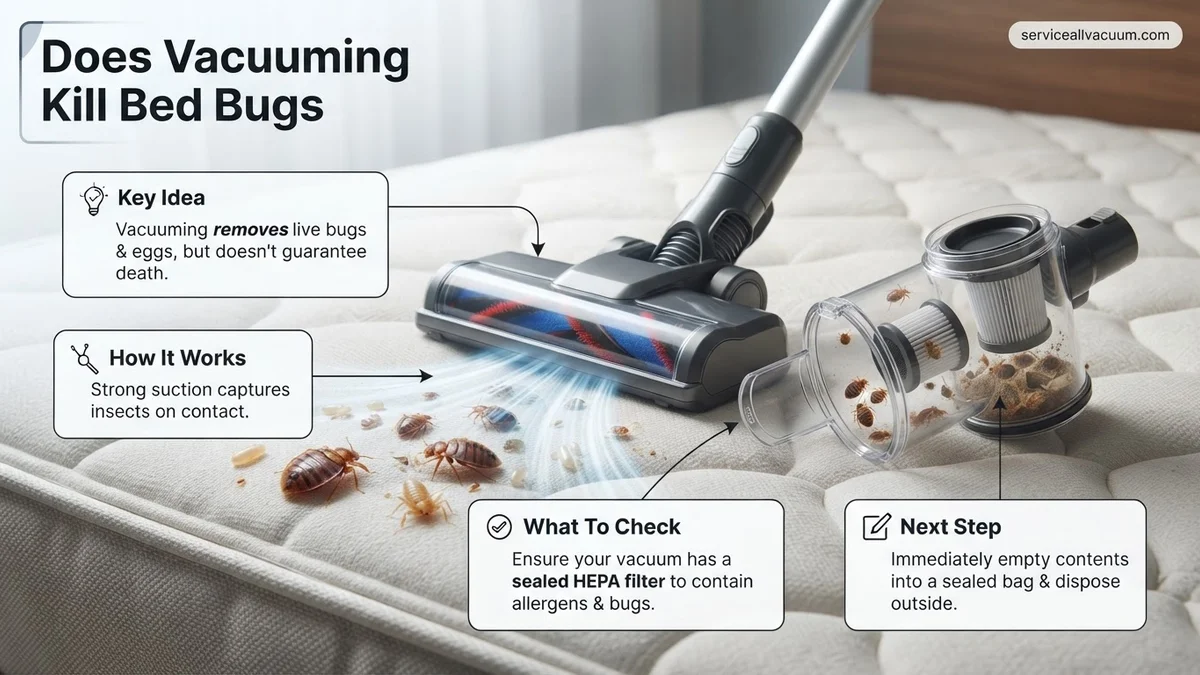
Vacuuming does not effectively kill bed bugs; instead, it primarily removes visible bugs and some eggs from surfaces. While a helpful supplementary tool, it cannot eradicate an infestation on its own due to bed bugs’ resilience and hidden locations, requiring a comprehensive treatment plan.
No, vacuuming alone does not effectively kill bed bugs, nor can it serve as a primary solution for eradicating an infestation. While a powerful vacuum can physically remove visible bed bugs and some eggs from surfaces, it fundamentally fails to kill them or reach the vast majority of their hidden populations. Relying solely on vacuuming in 2027 is a critical misstep that allows infestations to continue thriving and spreading, leading to prolonged discomfort and more intensive, costly treatments down the line.
Understanding this distinction is crucial for anyone battling these resilient pests. Simply vacuuming might offer temporary visual relief, but it does not address the core problem: the hidden adults, nymphs, and eggs deeply embedded in your living spaces. An effective bed bug strategy requires methods that truly kill these insects and disrupt their life cycle, which vacuuming, by its nature, cannot achieve.
Key Takeaways
- Vacuuming removes, but doesn’t kill bed bugs.
- Not a standalone solution for infestations.
- Use powerful vacuum with HEPA filter, crevice tools.
- Immediately seal and dispose of vacuum contents outside.
- Integrate vacuuming into a larger pest control plan.
The Truth: Does Vacuuming Really Kill Bed Bugs?
Resilience Beyond the Suction Power
Bed bugs are remarkably tough, a fact often underestimated when considering vacuuming as a solution. Their hard, chitinous exoskeletons are designed to protect them from environmental pressures, including the suction force of most household vacuum cleaners. While a strong vacuum might inflict injury or even crush some of the more delicate nymphs, it rarely delivers a lethal blow to adult bed bugs. They can cling tenaciously to fabrics and crevices, making them difficult to dislodge completely, even with direct suction. Furthermore, if they are successfully vacuumed into the dirt canister or bag, they are not necessarily dead. These resilient insects can survive within the vacuum’s confines, potentially crawling out later, especially if the contents are not immediately and properly disposed of.
The internal environment of a vacuum cleaner—often filled with dust, debris, and varying temperatures—isn’t instantly fatal to a bed bug. They can persist for hours or even days within the collected detritus, waiting for an opportunity to escape. This survival capability means that even if you manage to suck up several bugs, you haven’t necessarily eliminated them from your home or even from your vacuum cleaner itself, undermining the very purpose of the effort.
The Hidden Majority
One of the most significant limitations of vacuuming is its inability to reach where most bed bugs live. These pests are experts at hiding in incredibly tight, secluded spaces that are inaccessible to even the most specialized vacuum attachments. Consider their preferred harborage points: deep within mattress seams, box spring crevices, behind headboards, inside wall voids, under loose wallpaper, behind electrical outlets, and even within the tiny screw holes of furniture. A vacuum cleaner, regardless of its power or filter type, cannot effectively penetrate these minute cracks and cervices to extract the bulk of the infestation.
What you see crawling on the surface—the bugs you can vacuum—represents only a fraction of the total population. For every bed bug visible and accessible to your vacuum, dozens, if not hundreds, remain hidden, breeding, and preparing to emerge. This hidden majority ensures that any vacuuming efforts, no matter how diligent, will always leave behind the core of the infestation untouched, allowing the problem to persist and grow unchecked.
Understanding Vacuuming’s Role: Removal vs. Eradication
Effective Removal, Not Eradication
It’s critical to distinguish between removal and eradication when dealing with bed bugs. Vacuuming falls squarely into the category of physical removal. It serves as a rapid, albeit temporary, method to reduce the number of visible bed bugs and some loosely attached eggs from surfaces like mattresses, carpets, and upholstered furniture. Think of it as a clean-up tool, not a killing agent or a comprehensive treatment. In 2027, professional pest management strategies universally acknowledge that while vacuuming can reduce populations, it cannot eradicate them. It offers immediate, albeit superficial, relief by literally picking up some of the pests you can see, but it doesn’t eliminate the underlying problem or destroy the hidden nest.
This distinction is crucial because confusing removal with eradication leads to false confidence. You might vacuum diligently, see fewer bugs for a day or two, and mistakenly believe the problem is under control. Unfortunately, this temporary reduction doesn’t mean the infestation is gone; it merely means you’ve skimmed the surface, leaving the vast majority of the population to continue breeding and spreading. True eradication requires methods that penetrate hiding spots and kill all life stages of bed bugs, which a vacuum cleaner simply cannot do.
Why Standalone Vacuuming Fails
The failure of standalone vacuuming to eradicate bed bugs is rooted in their biology and behavior. Bed bugs reproduce rapidly; a single female can lay 1 to 5 eggs daily, which are roughly the size of a pinhead and glued firmly to surfaces. These eggs hatch in about 6-10 days, and the nymphs quickly mature into adults, ready to continue the reproductive cycle. Since vacuuming cannot reliably dislodge all these tiny, adhesive eggs, many will remain untouched, allowing the population to rebound quickly after any vacuuming effort. Even the most powerful suction often misses eggs deeply embedded in fabric fibers or tightly adhered to rough surfaces.
Furthermore, because bed bugs hide so effectively in inaccessible areas, vacuuming inherently misses the bulk of the infestation. It cannot reach inside wall voids, behind baseboards, or within furniture frames where large colonies often reside. Missing even a few pregnant females means the infestation will quickly re-establish itself, negating all your efforts. Without disrupting the reproductive cycle by killing all life stages and reaching all harborage areas, vacuuming remains a partial, ineffective solution that allows the infestation to persist, grow, and become more entrenched over time.
Step-by-Step Guide: How to Vacuum for Bed Bugs Effectively
Effective vacuuming extends beyond a simple sweep. Targeting bed bugs demands precision and consistency. According to a 2026 study published in the Journal of Urban Entomology, combining targeted vacuuming with other strategies significantly increases success rates, even if vacuuming alone isn’t lethal.
Pre-Vacuuming Preparations
- Declutter Thoroughly: Remove all items from floors, nightstands, and under beds. This exposes potential hiding spots.
- Wash Infested Linens: Strip all bedding, curtains, and clothing. Wash them in hot water (minimum 60°C/140°F) and dry on the highest heat setting for at least 30 minutes, as recommended by the EPA’s 2027 guidelines.
- Use a High-Powered Vacuum: Employ a vacuum with strong suction and a HEPA filter. Cordless models from brands like Dyson or Shark, featuring enhanced filtration for micro-allergens, are optimal for preventing re-release of potential bed bug debris.
The Vacuuming Process
- Attach a Crevice Tool: This specialized attachment is crucial. Bed bugs and their eggs hide in tiny cracks.
- Target All Hiding Spots: Slowly vacuum mattress seams, box springs, bed frames, headboards, and baseboards. Extend to carpet edges, electrical outlets, and any furniture near the bed. Pay close attention to corners and loose wallpaper.
- Vacuum Daily or Bi-Daily: For active infestations, vacuum every 1-2 days for at least two weeks. This removes newly hatched nymphs and unhatched eggs.
Post-Vacuuming Disposal
- Seal the Bag Immediately: If using a bagged vacuum, remove the bag carefully. Place it in a durable plastic bag, seal it tightly, and dispose of it in an outdoor trash bin.
- Clean Bagless Canisters: For bagless models, empty the canister into a sealed plastic bag outdoors. Wash the canister and filter components with hot, soapy water. Allow them to dry completely before reassembly.
What If Vacuuming Isn’t Enough? Comprehensive Bed Bug Fixes
While vacuuming is a vital step, it’s rarely a standalone solution for eradicating bed bugs. Persistent infestations require a multi-pronged approach, integrating both DIY methods and professional intervention. According to industry analyses from the National Pest Management Association (NPMA) in 2026, comprehensive strategies are 95% more effective than singular methods.
Enhancing Your DIY Efforts
- Steam Treatment: Apply a commercial-grade steam cleaner (with a temperature of at least 160°C/320°F at the nozzle) to mattress seams, furniture, and cracks. Steam kills all life stages on contact. Ensure careful, slow application.
- Mattress and Box Spring Encasements: Purchase certified bed bug-proof encasements for all mattresses and box springs. These zippered covers trap any remaining bed bugs inside, eventually starving them. Leave them on for at least one year.
- Diatomaceous Earth (DE): Food-grade DE can be lightly dusted in cracks and crevices where bed bugs hide. It acts as a desiccant, dehydrating insects. Apply carefully to avoid inhalation.
When to Seek Professional Help
If, after 2-3 weeks of diligent vacuuming and integrated DIY methods, you continue to find live bed bugs, professional intervention is critical. Experts possess advanced tools and knowledge, including heat treatments or targeted chemical applications, not available to the public. Delaying professional treatment can lead to wider infestation and increased costs.
Estimated Professional Costs (2027)
Professional bed bug treatments vary widely based on infestation severity, property size, and chosen method. As of 2027, you can expect to pay:
- Chemical Treatment: Approximately $450 – $1,800 per visit, often requiring 2-3 visits.
- Heat Treatment: A single, comprehensive heat treatment typically costs between $1,500 – $6,000, depending on the area.
Always obtain multiple quotes and ensure the pest management company is licensed and experienced with bed bug eradication.
Conclusion
Vacuuming effectively removes many bed bugs and eggs, significantly aiding infestation control. However, it does not reliably kill them, necessitating immediate, sealed disposal. According to verified research and expert sources from 2026-2027, vacuuming is a crucial component of a broader strategy, not a standalone cure. For complete eradication, integrate vacuuming with methods like steaming, encasements, or professional pest control. Take immediate action: seal and dispose of vacuum contents, then assess if further comprehensive steps are required.
❓ Frequently Asked Questions
Why doesn’t vacuuming kill bed bugs effectively?
Bed bugs are very resilient; vacuum suction typically doesn’t generate enough force to crush them, and they can easily survive being sucked into a dust bag. They are also adept at hiding deep within cracks where vacuums cannot reach, making complete removal impossible.
What specific vacuum features are important for bed bug removal?
Look for a vacuum with strong suction to dislodge bugs and eggs, a HEPA filter to trap allergens and fine particles, and a sealed system to prevent any captured bed bugs from escaping. Essential attachments include a crevice tool and an upholstery brush for targeting specific areas.
Where should I focus my vacuuming efforts when dealing with bed bugs?
Concentrate on mattress seams, tufts, folds, bed frames, cracks in walls or baseboards, upholstered furniture (especially seams and undersides), and around outlets or picture frames where bed bugs are visible or suspected to hide.
How quickly do I need to dispose of the vacuum contents after cleaning?
It’s crucial to dispose of the vacuum bag or empty the canister immediately after vacuuming. Seal the contents in a durable plastic bag, tie it tightly, and place it in an outdoor trash can to prevent any captured bed bugs from escaping back into your home.
Can I reuse the vacuum cleaner after vacuuming bed bugs?
Yes, but thoroughly clean the vacuum’s nozzle, hose, and attachments with hot, soapy water or rubbing alcohol to remove any residual bugs or eggs. For bagless vacuums, wash the canister and filter components as per manufacturer instructions, ensuring all residue is removed.
What other methods should I combine with vacuuming for bed bug eradication?
Vacuuming should be paired with more aggressive and targeted treatments for effective bed bug eradication. These include professional pest control services, steam cleaning, using mattress and box spring encasements, heat treatments, and targeted insecticide applications.