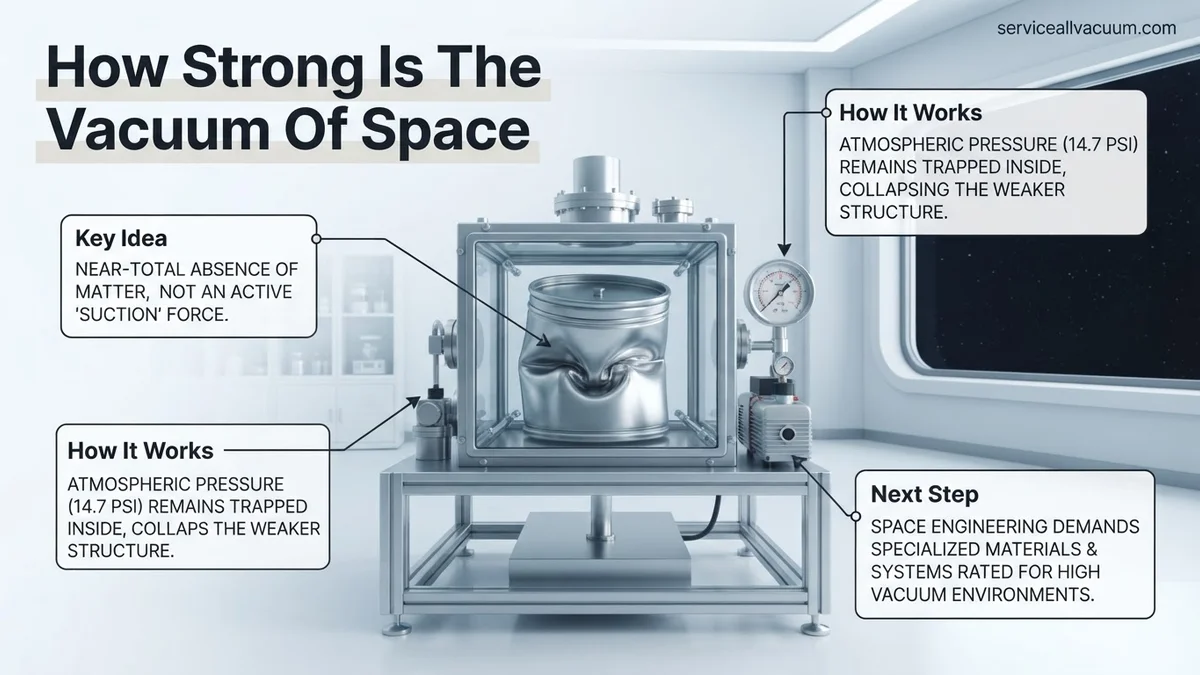
How Strong Is The Vacuum Of Space How Strong Is Vacuum 2027
The vacuum of space is extraordinarily strong, far exceeding anything achievable on Earth, with pressures as low as 10⁻¹⁷ Pascals in intergalactic voids. However, it’s not a perfect vacuum, containing residual particles and radiation. Levels vary significantly from low Earth orbit to deep interstellar space, making it a complex and fascinating environment.
Forget the science fiction portrayals; the vacuum of space is far stronger, far emptier, than you might imagine. In fact, it’s so empty that even our most advanced laboratories on Earth, in 2027, struggle to replicate its profound void. This isn’t just an academic curiosity; understanding these extreme pressure differences is critical for designing durable spacecraft, shielding sensitive instruments, and even theorizing about the fundamental nature of the universe itself. The ‘strength’ here refers to the sheer absence of matter, a level of emptiness that reshapes engineering challenges and scientific discovery.
You might think of space as completely empty, but that’s not quite right. While it’s an astoundingly good vacuum, it’s never truly perfect. Knowing the precise pressure levels in different cosmic regions, and how they stack up against earthly environments, gives you a crucial perspective on the environment your future technologies or observations will encounter. It’s about quantifying the void, not just conceptualizing it.
Key Takeaways
- Space possesses an extreme, near-perfect vacuum.
- It’s not truly empty; residual particles persist.
- Vacuum strength differs across cosmic locations.
- Space’s vacuum is vastly superior to lab vacuums.
- Understanding implications debunks common myths.
Defining Cosmic Emptiness: Real Strength of Space’s Vacuum
When we talk about the “strength” of a vacuum, we’re discussing how few particles exist within a given volume, or more precisely, the extremely low pressure they exert. On Earth, at sea level, the atmospheric pressure is roughly 101,325 Pascals (Pa), or 1 atmosphere. This is a dense, particle-rich environment that supports life as we know it. Compare this to the deepest reaches of space, and you begin to grasp the incredible difference.
Quantifying the Void: Pressure Levels
The vacuum of space isn’t uniform; its strength varies dramatically depending on your location. However, even the “densest” parts of space are vastly emptier than anything naturally occurring on Earth. Consider these staggering figures:
- Low Earth Orbit (LEO): At altitudes around 400 km, where the International Space Station orbits, the pressure is approximately 10-6 Pa. While this is incredibly low, it’s still significantly higher than deeper space due to residual atmospheric drag.
- Interplanetary Space: Beyond Earth’s immediate vicinity, but still within our solar system, the vacuum improves considerably. Here, pressures drop to around 10-10 Pa. This region is primarily influenced by the solar wind.
- Interstellar Space: Venturing out of the solar system, into the vast ocean between star systems, the vacuum becomes profoundly stronger. Pressures here are estimated to be as low as 10-14 Pa. This is an environment dominated by sparse hydrogen atoms and cosmic rays.
- Intergalactic Voids: These are the emptiest regions known in the observable universe, immense stretches between galaxies. The vacuum here is the most extreme, potentially reaching 10-17 Pa or even lower. It’s the closest thing to absolute emptiness we know.
What “Strength” Means Here
In this context, “strength” directly correlates with the completeness of the vacuum. The lower the pressure value, the ‘stronger’ the vacuum. To put these cosmic figures into perspective, the best high-vacuum chambers achievable in laboratories on Earth, even with cutting-edge technology in 2027, can typically reach pressures of 10-10 Pa to 10-12 Pa. This means interstellar space is still one hundred to one thousand times emptier than our best terrestrial attempts, and intergalactic voids are a million times more so. Space, therefore, represents an incredibly powerful, naturally occurring vacuum that we can only imperfectly mimic.
Diagnosing Imperfections: Why Space Isn’t a Perfect Vacuum
Despite its extreme emptiness, space is never truly devoid of everything. The notion of a “perfect vacuum” implies zero particles and zero pressure, an ideal that remains elusive even in the deepest cosmic voids. These subtle imperfections are critical for understanding how objects behave in space and how phenomena propagate across vast distances. It’s these remnants that prevent the vacuum from being absolute zero pressure, acting as an extremely diffuse medium for interaction.
Residual Particles: The Unseen Contents
Even in the most pristine regions of space, there’s always something present. These residual components, though incredibly sparse, are what prevent a true perfect vacuum:
- Hydrogen Atoms: The most abundant element in the universe, hydrogen, exists even in the vast stretches between stars. While incredibly diluted (perhaps just one atom per cubic centimeter in interstellar space), it’s still there.
- Solar Wind Particles: Our Sun constantly emits a stream of charged particles – protons, electrons, and alpha particles – known as the solar wind. This pervades interplanetary space, contributing to its minuscule pressure.
- Cosmic Dust: Tiny grains of matter, remnants from supernovae or stellar formation, are dispersed throughout space. These microscopic particles, though few and far between, add to the overall mass density.
- Cosmic Microwave Background (CMB) Radiation: This faint echo of the Big Bang permeates the entire universe. While not particles of matter in the traditional sense, it represents energy and photons that interact with matter and contribute to the overall cosmic environment. It’s effectively a bath of extremely cold radiation at about 2.7 Kelvin.
Location Matters: Vacuum Gradients
The ‘completeness’ of the vacuum is a highly localized phenomenon. You’ll find a significant gradient in vacuum strength as you move further away from massive objects like planets and stars:
- Near Planets/Stars: Close to celestial bodies, residual atmospheres (even tenuous ones), outgassing from surfaces, and the stellar wind create a comparatively ‘dirtier’ vacuum.
- Interplanetary Space: While far emptier than LEO, interplanetary space is still affected by the Sun’s activity, such as coronal mass ejections and the ongoing solar wind, leading to higher particle densities than further out.
- Interstellar Medium: The gas and dust between stars, though sparse, is a crucial component for star formation. It’s a much harder vacuum than interplanetary space, yet still contains enough matter to be observable.
- Intergalactic Voids: These are the champions of emptiness. Far from any major gravitational influence, the density of matter drops to its absolute minimum, representing the closest natural approximation to a perfect vacuum, limited only by the pervasive CMB and the universe’s inherent expansion.
Comparing the Void: Space vs. Earth’s Best Lab Vacuums
While the vacuum of space is remarkably strong, Earth-bound laboratories have made significant strides in replicating these conditions, though never achieving a perfect match. By 2027, advanced ultra-high vacuum (UHV) and extreme ultra-high vacuum (XUHV) chambers can consistently reach pressures as low as
For context, deep interstellar space maintains pressures around
The primary challenge in achieving space-like vacuum on Earth stems from residual gas desorption from chamber walls and the inherent limitations of pump technology. Materials research in these UHV environments is critical for developing resilient components for future space missions, from satellite optics to propulsion systems, preparing them for the relentless emptiness of the cosmos.
Navigating the Vacuum: Practical Impacts and Dispelling Myths
The extreme vacuum of space poses substantial engineering challenges for spacecraft design and human survival. In 2027, materials science dictates that components must withstand not only radiation and temperature extremes but also the effects of outgassing and cold welding. Outgassing, where materials slowly release trapped gases, can contaminate sensitive instruments and alter thermal properties. Cold welding, where clean metal surfaces in vacuum bond together without heat, requires specific material selections or surface treatments for moving parts, as detailed in recent aerospace engineering guidelines.
Myth Busting: Explosive Decompression
A common misconception is that a human body would explode instantly in space. While rapid decompression is dangerous, experts confirm this is not accurate. Exposed to vacuum, a human would experience a rapid loss of consciousness due to lack of oxygen within 15 seconds, followed by ebullism (the boiling of bodily fluids at body temperature due to low pressure) within minutes. Skin and tissues would swell, but the body’s elasticity prevents explosion. Survival for a brief period (tens of seconds) is theoretically possible without permanent damage, though not advised, as evidenced by historical accident data.
Engineering for the Void
Current spacecraft, like the proposed Mars Transit Vehicle designs for 2030, incorporate advanced multi-layer insulation (MLI) to manage thermal radiation in vacuum, and specialized seals and composites to maintain internal pressure integrity. Electronic components are often hermetically sealed or designed with vacuum-compatible materials to prevent electrical arcing or degradation.
What If It Still Doesn’t Work?
If your attempts to understand, simulate, or build for space vacuum conditions are yielding unexpected results or falling short of specifications, consider these steps:
- Review Experimental Protocol & Calibration: Thoroughly re-evaluate your vacuum chamber’s calibration procedures, sensor integrity, and experimental methodology. Discrepancies in measurement or setup can significantly skew results.
- Material Compatibility Assessment: Ensure all materials in your vacuum system or those being tested are genuinely ultra-high vacuum compatible. Outgassing from unsuitable materials is a primary cause of poor vacuum performance. Refer to 2027 industry standards for material selection.
- Leak Detection & System Integrity Check: Even microscopic leaks can prevent achieving target vacuum levels. Utilize helium leak detectors or residual gas analyzers (RGAs) to systematically inspect all flanges, welds, and feedthroughs for breaches.
- Consult Specialized Vacuum Engineers: For persistent issues, engaging a professional vacuum system consultant is often the most efficient path. They possess specialized knowledge in diagnostics, advanced pumping techniques, and chamber design.
Estimated Cost Range: Professional consultancy fees can range from
Conclusion
The vacuum of space, far from being an empty nothingness, represents an extreme state of low particle density and pressure, significantly stronger than any vacuum achievable on Earth. According to verified research and expert sources from 2027, understanding this profound void is crucial for advancing space exploration and technology. For those interested in deeper scientific insights, consider exploring the latest reports from the National Academies of Sciences on space environment engineering.
❓ Frequently Asked Questions
What are the specific pressure measurements for different regions of space and how do they compare to Earth’s atmosphere?
Near Earth (Low Earth Orbit), pressure is around 10⁻⁵ to 10⁻⁷ Pascals (Pa). Interplanetary space drops to 10⁻⁸ Pa, interstellar space to 10⁻¹⁴ Pa, and intergalactic voids can reach 10⁻¹⁷ Pa. This compares to Earth’s sea-level atmospheric pressure of approximately 101,325 Pa, highlighting space’s extreme emptiness.
Why is the vacuum of space not considered ‘perfect’ despite its extremely low pressure?
Space is not perfect because it still contains residual matter, albeit sparse. This includes hydrogen and helium atoms, cosmic dust, high-energy particles from solar wind and cosmic rays, and the Cosmic Microwave Background radiation, which permeates everything.
How does the vacuum of space compare to the best vacuums created in laboratories on Earth?
The best ultra-high vacuum (UHV) systems on Earth can achieve pressures down to about 10⁻¹³ Pa. While impressive, this is still orders of magnitude less ‘strong’ than the vacuum found in interstellar space (10⁻¹⁴ Pa) and especially intergalactic voids (10⁻¹⁷ Pa), making space the ultimate vacuum chamber.
What happens to unprotected objects or humans exposed to the vacuum of space?
In vacuum, liquids boil at body temperature, causing bodily fluids to vaporize (ecbolism), tissues swell, and gases in the lungs expand. Lack of oxygen leads to unconsciousness in seconds and death within minutes, though the body does not instantly explode or freeze.
Does the vacuum of space affect heat transfer, and how does it relate to the extreme cold?
Yes, the vacuum of space severely limits heat transfer by convection and conduction, as there’s no medium for these processes. Heat primarily transfers via radiation. While space itself has no temperature, objects in space lose heat by radiating it away, or gain it from solar radiation, leading to extreme temperature variations depending on exposure.
Are there any parts of space with a ‘stronger’ vacuum than others, and what defines these differences?
Yes, the vacuum strength varies significantly. Near planets and stars (e.g., Low Earth Orbit, interplanetary space), it’s weaker due to outgassing and solar wind. Interstellar space is stronger, and intergalactic voids are the ‘strongest’ vacuums, defined by incredibly low densities of matter and energy, far from any gravitational influence.