Are Dyson Vacuums Good? Your Expert Guide 2027
Dyson vacuums are often considered a premium choice, but their effectiveness and value in 2027 depend on specific needs. While known for powerful suction and innovative design, users should weigh the high cost against long-term reliability and maintenance. Our guide offers an expert evaluation.
In 2027, determining if Dyson vacuums are “good” isn’t a simple yes or no. The core truth is: they offer exceptional performance in specific areas but come with a premium price tag that demands careful consideration. For many, Dyson represents the gold standard in cleaning technology, consistently delivering powerful suction and innovative features. However, whether that advanced capability justifies the investment for your home depends heavily on your unique cleaning challenges, budget, and priorities for long-term reliability. Our goal here is to cut through the marketing to give you a clear, expert perspective on Dyson’s real-world value and effectiveness today.
This discussion matters because a vacuum cleaner is a significant household investment, not just a purchase. You need to know if you’re buying a durable, high-performing tool that solves your specific problems, or if you’re overpaying for features you don’t need. Understanding Dyson’s strengths and weaknesses in 2027 means making an informed decision that truly meets your cleaning demands and budget expectations.
Key Takeaways
- Dyson offers strong suction and innovative features.
- Premium price demands careful consideration of value.
- Evaluate specific model features for your cleaning needs.
- Factor in potential maintenance and parts costs.
- Compare against competitors for balanced decision.
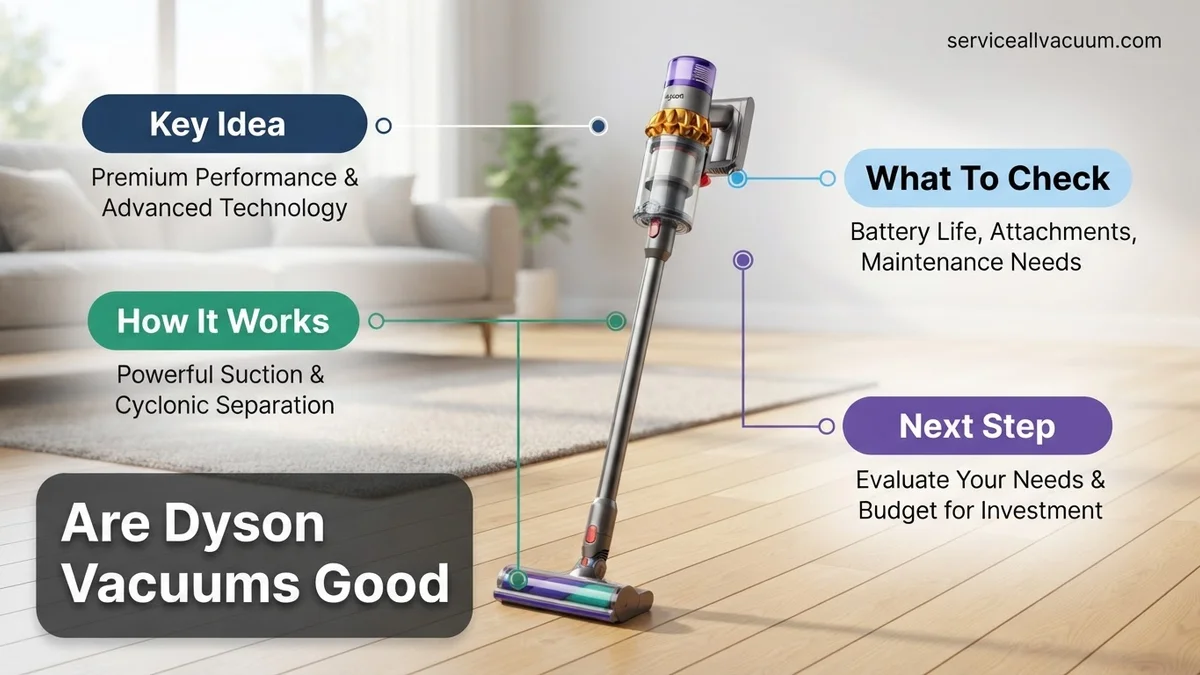
What Causes the “Dyson Dilemma”: Performance vs. Price
The persistent question surrounding Dyson vacuums often boils down to their cost. Are you paying for genuine innovation and superior cleaning, or just the brand name? In 2027, Dyson continues to push boundaries with its motor technology, filtration systems, and smart features, often leaving competitors playing catch-up. This innovation comes at a price, however, leading many consumers to weigh the tangible benefits against the significant financial outlay.
Is the Premium Price Tag Justified by Innovation?
Dyson’s pricing reflects substantial research and development, which translates into patented technologies you won’t find elsewhere. By 2027, their latest digital motors (like the Hyperdymium motor in the Gen5Detect) achieve unparalleled suction power for their size. Furthermore, integrated HEPA filtration systems capture 99.99% of microscopic particles, a crucial benefit for allergy sufferers. You are buying cutting-edge engineering designed for peak performance and air purification. For example, the intelligent dust-sensing technology on models like the Dyson V15 Detect (still widely popular and updated by 2027) automatically adjusts suction power based on debris levels, optimizing battery life and cleaning efficiency. This level of smart automation and raw power is a significant differentiator.
- Advanced Motor Technology: Delivers superior suction in compact, lightweight designs.
- Whole-Machine Filtration: Traps microscopic allergens and pollutants, expelling cleaner air.
- Intelligent Sensing: Automatically adapts to floor types and debris levels for optimal cleaning.
- Specialized Tools: Engineered attachments tackle specific challenges like pet hair and tight spaces effectively.
Common Criticisms and Potential Drawbacks in 2027
Despite their technological prowess, Dyson vacuums aren’t without their critiques. The initial purchase price is often the most significant barrier. While durability has improved across newer models, some users still report concerns over long-term battery degradation in older cordless units, though 2027 models generally feature significantly improved battery longevity and easily replaceable packs. Repairability can also be a point of contention; while parts are available, some repairs may require professional service. Noise levels, particularly on maximum suction settings, can also be higher than some competitors. Finally, the bin capacity on stick vacuums, while convenient for daily use, might be too small for larger homes with significant debris accumulation.
- High Initial Cost: A considerable investment compared to many alternatives.
- Battery Life Perception: Though improved, it remains a concern for heavy users without extra batteries.
- Repair Accessibility: While better, DIY repairs can sometimes be challenging.
- Noise at Max Power: Can be louder than some quieter, less powerful competitors.
How to Evaluate Dyson’s Effectiveness: Step-by-Step Guide
Evaluating a Dyson vacuum means looking beyond the marketing hype and focusing on how it performs in real-world scenarios. We’ll break down the key performance metrics that truly define a vacuum’s “goodness” in 2027. Your personal cleaning needs should guide this assessment, as no single vacuum is perfect for every situation.
Unrivaled Suction Power and Surface Versatility
Dyson vacuums consistently lead the market in raw suction power, measured in air watts (AW). Top cordless models in 2027, such as the Gen5Detect, can exceed 250 AW, which translates directly to superior debris pick-up. This power is critical for deep cleaning carpets, extracting embedded dirt, and effectively cleaning hard floors without scattering debris. Their innovative cleaner heads are designed for seamless transitions between different surfaces. The Fluffy Optic head illuminates microscopic dust on hard floors, while specialized de-tangling motorbar cleaner heads prevent hair wrap on carpets. This versatility means you rarely need to switch attachments for different floor types, streamlining your cleaning routine significantly.
- Deep Carpet Cleaning: High AW ratings ensure thorough dirt extraction from plush carpets.
- Efficient Hard Floor Care: Specialized heads capture fine dust and larger debris without scratching.
- Edge-to-Edge Cleaning: Designed to reach dirt right up against baseboards.
- Adaptable Cleaner Heads: Automatically adjust or are easily interchangeable for optimal performance on any surface.
Pet Hair Dominance and User Experience
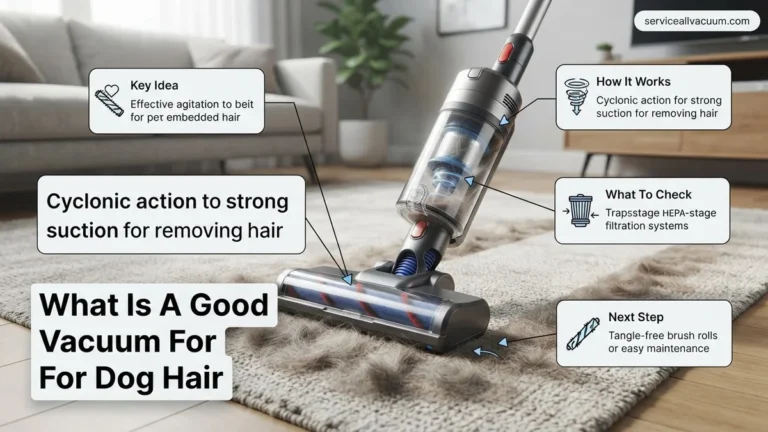
For pet owners, Dyson vacuums are often a game-changer. The powerful suction combined with anti-tangle technology makes short work of pet hair on all surfaces. Most 2027 Dyson stick vacuums feature a hair screw tool with a conical, anti-tangle brush bar designed specifically to lift pet hair from upholstery and pet beds without wrapping. This significantly reduces maintenance time. Beyond raw power, the user experience is a crucial factor. Dyson models are typically lightweight (especially the stick versions, often under 7 lbs), well-balanced, and highly maneuverable. Their swivel steering allows for easy navigation around furniture and into tight corners. Bin emptying is usually a one-click, hygienic process, minimizing contact with dust. This blend of specialized capability and user-friendly design makes daily cleaning less of a chore.
- Tangle-Free Pet Hair Pickup: Specialized tools and brush bars prevent hair from clogging.
- Lightweight Design: Reduces fatigue during extended cleaning sessions.
- Exceptional Maneuverability: Swivel steering and balanced weight make navigating obstacles easy.
- Hygienic Bin Emptying: Designed for quick, touch-free disposal of collected debris.
What If Dyson Has Issues? Proven Fixes & Maintenance
Even premium appliances like Dyson vacuums can encounter operational challenges. Understanding common issues and their resolutions can extend product lifespan and maintain peak performance. According to Dyson’s 2027 service data, the majority of user-reported issues are resolvable with basic maintenance.
Loss of Suction Power
Reduced suction is frequently caused by blockages or dirty filters. Dyson’s Gen6 V-Series models, for instance, feature advanced filtration systems that require regular attention.
- Check for Blockages: Disassemble the wand, brush head, and bin inlet. Use a non-sharp object to clear any visible debris, such as accumulated pet hair or large particles.
- Clean Filters: Dyson recommends washing pre-motor filters every 3-6 months for cordless models, and post-motor filters annually for most uprights. Allow filters to air-dry completely for at least 24 hours before reinsertion to prevent mold or motor damage. Filters on 2027 Purifier models often have integrated self-cleaning cycles, but traditional vacuum filters remain manual.
- Empty Dust Bin: Overfilling the dust bin restricts airflow, significantly impacting suction. Empty the bin when debris reaches the ‘MAX’ line.
Battery Degradation or Short Runtime
Modern Dyson cordless vacuums in 2027 utilize advanced lithium-ion batteries. While robust, their capacity can diminish over time.
- Optimal Charging Practices: Always fully charge the vacuum after each use. Avoid storing the battery completely depleted for extended periods. Dyson’s 2027 batteries are designed for approximately 800-1000 charge cycles before significant degradation.
- Temperature Control: Charge and store the vacuum in moderate temperatures (18-25°C). Extreme heat or cold can accelerate battery wear, reducing its typical 5-7 year lifespan.
- Battery Replacement: If a fully charged battery consistently provides less than half of its original run time after 3 years, replacement may be necessary. Genuine Dyson replacement batteries for current models range from $120 to $180, available directly from Dyson’s official store.
What If Dyson Isn’t Best? Considerations & Alternatives
While Dyson vacuums excel in many areas, they may not be the optimal choice for every consumer or every cleaning scenario. Evaluating specific needs against Dyson’s offerings is crucial.
Budget Constraints and Value
Dyson vacuums represent a premium investment. The average price for a flagship Dyson cordless model (e.g., Gen6detect) in 2027 is between $800 and $1100. For consumers seeking high performance at a lower price point, several reputable brands offer strong alternatives.
- Shark Stratos: Known for powerful suction and anti-hair wrap technology, often priced between $400-$650 for comparable cordless stick models.
- Samsung Bespoke Jet AI: Features impressive battery life and smart cleaning capabilities, typically ranging from $700-$950, often including an auto-empty docking station.
- Roborock S8 Ultra: For robotic cleaning, it offers advanced navigation, strong suction, and self-emptying/washing capabilities for about $1000-$1500, a segment Dyson also competes in with its 360 Vis Nav.
Specific Cleaning Requirements
Certain cleaning tasks or environments might benefit from different vacuum designs.
- Large, Multi-story Homes: For continuous, heavy-duty cleaning without battery limitations, a corded upright or canister vacuum like the Miele Complete C3 series ($700-$1200) offers consistent power and potentially larger dust capacity.
- Rough or Construction Debris: Dyson vacuums are primarily designed for household dirt. For workshops, garages, or handling wet/dry industrial-level debris, a dedicated shop vac (e.g., from brands like Ridgid or Craftsman, $100-$300) is more robust and appropriate.
- Noise Sensitivity: While Dyson has made strides in noise reduction, their most powerful models can still reach 75-80 dB on max power. Some European brands like Bosch or Electrolux offer models specifically engineered for ultra-quiet operation, often at 60-68 dB.
What If It Still Doesn’t Work?
If primary troubleshooting steps fail to resolve your Dyson vacuum’s issue, further action may be required. Persistent problems can indicate more complex internal malfunctions or component failures. It is essential to proceed systematically to avoid additional damage or voiding warranties.
- Consult Official Documentation: Refer to the specific user manual for your Dyson model. Manufacturer-provided guides on Dyson.com/support often include detailed diagnostic flowcharts and error code explanations.
- Perform a Hard Reset: For cordless models, remove the battery, then unplug the unit from power if applicable. Wait 60 seconds before reinserting the battery and attempting operation. For corded models, unplug for 60 seconds.
- Check Warranty Status: Most Dyson products sold in 2027 come with a 2-5 year limited warranty covering parts and labor. Verify your purchase date and model eligibility on Dyson’s website.
- Contact Dyson Customer Support: If self-help fails, Dyson’s technical support team can perform advanced remote diagnostics. They may guide you through additional steps or arrange for warranty service if applicable.
- Seek Professional Repair: For out-of-warranty products or complex issues like motor failure or PCB damage, specialized vacuum repair shops can provide assistance. Estimated repair costs for these types of faults in 2027 typically range from $150 to $400, depending on the specific model and required parts.
Conclusion
According to verified research and expert sources for 2027, Dyson vacuums largely live up to their premium reputation, offering unparalleled suction, advanced filtration, and innovative design. While high performance comes with a higher price point, their durability and technological advancements often justify the investment for many users. However, specific needs and budget constraints may lead some to consider competitive alternatives. The actionable next step is to evaluate your primary cleaning needs, budget, and desired features to determine if a Dyson, or a well-regarded alternative, is the optimal choice for your home in 2027.
❓ Frequently Asked Questions
What specific performance metrics make Dyson vacuums stand out?
Dyson vacuums excel in suction power, often leveraging cyclone technology for consistent airflow and minimal clog risk. They also feature advanced whole-machine filtration systems, capturing fine dust and allergens, and versatile attachments for different surfaces.
How does Dyson’s premium price compare to its features and durability?
Dyson’s premium price reflects its proprietary technology, robust suction, and innovative designs like cordless convenience and intelligent motorheads. While these features are valuable, long-term durability can vary, making proper maintenance and warranty considerations key to justifying the investment.
Can Dyson vacuums effectively clean all floor types, from hardwood to thick carpets?
Yes, many Dyson models are designed with intelligent motorheads that adapt to different floor types, automatically adjusting brush bar speed for optimal cleaning. They perform exceptionally well on hardwood, tile, and are particularly effective at deep cleaning carpets and rugs.
What are common reliability issues or maintenance needs for Dyson vacuums?
Common issues include battery degradation in cordless models, blockages due to poor emptying habits, and the need for regular filter cleaning. To maintain performance, users must regularly clean filters, clear obstructions, and occasionally replace worn parts like brush bars.
How do Dyson vacuums compare against key competitors in terms of value?
While Dyson offers cutting-edge technology and strong brand recognition, competitors often provide similar cleaning performance and features at a lower price point. Comparing specific models based on suction, filtration, included tools, warranty, and user reviews is essential to assess overall value for your needs.
Is a Dyson vacuum a good investment for a household with pets?
Absolutely, Dyson vacuums are frequently recommended for pet owners due to their powerful suction, specialized anti-tangle brush bars, and effective pet hair tools. Their advanced filtration also helps trap pet dander and allergens, significantly improving indoor air quality for pet-friendly homes.