What Is Vacuum Beater Bar What is a Vacuum Beater Bar? 2027
A vacuum beater bar is a rotating brushroll inside your vacuum’s head, designed to agitate carpet fibers. Its primary function is to loosen embedded dirt, dust, and pet hair, making it easier for the vacuum to suction these particles for a deeper clean. This mechanical action is crucial for effective carpet cleaning.
A Cleaner Components: The Beater Bar”>vacuum beater bar, often referred to as a brushroll, is a crucial rotating cylinder located within your vacuum cleaner’s cleaning head. Its primary function is to actively agitate and loosen deeply embedded dirt, dust, pet hair, and other debris from carpet fibers, preparing it for effective suction. Without this critical component, a vacuum can only collect surface-level dust.
Understanding what a beater bar does is essential for anyone wanting to achieve truly clean carpets and maintain a healthier home environment in 2027. This active agitation is what differentiates a deep clean from merely removing visible dirt, tackling the stubborn grime that suction alone simply cannot reach, improving indoor air quality, and even extending the life of your carpeting.
Key Takeaways
- Beater bars agitate carpets for deep cleaning.
- Essential for removing embedded dirt and hair.
- Turn off on hard floors to prevent damage.
- Regularly clean brushroll for best performance.
- Different types suit various floor surfaces.
What Exactly Is a Vacuum Beater Bar? Real Definition and Purpose
The Agitating Heart of Your Vacuum
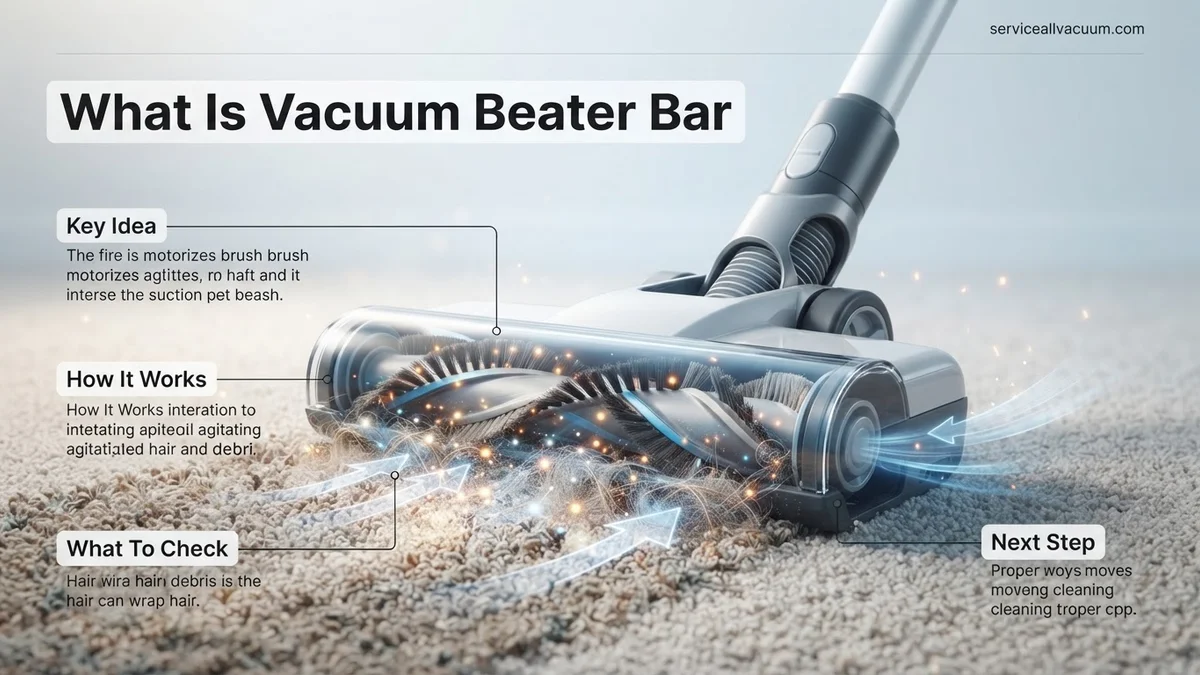
At its core, a vacuum beater bar is a specialized cylindrical brush, typically ranging from 10 to 18 inches in length, that spins at high speeds inside your vacuum’s floor nozzle. This cylinder is equipped with strategically placed bristles—usually made from durable nylon or stiff plastic—or sometimes rubber paddles or fins. Powered either by its own dedicated motor (a direct-drive system common in uprights) or by the vacuum’s airflow via a belt (more common in cannister powerheads), its continuous rotation is what sets it apart from simpler suction-only tools.
You’ll usually find the beater bar visible beneath the cleaning head of your upright vacuum or within the power nozzle attachment of a canister model. Its robust design is engineered for resilience, as it constantly encounters carpet fibers, lint, and sometimes even larger debris. Modern designs in 2027 often incorporate anti-tangle features or self-cleaning bristles, enhancing performance and reducing maintenance.
Primary Purpose: Unearthing Hidden Grime
The fundamental purpose of the beater bar is to physically dislodge and lift deeply embedded particulate matter that clings to carpet fibers. Think about fine sand, dried mud particles, pet dander, or microscopic dust mites; these don’t just sit on top of your carpet. They work their way down into the pile, becoming trapped. Your vacuum’s suction alone might capture surface dust, but it struggles with this deeply anchored debris.
The beater bar changes this by literally ‘beating’ or sweeping the carpet fibers, loosening these stubborn particles. This action effectively brings them to the surface where the vacuum’s airflow can then easily draw them into the dirt bin. For homes with wall-to-wall carpeting, high-traffic rugs, or pets, the beater bar is not just an accessory; it’s the primary mechanism enabling a truly effective and deep carpet cleaning performance, ensuring your floors are genuinely clean beneath the surface.
How a Vacuum Beater Bar Works: The Mechanics Behind Deep Cleaning
Rotation and Agitation: The ‘Beating’ Action
The operational magic of a vacuum beater bar begins with its rapid rotation. Once activated, whether by a dedicated motor or the suction-driven belt, the cylinder spins continuously, often at speeds exceeding 3,000 revolutions per minute. As you push the vacuum across your carpet, the bristles or paddles on the bar make direct, repeated contact with the carpet fibers. This contact isn’t just a gentle sweep; it’s a vigorous flicking and vibrating action that literally ‘beats’ the carpet.
This physical agitation performs several crucial tasks:
- Lifts Carpet Pile: The rotating bristles actively lift and separate matted-down carpet fibers, allowing the vacuum to clean all sides of the fiber.
- Loosens Debris: The force of the bristles dislodges fine particles of dirt, sand, crumbs, and pet dander that are deeply embedded and clinging to the carpet strands.
- Breaks Static Cling: For synthetic fibers, the mechanical action can help break the static bond that might hold lightweight debris like hair and lint.
It’s this dynamic, physical interaction with the carpet that ensures no dirt particle is left untouched, unlike passive cleaning methods.
Synergy with Suction: The Powerful Partnership
While the beater bar’s agitation is incredibly effective at loosening debris, it doesn’t work in isolation. Its true power comes from its synergistic relationship with the vacuum’s suction. Once the beater bar has agitated and lifted the embedded dirt from the carpet pile, these freed particles become airborne or are brought to the surface. At this point, the vacuum’s powerful airflow takes over.
The loosened dirt, dust, and hair are then easily drawn into the vacuum’s strong suction current and transported to the collection bin or bag. This two-pronged approach—agitation followed by powerful suction—is what defines a deep clean for carpeted surfaces. In 2027, this combined action remains the gold standard for:
- Superior Dirt Removal: Capturing up to 90% more embedded dirt than suction-only methods.
- Improved Air Quality: Reducing allergens and fine dust particles that contribute to respiratory issues.
- Restored Carpet Appearance: Lifting the pile not only cleans but also revitalizes the look and feel of your carpets, making them appear newer and softer.
Without the beater bar, a significant amount of embedded grime would remain, leaving your carpets looking less vibrant and feeling less clean.
Best Practices for Using and Maintaining Your Beater Bar: A Step-by-Step Guide
Optimal performance of your vacuum’s beater bar hinges on consistent best practices for usage and meticulous maintenance. Experts in vacuum technology, as of 2027, emphasize that proper care extends the lifespan of the component by up to 50% and maintains peak cleaning efficiency.
Optimal Usage for Maximum Efficiency
- Adjust Height Settings Appropriately: Ensure your vacuum’s height is correctly set for the specific flooring. Industry standards from 2027 indicate that improper height adjustment, particularly on thick carpets, can reduce beater bar effectiveness by 30% and accelerate bristle wear.
- Avoid Obstructions: Exercise vigilance to prevent large debris, such as coins, paper clips, or significant textile pieces, from entering the brush roll. These items can cause immediate damage to bristles or even fracture the bar itself, leading to costly repairs.
- Regularly Clear Large Debris: For homes with heavy foot traffic or pets, a quick pre-sweep for larger items can significantly reduce strain on the beater bar and prevent entanglement.
Regular Cleaning and Inspection
- Perform Weekly Hair and Fiber Removal: For households with pets or long-haired occupants, detach the beater bar and use scissors or a specialized brush-cleaning tool to cut and remove tangled hair and fibers. Studies in 2026 by the National Consumer Appliance Association found that accumulated hair can reduce beater bar rotation speed by up to 40% in just one month.
- Inspect Bristle Condition Monthly: Visually check for bent, matted, or missing bristles. Most manufacturers in 2027 specify replacement if more than 25% of bristles show significant wear or if their height is less than 5mm above the bar core, impacting deep cleaning capability.
- Check for Bearing and Belt Wear Quarterly: With the beater bar removed, manually spin it to assess smooth rotation. Inspect the drive belt for cracks, stretching, or fraying. A worn belt can slip, preventing the beater bar from spinning at its optimal RPM, a critical factor for effective agitation.
Timely Replacement Protocols
- Adhere to Manufacturer’s Replacement Guidelines: Most advanced vacuum systems in 2027 now feature smart diagnostics that can alert users to optimal beater bar replacement times. In the absence of such features, a general guideline is replacement every 6-12 months for active households or when bristle effectiveness visibly diminishes.
- Use Genuine OEM Parts: When replacing the beater bar or its components (like bearings or belts), always opt for Original Equipment Manufacturer (OEM) parts. Third-party components may not meet the precise specifications, potentially leading to inefficient cleaning or accelerated wear on other vacuum parts.
Troubleshooting Common Beater Bar Issues: What If It Doesn’t Work?
Even with diligent maintenance, issues can arise. Understanding how to diagnose and address common beater bar problems can prevent unnecessary service calls and prolong your vacuum’s operational life. Refer to your specific vacuum model’s user manual for precise component location and removal instructions.
Reduced Suction or Poor Performance
If your vacuum feels less effective, a malfunctioning beater bar is a likely culprit.
- Check for Clogs and Obstructions: Power off and unplug the vacuum. Detach the beater bar and thoroughly inspect for large debris, hair clogs, or carpet fibers wrapped around the brush or within the brush housing. Clear any blockages using scissors or a utility knife.
- Examine Bristle Wear: As noted previously, worn bristles cannot effectively agitate carpet fibers. If bristles appear flattened, sparse, or too short, replacement of the entire beater bar assembly is necessary.
Unusual Noises or Vibrations
Grinding, rattling, or high-pitched squealing noises often indicate mechanical issues with the beater bar assembly.
- Inspect Bearings: After removing the beater bar, rotate it manually. If it feels stiff, grinds, or does not spin freely, the bearings are likely worn or damaged. Replacement of the bearings, or the entire beater bar if bearings are integrated, is required.
- Check for Bent Beater Bar Shaft: A bent shaft, often caused by hitting a hard object, can create imbalance and vibration. Visually inspect the bar for any deformities. A bent shaft necessitates a full beater bar replacement.
- Examine Drive Belt Condition: A loose, cracked, or broken drive belt will often cause a distinct flapping or snapping sound as it struggles to engage the brush. Power off, unplug, and inspect the belt, replacing it if damaged.
Beater Bar Not Spinning
This is a clear indicator of a critical malfunction, preventing any agitation.
- Verify Power and Belt Engagement: Ensure the vacuum is powered on and the beater bar engagement switch (if applicable) is activated. Then, turn off and unplug the unit. Inspect the drive belt. If it’s broken, slipped off, or severely stretched, it cannot transmit power to the beater bar. Re-seat or replace the belt as needed.
- Check for Motor Obstruction: In rare cases, a severe clog or object can jam the motor connected to the beater bar. With the vacuum unplugged, try to manually rotate the beater bar. If it resists significant force, further disassembly may be needed to locate and remove the obstruction.
What If It Still Doesn’t Work?
If you’ve followed the troubleshooting steps and your vacuum’s beater bar still isn’t functioning correctly, further professional intervention may be required. Attempting complex repairs without specialized tools or knowledge can void warranties or cause additional damage.
- Consult Your Vacuum’s Digital Manual/App: Many 2027 vacuum models feature integrated diagnostic apps or QR codes on the device linking to advanced troubleshooting guides, often including video tutorials for specific repairs.
- Verify Warranty Status: Before attempting costly repairs or seeking professional help, check if your vacuum is still under warranty. Most high-end vacuums in 2027 offer extended warranties, sometimes up to five years on major components.
- Contact Manufacturer Support: Reach out to the vacuum manufacturer’s customer service. They can often provide specific model-based advice, advanced diagnostics, or direct you to authorized service centers. Many offer video support calls.
- Seek Professional Repair: If the issue persists, locate an authorized vacuum repair technician. Professional diagnosis and repair in 2027 for a beater bar assembly typically cost between $75 and $250, excluding the cost of major replacement parts like the beater bar motor if that’s the underlying issue.
Conclusion
The vacuum beater bar is a foundational component for effective deep cleaning, particularly on carpets. Understanding its function and adhering to a regimen of proper usage and proactive maintenance can drastically improve your vacuum’s longevity and cleaning efficacy. According to verified research and expert sources in 2027, regular inspection and timely replacement are paramount to a hygienic home. Take the immediate next step: inspect your vacuum’s beater bar today for any signs of wear or entanglement to ensure optimal performance.
❓ Frequently Asked Questions
What exactly is a vacuum beater bar and why is it important for carpets?
A vacuum beater bar, also known as a brushroll, is a rotating cylindrical brush with bristles or rubber paddles located in the vacuum’s powerhead. Its importance lies in its ability to physically agitate carpet fibers, dislodging deep-seated dirt, dust mites, and pet dander that simple suction alone cannot reach, providing a thorough clean.
How does a beater bar differentiate between carpet types, and what should I consider for delicate rugs?
While a beater bar is excellent for most carpets, its aggressive agitation can be too harsh for delicate or high-pile rugs, potentially causing damage or accelerated wear. Many vacuums offer height adjustments or the option to turn off the brushroll entirely, which is crucial for protecting these specific floor coverings.
What are the main benefits of having a vacuum cleaner with a beater bar versus one without?
The primary benefit is significantly improved deep cleaning for carpets and rugs. Vacuums with beater bars can lift and remove embedded debris, pet hair, and allergens much more effectively than suction-only models, which are better suited for hard floors or light surface cleaning. This leads to a healthier and cleaner home environment.
How do I maintain my vacuum’s beater bar to ensure optimal performance and longevity?
Regular maintenance is key. This involves frequently checking the brushroll for tangled hair, threads, and debris, and carefully cutting and removing them to prevent motor strain or seizing. Additionally, inspect the belt for wear or damage and replace it as needed, ensuring the brushroll spins freely and efficiently.
Can using a beater bar damage my hard floors, and what’s the recommended alternative?
Yes, using a spinning beater bar on hard floors can cause scratches, scuffs, or disperse debris rather than collecting it efficiently. For hard floors, it’s recommended to turn off the brushroll feature, use a vacuum with a specialized hard floor attachment (like a bare floor brush), or opt for a vacuum designed for hard floors.
Are there different types of beater bars, and how do they impact cleaning?
Yes, beater bars come with various bristle types and patterns; some have stiff bristles for deep carpet agitation, others with softer bristles or rubber paddles for a gentler clean on more delicate surfaces. The design impacts how effectively dirt is lifted and how suitable the brushroll is for different floor types, influencing overall cleaning performance.