How Long to Vacuum AC System 2026 Expert Step-by-Step Guide
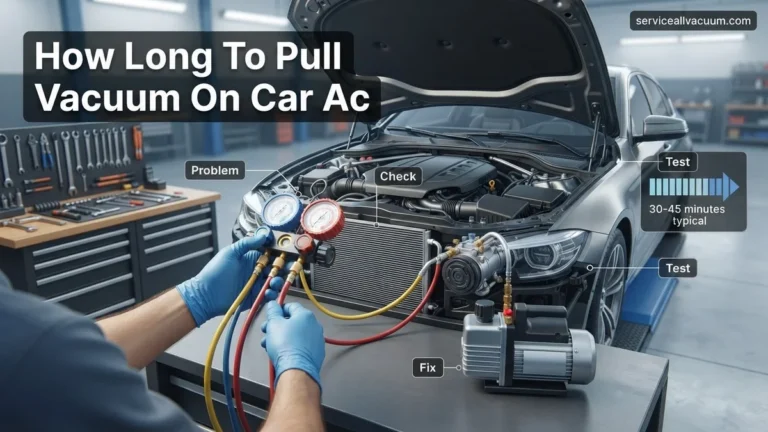
Most automotive and residential AC systems require running a vacuum pump for 30 to 45 minutes to properly remove air and moisture. However, relying solely on the clock is a mistake; the process is only complete when the system pulls down to 500 microns and holds that pressure.
You need to run a vacuum pump on an automotive or residential AC system for a standard duration of 30 to 45 minutes before recharging it with refrigerant. However, relying on a clock alone is a fast track to a failed compressor. In 2026, modern HVAC and automotive service standards dictate that your primary goal is reaching and holding a deep vacuum of 500 microns rather than simply waiting out a timer.
Pulling a proper vacuum does more than just remove air; it boils off and evacuates every trace of moisture hiding inside the aluminum lines and evaporator core. If you skip this step or rush the process, residual moisture mixes with your refrigerant to create corrosive acids. This guarantees component failure, poor cooling performance, and costly repairs down the road.
Key Takeaways
- Run the vacuum pump for 30 to 45 minutes as a general baseline for standard systems.
- A micron gauge is essential to confirm you have reached the critical 500-micron threshold.
- High humidity and recent component replacements significantly extend the required evacuation time.
- Perform a decay test by isolating the pump to ensure the system holds its vacuum.
- Moisture inside the system will boil at low pressures, requiring extended pump runtime.
Why Vacuuming an AC System Is Necessary for Proper Operation
Removing Non-Condensable Gases and Air
Air trapped inside a sealed air conditioning loop consists mostly of nitrogen and oxygen. These are classified as non-condensable gases because they refuse to liquefy under normal condenser pressures. When air takes up valuable space in your coils, it causes head pressure to skyrocket. This forces your compressor to work harder, driving up your electrical bills or burning out your car’s clutch.
Boiling Off and Extracting Moisture
Water is the ultimate enemy of any closed-loop refrigerant circuit. At standard atmospheric pressure, water boils at 212 degrees Fahrenheit (100 degrees Celsius). When you hook up a quality two-stage vacuum pump and pull the system down below 29.9 inches of mercury (Hg), you dramatically lower the ambient boiling point of water. At 500 microns:
- Water flashes instantly into vapor, even at freezing ambient temperatures.
- The vacuum pump sweeps the resulting water vapor out through its exhaust port.
- PAG and POE oils stay safe while internal humidity drops to near zero.
How Long to Vacuum an AC System Based on Size and Conditions
Standard Time Estimates by Application
While the 30-to-45-minute rule applies to most standard setups, the physical size of the system dictates how long your pump must run. A compact passenger car evaporator and condenser loop might reach target levels in just 20 to 25 minutes. Conversely, a residential split system or a large commercial vehicle requires a larger displacement pump and extended runtime to clear all the lines.
- Automotive Systems: 30 to 45 minutes of active pumping time.
- Residential Split Systems (2 to 5 Tons): 45 to 60 minutes minimum.
- Commercial or Multi-Zone Units: 60 to 90 minutes or longer depending on line set length.
Variables That Extend Your Evacuation Time
You cannot always rely on a fixed timeframe because environmental and mechanical factors heavily influence evacuation speed. If you recently opened the system during a humid afternoon in 2026, ambient moisture clings stubbornly to the interior walls of your copper or aluminum tubing. System capacity, hose diameter, and oil contamination also play massive roles in how fast you pull a proper vacuum.
- High Humidity: Moisture absorption increases, requiring longer purge times.
- Recent Component Replacements: Brand-new, open-air evaporators trap more ambient humidity.
- Restricted Access Hoses: Thin manifold gauge hoses choke airflow and dramatically slow down evacuation rates. Always use dedicated, large-diameter vacuum hoses and remove valve cores for best results.
Step-by-Step Guide to Evacuating and Testing Your AC System
Proper evacuation requires precision and adherence to strict automotive or HVAC standards. According to EPA guidelines, venting refrigerants into the atmosphere is illegal, so your system must be completely recovered before pulling a vacuum. Follow this step-by-step procedure to ensure a moisture-free and leak-tight system in 2026.
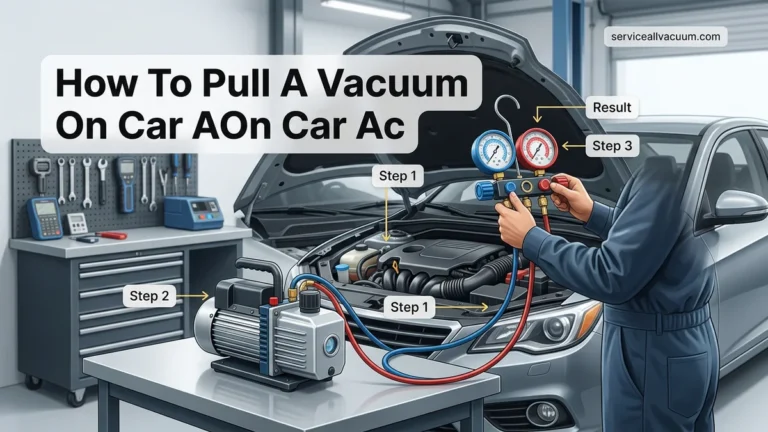
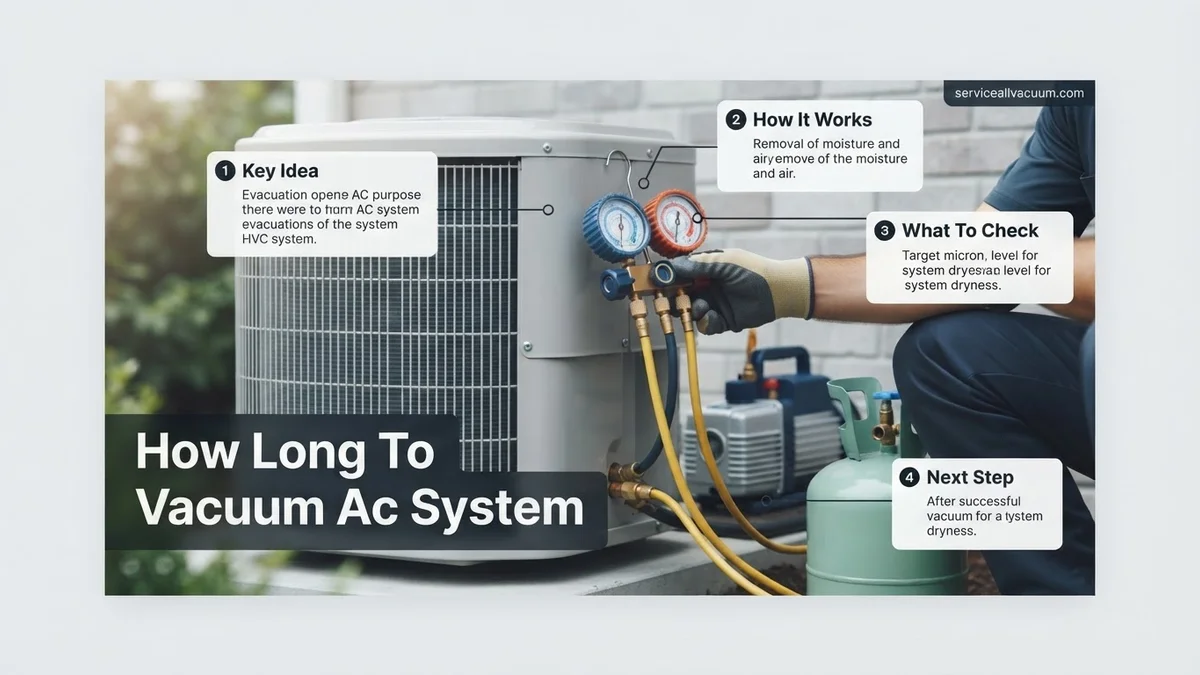
1. Connect the Manifold Gauge Set
Attach the low-pressure (blue) hose to the AC system’s low-side service port and the high-pressure (red) hose to the high-side port. Ensure both manual valves on the manifold gauge set are closed tightly before proceeding.
2. Connect and Run the Vacuum Pump
Attach the center yellow hose from your manifold gauge to the inlet of a high-efficiency CFM vacuum pump. Open both the high and low manifold valves, then turn on the pump. You will hear the pitch of the pump change as it draws air and moisture out of the system.
3. Monitor the Microns
Allow the pump to run until your digital micron gauge reads below 500 microns. For standard residential or automotive setups, this typically takes between 30 to 45 minutes. Never rely solely on a standard compound pressure gauge, as it cannot detect microscopic levels of residual moisture.
4. Perform the Isolation and Decay Test
Once you reach the target vacuum, close both manifold valves to isolate the pump, then turn the pump off. Watch the micron gauge for 15 minutes. If the reading holds steady below 500 microns, your system is dry and leak-free. If the pressure rises rapidly, you have a leak or residual moisture.
What If Your AC System Won’t Hold a Vacuum During the Test?
If your system fails the micron decay test and the pressure creeps upward, do not charge the system with refrigerant. This compromises cooling efficiency and wastes expensive materials. Try these verified troubleshooting steps to identify and resolve the issue:
- Check Valve and Hose Connections: A failing vacuum often stems from loose manifold connections, worn rubber O-rings on the service ports, or a faulty Schrader valve core. Tighten all fittings and re-evacuate.
- Isolate Components: If fittings are secure, the system has an active atmospheric leak. Use an electronic leak detector or pressurized nitrogen gas (charged to 150 PSI) to pinpoint micro-cracks in evaporator coils, condenser fins, or line set brazes.
- Evacuate Longer for Moisture: If the vacuum stalls around 1,000 to 2,000 microns and stays flat, trapped moisture is boiling off rather than an actual leak. Change your vacuum pump oil, which absorbs humidity rapidly, and extend the evacuation time by an additional 30 minutes.
- Call a Licensed HVAC or Automotive Technician: If standard diagnostics fail to find the leak, certified professionals utilize specialized UV dye kits or ultrasonic detectors. Professional repair and recharge services generally range from $250 to $800 depending on the complexity and refrigerant type.
Conclusion
Knowing how long to vacuum an AC system—typically 30 to 45 minutes until reaching a threshold below 500 microns—ensures your cooling unit operates at peak efficiency and longevity. Skipping this crucial dehydration step leads to acid formation and premature compressor failure. According to verified research and HVAC industry standards, investing time in a proper evacuation prevents costly future breakdowns. Take the next step today by inspecting your manifold gauges and vacuum pump equipment before beginning your maintenance routine.
❓ Frequently Asked Questions
Why does ambient temperature affect how long it takes to vacuum an AC system?
Lower ambient temperatures slow down the evaporation of moisture trapped inside the lines. When it is cold outside, water takes much longer to turn into vapor and be pulled out by the pump.
What happens if I do not vacuum my AC system long enough?
Incomplete evacuation leaves moisture and air inside the system. Moisture reacts with refrigerant to form corrosive acids, while air causes high head pressures and reduces cooling efficiency.
How do I perform a vacuum decay test after pumping down the system?
Close the manifold valves, turn off the vacuum pump, and watch the micron gauge. If the pressure rises above 1,000 microns within 10 to 15 minutes, you have a leak or residual moisture.
Does a larger residential AC system take longer to vacuum than a car AC?
Yes, larger split-system air conditioners have significantly more internal volume and longer line sets, often requiring 45 to 60 minutes or more to fully evacuate.
Can a vacuum pump remove liquid water from a flooded AC system?
While a vacuum pump lowers the boiling point of water so it evaporates, pulling liquid water directly through the pump ruins the pump oil. Major water contamination requires flushing and using dry nitrogen first.
Why does my vacuum reading stall out at 1,500 microns?
A stall usually indicates either a refrigerant leak letting ambient air back in, oil contamination in the pump, or liquid moisture still boiling off inside the system components.