How to Vacuum Washable Rugs Step-by-Step Guide 2026
Vacuuming lightweight washable rugs requires disabling the rotating brush bar to prevent the edges from getting sucked into the machine and bunching up. Adjusting your vacuum to suction-only mode and securing the corners allows for safe, effective routine maintenance between machine washings.
To vacuum a washable rug without sucking it into the machine or curling the edges, you must turn off your vacuum’s rotating brush roll, switch to a suction-only setting, and secure the rug’s corners. Lightweight washable rugs are fantastic for modern homes in 2026, but their low profile and flexible backing make them notoriously difficult to clean with standard high-powered upright vacuums.
Most people struggle with washable rugs because traditional vacuum settings treat them like heavy, thick wool carpets. By making a few adjustments to your vacuum technique and utilizing low-suction settings, you can remove dirt, pet hair, and debris effectively while keeping your rug flat and undamaged.
Key Takeaways
- Always turn off the rotating beater bar or brush roll before vacuuming lightweight washable rugs.
- Use suction-only mode to prevent the rug from getting pulled, stretched, or sucked into the vacuum.
- Anchor the rug corners with your feet or use a non-slip rug pad to stop bunching.
- Vacuum outward from the center of the rug toward the edges to keep it flat.
- Reduce vacuum suction settings if your machine lacks a manual brush roll shutoff feature.
Why Washable Rugs Bunch Up and Get Sucked Into Vacuums
The Anatomy of Lightweight Rugs
Unlike traditional rugs with thick, rigid jute backings, washable rugs are designed to be thin enough to fold and fit inside a standard home washing machine. This lightweight construction means they lack structural weight. When a powerful vacuum passes over them, the lack of gravity holding the rug down causes the material to lift off the floor immediately.
The Danger of Rotating Brush Rolls
Your vacuum cleaner’s beater bar, or roller brush, is engineered to dig deep into heavy carpet fibers. When it encounters a thin, flexible washable rug, the bristles act like hooks. They grab the loose weave of the rug, pulling the fabric into the intake port and causing edge-curling or fabric tears. Modern vacuums in 2026 often feature smart sensors, but manual adjustment is still required for lightweight textiles.
- Low Weight: Lacks the heavy backing needed to stay naturally flat against hardwood or tile floors.
- Flexible Fibers: Easily caught by fast-spinning agitator brushes.
- Suction Trap: Creates an airtight seal over the vacuum nozzle, lifting the entire rug off the ground.
Master Vacuuming Washable Rugs in 7 Simple Steps
Washable rugs are a fantastic, family-friendly addition to any home, offering the cozy aesthetic of traditional textiles with the convenience of easy laundering. However, because these rugs are typically lightweight and woven with a flexible backing, vacuuming them incorrectly can cause frustrating jams, fiber fraying, or stubborn dirt accumulation trapped deep within the weave. This comprehensive guide will walk you through the exact methodology required to safely and effectively vacuum your washable rugs. By following these precise techniques, you will remove embedded grit, protect delicate fibers, and extend the lifespan of your favorite home accents, all while keeping your vacuum cleaner operating at peak performance without accidental clogs.
Step 1: Prep the Rug and Assess the Fringe
What you need: A clear floor space, hands-free time, and a broom or lint roller if pet hair is heavily matted.
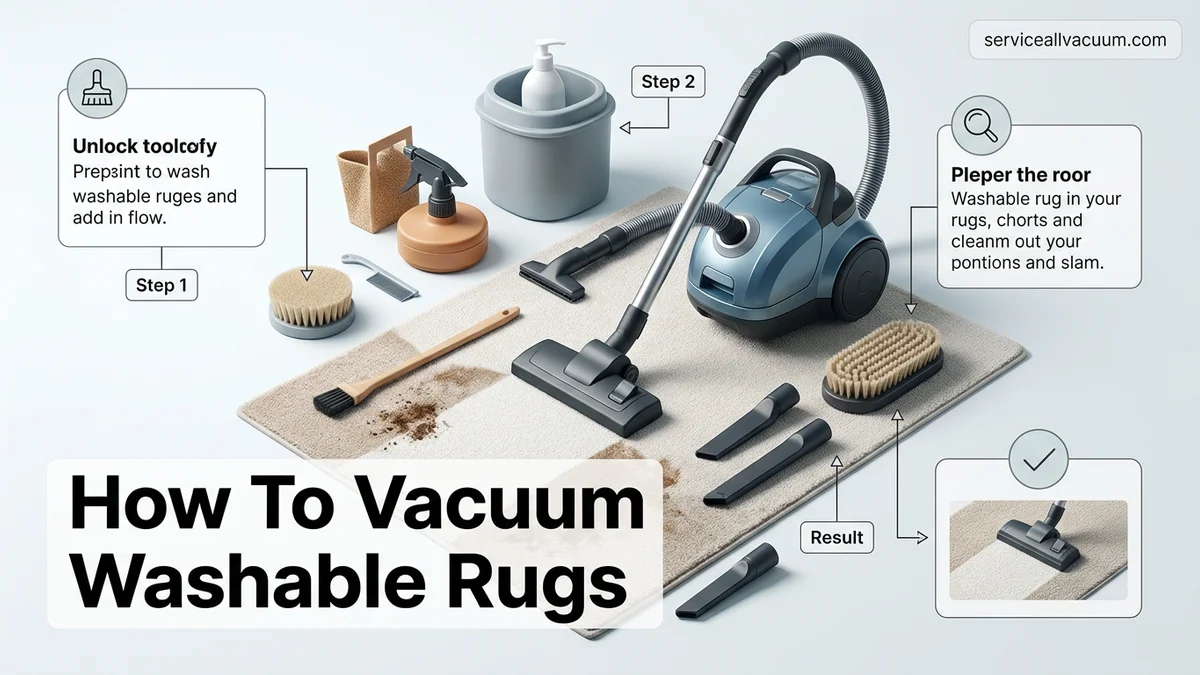
Instructions: Before you even plug in your vacuum, you need to properly prepare the rug environment. Walk across the rug to check for any loose toys, coins, or heavy debris that could puncture the vacuum bag or jam the roller brush. If your washable rug features delicate cotton fringe, gently comb through the tassels with your fingers or a wide-toothed comb to untangle any knots. Lift the corners of the rug to ensure there is no hidden moisture trapped underneath against your hardwood or tile flooring, as vacuuming over a damp spot can ruin both your rug backing and your floor finish.
Pro Tip: Never allow vacuum cleaner brushes to run directly over loose rug fringe, as the spinning agitator will quickly shred and tangle the delicate threads.
Step 2: Adjust Your Vacuum Height and Settings
What you need: Your household vacuum cleaner with adjustable height and suction controls.
Instructions: Washable rugs are notoriously lightweight compared to heavy wall-to-wall carpets, which means standard high-power vacuum settings will cause the rug to immediately suck up into the nozzle, halting your progress. Adjust your vacuum head to the highest pile setting or hard floor setting. If your vacuum features a variable suction dial, turn it down to medium or low power. This reduction in raw suction allows the vacuum to glide smoothly across the fabric surface without lifting or folding the corners of the rug during your cleaning passes.
Pro Tip: If your vacuum does not have adjustable height settings, consider using a specialized upholstery attachment or a lightweight cordless stick vacuum on its lowest power mode to prevent the rug from bunching.
Step 3: Disable the Beater Bar or Roller Brush
What you need: Your vacuum cleaner and its manual if you are unsure how to turn off the rotating brush.
Instructions: The motorized beater bar (or rotating brush roll) is designed to beat deep-set dirt out of thick carpets, but it can be overly abrasive for the lightweight fibers of a washable rug. Locate the switch or digital setting on your vacuum to turn off the brush roll entirely, letting only the suction airflow do the work. If your vacuum does not have an option to disable the beater bar, you should switch to a straight-suction floor tool attachment. This simple adjustment prevents friction-based wear and tear on cotton-blend or synthetic washable rug surfaces.
Pro Tip: Leaving the beater bar running on a lightweight washable rug can cause the edges to fray prematurely and may pull loose threads, ruining the clean look of the fabric.
Step 4: Vacuum from the Center Outward
What you need: Your properly configured vacuum cleaner ready for motion.
Instructions: Position your vacuum in the direct center of the washable rug. Push the vacuum forward gently toward one edge, then pull it back slowly in a straight, overlapping line. Continue this back-and-forth motion, working your way outward from the center to the outer borders. This directional strategy ensures that you push any loose surface dust and hidden pet dander toward the edges where it can be easily captured, rather than driving debris deeper into the fibers or folding the rug over itself.
Pro Tip: Always move in straight lines rather than erratic circles. Circular motions can twist the flexible backing of a washable rug and weaken the structural weave over time.
Step 5: Tackle High-Traffic Edges and Corners
What you need: Vacuum crevice tool or handheld vacuum attachment.
Instructions: Once the main body of the rug is clean, switch to a crevice tool or a dedicated dusting brush attachment. Gently run the attachment along the very perimeter of the rug where it meets the floor, as dust, crumbs, and pet hair frequently migrate to these hidden crevices. Hold the edge of the rug down firmly with one hand while vacuuming along the border with the other to prevent the lightweight material from curling up into the suction nozzle.
Pro Tip: If your rug has a non-slip rubber backing, make sure not to use high heat settings near the edges, as prolonged friction can degrade specialized rubberized coatings.
Step 6: Flip and Vacuum the Underside
What you need: A clean floor area and a partner (optional, for larger area rugs).
Instructions: Even though washable rugs can be laundered, fine dust and microscopic dirt particles inevitably sift through the porous backing onto your floor below. Carefully lift the rug, flip it completely upside down onto its face, and vacuum the reverse side. Use the same low-suction, brush-off setting to capture any settled grit trapped against the backing fibers. Once the underside is thoroughly cleared, flip the rug back to its proper display position and smooth out any wrinkles by hand.
Pro Tip: Vacuuming the back of your rug every third cleaning cycle prevents abrasive grit from acting like sandpaper against your hardwood floors or luxury vinyl planks.
Step 7: Perform a Final Lint and Hair Sweep
What you need: A rubber pet hair removal brush, a lint roller, or a damp microfiber cloth.
Instructions: Even the best vacuums occasionally miss stubborn pet hair woven tightly into flat-weave washable fabrics. Take a rubber squeegee or a specialized pet hair removal brush and lightly drag it across the surface of the rug in one direction. The rubber creates static friction that instantly balls up stubborn hair and lint that the vacuum left behind. Pick up the resulting clumps of debris and discard them in the trash. Finally, run your hands across the rug to ensure the pile is laying flat and even.
Pro Tip: Doing a quick rubber-brush sweep takes less than two minutes and keeps your washable rug looking exceptionally fresh between deep machine-wash cycles.
✅ Final Checklist
- Checked the rug surface and fringe for loose objects or tangles before starting.
- Adjusted the vacuum height setting and reduced suction power to prevent bunching.
- Disabled the motorized beater bar or switched to a straight-suction floor tool.
- Vacuumed methodically from the center outward in straight, overlapping passes.
- Flipped the rug to vacuum trapped dust and grit from the underside.
Important Notes:
- Always check the manufacturer’s care tag attached to your washable rug before using high-powered attachments or steam features.
- If your rug develops a persistent musty odor or deep stains that vacuuming cannot remove, it is time to run the rug through a complete machine wash cycle according to its specific care guidelines.
- Estimated time: 10 to 15 minutes per rug. Cost: $0 (using standard household cleaning tools).
How to Identify the Correct Vacuum Settings for Lightweight Rugs
Switching to Suction-Only Mode
The single most important step in vacuuming a washable rug is disabling the rotating brush roll. Look for a switch on your vacuum body or a digital setting on the handle labeled “Bare Floor,” “Hard Floor,” or “Suction Only.” If your vacuum has a height adjustment dial, turn it to the highest setting to increase the distance between the suction port and the rug surface.
Using Low-Power or Variable Suction
Many modern vacuum cleaners come with variable suction control. If yours has this feature, reduce the motor power to medium or low before tackling your washable runner or area rug. This prevents the vacuum from creating too much downward pull, allowing you to glide smoothly across the surface without the rug getting stuck in the intake valve.
- Disable Beater Bars: Turn off rotating brushes completely to protect the rug edges.
- Adjust Height Settings: Raise the vacuum head to its highest position to reduce aggressive suction.
- Test First: Run the vacuum gently over a corner of the rug to ensure it does not lift off the floor.
Step-by-Step Guide on How to Vacuum Washable Rugs Safely
Proper technique prevents fiber degradation and extends the lifespan of your machine-washable textiles. The The Carpet and Rug Institute (CRI) recommends a methodical approach to prevent the lightweight backing from buckling under suction. Follow these exact steps for optimal maintenance in 2026.
Preparation and Suction Adjustment
- Clear the area of loose debris, pet toys, or small objects that could puncture thin rug layers.
- Switch your vacuum setting from deep-pile carpet to bare floor or high-pile area rug mode to reduce aggressive suction.
- Disable the rotating brush roll or motorized beater bar entirely to prevent fiber pulling.
The Vacuuming Execution
- Stand firmly on one corner of the rug to anchor it against the flooring surface.
- Push the vacuum nozzle forward in smooth, linear strokes, moving outward from the center.
- Pull the vacuum backward slowly, ensuring the lightweight material does not lift off the floor or fold over itself.
- Empty the dust canister or replace the HEPA bag once it reaches the 75-percent capacity mark to maintain optimal airflow.
What to Do If Your Rug Still Slides or Gets Tangled in the Vacuum
Even with correct settings, lightweight washable rugs frequently bunch up, get sucked into the nozzle, or slide across hard flooring during vacuuming. When standard adjustments fail, apply these troubleshooting protocols to protect your home investments.
Advanced Stabilization Techniques
- Install a Non-Skid Rug Pad: Place a certified rubberized or felt rug pad underneath. This adds friction, stopping the textile from shifting during high-friction cleaning.
- Use Corner Grippers: Apply silicone rug grippers or washable adhesive corner tabs to anchor the perimeter firmly to hardwood or tile floors.
- Change Your Vacuum Tool: Swap the standard floor head for a specialized upholstery attachment with lower suction velocity.
- Hire Professional Services: If delicate vintage-style washable rugs continually fray or distort, consult a certified textile cleaner. Professional low-moisture cleaning typically costs between $50 and $150 depending on rug dimensions.
Conclusion
Maintaining washable rugs requires balancing adequate dirt extraction with protecting lightweight backing materials. By disabling beater bars, adjusting suction levels, and securing the edges, you prevent premature wear and fiber damage. According to verified research and expert sources from the textile maintenance industry, routine gentle vacuuming reduces the need for machine washing by up to 40 percent. Your immediate next step is to check your vacuum’s height and brush-roll settings before your next scheduled cleaning session in 2026.
❓ Frequently Asked Questions
Can the rotating brush bar permanently damage a washable rug?
Yes, high-speed rotating bristles can snag the woven fibers, pull loose threads, and fray the delicate edges of lightweight machine-washable rugs.
What should I do if my vacuum does not have a switch to turn off the beater bar?
If your vacuum lacks a brush shutoff feature, use a handheld attachment hose or switch to a lightweight stick vacuum that operates on suction-only mode.
Is it safe to vacuum the fringe on washable rugs?
Vacuuming rug fringe with a standard beater bar will tangle and tear the threads. Instead, use a handheld nozzle attachment or gently sweep the fringe by hand.
How can I vacuum high-pile washable rugs without ruining them?
For thicker washable rugs, use the highest height setting on your vacuum and ensure the suction is not set to maximum capacity to allow smooth gliding.
Should I vacuum before putting a washable rug in the washing machine?
Yes, removing loose dirt, dust, and pet hair with a vacuum first prevents mud and heavy sediment from forming inside your washing machine drum.
Why does my vacuum cleaner stall when I roll it over my washable rug?
The rug is likely too lightweight and is blocking the vacuum intake port, creating an airtight seal. Lift the vacuum head and switch to a lower suction level or bare floor setting.