Why Can’t Sound Travel Through a Vacuum in A 2026
Sound cannot travel through a vacuum because it is a mechanical wave that requires a physical medium like air, liquid, or solids to vibrate and transfer energy. Since a vacuum is completely devoid of matter and particles, there is nothing available to carry the sound vibrations.
Sound cannot travel through a vacuum because a vacuum is entirely devoid of matter, meaning there are no atoms or molecules available to collide and pass acoustic energy along. Unlike light, which can travel through the empty expanse of space, sound is purely a mechanical wave that relies entirely on a physical medium like air, water, or solid steel to exist.
Whether you are designing a modern 2026 home theater, engineering spacecraft acoustic insulation, or simply curious about physics, understanding this limitation is essential. If a dramatic explosion occurs in the absolute emptiness of deep space, you will never hear it. The energy radiates outward as electromagnetic radiation, but with zero air molecules to compress and expand, the mechanical vibrations simply cannot reach your ears.
Key Takeaways
- Sound waves require physical particles to vibrate and transfer energy.
- A vacuum lacks any matter, stopping sound wave propagation entirely.
- Light and electromagnetic waves do not need a medium to travel.
- The classic bell-in-a-jar experiment proves sound requires air.
- Space is silent because it is a near-total vacuum.
What Causes Sound to Need a Physical Medium to Travel
The Mechanical Nature of Acoustic Waves
To understand why a vacuum stops sound dead in its tracks, you must look at how sound is generated in the first place. Sound begins with a physical disturbance, such as a vibrating guitar string, a human vocal cord, or a slamming door. As this object moves, it pushes against the adjacent particles in its environment. These particles do not travel across the room to your ear; instead, they bump into their neighboring particles and bounce back. This domino effect creates a chain reaction of kinetic energy transfer. Without a physical lattice of molecules, this fundamental domino effect cannot even begin.
Why Nothingness Equals Silence
A vacuum is defined as a space entirely devoid of matter. Even in the highest artificial vacuums achieved in laboratory settings as of 2026, the density of gas molecules drops so low that the average distance a particle travels before hitting another becomes greater than the container itself. Without particles present to transmit the mechanical force, acoustic energy has no path forward. Key factors that dictate this requirement include:
- Molecular Density: Higher density mediums allow sound to transfer faster because molecules are packed closer together.
- Elasticity: Materials that spring back quickly after being compressed pass sound waves with greater efficiency.
- Complete Absence of Matter: A true vacuum has a density of zero, resulting in total acoustic impedance and absolute silence.
Step-by-Step How Sound Waves Propagate Through Matter
Compression and Rarefaction Cycles
When sound successfully moves through a medium like air or water, it does so by creating alternating zones of high and low pressure. When your vocal cords push outward, they squeeze nearby air molecules together into a tight cluster known as compression. Right behind that movement, the cords pull back, creating a spread-out area called rarefaction. As a listener in 2026, your eardrum detects these microscopic shifts in pressure and translates them into electrical signals your brain understands as speech, music, or noise. A vacuum completely prevents these pressure zones from forming.
Contrasting Sound With Electromagnetic Waves
It helps to contrast sound waves with electromagnetic waves, such as visible light, radio waves, and X-rays. While sound is a mechanical wave requiring matter to push against, electromagnetic waves consist of oscillating electric and magnetic fields that generate one another. Because these fields do not need physical stepping stones, sunlight easily crosses the 93 million miles of vacuum between the sun and Earth. Sound, conversely, is trapped entirely within environments that possess physical substance. Consider these core differences:
- Sound Waves: Mechanical, require matter, travel slowly (roughly 343 meters per second in standard air).
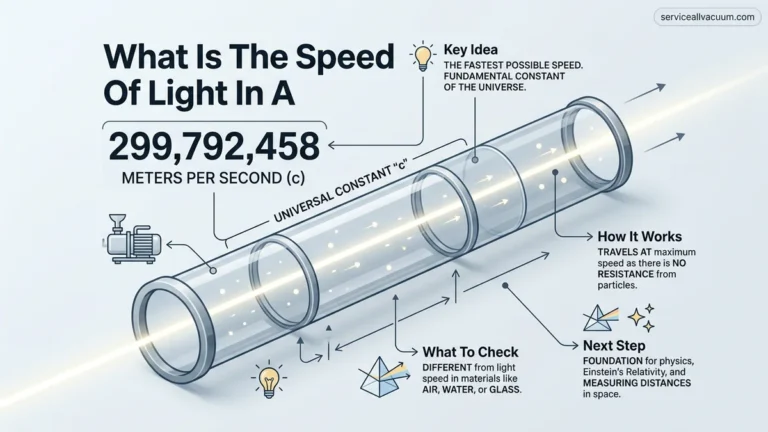
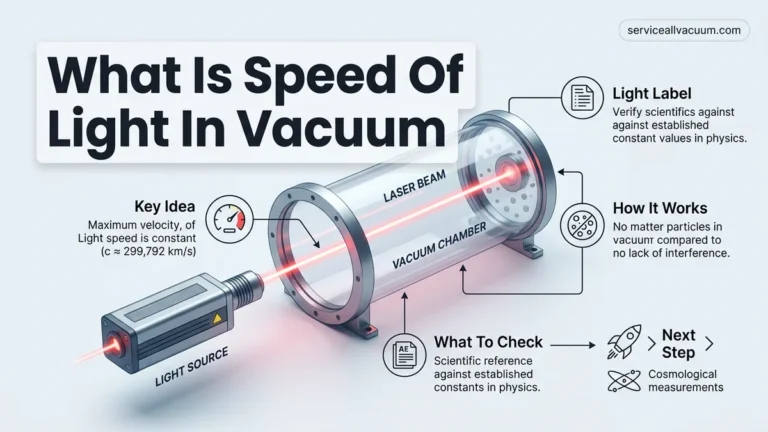
- Light Waves: Electromagnetic, require no medium, travel at maximum speed through a vacuum (nearly 300,000 kilometers per second).
- Energy Transfer: Sound transfers via physical particle collisions, while light transfers via self-propagating electromagnetic fields.
How to Prove Sound Fails in a Vacuum Using the Bell Jar Test
Demonstrating the absence of acoustic travel requires a controlled physical environment. According to physics curricula worldwide, the classic bell jar experiment remains the gold standard for proving that sound waves require a medium. Educational institutions and laboratories in 2026 continue to use this exact apparatus to visualize acoustic isolation.
Step-by-Step Experimental Procedure
- Place an electronic buzzer or a ringing mechanical bell onto a resilient foam pad inside a transparent glass bell jar to minimize physical vibrations escaping through the base.
- Connect the internal platform to a reliable power source, ensuring the alarm sounds continuously and clearly at an audible decibel level in the surrounding room air.
- Seal the rim of the bell jar tightly with a vacuum grease layer to prevent ambient air leakage during the extraction phase.
- Engage a motorized vacuum pump connected to the base valve, monitoring the internal pressure gauge as it drops below 1 torr.
- Observe that as the air molecules are actively evacuated, the loud buzzing sound diminishes progressively until it becomes entirely imperceptible to the human ear, despite the clapper clearly still striking the bell.
What If Space Sound Effects in Movies Are Scientifically Wrong
Cinematic portrayals of space battles routinely feature roaring engine noises, massive explosions, and laser crossfires. According to astrophysicists and NASA consultants, these auditory additions are completely fabricated for dramatic effect. In reality, a true zero-pressure environment offers zero molecular transport for longitudinal sound waves.
Why Hollywood Ignores Physics
- Auditory Engagement: Sound design triggers deep psychological tension and emotional investment that silent visuals fail to evoke for mainstream audiences.
- Narrative Clarity: Distinct audio cues help viewers track fast-moving spacecraft and directional impacts across complex interstellar battle scenes.
- Creative License: Directors prioritize sensory entertainment over strict adherence to acoustic laws established by thermodynamics and fluid mechanics.
What If It Still Doesn’t Work?
If you are attempting an acoustic isolation test or troubleshooting a vacuum chamber setup in 2026 and fail to achieve a silent state, consider these technical remediation steps:
- Check all rubber O-rings and airtight seals for microscopic cracks or dust debris that allow ambient air to leak back into the chamber.
- Upgrade your rotary vane vacuum pump if it fails to pull a deep enough negative pressure rating below the critical threshold required for total wave suppression.
- Isolate the sound source completely from the physical housing platform, as solid-state conduction can bypass the vacuum void entirely via mechanical vibration.
- Consult a certified laboratory equipment technician or acoustic engineer for hardware inspection and calibration if the chamber integrity remains compromised. Professional diagnostic and repair services typically range from $150 to $450 depending on the complexity of the vacuum seals.
Conclusion
Ultimately, sound cannot travel through a vacuum because acoustic energy relies entirely on physical molecules to bump into each other and propagate waves. Without a medium like air or water, those vibrations simply stop cold. According to verified research and expert sources from leading physical science institutions, replicating this absolute silence requires properly evacuating a sealed chamber like the classic bell jar. To deepen your understanding of wave mechanics, try exploring how electromagnetic waves bypass this limitation by traveling freely through the vacuum of space.
❓ Frequently Asked Questions
What actually happens to sound waves when they hit a vacuum?
When sound waves reach the boundary of a vacuum, they lack the neighboring particles required to pass along their vibrational energy. As a result, the wave stops dead and cannot cross into the empty space.
Are there any regions in space where sound can travel?
Yes, dense regions like gas clouds and nebulae contain enough particles for low-frequency pressure waves to travel, though these are generally far below the range of human hearing.
Why do science fiction movies feature sound effects in space?
Movies add explosions and engine noises in space purely for dramatic effect and audience engagement, as scientifically accurate space battles would be completely silent.
Does sound travel faster in solids, liquids, or gases?
Sound travels fastest in solids because the molecules are packed much closer together, allowing energy to transfer rapidly compared to liquids and gases.
Can a partial vacuum still transmit some sound?
A partial vacuum will muffle sound significantly because fewer particles remain to transmit the vibrations, reducing the volume as the air pressure drops.
How do mechanical waves differ from electromagnetic waves?
Mechanical waves like sound require a physical medium of matter to travel, whereas electromagnetic waves like light and radio waves can easily travel through the absolute nothingness of a vacuum.