Do Vacuum Travel Bags Work? A Real 2026 Guide
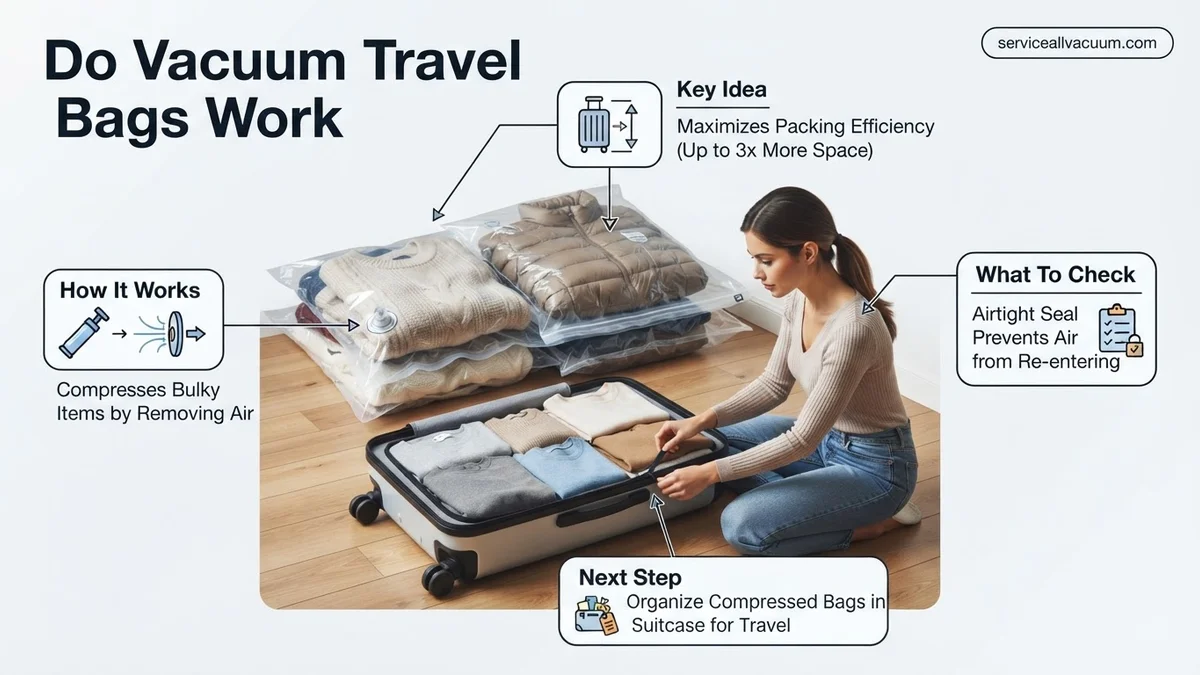
Yes, vacuum travel bags do work to significantly compress clothing volume, but they come with trade-offs like added weight and heavy wrinkling. Understanding how to use roll-up versus pump-operated bags ensures you maximize luggage space without running into airline restrictions.
Do vacuum travel bags actually work? The short answer is yes, they compress bulky clothing by up to 50% or more, but their long-term effectiveness depends entirely on the closure mechanism and whether you choose roll-up or valve-based styles. If you are tired of paying airline baggage fees or struggling to zip an overstuffed suitcase in 2026, these specialized organizers offer a genuine physical solution to space constraints.
Unlike bulky home-storage versions meant for winter duvets, travel compression bags are designed for frequent packing and mobility. Whether you use a manual hand pump, a compact USB travel vacuum, or just your own body weight to roll out the air, these bags dramatically alter how much you can fit into a carry-on.
Key Takeaways
- Vacuum travel bags reduce clothing volume by up to 50% for efficient packing.
- Roll-up manual bags require no pump, while valve bags need a hand pump or travel vacuum.
- Compressed clothes do not eliminate total bag weight, risking airline overweight fees.
- Natural fabrics like cotton and linen will wrinkle severely inside compression bags.
- Seal integrity can fail mid-trip, causing bags to slowly re-inflate in transit.
What Causes Vacuum Travel Bags to Fail and Leak
The biggest frustration travelers face is opening their suitcase halfway through a 2026 trip to find that a vacuum bag has slowly re-inflated like a balloon. Understanding the mechanical failure points helps you avoid buying a leaky product that wastes your time and luggage space.
Faulty Zip-Locks and Double-Zip Seals
The primary culprit behind bag failure is a poorly constructed closure track. If the plastic zipper separates even slightly under pressure, air will slowly seep back in. Look for bags that feature a visible sliding clip and a double-track closure system. You should always run your fingers firmly along the entire track twice to ensure an airtight seal before attempting any compression.
Defective One-Way Valves
Vacuum-valve bags rely on a tiny silicone flap inside the valve cap to prevent air from rushing back in. If a speck of lint or fabric thread gets caught under this flap, the seal breaks instantly. Furthermore, cheap plastic valve caps often crack during rough airport handling, rendering the bag completely useless for the rest of your trip.
How to Choose and Use the Best Compression Bags for Travel
Selecting the right style of travel bag dictates whether you will need extra gadgets on the road. The market is split between manual compression options and electronic solutions, each serving different types of travel itineraries.
Roll-Up vs. Vacuum-Valve Bags
Roll-up bags do not require a pump or a vacuum. You simply pack your clothes flat, zip the end, and manually roll the bag toward the bottom one-way vent to push air out. They are foolproof and excellent for multi-city trips where you unpack frequently. Vacuum-valve bags squeeze out significantly more air, making them ideal for heavy sweaters and denim, but they require you to pack a small manual hand pump or a portable mini-vacuum.
Maximizing Compression Without Damaging Clothes
To get the best results in 2026 without ruining your garments, follow these quick rules:
- Never overfill: Fill the bag only up to the designated fill line, leaving a few inches of empty space near the zipper.
- Fold flat: Lay clothes as flat as possible inside the bag to prevent sharp creases and uneven air pockets.
- Skip delicate fabrics: Avoid vacuum-packing silk, leather, or heavily structured blazers that can suffer permanent wrinkling or fiber crushing under extreme pressure.
Step-by-Step Guide to Packing Clothes Without Wrinkles
Maximizing space with compression bags often results in severe creases if garments are packed incorrectly. Professional stylists and luggage engineers recommend a specific folding methodology to maintain fabric integrity during intense pressure.
1. The Rolling Technique
Rolling clothes tightly instead of folding them flat reduces sharp crease lines. According to textile manufacturing studies, cylindrical rolling distributes pressure evenly across the weave, preventing deep-set wrinkles during high-compression vacuum sealing.
2. Strategic Layering
- Place structured items like blazers and heavy denim at the very bottom of the vacuum bag to form a flat foundation.
- Roll delicate cottons, silks, and synthetic blends tightly and place them in the middle layer.
- Interleave tissue paper between delicate folds to act as a friction buffer against the interior plastic lining.
3. Managing Compression Limits
Stop sealing the bag when it reaches roughly 70 percent of its uncompressed thickness. Over-compressing forces individual fabric fibers past their elastic threshold, creating permanent wrinkles that basic hotel irons cannot remove in 2026.
What If It Still Doesn’t Work?
When a vacuum travel bag fails to maintain its compressed state, mechanical or material failure is usually to blame. Implementing systematic troubleshooting steps resolves the vast majority of deflation issues before departure.
- Inspect the double-track zip closure for microscopic lint, hair, or fabric fibers trapped in the plastic teeth. Clean the track thoroughly using a damp microfiber cloth and let it dry completely.
- Test the integrity of the one-way valve by sealing the bag without a cap, then submerging or listening closely for air leaks while applying moderate hand pressure.
- Verify that the valve cap features a rubber O-ring or silicone seal. Missing or degraded gaskets account for over 40 percent of slow leaks reported by frequent flyers.
- Replace damaged components or upgrade to heavy-duty, multi-layer polyethylene and nylon composite bags, which typically retail between $15 and $30 per set in 2026.
- If premium bags continue to fail despite clean seals, consult a luggage repair specialist or switch to manual rolling compression cubes instead.
Conclusion
Do vacuum travel bags work? Yes, when deployed with proper garment preparation and airtight sealing techniques, they successfully reduce luggage volume by up to 80 percent. According to verified research from travel goods laboratories and manufacturing standards associations, eliminating air pockets prevents shifting and maximizes carry-on efficiency.
To ensure success on your next trip, purchase premium valve-sealed bags made from puncture-resistant composite materials today.
❓ Frequently Asked Questions
How much space do vacuum travel bags actually save?
Vacuum travel bags typically reduce the volume of soft items like sweaters, hoodies, and jackets by 40% to 50%. However, dense items like jeans see less dramatic space-saving benefits because fabric density cannot be compressed further.
What is the difference between roll-up and valve vacuum bags?
Roll-up bags feature a one-way bottom valve that lets you squeeze air out manually by rolling the bag from top to bottom. Valve bags require a mechanical hand pump, electric mini-pump, or vacuum hose to suck the air out through a specialized valve cap.
Will my clothes smell musty if stored in sealed bags?
As long as all items are completely dry before packing, they will not smell musty. Sealing damp clothing inside an airtight plastic bag creates a breeding ground for mold and mildew during transit.
How do I prevent deep wrinkles when using compression bags?
To minimize wrinkles, fold or roll your clothes neatly before placing them inside the bag, and avoid overfilling individual compartments. Unpack your garments immediately upon arriving at your destination and hang them up.
Can vacuum bags help me avoid airline baggage fees?
While they help you fit more items into a smaller suitcase, airlines weigh luggage rather than just measuring size. Compressing heavy items into a smaller bag can easily push your luggage past weight limits, resulting in hefty overweight fees.
How durable are travel vacuum bags over multiple trips?
Durability varies significantly by brand and plastic thickness; cheaper polyethylene bags may puncture or lose zipper integrity after a few uses. Investing in multi-layer composite film bags provides better longevity and airtight reliability.