Are Dyson Vacuums Worth It in 2027? Real Guide and Review
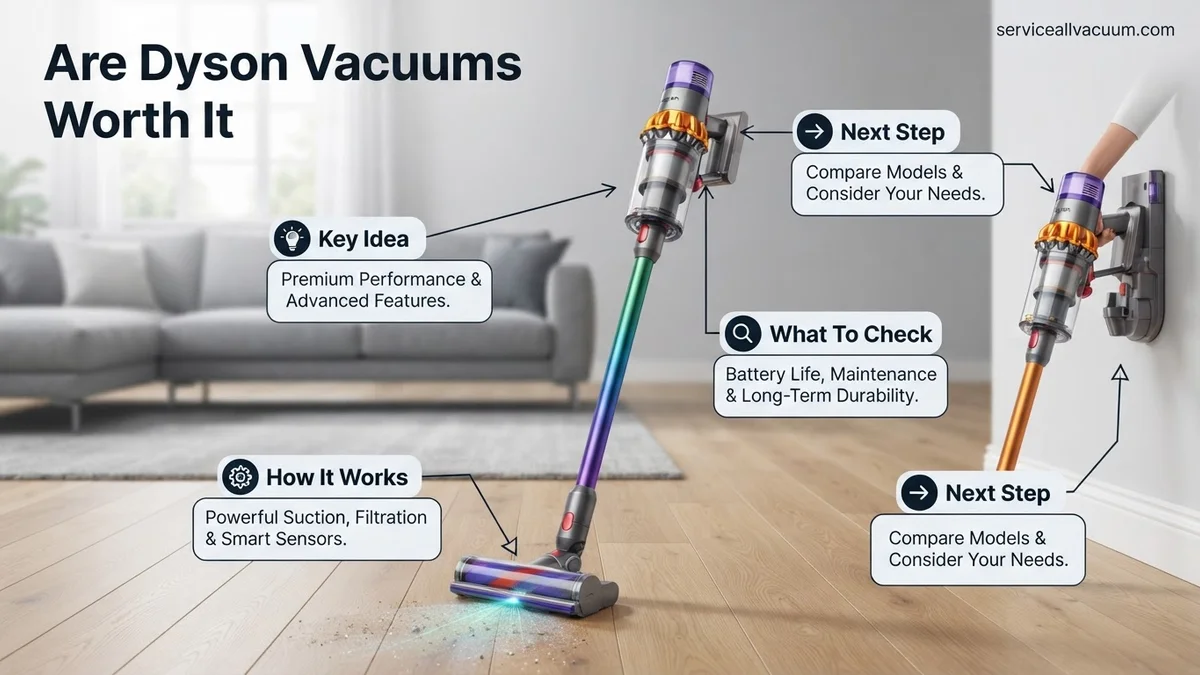
Evaluating whether Dyson vacuums are worth it depends heavily on your budget, flooring type, and desire for premium suction power. While they offer unmatched cleaning performance and lightweight design, high costs and battery limitations require careful consideration.
Dyson vacuums are generally worth the steep $400 to $800 investment if you have wall-to-wall shedding pets, severe allergies requiring advanced filtration, or a multi-level home where hauling a heavy corded machine is a chore. However, if you live in a small apartment with mostly hard floors or clean infrequently, you are mostly paying for luxury engineering and brand prestige rather than cleaning power you will actually use.
The core dilemma in 2027 is whether premium suction and futuristic laser-detection features justify a price point that is triple or quadruple what standard cordless competitors charge. To make the right financial choice, you need to look past the marketing hype and examine how these machines actually perform under daily household stress.
Key Takeaways
- Dyson vacuums deliver industry-leading suction power and advanced whole-home filtration systems.
- Prices ranging from $400 to $800 mean you are paying a heavy premium for brand and innovation.
- Battery degradation and trigger fatigue remain common long-term pain points for cordless models.
- Competitors like Shark offer 80% of the performance for half of the upfront cost.
- Dysons are best for homes with heavy pet hair and mixed flooring types needing deep cleans.
What Causes High Price Tags on Dyson Vacuums
Proprietary Motor and Cyclone Technology
The primary driver behind Dyson pricing is heavy R&D investment into digital motors. Unlike generic brands that buy off-the-shelf components, Dyson designs its own hyper-dymium motors. These motors spin at up to 125,000 RPM, generating massive suction from a tiny frame. You pay for the miniaturization and the engineering required to keep that motor from overheating.
Advanced root cyclone arrays generate centrifugal forces exceeding 100,000g to fling microscopic dust out of the airflow.
Precision dynamic balancing reduces motor vibration and hand fatigue during long cleaning sessions.
Custom-tuned acoustic dampening minimizes high-pitched whine compared to cheaper, louder alternatives.
Premium Materials and Filtration Costs
Dyson builds its units out of aerospace-grade polycarbonate plastics designed to survive accidental drops down the stairs. Furthermore, the inclusion of fully-sealed, whole-machine HEPA filtration traps 99.99% of particles down to 0.3 microns. Cheaper vacuums often leak fine dust back into your breathing air, defeating the purpose of vacuuming.
Impact-resistant resins handle the inevitable bumps against baseboards and furniture legs.
Multi-stage seal engineering prevents dirty air from bypassing the filter media.
How to Evaluate Your Cleaning Needs Before Buying
Assessing Flooring Types and Pet Ownership
Your home layout dictates whether a Dyson will pay for itself in time saved. If your house features thick high-pile carpet mixed with long-haired pets, standard budget cordless vacuums will constantly clog and stall. Dyson units excel at deep-fiber agitation and specialized hair-detangling cleaner heads.
Homes with dense carpeting require the high torque and deep suction power unique to Dyson’s flagship models.
Bare-floor-only homes gain little benefit from Dyson’s expensive motorized brush bars and can easily make do with cheaper stick vacuums.
Multi-pet households heavily benefit from anti-tangle conical brush rolls that save you from cutting wrapped hair out manually.
Lifestyle and Storage Constraints
Consider how you physically store and charge your cleaning gear. Dyson models rely heavily on wall-mounted dock stations that require drilling into drywall. If you rent your home or lack dedicated utility closet space with a nearby outlet, this mounting requirement becomes a major operational hurdle.
The “grab-and-go” drop-in dock makes daily spot-cleaning effortless if permanently installed in a convenient hallway.
Battery limitations mean whole-house deep cleans require swapping packs or working quickly in Max mode.
Step-by-Step Guide to Comparing Dyson vs. Budget Alternatives
Deciding between a flagship Dyson model and a budget alternative requires evaluating your specific home environment and cleaning habits. Industry benchmarks from 2027 show that budget cordless vacuums have improved significantly, yet clear performance gaps remain in filtration and continuous suction power.
Assessing Your Flooring and Debris Type
To determine if a premium Dyson is necessary, follow this evaluation framework:
- Calculate your exact floor ratio of high-pile carpet versus hard flooring, as Dyson’s high-torque cleaner heads automatically adjust suction and resist hair wrap more effectively than generic brands.
- Audit your household for pet ownership and heavy shedding, which demands the sealed HEPA filtration and high motor wattage standard in Dyson’s latest releases.
- Review your storage and charging constraints, comparing the wall-docking convenience of a Dyson against the freestanding designs common among budget competitors.
Weighing Long-Term Cost of Ownership
Budget alternatives often feature lower upfront costs, but replacement parts and shorter battery lifespans alter the financial equation over a five-year period. Dyson units generally offer higher repairability and readily available OEM components, extending the usable lifespan of the appliance.
What If It Still Doesn’t Work?
If your Dyson vacuum continues to underperform, lose suction, or fail to charge despite routine cleaning of the filter and cyclone assembly, more intensive troubleshooting is required. Hardware failures in modern cordless vacuums typically involve the battery management system or blockages deep within the airway.
Execute these advanced troubleshooting steps before seeking professional repair services:
- Inspect the bin runner seals and cyclone pathways for microscopic dust buildup that can compromise internal pressure and trigger automatic motor cutoffs.
- Test the battery output with a multimeter if the machine pulses on and off, as lithium-ion cells naturally degrade after 300 to 500 charge cycles.
- Examine the electrical contacts on the wand and cleaner head for debris or oxidation that interrupts power transmission from the trigger.
- Contact Dyson authorized customer support to diagnose electronic board failures, keeping in mind that out-of-warranty motor or battery replacements typically range from $100 to $180 depending on the model.
Conclusion
Determining whether Dyson vacuums are worth the investment depends heavily on your specific cleaning demands, flooring types, and desire for advanced HEPA filtration. While budget alternatives have narrowed the performance gap, Dyson’s sustained suction power and rigorous engineering still command a premium. According to verified research and consumer testing sources from 2027, buyers seeking a durable, multi-surface cleaning tool will find long-term value in Dyson’s flagship lineup. Review your home’s layout today and select the model that matches your daily maintenance requirements.
❓ Frequently Asked Questions
Are Dyson vacuums worth the money for pet owners?
Dyson vacuums are exceptionally good at pulling embedded pet hair out of carpets and upholstery without tangling, making them a worthwhile investment for multi-pet households.
How do Dyson vacuums compare to Shark cordless vacuums?
Dyson typically wins on raw suction power, filtration, and premium build quality, while Shark wins on affordability, dual-brushroll designs, and overall value.
Why do Dyson cordless vacuums require you to hold the trigger?
The trigger design is intended to maximize battery efficiency by only running the motor when active, though it can cause hand fatigue during long cleaning sessions.
Can Dyson vacuums completely replace a corded upright vacuum?
Modern high-end cordless Dysons match or exceed the suction power of many traditional corded vacuums, making full replacement realistic for most homes.
What maintenance do Dyson vacuums require to stay functional?
You need to wash the HEPA filter monthly, clear the bin regularly, and check the brush bar for hair wraps to maintain optimal suction.
Do Dyson vacuums hold their resale value?
Used Dyson vacuums retain a surprisingly high resale value on marketplaces like eBay and Facebook, provided they are well-maintained and clean.