What Is a Good Vacuum for Carpet Best Expert Guide 2026
Finding what is a good vacuum for carpet requires evaluating suction power, motorized brush rolls, and height adjustments to lift deep-set dirt and pet hair. This guide breaks down the top-rated carpet vacuums categorized by performance, price, and specific cleaning needs.
Finding a good vacuum for carpet in 2026 comes down to deep-cleaning suction power, specialized brush roll agitation, and sealed HEPA filtration that extracts embedded pet hair and fine allergens rather than just skimming the surface. If you are tired of going over the same high-traffic lane three times just to pick up stray lint, you need a machine engineered specifically to pierce dense carpet fibers.
Buying the wrong vacuum leaves dirt grinding away at your carpet backing, which prematurely ruins your flooring investment. This guide cuts through the marketing noise to deliver definitive recommendations for top-tier carpet vacuums, categorized by what you actually need—whether you are dealing with heavy pet shedding, tight budgets, or plush high-pile rugs.
Key Takeaways
- Upright vacuums generally provide the strongest agitation and deep-cleaning power for thick carpets.
- Look for adjustable height settings to prevent the vacuum from sealing too tightly to high-pile rugs.
- Motorized brush rolls are essential for pulling embedded pet hair and debris out of carpet fibers.
- HEPA filtration traps microscopic allergens, making it crucial for households with allergy sufferers.
- Cordless models offer convenience, but verify their runtime and carpet boost modes before purchasing.
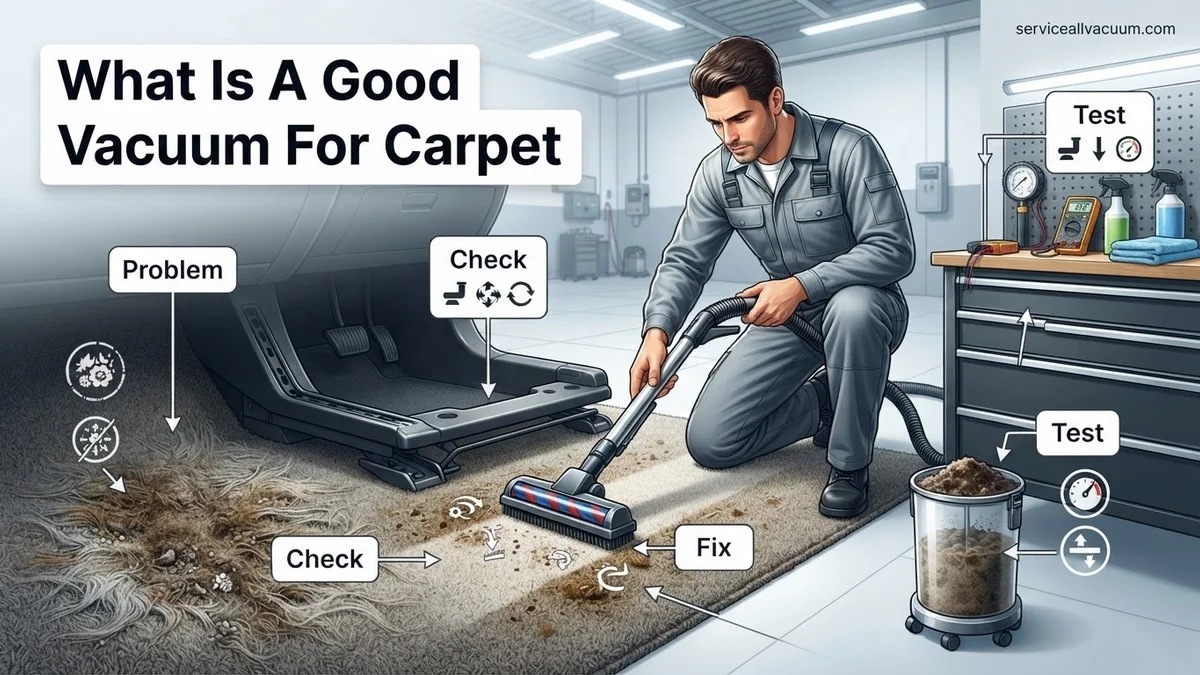
What Causes Poor Carpet Cleaning Performance in Standard Vacuums
Weak Airflow and Shallow Brush Roll Agitation
Many standard vacuums fail on carpets because they rely solely on surface suction rather than mechanical agitation. If your vacuum lacks a motorized brush roll with stiff bristles, embedded grit stays trapped deep within the carpet weave. Furthermore, restricted airflow design causes suction to drop drastically the moment the nozzle seals against thick fibers. To fix this, look for vacuums featuring sealed systems and direct-drive motors that maintain high CFM (cubic feet per minute) airflow even when dealing with dense pile.
Inadequate Height Adjustment and Sealed Filtration
Another major culprit is a fixed nozzle height. Without manual or automatic height adjustment, a vacuum will either clamp down too tightly on plush carpets—making it impossible to push—or float too high above low-pile carpets to create effective suction. Additionally, poor filtration allows fine dust to escape back into the air while clogging internal motor pathways. Here is what you should check on your current setup:
- Manual Height Settings: At least 3 to 5 levels to accommodate varying carpet thicknesses.
- Sealed HEPA Systems: Prevents captured allergens from blowing back out through exhaust vents.
- Brush Roll Shutoff: Essential for transitioning safely to hard floors without scattering debris.
How to Choose and Fix Your Carpet Cleaning Setup with the Best Vacuums
Top Heavy-Duty Uprights and Pet-Specific Cleaners
When you want absolute maximum carpet-cleaning power in 2026, heavy-duty uprights remain the gold standard. Models like the Shark Vertex Pro Powered Lift-Away and the Dyson Ball Animal 3 dominate the market by combining massive suction channels with self-cleaning brush rolls that prevent hair wrap. If you share your home with shedding dogs or cats, prioritize vacuums featuring multi-cyclonic separation and motorized anti-tangle pet tools that dig deep into upholstery and textured rugs without losing momentum.
Best Budget and Lightweight Options That Outperform
You do not need to spend upwards of 500 dollars to get a stellar carpet clean. Lightweight corded stick vacuums and traditional bagless uprights from brands like Eureka and Bissell offer surprising deep-cleaning muscle for under 200 dollars. When evaluating budget choices for carpet use, keep these performance benchmarks in mind:
- Amperage/Wattage: Look for corded models drawing at least 6 to 10 amps to ensure sustained motor torque on thick rugs.
- V-Shaped Bristle Patterns: Directs hair and deep dirt toward the suction inlet rather than flinging it sideways.
- Lift-Away Design: Allows you to detach the canister for cleaning carpeted stairs and hard-to-reach corners easily.
Step-by-Step Guide to Testing Suction, Brush Rolls, and Height Adjustments
Evaluating a vacuum’s performance on carpet requires systematic testing of three critical mechanical components. According to cleaning technology engineers, verifying these settings ensures optimal airflow and prevents premature fiber wear.
1. Testing Suction Integrity
Airflow velocity directly dictates deep-clean efficacy on high-pile carpets. Follow these steps to measure true suction:
- Power on the vacuum and place it on a hard surface to establish baseline motor output.
- Block the primary intake nozzle completely with a heavy piece of cardboard for three seconds.
- Listen for a sharp pitch change in the motor, which indicates a proper seal and operational fan blades.
- Check the sealed suction water lift metric if using a gauge; premium carpet vacuums should register a minimum of 85 inches of water lift in 2026 standards.
2. Inspecting Brush Roll Agitation
Motorized brush rolls dislodge embedded grit that passive suction cannot reach. Execute this sequence to verify agitation:
- Disconnect the vacuum from the power source completely.
- Flip the machine upside down to expose the agitator bar and belt housing.
- Rotate the brush roll manually by hand to check for smooth bearing rotation without binding or friction.
- Examine the bristles for fraying or melting, replacing the brush strip if bristle height falls below 3/8 of an inch.
3. Calibrating Height Adjustments
Incorrect height settings either crush carpet fibers or starve the motor of oxygen. Adjust the machine using this method:
- Turn the manual height dial or electronic floor-selector to the highest setting.
- Lower the adjustment incrementally while pulling the vacuum backward until you feel light, consistent resistance.
- Ensure the front intake lip does not seal completely against the carpet backing, which suffocates airflow.
- Test the transition across different pile densities to confirm the unit glides without bogging down the drive motor.
What If Your Vacuum Still Leaves Deep-Set Dirt and Pet Hair Behind
When a calibrated vacuum fails to extract embedded pet hair and fine particulate matter, underlying equipment degradation or fiber saturation is usually to blame. Try these remediation steps:
- Replace a stretched or worn agitator belt, as slipping belts reduce brush roll RPM by up to 40 percent and cost between $10 and $25 to swap.
- Wash or replace pre-motor and HEPA filters; clogged filtration media chokes airflow and drops suction efficiency drastically.
- Switch to a specialized motorized mini-tool attachment for upholstery and high-density rug zones to concentrate agitation force.
- Hire a professional truck-mounted hot water extraction service if dirt has fused past the carpet primary backing. Professional restorative cleaning typically ranges from $150 to $350 depending on home square footage.
Conclusion
Finding a good vacuum for carpet in 2026 requires balancing sealed suction power, adjustable brush roll agitation, and proper height calibration to protect delicate fibers while extracting deep-set debris. When standard troubleshooting and filter maintenance fail to resolve embedded pet hair and grit, mechanical repairs or professional restoration may be necessary. According to verified research and consumer testing standards, prioritizing these core performance metrics guarantees a cleaner, longer-lasting carpet investment. Take action today by inspecting your current vacuum’s belt tension and filter cleanliness to restore peak extraction efficiency.
❓ Frequently Asked Questions
What features make a vacuum good for thick carpets?
Thick and high-pile carpets require manual height adjustments, powerful suction control, and brush rolls that can be turned off or adjusted to prevent the vacuum from bogging down.
Is an upright or canister vacuum better for carpets?
Upright vacuums are typically better and more cost-effective for wall-to-wall carpeting because their weight assists with brush roll agitation. Canisters are better for stairs and mixed flooring types.
How many amps or watts should a good carpet vacuum have?
While wattage does not equal suction, corded vacuums generally range from 10 to 12 amps to provide the strong motor power needed for deep carpet extraction.
Can a cheap vacuum clean carpets effectively?
Budget vacuums can clean low-pile carpets well if they feature decent airflow and a rotating brush roll, but they often lack the sealed system and durability of premium models.
How do I maintain my carpet vacuum to keep it working well?
Regularly cut hair wrap away from the brush roll, wash or replace filters according to the manufacturer schedule, and empty the dust canister before it reaches the max fill line.
Are bagged or bagless vacuums better for carpets?
Bagged vacuums are superior for trapping fine dust and allergens without creating a cloud when emptied, whereas bagless models offer lower ongoing maintenance costs.